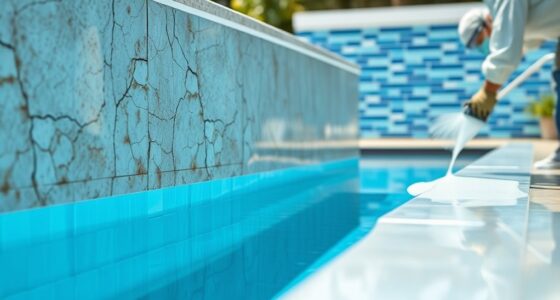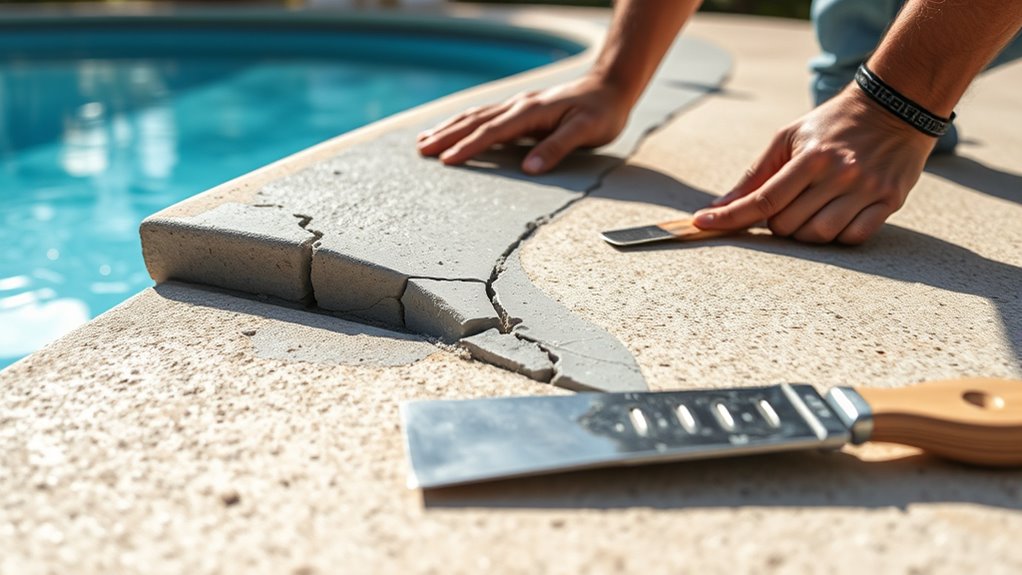

To fix cracked pool coping, first identify the material—like concrete, stone, brick, or pavers. Clean the area thoroughly with a wire brush or pressure washer, then slightly enlarge the crack. For concrete, use a suitable patch or mortar mix, while for stone or brick, apply an appropriate adhesive or mortar. Smooth the repair with a trowel and let it cure fully. Proper preparation and materials are key; continue exploring the steps to guarantee a stable, attractive fix.
Key Takeaways
- Identify the material of your coping (concrete, stone, brick, pavers) to select appropriate repair methods and materials.
- Clean and prepare the cracked area thoroughly, removing debris and enlarging cracks for better adhesion.
- Use suitable repair compounds such as concrete patch, mortar, or adhesive based on the coping material.
- Fill cracks completely, smooth the surface with a trowel, and allow proper curing time before sealing.
- Regularly inspect and promptly repair cracks to maintain safety, appearance, and prolong the coping’s lifespan.
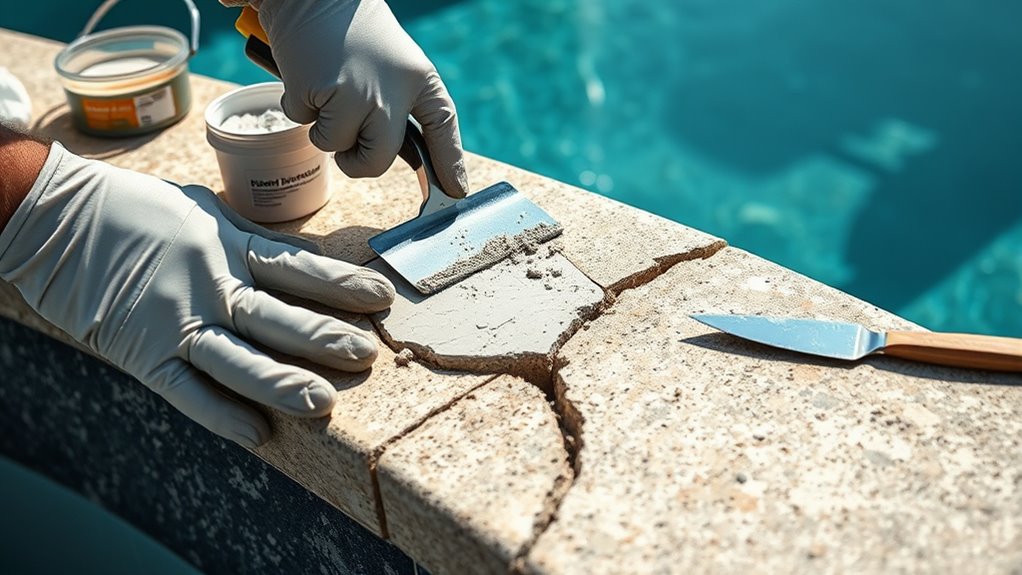
Cracked pool coping can detract from your pool’s appearance and compromise its safety. When you notice cracks, it’s essential to address them promptly to maintain the overall look and ensure safe use. Ignoring these issues can lead to further damage, making repairs more complicated and costly over time. Proper pool maintenance involves regularly inspecting your coping for signs of wear, and fixing cracks as soon as they appear helps preserve the integrity of your pool area. Safety considerations should always come first—cracked coping can cause tripping hazards or even allow water to seep beneath the deck, leading to more extensive damage.
Cracked pool coping threatens safety and appearance; repair promptly to prevent further damage and maintain your pool’s integrity.
To start, you need to identify the material of your pool coping, as this affects both the repair method and the materials you’ll use. Common materials include concrete, stone, brick, or pavers. Once you know what you’re working with, gather the necessary repair supplies. For concrete coping, you’ll typically need a concrete patch or mortar mix, a trowel, a wire brush, and possibly a bonding agent. For stone or brick, you’ll want a suitable adhesive or mortar designed specifically for those materials. Before applying any repair, clean the cracked area thoroughly—removing loose debris, dirt, and old mortar to ensure proper adhesion. Use a wire brush or pressure washer if needed, but make sure the surface is dry before proceeding.
When repairing, start by slightly enlarging the crack with a chisel or wire brush to create a better bonding surface. Applying a bonding agent can improve the adhesion of the patch material. For concrete cracks, mix the patch compound according to the manufacturer’s instructions, then fill the crack completely, smoothing it out with your trowel. For stone or brick, carefully apply mortar or adhesive, pressing it into the crack and ensuring it’s flush with the surface. After the repair, allow the material to cure fully, which may take several hours or days depending on the product used. Once cured, you can consider sealing the entire coping to prevent future damage and ease maintenance. Additionally, understanding the types of cookies used on your site can help improve your overall experience and site security.
Addressing cracked pool coping isn’t just about aesthetics; it’s about maintaining safety and prolonging the lifespan of your pool area. Regular pool maintenance includes inspecting the coping and repairing any issues immediately. Doing so prevents minor cracks from turning into major problems, which could threaten the safety of swimmers and lead to costly repairs. With the right materials and proper technique, you can restore your pool’s appearance and safety efficiently, ensuring your pool remains an inviting, secure space for everyone.
Frequently Asked Questions
How Long Does It Take for Repaired Coping to Fully Cure?
You should expect the repaired coping to fully cure within 7 to 14 days, depending on the materials used and weather conditions. During this curing process, it’s important to follow timing considerations specified by the manufacturer to guarantee the repair gains maximum strength. Keep the area dry and avoid heavy use during this period, as proper curing is essential for long-lasting results and to prevent future cracks or damage.
Can Cracked Coping Be Safely Repaired Without Professional Help?
Yes, you can safely perform DIY repairs on cracked coping if you follow proper safety precautions. Wear gloves, goggles, and a mask to protect yourself from dust and debris. Make sure to use suitable repair materials, like epoxy or concrete patch, and follow the manufacturer’s instructions carefully. If the crack is large or extensive, consider consulting a professional to guarantee the repair is durable and safe.
What Are the Environmental Impacts of Different Repair Materials?
Different repair materials have varying environmental impacts. Eco-friendly materials, like recycled composites or natural stone, reduce pollution and conserve resources, making them better for the environment. Conventional options, such as cement or synthetic compounds, may release harmful chemicals and consume more energy during production. When choosing materials, consider their eco-friendly qualities to minimize your repair’s environmental footprint and promote sustainability around your pool area.
How Often Should Pool Coping Be Inspected for Cracks?
Don’t wait for a crack to whisper trouble; inspect your pool coping at least twice a year, ideally during spring and fall. Regular pool maintenance helps catch issues early, preventing safety concerns and costly repairs. Cracks can hide beneath the surface, threatening your safety and the pool’s integrity. Staying vigilant guarantees your oasis remains safe, beautiful, and inviting — because peace of mind is priceless when it comes to your pool.
Are There Eco-Friendly Options for Repairing Cracked Coping?
Yes, you can choose eco-friendly solutions for repairing cracked coping. Look for sustainable materials like recycled concrete, natural stone, or biodegradable sealants that minimize environmental impact. These options help reduce your carbon footprint while maintaining durability. Using eco-friendly solutions not only preserves the environment but also guarantees your pool area stays safe and attractive. Always check product labels for sustainability certifications to make the most environmentally conscious choice.
Conclusion
By blending basic but bold bonding methods with the right materials, you can beautifully banish cracks and restore your pool’s pristine perfection. Taking time to treat, tune, and tackle cracks ensures your coping stays strong and stunning. Remember, patience and preparation prevent problems from progressing. With the right repairs, your pool’s coping can come back crack-free, creating a mesmerizing, carefree backyard oasis. Fixing flaws with finesse transforms troubles into triumphs, turning your pool into a picture-perfect paradise.