
When building an indoor endless pool, make certain you have enough space for the pool, safety zones, and maintenance access, while planning for future upgrades. Good ventilation is vital to control humidity, heat, and moisture, so include a high-quality system that’s easy to access. Proper placement of equipment ensures smooth maintenance and keeps the environment comfortable. Keep exploring to find how to optimize your space and ventilation for a safe, enjoyable indoor pool experience.
Key Takeaways
- Ensure adequate room size for the pool, safety zones, maintenance access, and future upgrades.
- Plan ceiling height to improve ventilation, airflow, and overall indoor comfort.
- Install high-quality, accessible ventilation systems to control humidity and prevent mold.
- Allocate space for pool equipment like pumps, filters, and heaters for easy maintenance.
- Incorporate proper water chemistry management features, such as covers and filtration, to maintain water quality indoors.
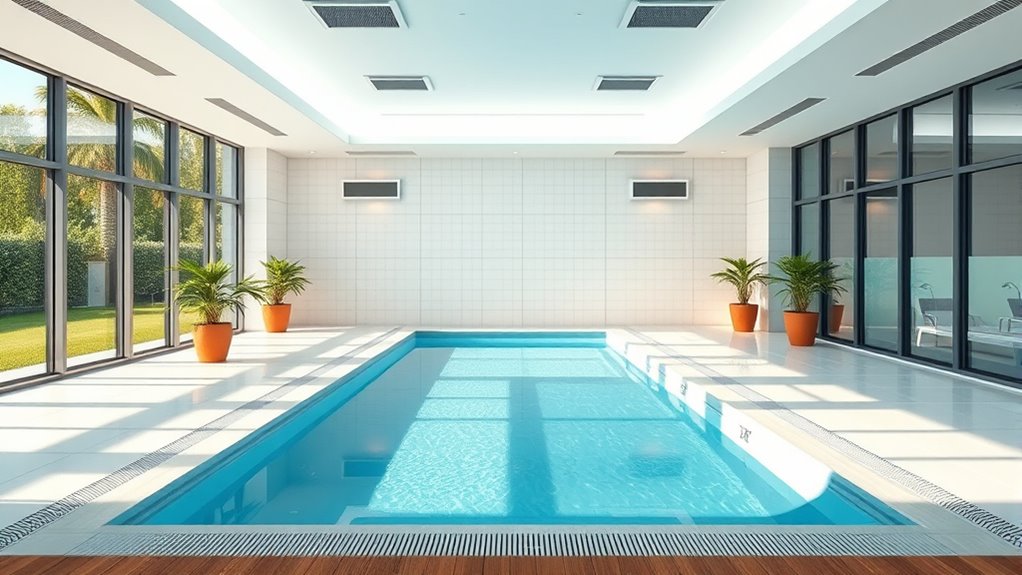
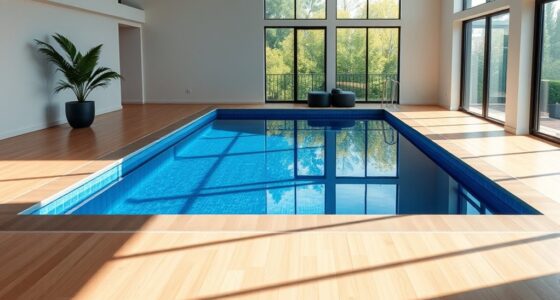
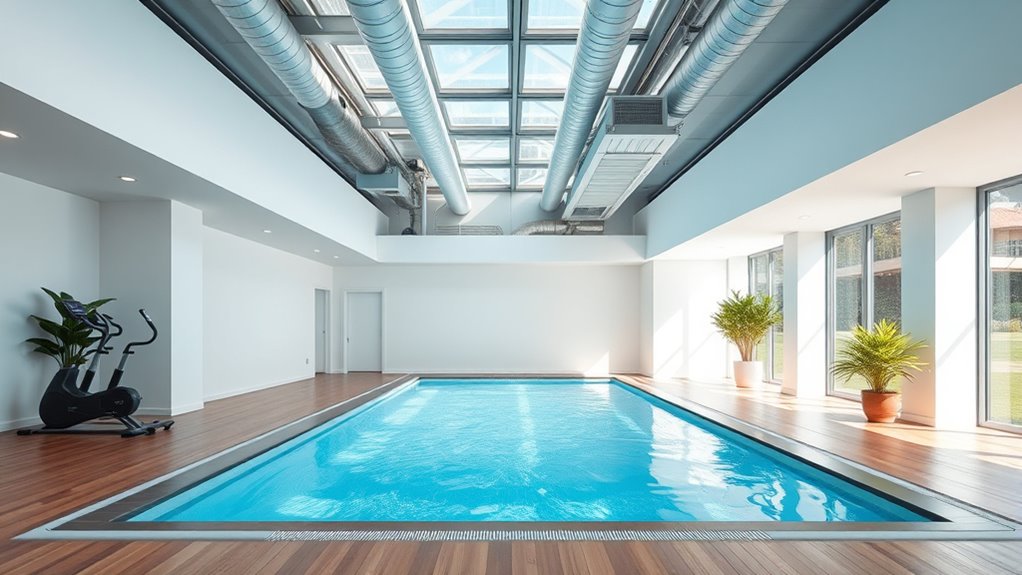
Creating an indoor endless pool is an excellent way to enjoy the benefits of swimming year-round, regardless of weather. But before you start, you need to consider space and ventilation carefully. Proper planning ensures your pool remains a comfortable, safe, and functional addition to your home. First, think about the space required. You’ll need enough room not only for the pool itself but also for surrounding safety areas, maintenance access, and equipment. This space should accommodate future upgrades or repairs without feeling cramped. Measure your available area precisely, and consider ceiling height as well. Adequate height prevents a feeling of confinement and allows for proper ventilation systems. Remember, an indoor pool generates humidity and heat, which can cause moisture problems, so ventilation is essential. Incorporating innovative ventilation solutions can further enhance indoor air quality and moisture control.
Ventilation impacts both comfort and the integrity of your home. Without proper airflow, excess humidity can lead to mold, mildew, and structural damage. Installing a high-quality exhaust or dehumidification system ensures moisture is effectively removed from the indoor environment. This not only protects your home but also keeps the air fresh and safe for everyone. When planning your space, allocate room for the ventilation system, pool equipment, and access to electrical outlets and plumbing. Proper placement of these elements simplifies maintenance and minimizes potential issues down the line.
Pool maintenance becomes even more critical indoors because the environment is more controlled and less exposed to natural elements. You’ll need a reliable filtration and circulation system to keep the water clean and clear. Water chemistry management is key to maintaining healthy water. Regular testing of pH levels, chlorine or sanitizer levels, and alkalinity helps prevent problems like algae growth or bacteria buildup. A well-maintained water chemistry reduces the need for frequent chemical adjustments and ensures a safe swimming environment. Additionally, consider installing a cover or enclosure to minimize debris and evaporation, which helps stabilize water chemistry and reduces maintenance efforts.
Finally, plan for easy access to all pool components, including pumps, filters, heaters, and chemical feeders. Regular inspections and maintenance are essential to keep your indoor pool functioning smoothly. By carefully considering space, ventilation, and pool maintenance needs, you’ll create an indoor swimming environment that’s enjoyable, safe, and easy to care for year-round. Proper planning now means fewer disruptions later and a lifetime of relaxing, healthy swimming right in your home.
Frequently Asked Questions
What Are the Best Materials for Indoor Pool Flooring?
You should choose waterproof flooring materials like ceramic tiles, vinyl, or epoxy coatings for your indoor pool. These pool flooring options resist moisture, prevent slips, and are durable enough to withstand constant exposure to water. Consider slip-resistant surfaces for safety, and opt for materials that are easy to clean and maintain. Your goal is to create a safe, waterproof environment that complements your pool area while enduring daily moisture exposure.
How Do I Prevent Humidity Damage Indoors?
Humidity can be a silent thief, damaging your indoor pool space if you don’t act. You should install a reliable dehumidification system to keep moisture levels in check, and use moisture-resistant paint on walls and ceilings to prevent mold and deterioration. Regularly ventilate the area and monitor humidity levels to stay ahead of potential damage, ensuring your indoor pool remains a safe, enjoyable retreat without costly repairs.
Can I Install a Pool in a Multi-Story Building?
Yes, you can install a pool in a multi-story building, but you must consider multi-story constraints like structural support and weight capacity. Make certain your plans meet building code compliance, especially for waterproofing, ventilation, and safety measures. Consult a structural engineer and local authorities to verify your setup. Proper planning prevents damage and guarantees your indoor pool is safe, functional, and compliant with all regulations.
What Are the Safety Features for Indoor Pools?
Imagine your indoor pool as a tranquil oasis, protected by safety features that act like sturdy shields. You should install pool safety measures like secure fencing, alarms, and non-slip surfaces. Ventilation systems are your invigorating gust of fresh air, preventing mold and maintaining air quality. These elements work together, creating a safe haven where you can relax confidently, knowing every detail safeguards your aquatic sanctuary.
How Much Does Indoor Pool Maintenance Typically Cost?
Indoor pool maintenance typically costs between $1,200 and $3,500 annually, depending on size and usage. You’ll spend on pool chemical costs, which include disinfectants and pH adjusters, and annual maintenance fees for equipment upkeep. Regular cleaning and filter checks are essential to keep your pool in top condition. Expect to budget for these ongoing expenses to make certain a safe, clean, and enjoyable indoor swimming environment.
Conclusion
Building an endless pool indoors transforms your space into a personal aquatic retreat, but it’s more than just installing equipment—it’s about creating harmony between your pool and your environment. Think of your indoor oasis as a delicate symphony, where space and ventilation play the essential notes. By carefully balancing these elements, you turn a simple pool into a sanctuary that refreshes your body and mind. After all, isn’t a well-designed space the true essence of serenity?