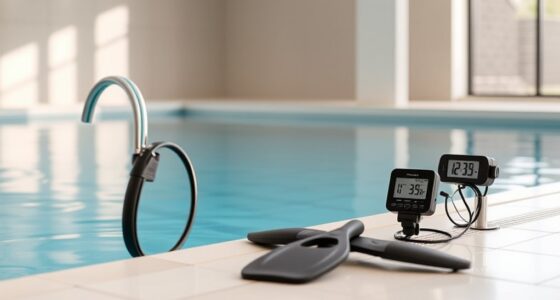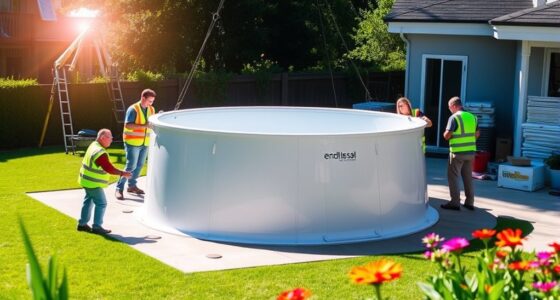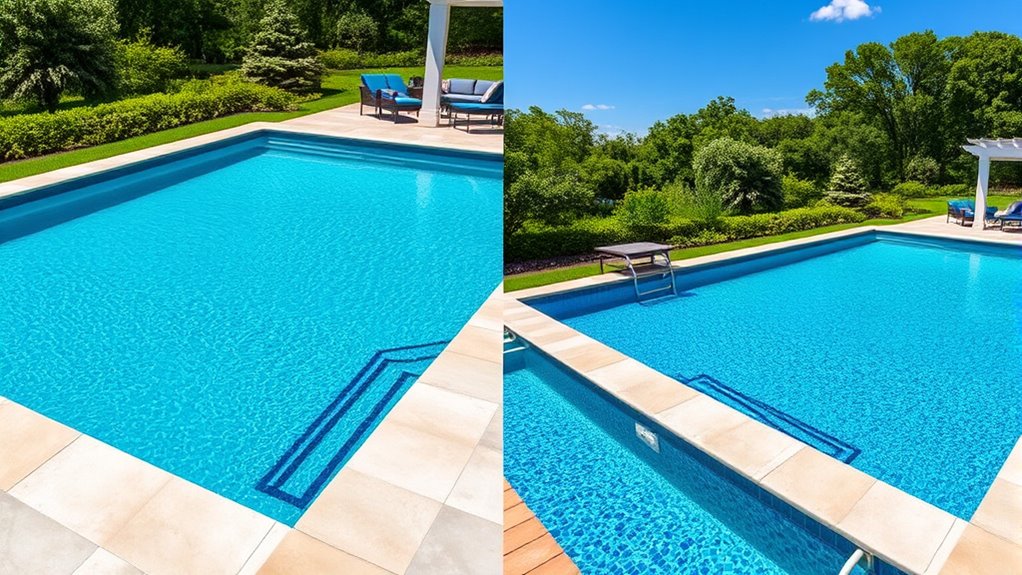

Endless pools are compact, budget-friendly options ideal for therapy, exercise, and small spaces, featuring adjustable currents for targeted workouts. Traditional pools are larger, built-in, and better suited for swimming, entertaining, and landscaping but come with higher costs and maintenance. If you’re looking for convenience, affordability, and versatility, endless pools might fit your needs. To understand how they compare in price, design, and suitability, explore the details ahead.
Key Takeaways
- Endless pools are compact, portable, and designed for hydrotherapy and low-impact exercise, while traditional pools are larger, built-in structures for swimming and recreation.
- Endless pools require less maintenance, fewer chemicals, and lower energy costs compared to traditional pools, which need more upkeep and cleaning.
- The initial investment for endless pools is generally lower, whereas traditional pools involve higher costs for excavation, construction, and landscaping.
- Endless pools are ideal for limited space, therapy, and small families, while traditional pools suit larger backyard entertainment and extensive swimming needs.
- Ongoing expenses for traditional pools tend to be higher due to size, heating, chemicals, and maintenance requirements.
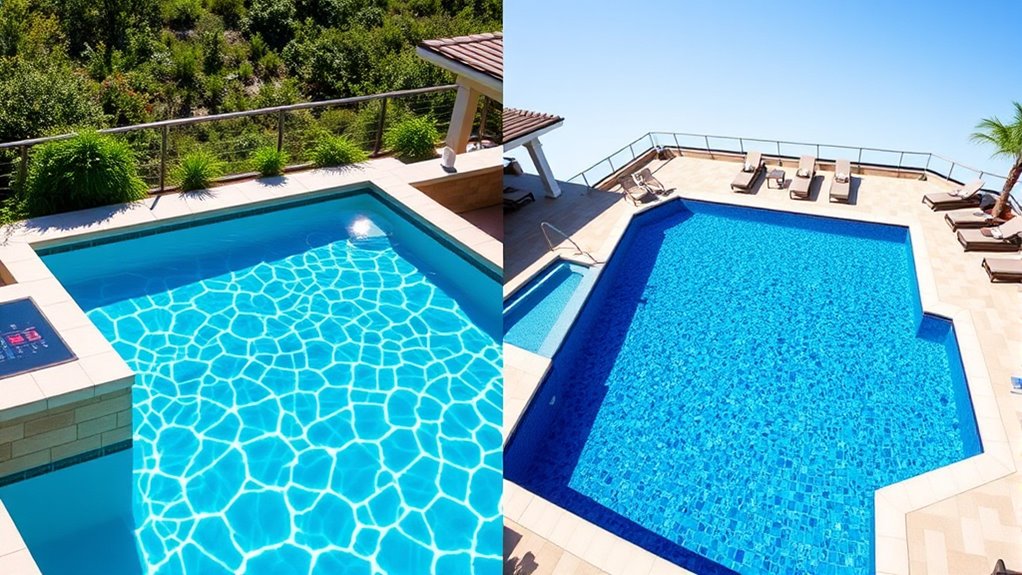
When choosing a pool for your home, understanding the differences between endless and traditional pools can help you make the right decision. Endless pools are compact, customizable units designed for specific activities like exercise, therapy, or relaxation. Traditional pools, on the other hand, are larger, often built into the ground or as permanent structures, offering a more expansive swimming experience. One of the key advantages of endless pools is their focus on hydrotherapy benefits. Their adjustable current allows you to walk, jog, or swim against a steady flow, making them perfect for low-impact therapy, rehab, or gentle exercise. If you’re dealing with joint issues or recovering from injury, the hydrotherapy benefits of an endless pool can be significant, providing targeted relief and muscle strengthening without the strain of traditional swimming.
However, it’s important to consider the maintenance challenges associated with these pools. Endless pools, being smaller and often portable, tend to require less maintenance than traditional pools. They typically feature self-contained systems that minimize debris buildup and are easier to clean. Their smaller size means fewer chemicals, less water, and lower energy costs for heating and filtration. Traditional pools, conversely, come with more complex maintenance challenges. Their larger size means more water to treat and filter, which can increase chemical usage and energy bills. Regular cleaning, balancing pH levels, and maintaining the filtration system can become time-consuming and costly. Additionally, traditional pools often require more extensive upkeep to prevent algae growth, manage debris, and ensure structural integrity, especially if they are above or in-ground.
Cost is another critical factor to weigh. Endless pools generally have a lower initial investment, especially if you opt for portable or semi-custom models. They’re more affordable to install and operate, making them attractive if your budget is limited. Traditional pools involve significant upfront costs for excavation, construction, and landscaping, along with ongoing expenses for maintenance, chemicals, and repairs. Their larger size and permanent nature also mean higher utility bills, particularly for heating and filtering. When considering your long-term expenses, endless pools can be more economical for those seeking a convenient, low-maintenance option, while traditional pools might appeal to those wanting a backyard centerpiece and more space for swimming and entertaining.
Ultimately, your choice hinges on your specific needs, budget, and space. Endless pools excel in hydrotherapy benefits, flexibility, and ease of maintenance, making them ideal for therapy, small families, or limited yards. Traditional pools offer a more extensive swimming experience but come with higher costs and maintenance challenges. By weighing these factors, you can select the pool that best aligns with your lifestyle and preferences.
Frequently Asked Questions
How Long Does Installation Typically Take for Each Pool Type?
Installation typically takes about 4 to 8 weeks for Endless Pools, depending on your setup complexity and customization options. Traditional pools usually require longer, often 8 to 12 weeks, due to their larger size and more extensive construction needs. Your installation timeline can vary based on site preparation, permits, and contractor schedules. Planning ahead and working closely with your installer helps guarantee a smooth process for either pool type.
Are There Maintenance Differences Between Endless and Traditional Pools?
You’ll find that maintenance differs between Endless Pools and traditional pools. Endless Pools typically require less chemical maintenance because of smaller water volumes, making balancing chemicals easier. Cleaning routines are also simpler due to their compact size and integrated filtration systems. With traditional pools, you’ll spend more time on chemical adjustments and routine cleaning. Overall, Endless Pools offer a more convenient, low-maintenance option, saving you time and effort.
Can Both Pool Types Be Integrated With Smart Home Systems?
Like a symphony conductor, you can coordinate both pool types with your smart home system. Both endless pools and traditional pools often support smart home integration, enabling automation features like temperature control, lighting, and cleaning schedules. While compatibility varies by model, many modern pools are designed to seamlessly connect with smart devices, giving you effortless control and enhancing your swimming experience.
What Is the Typical Lifespan of Endless Versus Traditional Pools?
You can expect both endless pools and traditional pools to last around 10 to 20 years, depending on your pool’s quality, maintenance, and usage. Endless pools often have a shorter lifespan due to their smaller components and specialized materials, while traditional pools with sturdy construction and proper upkeep tend to be more durable. The lifespan comparison shows that regular maintenance markedly impacts pool durability, ensuring you get the most out of your investment.
Are There Environmental Considerations for Each Pool Type?
Think of your pool as a garden; choosing eco-friendly options nurtures it better. Endless Pools often use less water and energy, making them more eco-friendly and reducing resource consumption. Traditional pools may require more chemicals and electricity for heating and filtration, impacting the environment. By selecting an eco-conscious pool, you’re helping conserve resources and minimize your ecological footprint, ensuring your backyard oasis stays beautiful and sustainable for years to come.
Conclusion
Choosing between endless pools and traditional pools is like picking between a sleek sports car and a spacious SUV—you get different benefits. Endless pools offer convenience and modern features, making them feel like a personal oasis at your fingertips. Traditional pools, on the other hand, provide space and versatility for family fun. Think of it as finding the perfect fit for your lifestyle—whether you want a quick refresh or a backyard sanctuary, both options can make a splash.