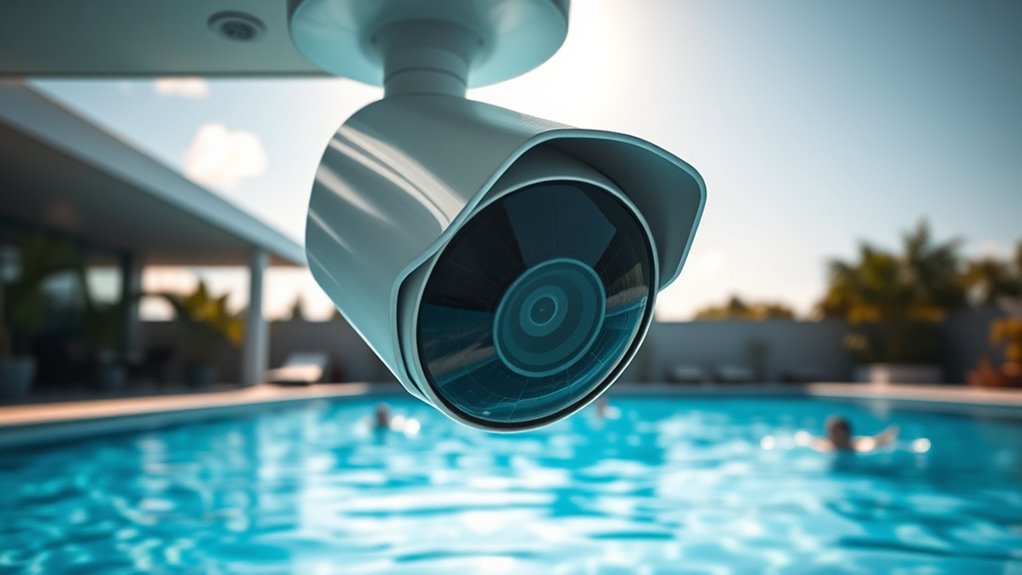

AI drowning detection cameras boost pool safety by providing real-time monitoring and instant alerts if someone shows signs of distress or submersion. They use advanced sensors and algorithms to accurately distinguish emergencies from normal activity, reducing false alarms. While they enhance emergency response, privacy concerns arise around data storage and access. Choosing a reliable system balances safety and privacy—keeping you secure. To discover how these systems can fit your needs, keep exploring the options available.
Key Takeaways
- AI drowning detection cameras use advanced sensors and algorithms for real-time pool monitoring and emergency alerts.
- Accurate sensor technology minimizes false alarms, ensuring reliable safety responses around pools.
- Privacy concerns require systems with encrypted data storage and customizable settings to protect individuals’ rights.
- Reputable systems balance high detection accuracy with robust data security measures for trustworthy safety solutions.
- Proper system selection enhances pool safety while maintaining privacy, promoting confidence in AI-driven drowning prevention.

AI drowning detection cameras are transforming how we guarantee safety around pools and open water. These innovative systems use advanced sensors and algorithms to monitor swimmers continuously, offering real-time alerts if someone shows signs of distress or submersion. As you consider adopting this technology, one of the most important factors you’ll want to evaluate is sensor accuracy. High sensor accuracy means the system can reliably distinguish between normal water activities and actual emergencies, reducing false alarms and ensuring help arrives promptly when needed. When sensors perform well, you gain peace of mind knowing that the system isn’t just reactive but highly dependable, which is essential for preventing tragedies.
However, alongside the benefits of improved safety, privacy concerns often surface. These cameras are designed to monitor individuals closely, capturing video and data around the clock. You might worry about how this data is stored, who has access to it, and whether it could be misused. Addressing these privacy concerns requires choosing systems with robust data protection measures, such as encrypted storage and strict access controls. Transparency from manufacturers about data handling practices can help you feel more confident in the system’s security. It’s natural to question whether the presence of cameras infringes on personal privacy, especially in private or semi-private settings. You can mitigate these concerns by setting clear policies on data usage, limiting who can view footage, and ensuring the system only captures necessary information for safety purposes.
Furthermore, sensor accuracy and privacy are interconnected. For example, to achieve high sensor accuracy, some systems may incorporate advanced imaging technologies that could potentially capture more detailed visuals. This raises additional privacy implications, so it’s vital to select AI drowning detection cameras that balance precise monitoring with respect for individual privacy rights. Many reputable providers offer customizable settings that allow you to adjust the level of monitoring, ensuring you can maintain safety without overstepping boundaries. Additionally, ensuring the use of high-quality sensors aligned with home security standards can improve both accuracy and data protection, giving you greater confidence in the system’s reliability.
Frequently Asked Questions
How Do AI Drowning Detection Cameras Handle False Alarms?
AI drowning detection cameras handle false alarms through sensor calibration and advanced algorithms. You’ll find that regular sensor calibration guarantees accurate detection, reducing false alarms caused by environmental factors. The system uses machine learning to distinguish between real emergencies and benign activities, continuously improving false alarm reduction. This way, you get reliable alerts, minimizing unnecessary disruptions while maintaining pool safety, so you can trust the system to respond appropriately when it truly matters.
What Is the Installation Process for AI Drowning Detection Systems?
You start by following the installation steps outlined in the manual, which includes mounting the cameras securely around the pool area. Then, connect the system to power and your network. Once installed, you’ll need to perform system calibration by positioning the cameras correctly and adjusting settings for maximum detection. Test the system thoroughly to guarantee it accurately identifies potential issues, making any necessary tweaks for reliable performance.
Are AI Cameras Effective in Outdoor Pools With Sunlight?
You might notice that AI cameras often struggle with sunlight interference, but many models are designed for outdoor durability, making them quite effective in outdoor pools. These cameras use advanced algorithms to distinguish between sunlight glare and actual emergencies, ensuring reliable detection even on bright days. So, if you choose high-quality, weather-resistant systems, you can confidently rely on AI cameras to monitor outdoor pools, regardless of the sunlight.
How Is Data Privacy Maintained With AI Surveillance?
You can trust that privacy concerns are addressed by using data encryption, which secures your footage from unauthorized access. Manufacturers also implement strict access controls and anonymize data whenever possible. Regular audits and compliance with privacy regulations guarantee your personal information remains protected. By prioritizing these measures, AI surveillance systems aim to balance safety benefits with your privacy rights, giving you peace of mind while enjoying the pool.
What Is the Maintenance Required for AI Drowning Detection Cameras?
Maintaining AI drowning detection cameras means meticulously managing their magic. You’ll regularly perform sensor calibration to keep detection precise and reliably responsive. You also need to stay ahead with timely software updates, ensuring the system’s stability and security. Routine inspections help identify issues early, while cleaning keeps lenses clear for clear detection. Proper maintenance maximizes safety, keeps the system sharp, and guarantees peace of mind for everyone enjoying the pool.
Conclusion
With AI drowning detection cameras, you hold a powerful shield that transforms pool safety from fragile hope to near certainty. Like a vigilant guardian watching over every splash, these cameras provide peace of mind, ensuring help is always just a moment away. Embrace this technology, and turn your pool into a haven where safety blooms, proving that innovation can be the lighthouse guiding everyone safely back to shore.