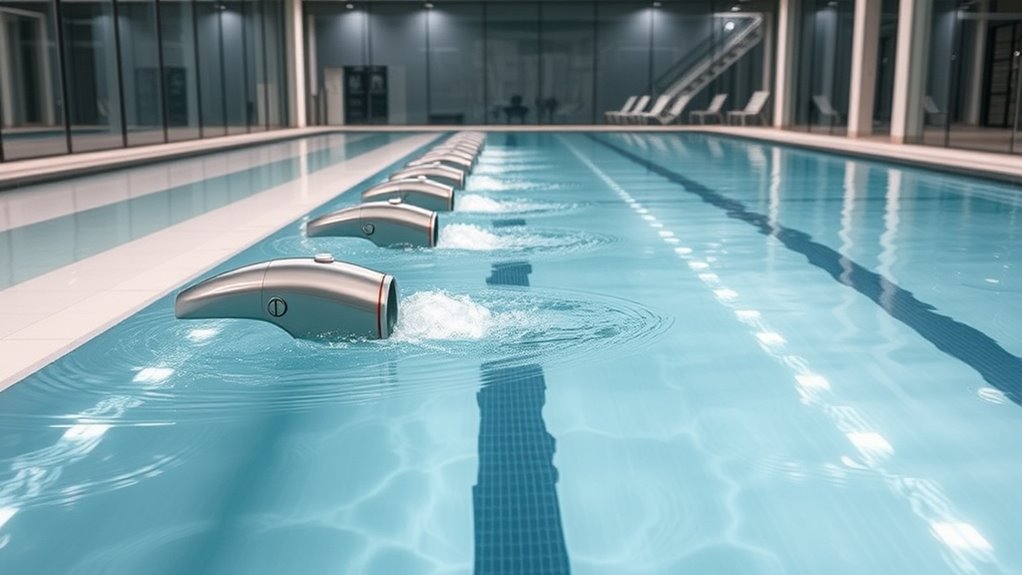

When choosing swim current generators for exercise pools, focus on selecting models with adjustable resistance to match your fitness level and goals. Make certain the unit’s size and capacity align with your pool dimensions for maximum performance. Look for energy-efficient pumps with variable speed motors to save on power costs. User control features like digital displays and remote operation can enhance your experience. Keep these factors in mind to find the best fit—continue exploring for detailed insights.
Key Takeaways
- Match generator size and resistance settings to your pool dimensions and workout needs for optimal performance.
- Choose energy-efficient models with variable speed motors to reduce operational costs and noise.
- Ensure seamless integration with existing pool infrastructure to avoid extensive modifications.
- Prioritize user-friendly controls and automation features for easy adjustment of resistance levels.
- Consider water resistance factors to create smooth, natural currents that enhance swim training and comfort.
Are you wondering how to select the right swim current generator for your pool or aquatic training facility? The key factors to consider include water resistance and energy efficiency, both of which considerably impact your overall experience and operational costs. When choosing a swim current generator, it’s crucial to understand how water resistance affects the flow of water and your workout. A system with adjustable water resistance allows you to tailor the current to your fitness level or training goals, providing a more effective and comfortable workout. Furthermore, the right generator should maximize water resistance to create a smooth, consistent flow that mimics natural swimming conditions, helping you improve technique and endurance without unnecessary strain.
Energy efficiency is equally important because it directly influences your long-term expenses and environmental footprint. Look for models that feature advanced pump technology designed to minimize power consumption while maintaining high performance. Energy-efficient generators often come with variable speed motors, which adjust their output based on demand, reducing unnecessary energy use during lighter workouts or warm-up sessions. This not only lowers your energy bills but also reduces noise and heat output, creating a more pleasant environment for training or leisure swimming. When evaluating different systems, check their power ratings and energy-saving features to ensure you’re investing in a unit that balances performance with cost-effectiveness.
Additionally, consider the size and capacity of the swim current generator relative to your pool dimensions. An oversized unit may waste energy and produce excessively strong currents that are difficult to swim against comfortably, while a smaller system might not generate enough resistance for effective training. The goal is to find a generator that can produce a steady, adjustable current suited to your pool’s size and your specific workout needs. Compatibility with existing pool infrastructure is another practical aspect—ensure the system integrates seamlessly with your setup without requiring extensive modifications. Proper sizing and compatibility are essential to optimize both performance and efficiency.
Finally, think about user control and automation features. Modern swim current generators often include digital controls, remote operation, and programmable settings. These features make it easier to customize your workout, switch between different resistance levels, and save preferred settings. Such convenience enhances your experience, especially if multiple users or trainers utilize the pool. By focusing on water resistance customization, energy efficiency, capacity, and user-friendly features, you’ll be well-equipped to select a swim current generator that offers outstanding performance, cost savings, and a satisfying aquatic workout experience.
Frequently Asked Questions
How Energy-Efficient Are Different Swim Current Generator Models?
Different swim current generator models vary in energy consumption and power efficiency. You’ll find that high-efficiency models use less energy while still providing strong, consistent currents. Look for units with advanced motor technology and adjustable flow settings, which help optimize power efficiency and reduce energy costs. By choosing a more energy-efficient generator, you’ll enjoy lower electricity bills and a greener pool experience.
What Maintenance Is Required for Various Swim Current Generators?
Think of your swim current generator as a car—regular maintenance keeps it running smoothly. You’ll need to clean filters regularly to prevent clogs, and schedule electrical inspections to guarantee safety and efficiency. I once overlooked filter cleaning, and the generator’s performance dropped. By maintaining your generator with these simple steps, you’ll extend its lifespan and enjoy consistent, powerful currents during your swim workouts.
Can Swim Current Generators Be Used in Above-Ground Pools?
Yes, you can use swim current generators in above-ground pools. Many models are designed for above-ground installation or are portable options, making them easy to set up and move. These generators typically attach to your pool’s side or are portable units that don’t require permanent installation. Just guarantee the generator’s size and power match your pool’s dimensions for peak performance and safety.
Are There Safety Features Integrated Into Modern Swim Current Generators?
Modern swim current generators come with safety features like safety sensors and emergency shutoffs. These systems automatically detect issues such as power surges, blockages, or user distress, and promptly shut down the generator to prevent accidents. You can feel confident using these generators, knowing they prioritize safety. Always verify your model includes these features and follow the manufacturer’s instructions to maximize safety during your swimming workouts.
How Do Noise Levels Vary Among Different Swim Current Generator Types?
Noise levels vary widely among swim current generator types, with some creating constant clatter and others whispering quietly. You’ll find that pumps with sound mitigation features produce less disruptive noise, making your workout more peaceful. Air-driven models tend to be noisier, while turbine-based generators often operate more quietly. Comparing noise levels helps you select a generator that offers effective exercise with minimal sound distraction, ensuring a serene swimming experience.
Conclusion
Remember, choosing the right swim current generator is key to creating an effective exercise pool. Consider your space, budget, and workout goals carefully. Just like a steady hand guides a ship safely to harbor, selecting the right equipment ensures a smooth swimming experience. Don’t rush your decision—think it through, and you’ll find the perfect fit. After all, “A boat is safe in harbor, but that’s not what boats are for.” Plunge in with confidence!