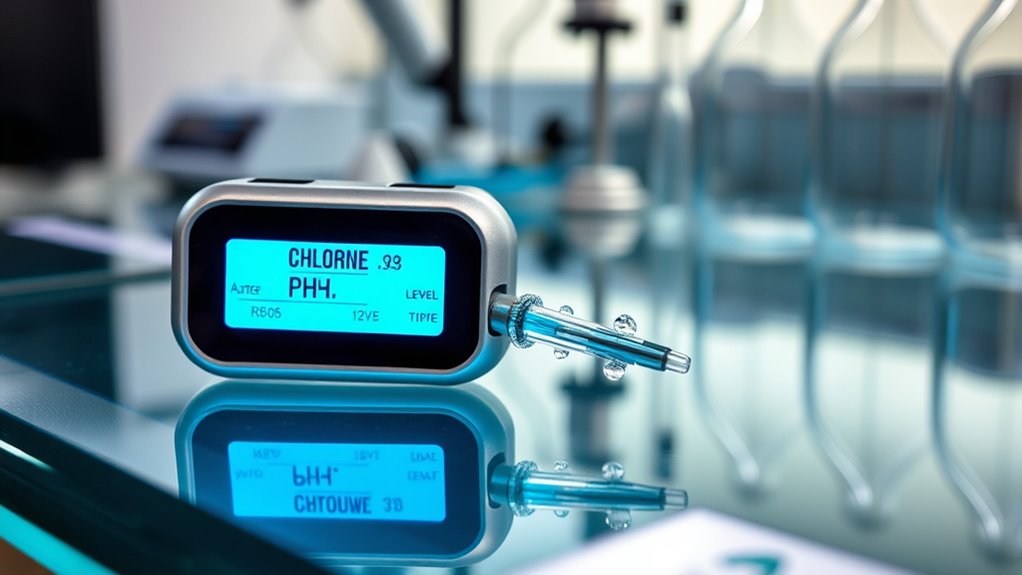
Innovative water testing devices allow you to monitor chlorine and pH levels in real time with high accuracy, thanks to advanced sensors designed for continuous water analysis. They provide quick, reliable results, helping you detect even subtle changes in water chemistry early on. Features like automatic calibration and self-check functions ensure consistent performance over time. By choosing these devices, you can confidently maintain water safety. Keep exploring to discover how these technologies can transform your water quality management.
Key Takeaways
- Advanced sensors enable continuous, real-time monitoring of chlorine and pH levels for immediate water quality insights.
- Innovative devices feature automated calibration and self-check functions to ensure measurement accuracy over time.
- Real-time analysis allows early detection of water chemistry changes, reducing health and safety risks.
- Digital calibration prompts and verification features simplify maintenance and enhance device reliability.
- Durable, precise sensors support reliable water testing in diverse environmental conditions for proactive management.
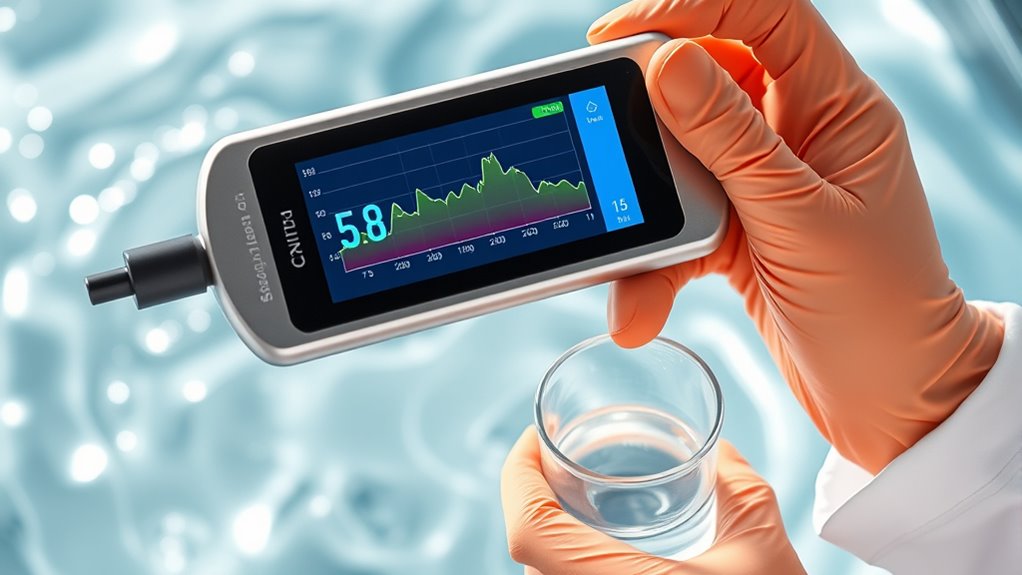
Water testing devices are indispensable tools that help you quickly and accurately assess the quality of your water. When it comes to monitoring parameters like chlorine and pH, having reliable equipment is essential for ensuring safety and compliance. One of the key factors to consider is sensor accuracy, which directly impacts how precise your readings are. High sensor accuracy means you can trust the data your device provides, reducing the risk of making decisions based on faulty information. To achieve this, it’s important to select devices equipped with advanced sensors designed for real-time water analysis. These sensors are often engineered to detect even subtle changes in water chemistry, providing you with early warnings of contamination or imbalance.
However, sensor accuracy alone isn’t enough. Regular device calibration is equally important for maintaining measurement reliability. Calibration involves adjusting your water testing device to align with standard reference values, ensuring that the readings stay precise over time. Many modern devices come with automated calibration features or easy-to-follow calibration procedures, making it simple for you to keep your equipment in top condition. Proper calibration routines should be performed routinely—before each testing session or at specified intervals—especially if your device is used frequently or in varying water conditions. This practice prevents drift in sensor performance and guarantees that your measurements remain consistent and trustworthy.
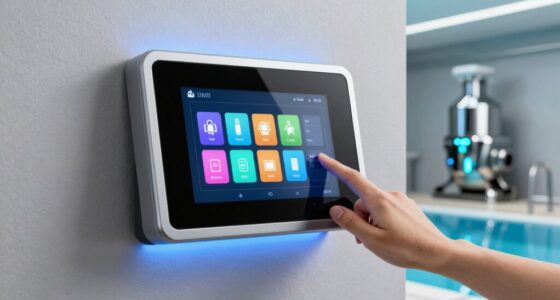
When shopping for innovative water testing devices, look for models that emphasize sensor accuracy and straightforward calibration processes. Devices equipped with digital calibration prompts or self-check functions make it easier for you to maintain accuracy without needing extensive technical knowledge. Additionally, some advanced testers include calibration verification features that allow you to confirm the device’s performance between calibration sessions. This added layer of reassurance helps you catch any potential inaccuracies early, so you can recalibrate as needed and avoid false readings. Sensor reliability is crucial for long-term performance and confidence in your water quality assessments.
Incorporating these best practices ensures your device consistently provides accurate, real-time data on chlorine levels and pH. As a result, you’ll be better equipped to monitor water quality continuously, respond swiftly to any changes, and maintain safe water standards. Remember, reliable sensor accuracy combined with proper calibration is the foundation of effective water testing. Investing in a device with these features not only improves your measurement confidence but also saves you time and effort in the long run. By prioritizing these aspects, you can confidently rely on your water testing device to deliver precise, consistent results, helping you safeguard water quality efficiently.
Frequently Asked Questions
How Do These Devices Compare to Traditional Testing Methods?
These devices outperform traditional testing methods by providing real-time data, so you can act quickly. They often require less frequent calibration, saving you time, and they’re built for durability, handling harsh conditions without breaking down. Unlike manual tests, which can be time-consuming and less accurate, these devices give you reliable, continuous readings, making water quality management more efficient and precise.
What Is the Typical Lifespan of a Water Testing Device?
You might be surprised to learn that most water testing devices typically last around 3 to 5 years, depending on device durability and usage. Proper maintenance frequency can extend their lifespan, so regularly calibrate and clean your device to keep it functioning effectively. A little proactive care often coincides with longer-lasting performance, making your investment worthwhile. Keep an eye on signs of wear to ensure accurate readings over time.
Are These Devices Suitable for Outdoor or Industrial Environments?
Yes, these devices are suitable for outdoor and industrial environments. They feature enhanced environmental durability, allowing them to withstand harsh conditions like temperature fluctuations, humidity, and exposure to chemicals. When installing, consider proper placement for ideal monitoring and protection against physical damage. Ensuring the device is securely mounted and protected from direct sunlight or moisture helps maintain accuracy and longevity in challenging settings.
How Often Should Real-Time Monitoring Devices Be Calibrated?
Think of your real-time monitoring device as a garden that needs regular tending. You should calibrate it at least monthly, or more frequently if conditions change. Adhering to the manufacturer’s maintenance schedule guarantees accuracy. Regular calibration acts like a tune-up, keeping your device sharp and reliable, so you always get precise readings. Neglecting this can lead to misjudgments, like sailing blindfolded in waters that demand clear navigation.
Can These Devices Detect Other Water Contaminants Besides Chlorine and Ph?
Yes, these devices can detect other water contaminants beyond chlorine and pH, thanks to their sensor versatility. Many advanced monitoring systems are designed to measure parameters like turbidity, dissolved oxygen, heavy metals, and nitrates. This broad detection capability helps you assess overall water quality in real time, ensuring safe and clean water. You can rely on these versatile sensors to provide all-encompassing insights into your water system’s health.
Conclusion
So, now you can finally stop guessing whether your water’s safe or just pretending to be healthy. With these snazzy new devices, you’ll be the boss of your own liquid destiny—monitoring chlorine and pH levels in real time, no science degree needed. Say goodbye to mysterious water odors or cloudy surprises. Because who needs a lab when you’ve got these gadgets? Cheers to making water testing so effortless, it practically does the work for you!