Balancing pH in your saltwater hot tub requires attention to unique factors like mineral content and salt levels, which can influence pH stability. Regular testing is essential, as high or low pH can reduce chlorine effectiveness and cause mineral deposits or corrosion. Use the appropriate pH adjusters carefully to maintain the ideal range of 7.2 to 7.6. If you keep these considerations in mind, you’ll keep your hot tub safe, clear, and enjoyable—discover how to master this process.
Key Takeaways
- Saltwater generators can affect pH levels, requiring more frequent adjustments than traditional hot tubs.
- Calcium and mineral levels influence pH stability, demanding careful monitoring to prevent scale or corrosion.
- pH adjustments should be gradual to avoid destabilizing salt levels and chlorine effectiveness.
- Unique water chemistry, like high mineral content, may necessitate specialized pH balancing products.
- Regular testing is crucial to account for salt and mineral interactions impacting pH balance.
Maintaining the proper pH balance in your saltwater hot tub is essential for ensuring comfortable and safe soaking experiences. When your pH drifts out of the recommended range, it can affect how well your chlorine levels work and disrupt the mineral balance that keeps your water clear and inviting. If the pH becomes too high, your chlorine may become less effective, leading to insufficient disinfection and potential algae growth. Conversely, if it’s too low, the water can become corrosive, damaging your hot tub components and causing skin or eye irritation. Keeping a close eye on both pH and chlorine levels helps you maintain a safe, balanced environment that’s enjoyable and hygienic.
Proper pH balance ensures safe, comfortable, and effective saltwater hot tub enjoyment.
Because saltwater hot tubs generate chlorine through a salt-chlorine generator, your chlorine levels are closely tied to your pH. When the pH is off, the chlorine may either become too weak to sanitize properly or produce irritating chloramines. Regular testing is essential—ideally weekly—to ensure your chlorine levels stay within the ideal range of 1 to 3 ppm. If you notice your chlorine isn’t maintaining proper levels, adjusting the pH can often help restore balance. A high pH can cause chlorine to become less reactive, while a low pH can lead to excessive chlorine activity, which might cause discomfort. By balancing the pH, you maximize the chlorine’s effectiveness, ensuring your water remains safe and sanitized.
In addition to chlorine, the mineral balance in your saltwater system plays a pivotal role. Saltwater hot tubs rely on dissolved minerals like sodium, magnesium, and calcium to maintain water clarity and prevent corrosion or scale buildup. When the pH is out of whack, it can alter how these minerals behave, leading to cloudy water or mineral deposits. For example, high pH levels can cause calcium to precipitate out of solution, forming scale on your hot tub’s surfaces and equipment. Conversely, low pH can dissolve minerals excessively, leading to corrosive water that damages the heater or jets. Maintaining proper pH ensures minerals stay dissolved and balanced, supporting water clarity and protecting your investment.
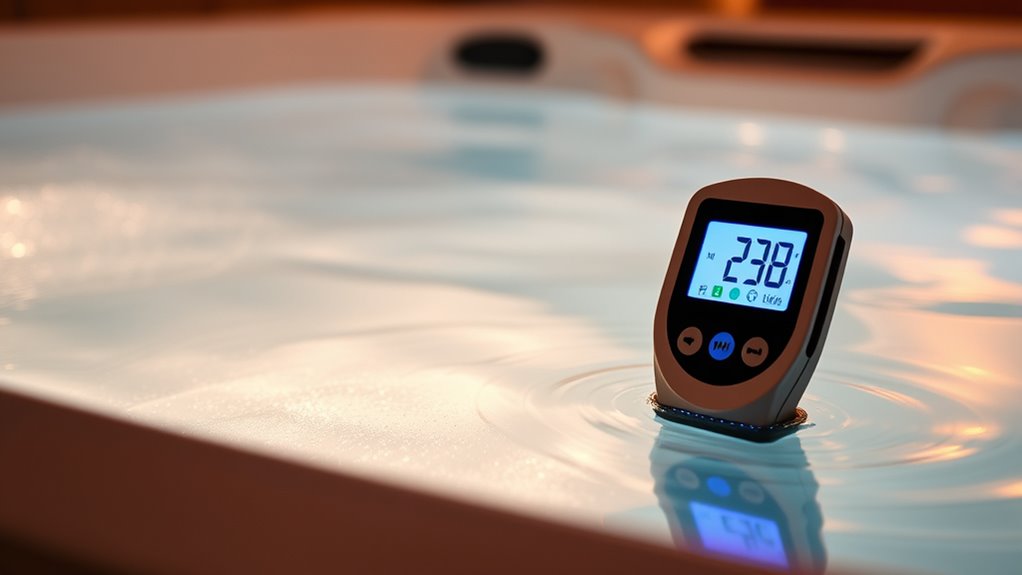
To keep everything in check, use a reliable test kit or digital meter regularly. Adjust pH using pH increasers or decreasers as needed, but always do so gradually. Remember, small adjustments go a long way, and rushing them can cause more imbalance. When your pH is in the proper range of 7.2 to 7.6, you’ll find that chlorine functions ideally, and minerals stay in suspension. This delicate balance might require some ongoing attention, but it’s the key to enjoying a clean, comfortable soak every time. Proper water testing and maintenance help prevent issues like mineral deposits and corrosion, extending the life of your hot tub components. By understanding the relationship between pH, chlorine levels, and mineral balance, you set yourself up for a hassle-free hot tub experience that’s both safe and satisfying.
Frequently Asked Questions
How Often Should I Test Ph Levels in Saltwater Hot Tubs?
You should test pH levels in your saltwater hot tub at least twice a week. Regular testing helps you monitor pH fluctuation caused by salt and other chemicals, ensuring water stays balanced and comfortable. If you notice pH drifting outside the suitable range, test more frequently until you stabilize it. Consistent test frequency keeps your hot tub safe, prevents damage, and maintains ideal water chemistry.
Can Natural Elements Affect Ph Balance in Saltwater Spas?
Ever wonder if natural elements can throw off your saltwater spa’s pH balance? They definitely can! Natural minerals from nearby water sources or organic debris like leaves and dirt introduce acids or bases that alter pH levels. These elements can cause fluctuations, making your water either too acidic or alkaline. Regular testing and filtration help maintain proper pH, ensuring a comfortable, balanced soak every time you indulge in your spa.
What Are the Signs of Improper Ph in My Hot Tub?
You’ll notice signs of improper pH in your hot tub through pH fluctuation, which causes cloudy water and skin irritation. You might also see algae growth, making the water green or slimy. If your water smells off or feels itchy, it’s a sign your pH isn’t balanced. Regular testing helps catch these issues early, so you can adjust chemicals and keep your hot tub safe and comfortable.
Does Salt Concentration Influence Ph Stability Over Time?
Imagine a delicate dance, where salt concentration gently guides the pH stability in your hot tub. Yes, salt fluctuation can influence pH drift over time, making it harder to maintain balanced water. As salt levels change, they subtly affect the pH, causing it to drift. Regular testing and adjusting help keep that dance smooth, ensuring your hot tub stays inviting and comfortable.
Are There Eco-Friendly Methods to Adjust Ph in Saltwater Hot Tubs?
Yes, you can use eco-friendly solutions to adjust pH in your saltwater hot tub. Natural remedies like adding baking soda raise pH, while citric acid can lower it. These eco-friendly solutions are safe for the environment and gentle on your skin. Always test your water first and add small amounts gradually to achieve the desired pH balance, ensuring a comfortable and sustainable hot tub experience.
Conclusion
Maintaining proper pH in your saltwater hot tub is like steering a ship through calm waters—you need to stay attentive to prevent rough patches. By regularly checking and adjusting your pH levels, you ensure a smooth, relaxing soak every time. Remember, balancing pH isn’t a one-time task but an ongoing voyage. Keep a watchful eye, and your hot tub will remain your oasis of serenity, shining bright like a lighthouse guiding you home.