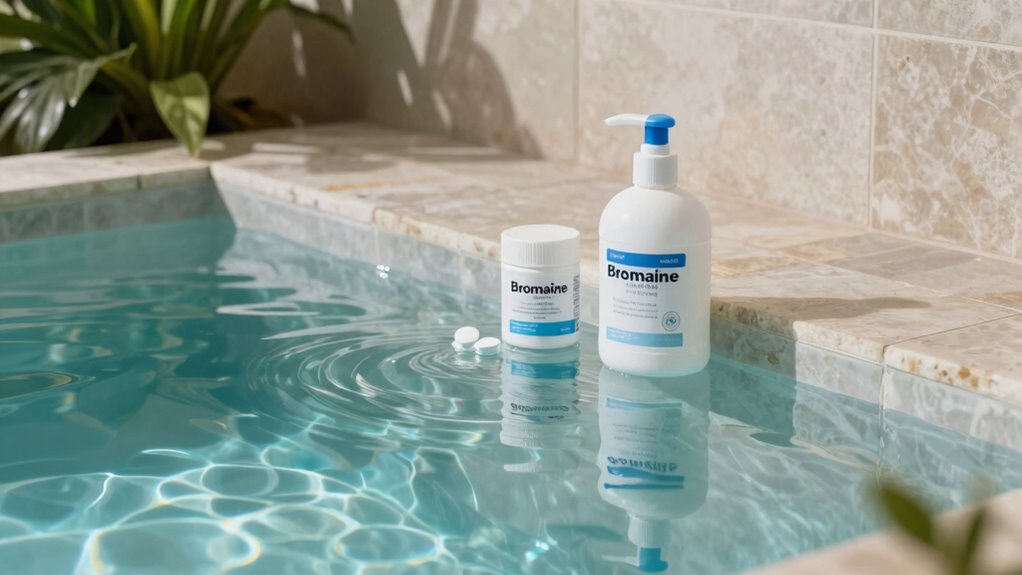

Choosing between bromine and chlorine for your spa depends on your skincare sensitivity, odor preference, and maintenance routine. Bromine offers milder odor, fewer skin irritations, and longer-lasting sanitation, making it ideal for sensitive users. Chlorine provides quick, effective disinfection but can cause dryness and strong fumes. Your choice also impacts costs and environmental safety. To find the best fit for your lifestyle, explore how proper water chemistry and testing can make all the difference.
Key Takeaways
- Bromine is more stable at high temperatures, ideal for spa environments, while chlorine reacts quickly for rapid disinfection.
- Bromine causes less skin irritation and has a milder odor, suitable for sensitive skin users.
- Chlorine is cost-effective upfront but requires more frequent testing and replenishment due to its shorter lifespan.
- Proper pH management enhances sanitizer effectiveness and minimizes odors, regardless of sanitizer choice.
- Consider long-term costs, water comfort, and your sensitivity to fumes when choosing between bromine and chlorine.
How Do Bromine and Chlorine Work as Spa Sanitizers?

Bromine and chlorine are both popular choices for sanitizing spa water because they effectively kill bacteria and other contaminants. They work by disrupting the cellular processes of microbes, ensuring your spa stays clean and safe. Bromine is more stable in higher temperatures, making it ideal for spas, while chlorine reacts quickly to sanitize. Both chemicals influence spa mineralization and pH balancing; chlorine tends to raise pH levels, requiring adjustments, whereas bromine has a milder effect. Proper pH balance is essential for suitable sanitizer function and preventing damage to your spa’s components. Regular testing helps maintain the right balance, ensuring your sanitizer remains effective, and maintaining an appropriate sanitizer level is crucial for ongoing effectiveness and water safety. Understanding how these sanitizers operate helps you keep your spa water clear, safe, and comfortable, and proper maintenance techniques can extend the lifespan of your spa equipment. Additionally, knowing the chemical reactions involved can help you troubleshoot issues more effectively and maintain optimal water quality. Being aware of the effects on water chemistry can help you better manage the overall health of your spa water.
Bromine in Spas: Pros, Cons, and Best Uses
Although it’s less aggressive than chlorine, bromine offers several advantages that make it a popular choice for spa owners. It helps maintain excellent spa water clarity and is effective at controlling bacteria and algae. Plus, bromine’s sanitizer shelf life is longer, meaning it stays active longer in your spa without frequent addition. Here are some benefits of using bromine:
Bromine keeps spa water clear, safe, and longer-lasting than chlorine.
- Gentle on skin and eyes
- Stable at higher temperatures
- Less odor compared to chlorine
- Longer-lasting sanitizer shelf life
- It is compatible with natural pool systems and sustainable practices.
Additionally, bromine’s chemical stability makes it a more reliable option in varying environmental conditions.
Choosing the right sanitizer can also impact your maintenance routine and overall spa experience, making bromine a versatile option for many spa routines.
Chlorine for Spas: Advantages, Disadvantages, and Considerations

Many spa owners turn to chlorine as a trusted disinfectant to keep their water clean and safe. Chlorine effectively maintains spa water clarity by killing bacteria and algae quickly. It’s affordable and easy to use, making it a popular choice. However, chlorine’s sanitizer shelf life can be limited, especially if exposed to sunlight or high temperatures, requiring regular testing and replenishing. You’ll need to balance proper dosing to avoid strong odors or skin irritation. While chlorine works fast, it can cause dryness or irritation for sensitive skin. Also, some users find the chemical smell unpleasant. Overall, chlorine offers reliable disinfection but demands consistent maintenance to ensure ideal water quality and clarity in your spa. Additionally, embracing diversity in standards can help consumers make more informed choices tailored to their preferences and sensitivities.
Which Sanitizer Is Safer for Sensitive Skin and Breathing?

If you have sensitive skin or breathing issues, choosing a sanitizer that minimizes irritation is vital. Bromine tends to cause fewer skin reactions and has a milder chemical odor compared to chlorine. Consider how each option affects your comfort and respiratory health before making a decision. Additionally, understanding basic car repair tips can help you maintain your spa equipment and ensure safe operation. Being aware of chemical properties can also help you select the most suitable sanitizer for your needs.
Skin Irritation Potential
When it comes to skin irritation and respiratory comfort, bromine generally proves to be gentler than chlorine for sensitive individuals. Bromine’s lower reactivity means it’s less likely to cause redness or itching, especially if your spa’s pH balance isn’t perfectly maintained. Additionally, bromine works well in water with higher hardness levels, reducing irritation risks. To keep skin happy, consider these factors:
- Bromine’s milder nature minimizes skin allergies.
- Maintaining proper pH levels prevents harsh reactions.
- Water hardness influences sanitizer effectiveness and skin comfort.
- Chlorine’s stronger oxidation can strip oils, causing dryness and irritation.
- Using smart lock and office gear can enhance overall spa safety and convenience.
- Proper testing and adjustment of water chemistry help ensure that sanitizer effectiveness remains optimal, reducing skin irritation. Additionally, understanding the chemical stability of each sanitizer can help maintain consistent water quality and comfort.
- Regular monitoring of water parameters contributes to consistent sanitization, promoting better skin and respiratory health. Moreover, selecting the right sanitizer based on your water chemistry can further improve overall water quality and user comfort.
Choosing bromine may help you enjoy your spa without skin discomfort, especially if you’re prone to sensitivities. Proper water balance ensures both sanitization and skin comfort.
Respiratory Sensitivity Risks
Bromine generally poses fewer respiratory risks than chlorine, making it a safer choice for sensitive skin and breathing. When you use bromine, it produces fewer irritating vapors, improving air quality and reducing indoor pollution. This can contribute to a more comfortable spa experience, especially for those with respiratory sensitivities. Chlorine often releases stronger fumes that can irritate your lungs and worsen breathing issues. To visualize the differences:
| Aspect | Bromine | Chlorine | Impact |
|---|---|---|---|
| Air Quality | Generally cleaner fumes | Stronger fumes, more irritation | Better for sensitive lungs |
| Indoor Pollution | Less volatile | More volatile | Reduced indoor pollution |
| Respiratory Risk | Lower | Higher | Safer for breathing |
| Irritation Potential | Less likely to irritate | More likely to irritate | Fewer respiratory risks |
| Suitability | Better for sensitive users | Less ideal for sensitive users | Fewer respiratory risks |
Chemical Odor Levels
Chemical odor levels are a key factor to contemplate when choosing a sanitizer for your spa, especially if you have sensitive skin or respiratory issues. Bromine generally emits a milder smell compared to chlorine, reducing discomfort. Proper pH balance helps minimize strong odors and prevents residue buildup that can intensify smells. Consider these points:
- Bromine produces less pungent fumes, making it gentler on your breathing.
- Chlorine’s strong chemical smell can cause irritation for sensitive skin.
- Maintaining ideal pH prevents odor-causing residue buildup.
- Overuse of either sanitizer can lead to lingering chemical odors, impacting comfort.
- Balancing pH levels is essential for reducing chemical odors and ensuring a comfortable spa environment. Additionally, understanding the chemical properties of each sanitizer can help you make a more informed choice for your routine.
Choosing a sanitizer with good pH control ensures a balanced environment, reducing harsh smells and residue, making your spa experience more pleasant and safer for sensitive skin and breathing.
Bromine vs. Chlorine: Cost Comparison for Spa Maintenance

While both bromine and chlorine serve as effective disinfectants for spa water, their costs can vary considerably over time. Bromine usually has a higher initial price but tends to last longer, which can reduce overall expenses for sanitizer maintenance. Chlorine, on the other hand, is more affordable upfront but may require more frequent application to maintain ideal spa water clarity. If you prefer less frequent adjustments and steady sanitizer levels, bromine might be more cost-effective in the long run. However, chlorine’s lower price point can make it appealing if you’re on a tight budget and willing to monitor your spa more closely. Ultimately, your choice depends on balancing upfront costs with ongoing expenses related to maintaining clear, safe water.
How to Test and Adjust Your Spa’s Sanitizer Levels Correctly
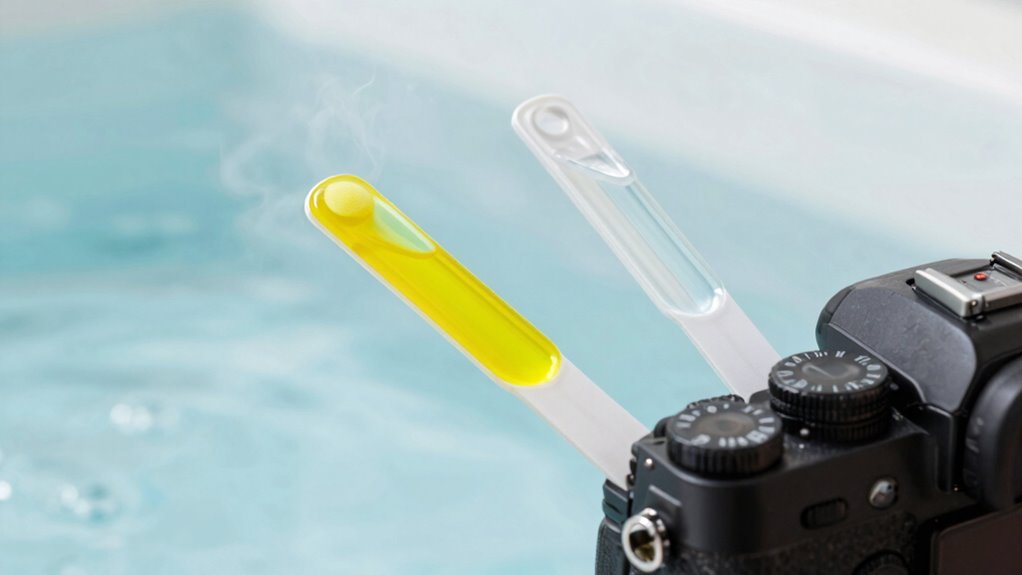
To keep your spa safe and clean, you need to regularly test your sanitizer levels using the right tools. You can choose test strips or digital testers to get accurate readings quickly. Once you know your levels, you’ll need to adjust the sanitizer accordingly to maintain ideal water quality. Always follow manufacturer guidelines for proper testing and adjustment procedures to ensure safety and effectiveness air purifier maintenance. Regular testing helps prevent sanitizer imbalances that can impact overall water quality, ensuring a healthy spa experience for all users. Additionally, understanding your affiliates relationship can help you make informed decisions when purchasing testing supplies.
Testing Methods and Tools
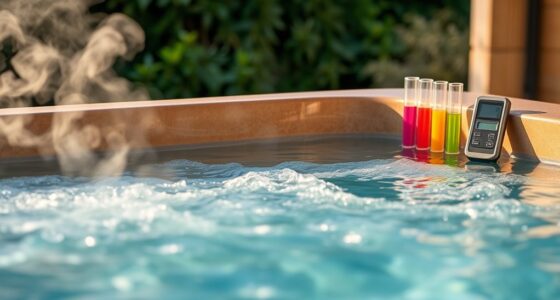
Accurately testing your spa’s sanitizer levels is essential for maintaining safe and healthy water. Proper testing guarantees your sanitizer remains effective and helps you monitor pH balance, which impacts sanitizer stability. Here are four key tools and methods:
- Test strips – Quick and easy for regular checks; dip and compare colors.
- Liquid test kits – Provide precise readings for sanitizer and pH levels.
- Digital testers – Offer instant, accurate measurements for both sanitizer and pH.
- Professional lab testing – For thorough analysis, especially if issues arise.
Always check sanitizer levels regularly and ensure the pH balance is within the recommended range. Maintaining proper sanitizer stability prevents overuse or underuse, keeping your spa water safe and clear.
Adjusting Sanitizer Levels
Properly adjusting your spa’s sanitizer levels is essential for keeping the water safe and clear. First, test the sanitizer levels regularly using your test strips or kits. When levels are off, modify them according to the manufacturer’s instructions. Keep an eye on the pH balance, as it affects sanitizer effectiveness; ideal pH is between 7.2 and 7.6. Additionally, consider mineral content, which can influence sanitizer performance and water clarity. If mineral levels are high, you might need to increase sanitizer dosage or use specific treatments to manage mineral buildup. Always retest after making adjustments to ensure proper balance. Maintaining correct sanitizer levels, along with balanced pH and mineral content, helps prevent bacteria growth and keeps your spa water pristine.
Are Bromine and Chlorine Safe and Eco-Friendly Options?

When considering bromine and chlorine for spa sanitation, safety and eco-friendliness are key concerns. Both disinfectants can be safe if used properly, but their environmental impact varies. Here are some points to take into account:
Choosing between bromine and chlorine depends on safety and eco-friendliness considerations.
- Bromine typically produces fewer irritating fumes, making it gentler for your skin and respiratory health.
- Chlorine can form chlorinated byproducts, which may be harmful to aquatic life and the environment.
- Eco-friendly alternatives include natural disinfectants like mineral-based systems or enzyme treatments that reduce chemical use.
- Using these options helps lower your spa’s ecological footprint and promotes safer, healthier water.
While both bromine and chlorine are effective disinfectants, choosing eco-friendly alternatives ensures your routine is safer for you and the environment.
Troubleshooting Common Spa Sanitizer Problems

Even with regular maintenance, sanitizer problems can still crop up and disrupt your spa experience. One common issue is fluctuating pH balance, which can reduce sanitizer effectiveness and cause cloudy water or skin irritation. To troubleshoot, check your pH levels regularly and adjust them as needed. Another problem involves mineral compatibility; minerals like iron or copper can react with sanitizers, leading to staining or cloudy water. If you notice these issues, test for mineral content and consider using a mineral remover or clarifier. Ensuring your sanitizer is compatible with your spa’s mineral levels helps prevent ongoing problems. Also, verify that your sanitizer’s concentration is correct and evenly distributed to maintain proper sanitation and clear, balanced water.
Which Sanitizer Fits Your Lifestyle and Usage Needs?

Choosing the right sanitizer depends on your lifestyle and how you use your spa. Your choice impacts spa water clarity, maintenance ease, and overall enjoyment. Consider these factors:
Selecting the right sanitizer ensures crystal-clear water and effortless maintenance tailored to your lifestyle.
- If you want quick sanitizer mixing and minimal odor, chlorine might suit you better.
- For a gentler experience with less strong smell, bromine offers more subtlety.
- If you frequently use your spa, opt for a sanitizer that maintains water clarity longer and requires fewer adjustments.
- For low-maintenance routines, select a sanitizer that stabilizes well and resists breakdown over time.
Your lifestyle determines how often you’ll need to test and adjust sanitizer levels, affecting water clarity and overall spa enjoyment. Choose the sanitizer that aligns with your routine for the best experience.
Frequently Asked Questions
How Often Should I Replace Bromine or Chlorine Tablets in My Spa?
You should replace bromine or chlorine tablets every 1 to 2 weeks, depending on tablet lifespan and your spa usage. Check your spa’s chemical levels regularly, and follow the recommended replacement schedule provided by the manufacturer. If the tablets are dissolving quickly or your water chemistry becomes imbalanced, it’s time to add fresh tablets. Consistent replacement guarantees your spa stays clean, safe, and properly sanitized.
Can I Use Bromine and Chlorine Together in My Spa?
Mixing bromine and chlorine in your spa is like trying to blend oil and water—they don’t naturally harmonize. Chemical compatibility is poor, and doing so can undermine sanitizer synergy, leading to fluctuating water quality and potential damage. It’s best to stick with one sanitizer to keep your spa safe and clear. If you want extra sanitization, consider boosters compatible with your chosen sanitizer instead of combining them directly.
What Are the Environmental Impacts of Using Bromine Versus Chlorine?
You might be concerned about environmental impact when choosing between bromine and chlorine. Chlorine tends to have a higher chemical runoff risk, which can harm aquatic life if not managed properly. Bromine is more stable and produces fewer harmful byproducts, but it still impacts the environment. To minimize your footprint, always follow proper spa maintenance, avoid overuse, and dispose of chemicals responsibly to reduce environmental impact.
How Do Weather Conditions Affect Sanitizer Effectiveness?
Weather conditions, like temperature fluctuations and humidity levels, profoundly impact sanitizer effectiveness. When temperatures rise, sanitizers work faster but may evaporate quicker, reducing their lifespan. High humidity can cause chemical dilution or loss of potency, making your sanitizer less effective. To guarantee proper sanitation, regularly test your spa water, adjust sanitizer levels accordingly, and consider covering your spa to minimize exposure to fluctuating weather conditions.
Are There Alternative Sanitizers to Bromine and Chlorine for Spas?
You can absolutely explore natural alternatives and UV sanitizers for your spa. These options are like superheroes fighting germs without harsh chemicals, making your soak safer and eco-friendly. UV sanitizers use ultraviolet light to kill bacteria instantly, while natural options like mineral or enzyme treatments reduce chemical use. If you’re seeking a gentler, more sustainable way to maintain your spa’s cleanliness, these alternatives might just be your perfect match.
Conclusion
Choosing between bromine and chlorine for your spa depends on your skin sensitivity, budget, and maintenance style. Both have their merits, but ultimately, it’s about what fits your routine best—much like selecting the perfect chariot for your journey. With proper testing and adjustments, you can enjoy crystal-clear, safe water. So, weigh your options carefully and keep the waters of your spa as inviting as a Roman bath.