
To lower your hot tub’s operating costs, focus on enhancing insulation by using foam covers and insulating panels to retain heat. Install solar panels designed for hot tubs to cut reliance on electric heaters and combine this with using timers to run the heater only when needed. Maintain your equipment regularly for efficiency, and keep water temperatures moderate to save energy. Keep exploring for more practical tips on making your hot tub even more energy-efficient.
Key Takeaways
- Insulate the hot tub and cover it with a high R-value cover to prevent heat loss.
- Use solar panels designed for hot tubs to supplement or replace traditional heating methods.
- Maintain a consistent, moderate temperature setting and use timers to reduce unnecessary heater operation.
- Regularly service filters and pumps to ensure energy-efficient operation.
- Combine insulation and solar heating strategies for maximum energy savings and lower operational costs.
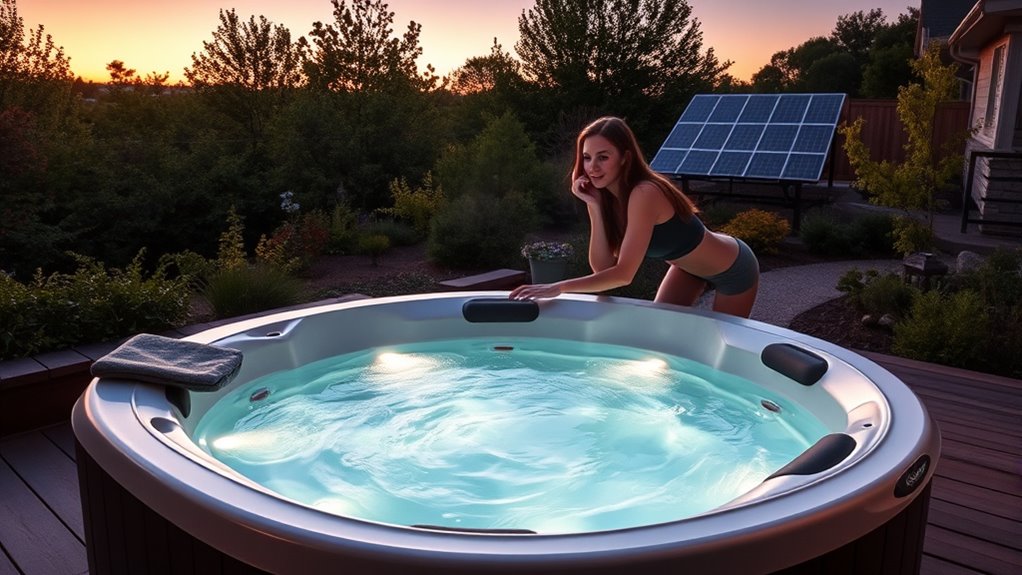
Hot tubs can be a relaxing retreat, but they often consume a lot of energy, leading to high utility bills. Fortunately, there are effective ways to make your hot tub more energy-efficient without sacrificing comfort. One of the most impactful methods is utilizing solar heating. By installing solar panels designed specifically for hot tubs, you harness free, renewable energy from the sun to heat your water. Solar heating systems can substantially reduce your reliance on electric or gas heaters, cutting down ongoing energy costs. Even in less sunny regions, a properly designed solar setup can supplement traditional heating sources, ensuring your hot tub stays warm while consuming less electricity.
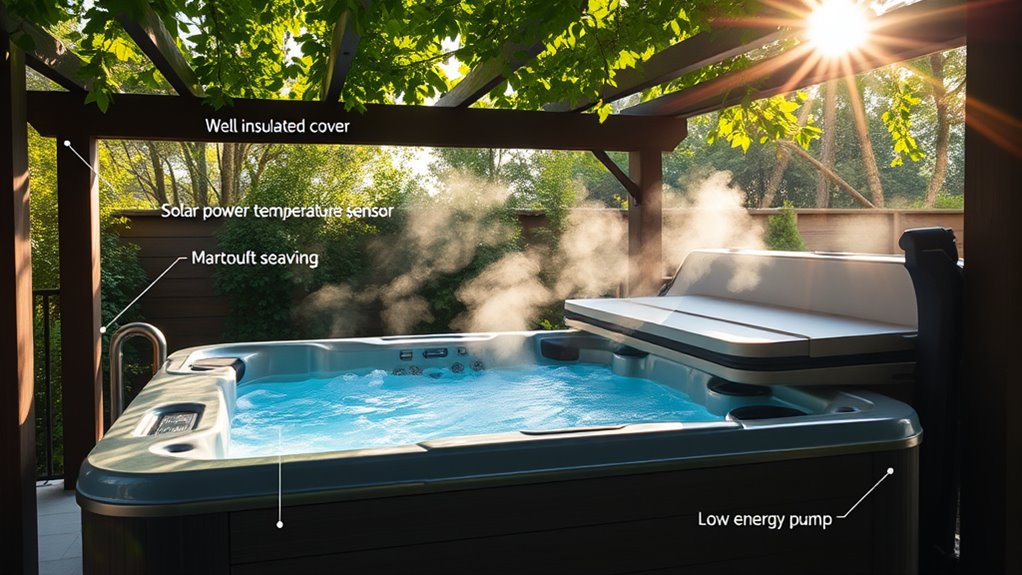
In addition to solar heating, focusing on insulation techniques can greatly improve your hot tub’s energy efficiency. Proper insulation minimizes heat loss, keeping the water warmer for longer periods without continuously running the heater. You can start by insulating the hot tub cabinet with foam or reflective insulation panels, which act as barriers against heat escape. Wrapping the entire shell with an insulated cover is equally essential; a good cover can prevent up to 90% of heat loss. When shopping for a cover, opt for one with high R-value ratings, which indicates better insulation performance. Also, consider insulating the pipes and jets to prevent heat from escaping through these pathways, especially if your hot tub is located in a cooler climate.
Combining solar heating with effective insulation techniques creates a synergistic effect that maximizes energy savings. When your hot tub retains heat better, you won’t need to run the heater as often, which translates into lower energy bills. It’s also helpful to set your heater to maintain a consistent, moderate temperature rather than constantly raising and lowering it. Using a timer can further optimize operation by turning the heater off during periods of non-use and turning it back on shortly before you plan to soak, preventing unnecessary energy consumption. Additionally, maintaining your hot tub’s filter and pumps ensures they operate efficiently, reducing the overall energy required to keep your hot tub running smoothly. Incorporating energy-efficient practices can also include selecting Energy-Efficient Equipment, which can provide long-term savings and environmental benefits.
Frequently Asked Questions
What Are the Best Times of Day to Use My Hot Tub?
You should use your hot tub during off-peak hours, typically early mornings or late evenings, to save on energy costs. Timing considerations include avoiding peak electricity rates and aligning with your daily usage patterns. By taking advantage of these periods, you minimize energy consumption and lower your bills. Consistently using your hot tub during these times helps maintain efficiency while still enjoying relaxation whenever you want.
How Often Should I Drain and Refill My Hot Tub?
Ever wonder how often you should drain and refill your hot tub? Typically, you should do this every 3 to 4 months, but it depends on water chemistry and filter cleaning. Regularly check water clarity and pH levels; if they’re off, it’s time for a change. Proper maintenance keeps your hot tub running efficiently, saving you energy and prolonging its lifespan. Keep an eye on these signs, and you’ll enjoy crystal-clear, cost-effective relaxation.
Can Insulation Improvements Significantly Reduce Energy Costs?
Yes, insulation upgrades and thermal barriers can substantially cut your energy costs. When you improve your hot tub’s insulation, it retains heat better, reducing the workload on your heater. Adding thermal barriers or upgrading existing insulation minimizes heat loss, especially during colder months. This means your hot tub stays warm longer, uses less energy, and lowers your utility bills. Investing in these upgrades is a smart move for more efficient, cost-effective hot tub operation.
Are Solar Covers Effective for Lowering Hot Tub Energy Use?
Yes, solar covers are effective for lowering hot tub energy use. They trap heat, reducing the amount of energy needed to maintain your hot tub’s temperature. By using solar covers, you can maximize energy savings, especially during sunny days, and cut down on heating costs. Make sure to use a quality cover and keep it in good condition to get the most benefit from its insulating properties.
What Maintenance Tasks Help Improve Energy Efficiency?
You can enhance your hot tub’s energy efficiency by performing regular filter maintenance, which guarantees proper water flow and reduces strain on the heater. Additionally, calibrate your heater periodically to maintain accurate temperature control and prevent unnecessary energy use. Cleaning or replacing filters and checking heater settings help your hot tub run smoothly, saving you money while keeping the water comfortable and clean.
Conclusion
By following these tips, you’ll turn your hot tub into a budget-friendly oasis—without turning your electric bill into a horror story. Imagine your neighbors gazing in envy as your hot tub hums along, sipping energy like a fancy cocktail. With just a little effort, you’ll keep the water warm and your wallet happy—no need for a spa day at the bank. So go ahead, soak smart and save big!