To keep your hot tub in top shape, first check water temperature, clarity, and smell daily, and test water chemistry to maintain proper pH and sanitizer levels. Weekly, clean your filter, skim the surface, and inspect jets and surfaces for buildup. Every month, drain and refill, clean the shell and accessories, and inspect equipment for issues. Maintaining this routine guarantees safe, clean water—continue along to discover more tips for seamless upkeep.
Key Takeaways
- Categorize tasks into daily, weekly, and monthly routines based on their recommended frequency.
- Include water chemistry testing and adjustments as a core daily and weekly maintenance activity.
- Schedule filter cleaning and deep cleaning of the hot tub on a weekly or monthly basis.
- Incorporate equipment inspection and plumbing line flushing into monthly check-ups.
- Create a calendar or checklist to ensure timely completion of all maintenance tasks.
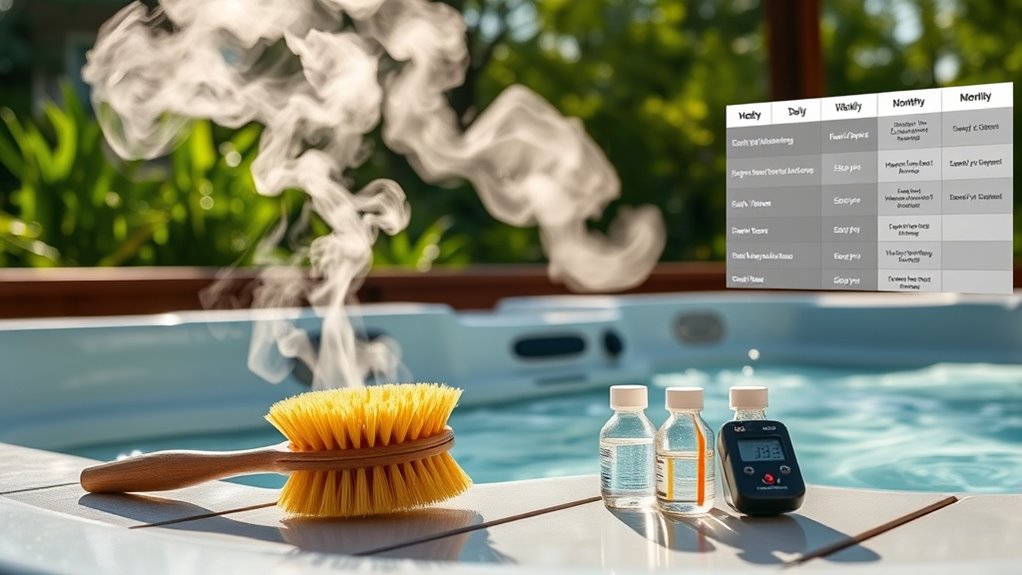
Are you wondering how to keep your hot tub clean and functioning properly? The key is establishing a solid maintenance schedule that covers daily, weekly, and monthly tasks. Starting with daily routines, you should check the water temperature and ensure it remains consistent. This helps prevent overheating or cooling issues that could damage your system. Also, take a quick look at the water’s clarity and smell—if you notice cloudiness or a strange odor, it’s a sign you need to test and adjust your water chemistry. Maintaining proper water chemistry is essential because it directly affects water quality, comfort, and safety. Test strips or digital testers can help you monitor pH levels and sanitizer concentrations. Keeping the pH balanced between 7.2 and 7.8 prevents corrosion of equipment and skin irritation. Adding sanitizer as needed keeps bacteria and algae at bay, ensuring your hot tub stays fresh and safe to use.
Maintain water chemistry daily to ensure safety, clarity, and comfort in your hot tub.
When it comes to filter cleaning, it’s important to perform this task at least once a week. A clean filter ensures proper water flow and filtration, which is critical for maintaining water clarity and reducing chemical usage. Remove the filter from the hot tub and rinse it thoroughly with a garden hose to remove debris, dirt, and oils. For a deeper clean, soak the filter in a filter cleaner solution according to the manufacturer’s instructions, then rinse again. A clean filter helps keep your water crystal clear and reduces strain on your circulation pump. If you notice the filter is damaged or heavily soiled, replace it to maintain effective filtration. Regular filter maintenance can also extend the lifespan of your filtration system and improve overall water quality.
Weekly maintenance also involves inspecting the hot tub’s jets and surfaces for buildup or grime. Use a soft brush or cloth to clean around the jets and the shell, removing any dirt or soap scum. Checking the water chemistry regularly and adjusting as needed prevents issues like scaling or foaming. Additionally, skim the surface to remove leaves or insects, and empty the skimmer basket to ensure water flows smoothly. Ensuring proper contrast ratio in your hot tub’s filtration and heating systems can help improve overall efficiency and performance.
Monthly tasks expand on this routine. You should drain and refill the hot tub, typically every three to four months, or as recommended by your manufacturer. During this process, thoroughly clean the shell, cover, and any accessories. It’s also a good time to inspect the equipment—like pumps and heaters—for signs of wear or leaks. Before refilling, clean the plumbing lines with a line flush product to clear out any buildup. These monthly check-ins help prevent long-term issues and keep the hot tub running smoothly. Regularly scheduled maintenance ensures your hot tub remains in optimal condition and prolongs its lifespan.
Frequently Asked Questions
How Do I Balance Ph Levels Effectively?
To balance pH levels effectively, you need to regularly test the water with test strips or a kit. If the pH is too low, add pH increaser; if it’s too high, use a pH reducer. This pH adjustment helps maintain proper chemical balancing, ensuring your hot tub stays clean and safe. Always follow product instructions carefully, and retest after each adjustment to keep the pH within the ideal range of 7.2 to 7.6.
What Are the Signs of a Failing Hot Tub Pump?
You’ll notice signs of a failing hot tub pump through increased pump noise and reduced water flow. If the pump makes loud banging or grinding sounds, it’s a red flag. Similarly, if you observe less water circulating or weak jets, the pump might be failing. Address these issues promptly to prevent further damage, and consider inspecting or replacing the pump to restore proper hot tub function.
Can I Use DIY Methods for Hot Tub Filter Cleaning?
Yes, you can use DIY cleaning for your hot tub filter. Regular filter maintenance helps keep your hot tub water clean and clear. To DIY clean, remove the filter and rinse it with a hose to remove debris. For a deeper clean, soak it in a filter cleaner solution. Avoid harsh chemicals, and guarantee the filter dries completely before reinstalling. Regular DIY filter maintenance extends its lifespan and improves water quality.
How Often Should I Change the Hot Tub Cover?
Imagine your hot tub cover, a cozy shield protecting your oasis. You should change it every 3 to 5 years, depending on wear and tear. Regular maintenance keeps it lush and durable, preventing mold, UV damage, and cracking. Incorporate cover checks into your maintenance schedule—clean it monthly, and replace when signs of aging appear. This guarantees your hot tub remains inviting, safe, and in top condition for years to come.
What Safety Precautions Should I Follow During Maintenance?
During maintenance, always prioritize safety by handling chemicals carefully—wear gloves and goggles to prevent skin and eye irritation. Follow chemical safety guidelines and make certain the hot tub is powered off to avoid electrical hazards. Keep the area dry and avoid mixing chemicals improperly. Regularly inspect electrical components for damage, and never open electrical panels unless you’re qualified. These precautions protect you from potential accidents and ensure safe, effective maintenance.
Conclusion
Maintaining your hot tub doesn’t have to be overwhelming. Stick to a consistent schedule, tackling daily, weekly, and monthly tasks, and you’ll enjoy crystal-clear water year-round. Did you know that regular maintenance can extend your hot tub’s lifespan by up to 50%? Staying on top of these tasks not only keeps your hot tub safe and inviting but also saves you money in the long run. Start today and soak in the benefits of a well-maintained hot tub!