
Maintaining your hot tub’s pH between 7.2 and 7.8 is key to keeping the water clean, safe, and equipment protected. This range guarantees the sanitizer works effectively, prevents corrosion, and avoids cloudy water or scale buildup. If pH drops too low or rises too high, it causes issues like bacterial growth or equipment damage. Keep your water balanced, and you’ll enjoy a safe, enjoyable soak—there’s more to learn if you keep exploring.
Key Takeaways
- The pH range 7.2–7.8 ensures optimal sanitizer effectiveness and water safety in hot tubs.
- Maintaining this range prevents corrosion of equipment and buildup of scale or algae.
- pH levels outside this range can lead to cloudy water, skin irritation, or bacteria growth.
- Regular testing and adjustments keep water chemistry balanced and protect hot tub components.
- This specific pH range balances acidity and alkalinity for clean, safe, and comfortable hot tub use.
What Is Hot Tub pH, and Why Is It So Important?

Have you ever wondered why maintaining the right pH level in your hot tub matters? Your hot tub’s pH measures how acidic or alkaline the water is, which directly affects chemical stability. When pH is balanced, sanitizers work more effectively, keeping bacteria and algae at bay. Proper pH levels also protect your equipment; if the water is too acidic or alkaline, it can cause corrosion or scale buildup, shortening equipment lifespan. A stable pH ensures your hot tub stays clean, safe, and enjoyable. Additionally, filter maintenance plays a crucial role in maintaining water quality and preventing issues related to pH imbalance. Regular testing and adjusting of pH levels can prevent costly repairs and ensure optimal water chemistry. Maintaining correct pH levels also supports user comfort, making your soak more pleasant and reducing skin or eye irritation. Keeping the pH within the recommended range helps prevent costly repairs and keeps your hot tub functioning smoothly. Proper water balancing methods further contribute to the longevity of your hot tub components. Understanding how various factors, such as chemical additives, influence pH can help you better manage your hot tub’s water quality.
Why Should Your Hot Tub pH Be Between 7.2 and 7.8?
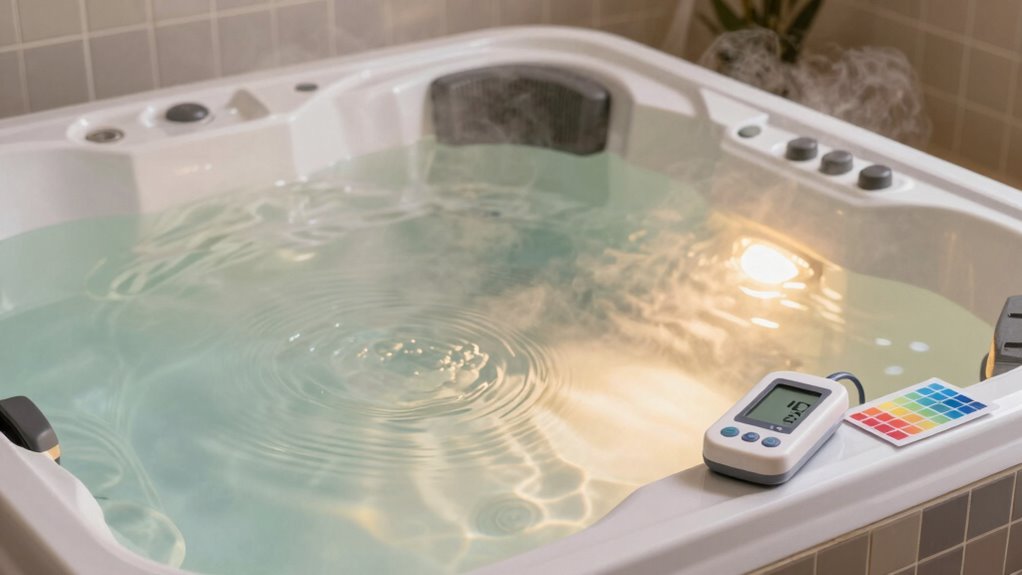
Maintaining your hot tub’s pH between 7.2 and 7.8 is essential because this range optimizes water chemistry, ensuring sanitizers work effectively while preventing damage to the equipment. When pH stays within this range, chemical reactions occur smoothly, helping disinfect the water and keep it clear. If pH drops too low, it can cause corrosion and damage heater elements. Conversely, if it’s too high, sanitizers become less effective, leading to bacterial growth. Additionally, proper pH levels help prevent algae growth, which thrives in imbalanced water. By keeping your pH within 7.2–7.8, you create an environment where your hot tub stays clean, safe, and comfortable, reducing the need for excessive chemical adjustments and costly repairs. Proper water chemistry plays a crucial role in maintaining the longevity and safety of your hot tub. Regular testing and pH adjustment are vital to keep the water within this optimal range, ensuring the best experience. Maintaining balanced water chemistry also helps prevent corrosion and other damage caused by improper pH levels. Consistent monitoring and understanding of water chemistry fundamentals help you achieve this balance more effectively.
How Does Hot Tub pH Impact Water Quality and Safety?
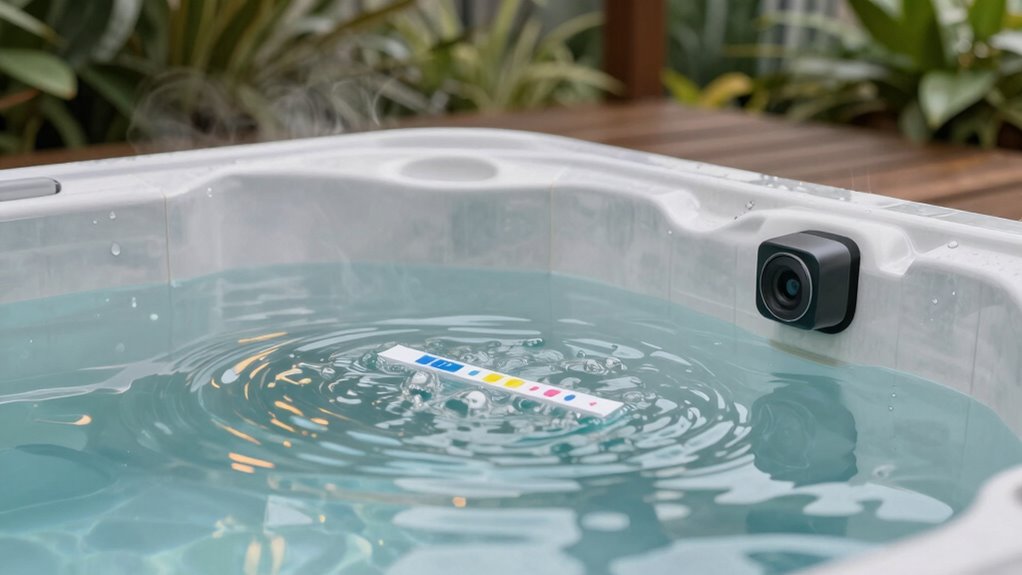
When your hot tub’s pH is out of balance, it directly affects water quality and safety. Incorrect pH levels cause chemical reactions that can reduce sanitizer effectiveness, making it harder to keep bacteria at bay. This imbalance can lead to increased bacterial growth, posing health risks. Here’s what happens:
- Acidic water (low pH) can cause skin irritation and corrode equipment.
- Alkaline water (high pH) leads to cloudy water and mineral buildup.
- Both extremes diminish sanitizer efficiency, allowing bacteria and algae to thrive.
- Regular testing and adjustments help maintain optimal water chemistry for safe soaking. Proper pH balance also supports the overall function of other hot tub chemicals, ensuring they work effectively together. Maintaining proper pH levels helps prevent corrosion and prolongs equipment lifespan. Additionally, understanding the importance of pH levels in relation to water chemistry helps users better maintain their hot tubs. Maintaining stable pH levels also prevents scale formation, which can hinder equipment performance and efficiency. Proper pH management ensures that chemical reactions work correctly, keeping water clean and safe. It also helps prevent bacteria from multiplying, reducing the risk of infections and ensuring a safe, enjoyable soak.
What Causes pH Imbalance, and How Can You Fix It?
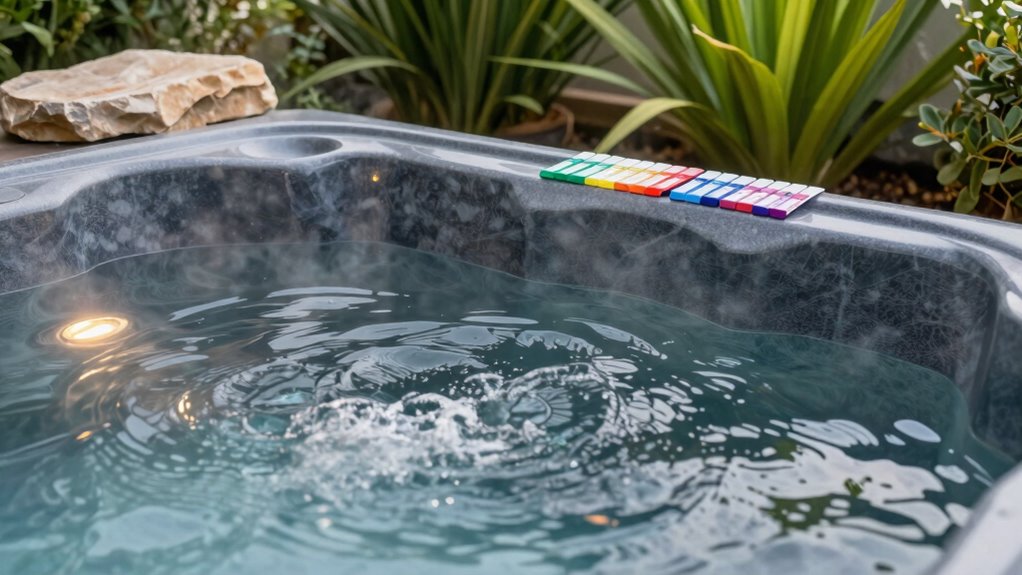
Several factors can cause pH imbalance in your hot tub, such as the introduction of new water, bathing products, or changes in temperature. These elements can disrupt the alkaline balance, leading to either too high or too low pH levels. When the pH shifts, chemical reactions occur more rapidly, causing issues like cloudy water, scaling, or corrosion. To fix this, you need to adjust the pH using pH increasers or decreasers, depending on the imbalance. Regular testing helps you monitor these changes, allowing you to respond promptly. Maintaining the proper pH range of 7.2–7.8 ensures stable chemical reactions, keeping your hot tub water safe, clean, and comfortable for soaking. Proper water chemistry management is essential for preventing pH fluctuations and ensuring a safe hot tub experience. Consistent maintenance is key to preventing pH fluctuations. Understanding the impact of temperature on pH levels can also help you better anticipate and control changes in water chemistry, especially since temperature variations can influence pH levels similarly to how they affect electric bike performance.
How to Test and Maintain Proper pH Levels in Your Hot Tub?
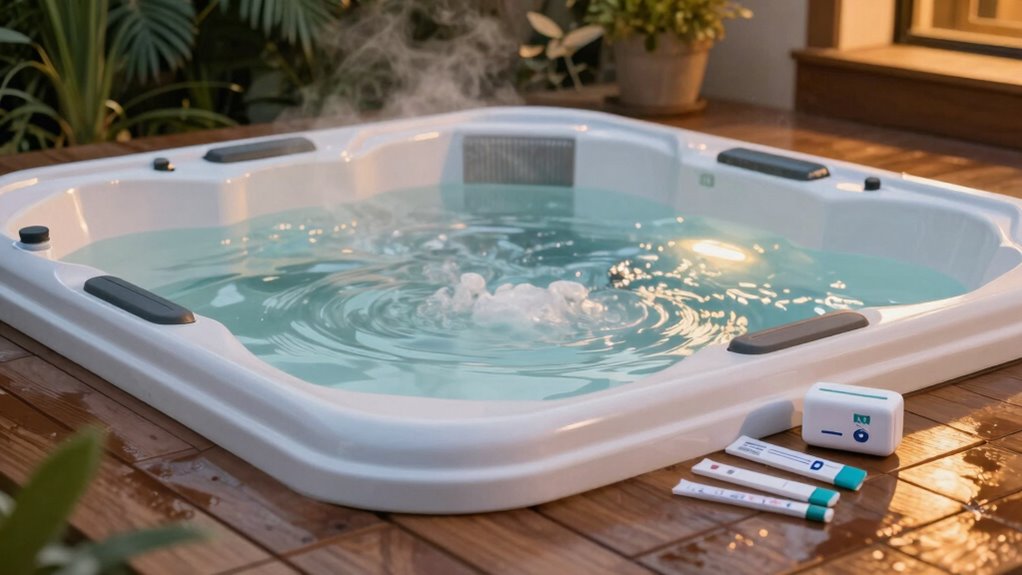
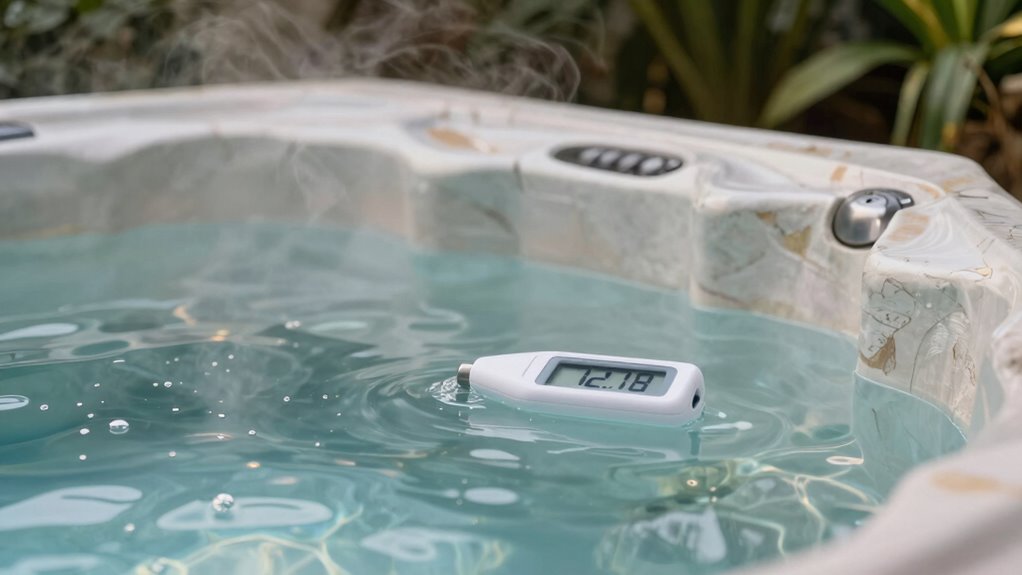
To keep your hot tub’s water balanced, you need to regularly test the pH levels using appropriate testing methods. Water testing kits, whether strips or liquid test kits, provide quick and accurate results. Once you have your readings, you can ensure proper chemical balancing by adjusting pH levels with pH increasers or decreasers. Here’s how to do it:
- Test the water using your chosen kit, aiming for a pH of 7.2–7.8.
- Add the necessary chemicals based on your test results to correct any imbalance.
- Re-test after a few hours to confirm the pH is within the ideal range.
- Be aware that performance cookies can collect data on your testing habits and site interactions to help improve the accuracy of water testing products and instructions. Proper water chemistry is essential for preventing issues like scaling or corrosion, keeping your hot tub safe and enjoyable.
Frequently Asked Questions
What Are Signs of pH Imbalance in a Hot Tub?
You’ll notice signs of pH imbalance in your hot tub when you see pH fluctuation, causing the water to feel off or cloudy. If the pH is too high, algae growth may occur, making the water green or slimy. Conversely, low pH can cause skin irritation and corrosion of equipment. Regular testing helps you catch these signs early and keep your hot tub balanced and safe.
How Often Should I Test My Hot Tub’s pH Levels?
You should test your hot tub’s pH levels at least 2 to 3 times a week to maintain proper balancing chemicals. Regular testing helps you keep water clarity clear and prevent imbalance issues. If you notice cloudy water or skin irritation, test more often. Consistent testing guarantees your pH stays within the ideal range of 7.2–7.8, keeping your hot tub safe, clean, and enjoyable.
Can pH Levels Affect Hot Tub Equipment Longevity?
Yes, pH levels can affect your hot tub equipment longevity. When water chemistry isn’t balanced, especially if pH drops below 7.2 or rises above 7.8, it can cause corrosion or scaling. This puts extra strain on equipment, leading to frequent maintenance or early failure. To protect your investment, regularly test and adjust your hot tub’s pH, ensuring it stays within the ideal range for ideal equipment maintenance and longevity.
What Natural Methods Can Help Stabilize Hot Tub pH?
You can naturally stabilize your hot tub’s pH by using balancing techniques like aeration or adding natural additives such as baking soda or borax. These methods help keep pH levels steady without harsh chemicals. Don’t put all your eggs in one basket—test regularly and adjust gradually. By doing so, you’ll avoid pH swings and protect your equipment, making sure your hot tub stays inviting and safe for a relaxing soak.
Does pH Impact the Effectiveness of Sanitizers?
Yes, pH impacts the effectiveness of sanitizers because it influences sanitizer interaction with bacteria and algae. When pH levels are outside the ideal range of 7.2–7.8, sanitizers like chlorine or bromine may become less effective, reducing your hot tub’s cleanliness. Maintaining proper pH helps guarantee your sanitizer works at its best, keeping your hot tub safe and sanitized. Regular testing and adjusting pH levels are key to maximizing sanitizer effectiveness.
Conclusion
Keeping your hot tub’s pH between 7.2 and 7.8 isn’t just a good idea—it’s the secret to turning your relaxing oasis into a pristine paradise. When you maintain proper pH levels, you prevent harsh chemicals, safeguard your skin, and extend your hot tub’s lifespan. Don’t let pH chaos turn your tranquil retreat into a bubbling disaster—stay vigilant, test regularly, and enjoy crystal-clear, perfectly balanced water every time!