To avoid unpleasant smells when shocking your spa, make sure your water’s pH and alkalinity are balanced before adding the shock. Use the correct type and follow proper dosage instructions to prevent overuse, which can cause strong odors. Shock when necessary, like after heavy use or chemical treatments, and aerate the water afterward. Keeping water balanced and clean helps prevent odors—stay tuned for more tips on maintaining fresh, odor-free spa water.
Key Takeaways
- Test water chemistry before shocking to ensure pH and alkalinity are within recommended ranges.
- Follow manufacturer instructions precisely to avoid overdosing shock chemicals.
- Shock after heavy use and wait until water stabilizes to prevent strong odors.
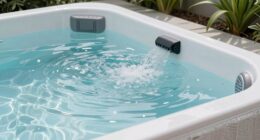
- Aerate water by running jets after shocking to disperse any odors.
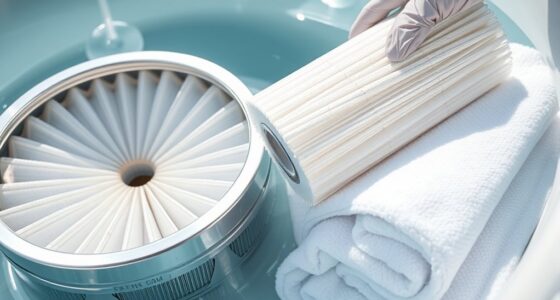
- Regularly maintain and clean filters to reduce organic buildup that causes smells.
Why Does Spa Shock Smell Bad, and How Can You Prevent It?
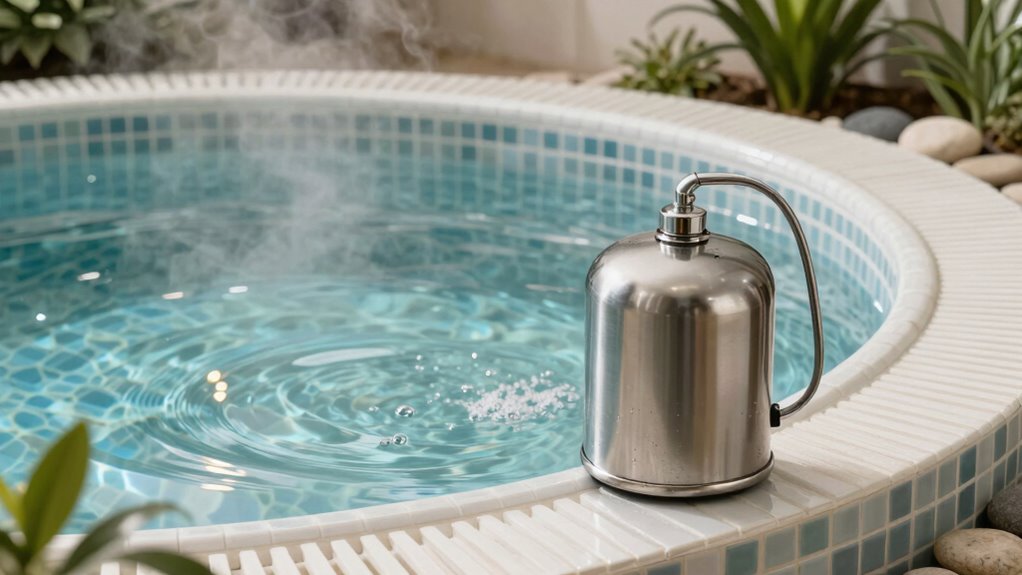
When you add spa shock, a foul smell can sometimes develop, which often surprises users. This unpleasant odor usually results from the chemical reaction between spa shock and organic contaminants like sweat, oils, or body lotions. If not properly balanced, the shock can release sulfur-like or chlorine smells. To prevent this, verify your water’s pH and alkalinity levels are within the recommended range before adding spa shock. Overdosing can also cause strong odors, so follow the manufacturer’s instructions carefully. Regularly shocking your spa helps break down organic matter, reducing odor over time. Keeping your spa clean and maintaining proper water chemistry are key steps in preventing the unpleasant smell associated with spa shock, making your spa experience more enjoyable. Additionally, understanding the chemical reaction involved can help you better troubleshoot and prevent these odors from forming. Proper water filtration and circulation can also minimize odor buildup, enhancing your spa experience. Ensuring the water is well-maintained and balanced supports the effectiveness of shock treatments and prevents issues like odor caused by imbalanced water chemistry. Proper testing and adjustment of your water chemistry balance are essential for optimal results. Maintaining good water quality through consistent testing further reduces the likelihood of odor issues related to spa shock.
How to Choose the Right Spa Shock and Dose Properly
Choosing the right spa shock depends on your specific needs and the type of water issues you’re addressing. When selecting your spa chemical, consider whether you need a chlorine-based, non-chlorine, or mineral shock. Proper dosing techniques are essential to prevent odors and chemical imbalance. To guarantee effective shock treatment, keep these points in mind: Always follow manufacturer instructions for dosage, test water parameters before shocking, use the correct type of shock for your water condition, and avoid over-shocking, which can cause odors and damage. Additionally, understanding Free Floating principles can help maintain a balanced and healthy spa environment. Maintaining proper water chemistry balance is crucial for effective shock treatment and maintaining a pleasant spa experience. Regularly monitoring your water’s pH and alkalinity levels can also help prevent common issues like odors and cloudy water. Moreover, implementing proper water testing routines ensures that shock treatments are both safe and effective. Being aware of chemical residuals can further assist in avoiding long-term odors and buildup.
When Should You Shock Your Spa for Best Results?
The timing of shocking your spa plays a key role in maintaining clear, balanced water. You should shock your spa after heavy use, such as multiple baths or long soak sessions, to break down contaminants and prevent odor buildup. It’s also essential to shock after adding chemicals that disrupt water chemistry, like algaecides or clarifiers, to restore proper chemical balancing. Regularly shocking your spa weekly helps maintain ideal water quality and prevents cloudy or smelly water. Avoid shocking immediately after adding sanitizer or other chemicals, as this can interfere with proper chemical balancing. Instead, wait until the water has stabilized, ensuring your spa maintenance routine promotes clear, fresh water without overdoing it. Proper timing maximizes shock effectiveness and keeps your spa inviting. Additionally, understanding chemical balance is crucial to prevent odors and maintain water clarity. Monitoring water chemistry regularly ensures optimal shock timing and effectiveness, supporting a clean and odor-free spa environment. Maintaining proper water pH levels also helps prevent accumulation of odors and enhances sanitizer effectiveness. Regular testing of spa water parameters can help you identify and address issues before they become problematic, ensuring a more pleasant spa experience.
How to Neutralize Odor After Shocking Your Spa
Odors often linger after shocking your spa, but you can effectively neutralize them with targeted steps. First, verify your spa’s chemical balance is correct, as imbalance can worsen spa odor. Then, run your jets to aerate the water and help disperse unwanted smells. You might also add a dechlorinator or enzyme-based clarifier to break down organic matter causing odors. Incorporating spa maintenance tools and techniques can help you maintain your spa equipment more effectively, ensuring it remains in good condition and less prone to odor issues. Proper chemical balancing methods are essential for controlling odors and preventing buildup. Key tips include: – Adjust pH and sanitizer levels to maintain proper chemical balance – Aerate water to release trapped odors – Use specialized odor neutralizers or enzyme treatments – Regularly clean filters to prevent build-up of odorous debris. Regular water testing procedures can also help you identify and address issues before odors become noticeable. Additionally, implementing proper cleaning routines can prevent residue buildup that contributes to smell. Following these steps helps keep your spa smelling fresh without overdoing chemical treatments.
Tips for Keeping Your Spa Water Fresh and Odor-Free
Maintaining a clean and balanced spa water environment is key to keeping it fresh and odor-free. Start by regularly testing your water’s pH and sanitizer levels, adjusting as needed. Incorporate aromatherapy blends designed for spas to naturally mask odors and enhance relaxation without overwhelming your senses. Proper water mineralization also plays an essential role; adding mineral systems can reduce the need for frequent chemical adjustments and help control odors. Keep your filters clean and replace them as recommended to prevent buildup of organic matter that causes smells. Cover your spa when not in use to minimize debris and evaporation. Additionally, understanding indoor air quality factors can help you identify and mitigate sources of odors that may affect your spa environment. Regularly inspecting your spa environment for air pollutants can further improve overall odor control. By consistently monitoring water chemistry, using natural aromatherapy, and maintaining mineral balance, you ensure your spa remains inviting, fresh, and odor-free.
Frequently Asked Questions
Can Natural Remedies Help Eliminate Spa Shock Smells?
Yes, natural remedies can help eliminate spa shock smells. You can try herbal deodorizers like chamomile or mint, which absorb odors and freshen the water. Adding a few drops of essential oils such as lavender or eucalyptus also helps mask any unwanted smells naturally. Just make certain you use them in moderation to prevent overpowering scents and maintain water balance. These remedies keep your spa smelling fresh without overdoing it.
How Long Should I Wait After Shocking Before Using the Spa?
You should wait at least 24 hours after shocking your spa before using it. During this time, the chemical balancing process completes, and the shock treatment dissipates. Proper spa maintenance involves testing the water and ensuring the chemicals are balanced to prevent strong odors. Always follow the manufacturer’s instructions for your specific shock treatment, and avoid using the spa until the smell subsides and water chemistry stabilizes.
Are There Specific Brands That Minimize Odor Issues?
You might think all brands cause odor issues, but some actually prioritize odor reduction. Brands like Leisure Time and SpaGuard offer options specifically designed to minimize smells while effectively shocking your spa. Research shows these brands use advanced formulations that break down contaminants more efficiently, reducing lingering odors. Choosing reputable brand options focused on odor control helps you enjoy a fresh, odor-free spa experience without risking over-shocking.
Does Water Temperature Affect Shock Odor and Neutralization?
Yes, water temperature affects shock odor and its neutralization. When the water is warmer, bacteria and organic materials break down faster, which can intensify odors if the water chemistry isn’t balanced. Maintaining proper pH levels helps the shock work effectively, reducing smell. Keep your spa’s water temperature stable and monitor your water chemistry regularly to prevent strong odors and ensure proper shock neutralization.
How Often Should I Perform Shock Treatments to Prevent Smell Buildup?
Think of shock treatment frequency as your spa’s heartbeat—regular and steady. You should perform shock treatments every 1 to 2 weeks to prevent smell buildup. Consistently using odor prevention methods, like maintaining proper chemical levels and good filtration, helps keep your water fresh. Overdoing it can cause more harm than good, so stick to this schedule to keep your spa smelling clean without excess odors.
Conclusion
By following these tips, you can enjoy a crystal-clear, fresh-smelling spa anytime you want. Picture stepping into warm, bubbling water that’s perfectly balanced—no harsh odors, just pure relaxation. With the right shock treatment and proper care, your spa becomes a sanctuary of serenity rather than a source of unpleasant smells. Keep your water inviting and your mind at ease, so every soak feels like a rejuvenating escape into a tranquil oasis.