
To maintain proper water levels in your hot tub, regularly check that the water reaches the middle of the skimmer opening or covers the jets. Use test strips or digital testers to monitor pH, alkalinity, and sanitizer levels, adding chemicals as needed. For convenience, consider installing automatic refill systems that alert you when water drops too low. Keeping the water balanced and at the right level is key to safe, efficient, and long-lasting hot tub use. Continue exploring to learn more tips and tricks.
Key Takeaways
- Regularly check water levels manually, ensuring they reach the middle of the skimmer opening or cover jets.
- Use automated sensors or refill systems to maintain consistent water levels and reduce manual effort.
- Avoid overfilling to prevent skimmer issues and spillage, which can damage the pump or heater.
- Test water chemistry frequently to ensure proper pH, alkalinity, and sanitizer levels for safe use.
- Top off water after heavy use or evaporation, especially in hot weather, to keep water at optimal levels.
Keeping your hot tub’s water at the proper level is vital for safe and efficient operation. If the water isn’t at the right height, your jet system might not work properly, and the heater could overheat or shut down. To guarantee everything runs smoothly, you need to regularly check and maintain the correct water level. This starts with water testing, which helps determine the current state of your hot tub’s water. Using test strips or digital testers, you can quickly assess pH levels, alkalinity, and sanitizer levels. Proper water testing gives you the information needed to make precise adjustments, preventing issues like cloudy water or bacteria buildup.
Once you’ve tested the water, the next step is chemical balancing. When the chemicals are correctly balanced, your hot tub water stays clean, clear, and safe for soaking. If the pH is too low or high, it can lead to corrosion or scaling, damaging the equipment and irritating your skin. Balancing chemicals like pH increasers or reducers, alkalinity agents, and sanitizer help maintain the right chemical levels. Regularly balancing the chemicals also minimizes the need for excessive shocking or clarifying treatments, saving you time and money.
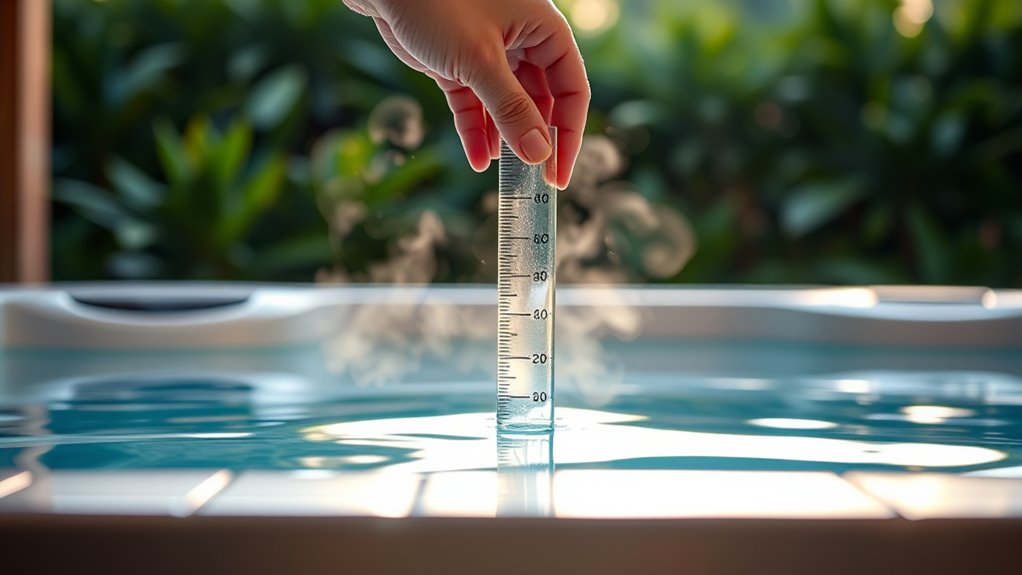
Maintaining proper water levels also involves physically checking the water height regularly. Ideally, the water should reach the middle of the skimmer opening or cover the jets without overflowing. If the water drops below the recommended level, you risk damaging the pump or heater. Conversely, overfilling can cause water to spill out or interfere with the skimmer’s ability to filter debris. To keep the level consistent, always top off your hot tub after heavy usage or evaporation, especially during hot weather or if you notice the water dropping.
In addition to manual checks, consider installing a water level sensor or automatic refill system. These tools help maintain the ideal water level without constant manual intervention. They can alert you when the water drops below a set point or automatically add water to compensate for evaporation. Remember, maintaining proper water levels isn’t just about comfort; it’s vital for your hot tub’s longevity and performance. Proper water level maintenance is essential for ensuring your hot tub operates efficiently and lasts longer.
Frequently Asked Questions
How Often Should I Check My Hot Tub’s Water Level?
You should check your hot tub’s water level at least once a week. During these checks, perform water testing to ensure proper pH and sanitizer levels, and adjust chemical balancing as needed. Keep an eye on the water level especially after heavy use or if you notice the water dropping. Regular checks help prevent issues like pump damage and maintain clean, safe water for your enjoyment.
What Type of Water Is Best for Filling My Hot Tub?
Like choosing the finest wine, selecting the right water for your hot tub matters. You should fill it with clean, fresh tap water, which offers good water quality and is easy to treat with your filtration system. If your tap water has high mineral content, consider using a water conditioner or filtered water to prevent buildup. Proper water quality guarantees your hot tub stays sparkling and safe for relaxation.
Can I Overfill My Hot Tub?
Yes, you can overfill your hot tub, which can compromise safety and lead to water spillage. To guarantee hot tub safety and conserve water, always fill to the recommended level, usually marked inside the tub. Overfilling wastes water and increases the risk of damage or accidents. Keep an eye on the water level, and avoid overfilling to protect your hot tub and promote water conservation.
How Do Weather Changes Affect Hot Tub Water Levels?
Weather impact your hot tub water levels because changes in temperature and humidity can increase evaporation rates, causing the water to drop faster. When it’s hot and dry, you might notice the water level decreasing more quickly, so you should check and top off your hot tub regularly. Conversely, cooler or humid weather reduces evaporation, meaning less frequent refilling. Stay attentive to these weather changes to keep your water at the proper level.
What Are the Signs of Low Water Levels?
Did you know that hot tubs can lose up to an inch of water per day due to evaporation? If you notice the water level is below the skimmer or jets, it’s a sign of low water levels. This can lead to water contamination and damage your equipment. Keep an eye on the water line regularly, especially during hot, dry weather, to prevent these issues and make certain of safe, clean soaking.
Conclusion
Keeping your hot tub at the right water level keeps the jets flowing, the heater heating, and the experience glowing. When you check regularly, you prevent problems before they start, ensuring every soak is smooth and soothing. Maintaining proper water levels is about more than just filling; it’s about caring for your tub, protecting your investment, and creating a relaxing oasis. Stay vigilant, stay consistent, and enjoy the warm, bubbling comfort whenever you desire.