Installing a hot tub outdoors offers scenic views and easy backyard access, but can be less energy-efficient and expose you to weather and privacy concerns. Indoor setups provide a cozy, private environment and better control over energy costs, yet often require significant planning for ventilation and space. To make the best choice, consider your lifestyle, space, and budget. Keep exploring to discover more about how each option can perfectly fit your needs.
Key Takeaways
- Indoor hot tubs offer year-round privacy and comfort but require proper ventilation and possible remodeling.
- Outdoor hot tubs provide scenic views and easy yard access but may face weather-related challenges and higher energy costs.
- Indoor installations typically have better energy efficiency due to controlled environments, reducing heating expenses.
- Outdoor setups may need additional privacy measures like fencing or screens to ensure user comfort.
- Planning considerations, such as space, ventilation, and structural support, are crucial for safe and effective indoor hot tub installation.
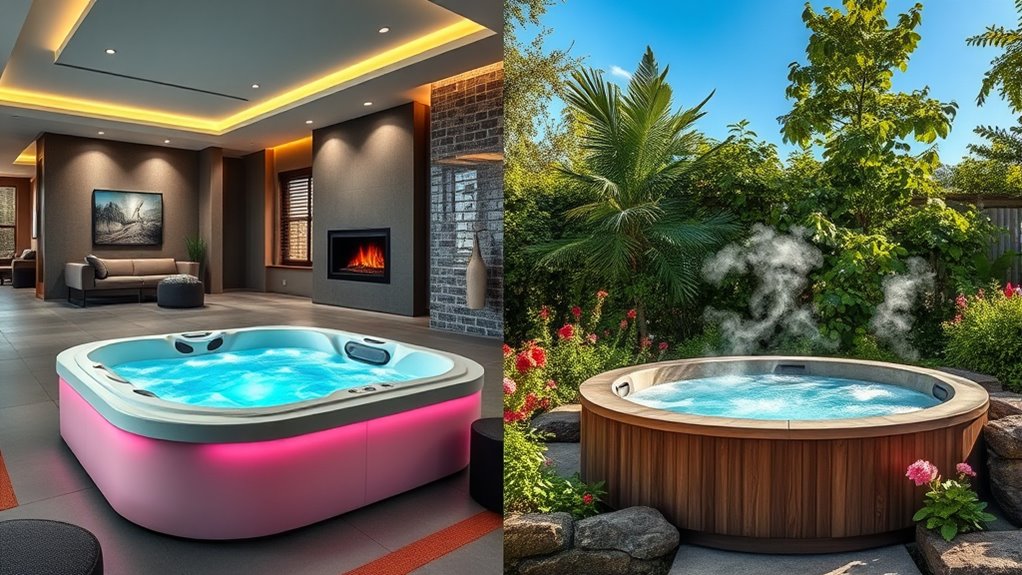
Deciding whether to install a hot tub indoors or outdoors depends on your space, lifestyle, and preferences. Each option offers unique advantages and challenges, especially when it comes to energy efficiency and privacy concerns. If you opt for an outdoor hot tub, you’ll benefit from a natural, scenic setting that enhances relaxation and provides easy access to your yard or garden. However, outdoor installations often lead to higher energy costs, as the hot tub must work harder to maintain temperature against outdoor temperature fluctuations. Proper insulation and covers can help mitigate these costs, but you’ll still see some impact on your energy bills. Additionally, privacy becomes a major factor outdoors; you might need fencing, landscaping, or privacy screens to block views from neighbors or passersby. Without these measures, you might feel exposed, which can diminish your overall enjoyment.
Installing a hot tub indoors offers a different set of benefits. You’ll have a controlled environment, which generally means better energy efficiency. Since indoor spaces usually retain heat more effectively, your hot tub won’t need to work as hard to stay warm, reducing energy consumption and lowering costs. Plus, being indoors provides a high level of privacy—you won’t need to worry about prying eyes or creating visual barriers. This setting allows you to enjoy your hot tub at any time, regardless of weather or outside noise. On the flip side, indoor installations require careful planning to ensure proper ventilation and drainage. Without adequate ventilation, humidity can accumulate, leading to mold or damage to your home’s structure. You’ll also need to consider space constraints; not every home has a designated area large enough for a hot tub, and fitting one might require significant remodeling. Moreover, ventilation and drainage are critical factors to prevent potential issues associated with indoor hot tub installation.
Both options require you to think about your lifestyle. If you love spending time outdoors and want a natural, open-air experience, an outdoor hot tub might be the perfect fit—just keep privacy and energy costs in mind. Conversely, if you prefer year-round use and a cozy, private setting, installing indoors makes sense, provided your home can accommodate it safely and comfortably. Ultimately, your decision hinges on balancing these factors to match your daily routines, budget, and personal comfort. Whichever choice you make, careful planning ensures you’ll enjoy your hot tub for years to come, whether surrounded by nature or cocooned inside your home.
Frequently Asked Questions
What Permits Are Needed for Indoor Hot Tub Installation?
You’ll need to check local building codes for permits when installing an indoor hot tub. Typically, this includes guaranteeing proper indoor ventilation and possibly structural reinforcement to support the weight and prevent moisture damage. You might also require electrical permits for safe wiring. Contact your local building department to confirm specific requirements, and consider hiring professionals to handle permits and ensure all safety standards are met.
How Does Indoor Installation Affect Home Energy Efficiency?
Think of your home as a cozy nest, where indoor hot tub installation can either keep warmth in or let it escape. It impacts your energy efficiency by requiring proper insulation to prevent heat loss. Without adequate insulation requirements, your heating efficiency drops, making it harder and more costly to maintain comfort. Proper sealing and insulation help you conserve energy, ensuring your hot tub stays warm without overloading your heating system.
Can I Install a Hot Tub in a Basement?
Yes, you can install a hot tub in your basement, but you need to guarantee proper basement ventilation and humidity control. Adequate ventilation prevents excess moisture buildup, which could lead to mold and structural damage. You should also consider waterproofing and insulation to maintain a comfortable environment. Consulting a professional will help you set up the hot tub safely and efficiently, minimizing potential issues related to indoor installation.
What Are the Safety Considerations for Indoor Hot Tubs?
Imagine stepping into a warm, bubbling oasis where safety is your top priority. You need to guarantee proper electrical safety by using GFCI outlets and qualified wiring to prevent shocks. Humidity control is essential—install dehumidifiers and ensure proper ventilation to avoid mold and water damage. Regular maintenance and monitoring protect you from electrical hazards and moisture issues, creating a safe, relaxing indoor hot tub experience.
How Does Outdoor Weather Impact Hot Tub Maintenance?
Outdoor weather challenges considerably impact your hot tub maintenance. You’ll need to regularly check for debris, leaves, and dirt that can clog filters and affect water quality. Seasonal maintenance becomes essential, especially during winter or heavy rain, to prevent freezing pipes or corrosion. Covering your hot tub when not in use helps protect it from weather elements, reducing cleanup time and extending its lifespan. Staying proactive keeps your hot tub in top condition year-round.
Conclusion
Whether you choose to install your hot tub indoors or outdoors, each option has its unique charm. Think of it as picking between a cozy fireplace or a sunny patio—both offer warmth and relaxation, just in different settings. Consider your space, climate, and lifestyle to make the best choice. Whichever you pick, your hot tub will become a haven where you can unwind like a gentle breeze on a summer day.