To keep your swim spa in top condition, you should regularly check and replace filters to guarantee effective water filtration, removing dirt and bacteria. Balance your chemicals by testing pH, alkalinity, and sanitizer levels often, using reliable test kits, and adjust as needed. Combining proper filtration with consistent chemical management helps maintain clear, safe water while preventing costly repairs. Continue exploring ways to optimize your maintenance routine for a more enjoyable swim experience.
Key Takeaways
- Regularly check and replace filters to ensure optimal water flow and clarity.
- Balance chemical levels, including pH and sanitizer, through routine testing for safe, comfortable water.
- Clean filters and surfaces frequently to prevent debris buildup and maintain equipment efficiency.
- Combine filtration, chemical balancing, and cleaning practices for comprehensive swim spa maintenance.
- Schedule consistent maintenance routines to extend equipment lifespan and keep water crystal clear.

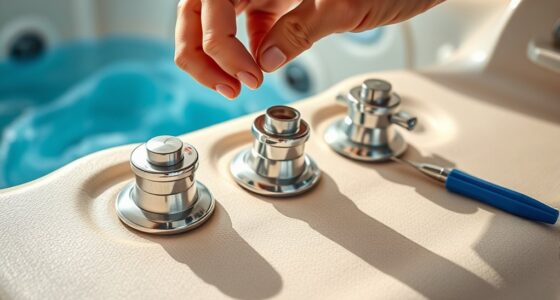
Keeping your swim spa in top condition requires regular maintenance to guarantee clean water and ideal performance. One of the most important aspects of upkeep is ensuring your water filtration system is working effectively. Proper water filtration removes dirt, debris, and bacteria, keeping the water clear and safe for use. You should regularly check your filters, cleaning or replacing them as needed, to prevent clogs and maintain optimal flow. A well-maintained filtration system not only improves water clarity but also reduces the workload on your chemical treatments. When your filtration runs efficiently, your swim spa stays cleaner longer, saving you time and effort in the long run. Additionally, understanding the effectiveness of filters can help you select the right type for your specific needs.
Regularly check and clean filters to keep your swim spa water clear and flow smooth.
Alongside water filtration, chemical balancing plays a vital role in maintaining a healthy swim spa environment. Balancing chemicals like pH, alkalinity, and sanitizer levels ensures the water remains safe, comfortable, and free of harmful bacteria. You should test your water frequently using test strips or a liquid test kit to monitor these levels. Adjustments should be made promptly to keep everything within recommended ranges. For example, maintaining a pH level between 7.2 and 7.8 helps your sanitizer work more effectively and prevents corrosion or scale buildup. Proper chemical balancing not only protects your equipment but also enhances your overall swimming experience by providing water that feels soft and comfortable.
To keep your chemical levels in check, establish a routine for testing and adjusting water chemistry. This routine could be daily or every few days, depending on how often you use your swim spa. Always follow the manufacturer’s instructions when adding chemicals, and avoid over-treating, which can cause skin irritations or damage to the spa components. Using a reliable water testing kit makes it easier to identify when chemical adjustments are needed, so you can act quickly before problems develop. Remember, consistency is key in chemical balancing; neglecting it can lead to cloudy water, unpleasant odors, or even equipment damage.
Regularly maintaining your water filtration and chemical balance creates a healthier, more enjoyable swim spa experience. Keeping these systems in check helps prevent costly repairs, extends the lifespan of your equipment, and ensures your water remains crystal clear. By dedicating some time each week to these simple tasks, you can enjoy a pristine, inviting swim spa anytime. Ultimately, consistent attention to water filtration and chemical balancing makes all the difference in preserving your investment and providing a safe, relaxing environment for every swim.
Frequently Asked Questions
How Often Should I Replace the Swim Spa’s Water?
You should replace your swim spa’s water every 3 to 4 months. Regular water testing helps you monitor chemical levels and keep the water balanced, which prolongs its lifespan. If you notice cloudy water, strong odors, or skin irritation, it’s time for a full water change. Consistently maintaining proper chemical balancing ensures your swim spa stays clean, safe, and enjoyable, reducing the need for frequent water replacements.
What Are the Signs of Algae Growth in a Swim Spa?
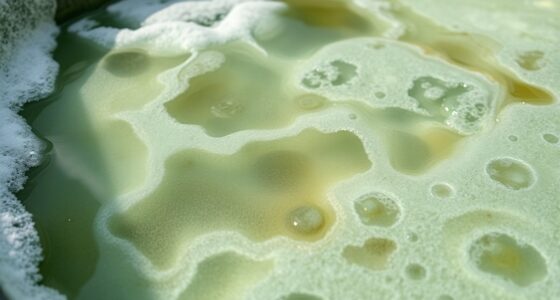
Algae growth is like an unwelcome shadow creeping across your swim spa’s surface. You’ll notice green, cloudy water, slimy spots, or a fuzzy film—clear signs of algae detection. To prevent algae, keep your water balanced and sanitized regularly. If you see these signs, act swiftly to prevent algae from spreading further, ensuring your swim spa stays clean, clear, and inviting for every swim.
Can I Use Regular Pool Chemicals in My Swim Spa?
You shouldn’t use regular pool chemicals in your swim spa because of chemical compatibility issues. Swim spas require specific formulations to prevent damage to the equipment and ensure safe water. Always perform water testing regularly to monitor chemical levels and adjust accordingly. Using spa-specific chemicals guarantees proper pH, sanitizer, and algaecide balance, helping you maintain clean, clear water and extend your swim spa’s lifespan.
How Do I Troubleshoot Heater Malfunctions?
Oh, your heater’s throwing a tantrum? Don’t worry, heater troubleshooting is simpler than you think. First, check the power supply—sometimes, it’s just a loose wire or tripped breaker. Next, inspect the thermostat and temperature sensor for faults—these often cause temperature repair issues. Clean the filter and ensure proper water flow. If problems persist, it might be time to call a pro, but these steps often resolve the glitch.
What Safety Precautions Are Recommended for Swim Spa Maintenance?
You should always wear protective gear, like gloves and goggles, when maintaining your swim spa. Keep the area well-ventilated to avoid chemical fumes. Before working on equipment, turn off the power to guarantee safety. Regularly check and maintain proper chemical balancing to prevent corrosion and equipment damage. Follow manufacturer instructions closely to ensure correct handling, and never mix chemicals. These precautions help protect both your equipment and your safety during maintenance.
Conclusion
So, now you’re basically a swim spa wizard—balancing chemicals, cleaning filters, and dodging algae like a pro. Remember, neglecting your spa is like ignoring a ticking time bomb of murky water and funky odors. Keep up with maintenance, or soon you’ll be swimming in a swamp and dreaming of pristine waters. Stay vigilant, or you’ll be forever haunted by the ghost of neglected pools, waving ghostly towels in your nightmares. Keep it clean, or face the swampy consequences!