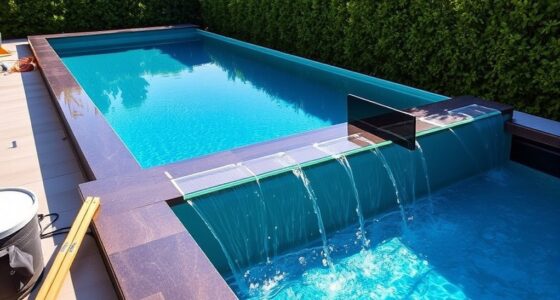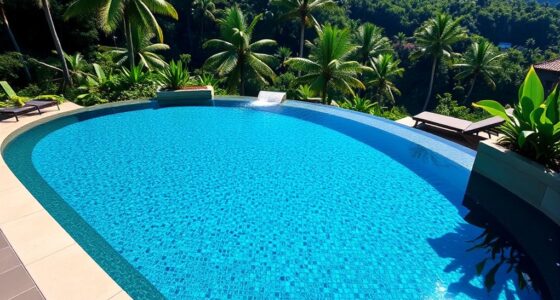

Building an infinity pool involves substantial costs, especially for the structure, custom features, and installation. You’ll also need to budget for a high-quality water filtration system, which includes purchase, setup, and ongoing maintenance. Additional expenses cover plumbing, backup power solutions, and finishing touches like coping and decking. Overall, the costs can vary widely based on size and design choices. To better understand each component and plan your budget, keep exploring further details.
Key Takeaways
- Construction costs include excavation, structural work, and waterproofing, which vary based on pool size and site conditions.
- The infinity edge feature requires specialized design and materials, significantly increasing overall expenses.
- Pool equipment costs encompass filtration, pumps, and lighting systems necessary for water clarity and safety.
- Additional costs involve permits, design consultations, and potential landscaping or finishing touches.
- Budget should account for ongoing maintenance, including filter media replacement, cleaning, and backup power systems.

Water filtration is another vital expense that often gets overlooked initially. A reliable filtration system ensures your water stays clean, clear, and safe for swimming. The cost depends on the size of your pool and the type of filtration system you choose, such as sand, cartridge, or diatomaceous earth filters. While the upfront cost might seem high, investing in high-quality filtration can save you money over time by reducing chemical use and maintenance. Proper filtration also extends the lifespan of your pool and its other components, preventing costly repairs down the line. Expect to allocate funds for the initial purchase, installation, and periodic replacement of filter media or cartridges. Regular maintenance, including backwashing or cleaning filters, also adds to ongoing expenses but is necessary to keep your pool water pristine. Incorporating reliable backup power solutions can help ensure your filtration system continues to operate during power outages, maintaining water quality and safety.
Frequently Asked Questions
How Long Does It Typically Take to Build an Infinity Pool?
Building an infinity pool usually takes about 8 to 12 weeks, depending on your project’s complexity. During this time, you’ll see progress as contractors install the pool structure, water features, and pool lighting. Factors like site preparation and custom features can extend the timeline. Stay involved to make certain everything aligns with your vision, especially when choosing water features and lighting to create the perfect aesthetic and ambiance.
What Are the Ongoing Maintenance Costs for an Infinity Pool?
Think of your infinity pool as a lush garden requiring regular care. You’ll spend around $1,200 to $2,500 annually on maintenance, including pool cleaning and chemical balancing. Keep the water crystal clear and balanced, like a mirror reflecting the sky. Regularly check filters, balance chemicals, and clean debris to prevent costly repairs. With consistent attention, your stunning infinity pool stays inviting, shimmering like an endless horizon.
Can an Infinity Pool Be Installed in a Small Backyard?
Yes, you can install an infinity pool in a small backyard by optimizing space effectively. You’ll need to choose a compact design that fits your area and consider vertical features or tiered layouts to maximize space. Proper planning allows you to enjoy the luxurious look of an infinity pool without overwhelming your small backyard, making it a stunning focal point while maintaining functionality and style within limited space.
What Permits Are Required Before Constructing an Infinity Pool?
Before constructing an infinity pool, you’ll need to obtain the necessary permits from your local building department. They’ll review your plans to guarantee pool safety and water filtration standards are met. You might also need approvals related to zoning or environmental regulations. Securing these permits beforehand helps prevent costly delays and ensures your infinity pool complies with safety codes, making your backyard oasis safe and enjoyable.
How Energy-Efficient Are Infinity Pools Compared to Traditional Pools?
An infinity pool’s energy efficiency can seem like a tiny whisper compared to the roaring demands of traditional pools. You’ll find that with modern pumps, LED lighting, and solar heating options, these pools drastically cut down energy consumption. They’re designed to be eco-friendly, reducing your carbon footprint while still offering stunning views. So, if you care about eco-friendliness and saving on energy bills, an infinity pool can be surprisingly efficient.
Conclusion
Building an infinity pool is like crafting a private oasis, blending luxury with serenity. Every dollar invested flows into creating a seamless edge that mirrors the horizon, turning your backyard into a breathtaking escape. Remember, this isn’t just a project—it’s an investment in your sanctuary, a mirror to your dreams. So, embrace the journey, knowing that the final reveal will be a shimmering paradise, where worries fade and tranquility takes center stage.