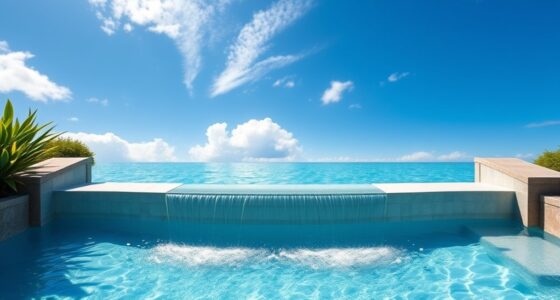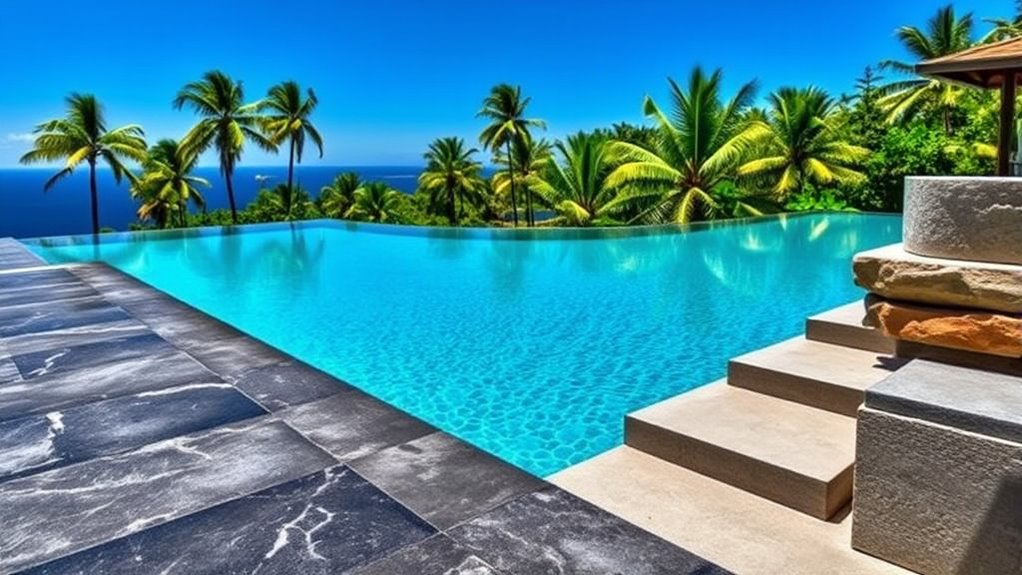

When choosing materials for your infinity pool, prioritize durability, water resistance, and aesthetic appeal. Opt for high-quality waterproofing membranes like PVC or rubber sheets to prevent leaks, and select sturdy coping materials such as natural stone, concrete, or tile that match your design and weather conditions. Proper installation is essential to guarantee longevity and safety. To make your pool truly stand out and last, consider all these factors—more insights await to help refine your choices.
Key Takeaways
- Select durable waterproofing membranes like PVC or rubber to prevent water infiltration and withstand pool chemicals and UV rays.
- Ensure proper installation of waterproofing layers to prevent leaks and extend pool lifespan.
- Choose high-quality filtration materials to maintain water clarity, quality, and system longevity.
- Opt for weather-resistant, slip-resistant coping materials such as natural stone, concrete, or tile for safety and aesthetics.
- Coordinate material choices with overall design, considering durability, maintenance, and compatibility with water chemistry.
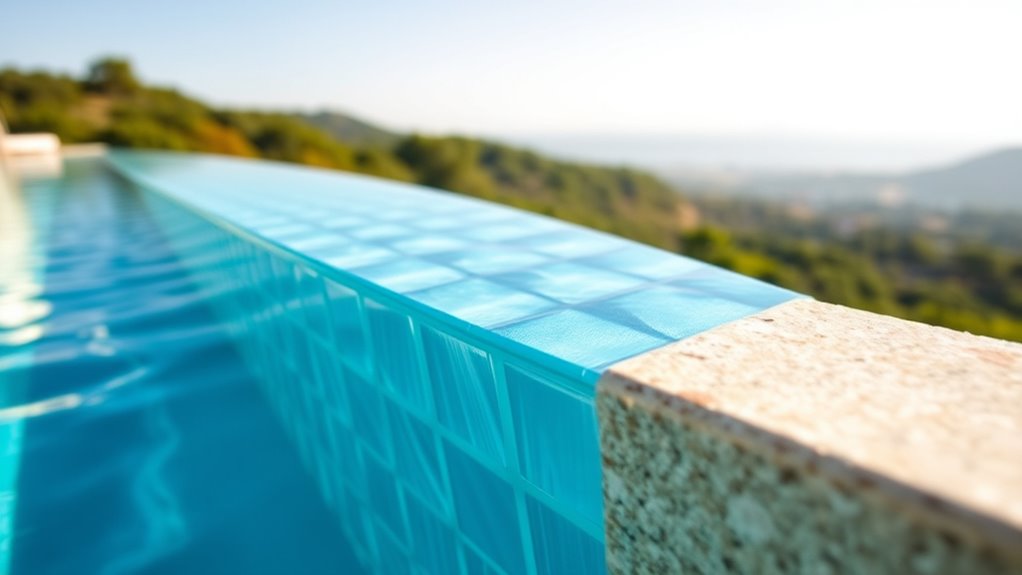
When building an infinity pool, selecting the right materials is essential to guarantee durability, safety, and aesthetic appeal. One of the most critical elements is choosing appropriate waterproofing membranes. These membranes serve as a barrier against water infiltration and damage, ensuring the longevity of your pool. High-quality waterproofing membranes, such as PVC or rubber-based sheets, are necessary because they withstand constant exposure to water, UV rays, and chemicals. Proper installation of these membranes prevents leaks, which can compromise the pool’s structure and lead to costly repairs down the line. When you prioritize waterproofing, you create a secure environment that maintains the pool’s integrity over time, giving you peace of mind and a beautiful, functional feature in your space. Additionally, selecting the right filtering materials for the pool’s filtration system can greatly enhance water clarity and quality, contributing to a safer swimming environment.
In addition to waterproofing, selecting the right pool coping options is equally important. Pool coping not only provides a finished look but also protects the edges of your infinity pool from cracking and chipping. You have a variety of options to weigh, including natural stone, concrete, or tile. Natural stone, such as travertine or limestone, offers a timeless aesthetic and excellent durability, blending seamlessly with outdoor landscapes. Concrete coping, often stamped or textured, provides versatility in design and can be customized to match your overall style. Tile coping adds a sleek, modern touch, and offers easy maintenance. When choosing coping options, consider how they will withstand weather conditions, foot traffic, and the pool’s water chemistry. Properly selected and installed coping ensures safety by providing a slip-resistant edge and enhances the visual appeal of your infinity pool.
The materials you select for waterproofing and coping should complement each other and align with your overall design vision. Durability, safety, and style are all interconnected; neglecting any aspect can lead to issues like water leaks, surface deterioration, or an unbalanced aesthetic. It’s wise to consult with pool construction experts or landscape architects who can guide you toward the best materials based on your climate, budget, and desired look. Remember, investing in quality waterproofing membranes and suitable coping options upfront can save you significant time, effort, and money in the future. These choices not only protect your investment but also enhance the luxurious, seamless appearance that makes infinity pools so captivating. By paying close attention to these critical materials, you’ll ensure your infinity pool remains a stunning, durable feature for years to come.
Frequently Asked Questions
How Do Material Choices Affect Pool Maintenance Costs?
Your choice of pool surface options and materials considerably impacts maintenance costs. Durable materials like tile or concrete resist damage and reduce repairs, while softer surfaces may need more upkeep. Material installation challenges can lead to leaks or cracks, increasing future expenses. Selecting high-quality, compatible materials minimizes these issues, saving you money over time. Properly chosen materials ensure your infinity pool remains beautiful and functional with less frequent, costly maintenance.
Are Eco-Friendly Materials Available for Infinity Pool Construction?
Did you know eco-friendly options are increasingly popular for infinity pool construction? Yes, sustainable materials like recycled glass, bamboo, and eco-friendly concrete are available. These options reduce environmental impact and can lower long-term maintenance costs. You can choose eco-friendly materials for your infinity pool, ensuring a beautiful, sustainable design that aligns with eco-conscious living. This way, you enjoy luxury while helping protect the planet.
Which Materials Best Resist Pool Chemical Corrosion?
You should opt for corrosion-resistant alloys like stainless steel or titanium, as they stand up well to pool chemicals. Sustainable building materials, such as composite resins or certain eco-friendly plastics, also resist corrosion and are better for the environment. By choosing these materials, you guarantee your infinity pool remains durable, low-maintenance, and eco-conscious, giving you a beautiful, long-lasting feature that withstands harsh chemical exposure.
How Do Different Materials Impact Pool Heating Efficiency?
Different materials markedly impact your pool’s heating efficiency through thermal conductivity and insulation. Materials with low thermal conductivity, like certain composites or insulated panels, help retain heat better, reducing energy costs. Conversely, high-conductivity materials, such as concrete or metal, transfer heat quickly but also lose it faster. Choosing materials with good insulation properties ensures your infinity pool stays warm longer, making your heating system more efficient and cost-effective.
What Are the Long-Term Durability Differences Among Common Materials?
Think of pool materials as the backbone of your infinity pool—some stand tall for decades, others wobble sooner. Concrete offers the longest material lifespan and maintains strong structural integrity, making it ideal for durability. Vinyl liners, while cost-effective initially, may need replacing after 7-15 years. Fiberglass is quick to install and durable but can crack over time. Your choice impacts how long your pool stays pristine and secure.
Conclusion
Choosing the right materials for your infinity pool is vital to guarantee durability, beauty, and safety. By selecting high-quality, suitable materials, you’re setting yourself up for a stunning, long-lasting oasis. Remember, the devil is in the details, so don’t rush your decision. Take your time, do your research, and you’ll be swimming in your dream pool before you know it. With the right choices, you’ll have a masterpiece that’s worth every penny.