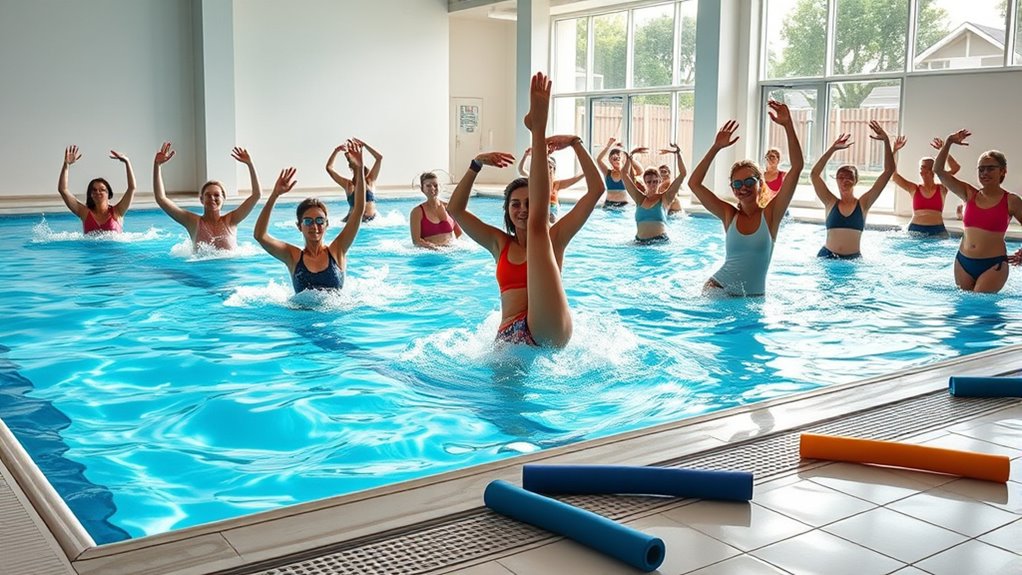

To do water aerobics routines at home, start with warm-up exercises like water walking and arm swings to engage your muscles. Incorporate moves such as water punches, leg lifts, and resistance exercises using water dumbbells or gloves to build strength. Add aerobic patterns like kicks and side steps for cardio, and finish with stretches to improve flexibility. Keep practicing regularly, and you’ll discover more effective ways to boost your fitness and mobility.
Key Takeaways
- Incorporate warm-up moves like water walking, knee lifts, and arm swings to prepare muscles for exercise.
- Use resistance tools such as water dumbbells or gloves for upper body strength routines.
- Perform aerobic patterns like side steps, kicks, and crossovers to elevate heart rate and burn calories.
- Integrate stretching and flexibility exercises, including torso twists and leg swings, to improve mobility.
- Finish with cool-down stretches and deep breathing to promote recovery and enhance flexibility.
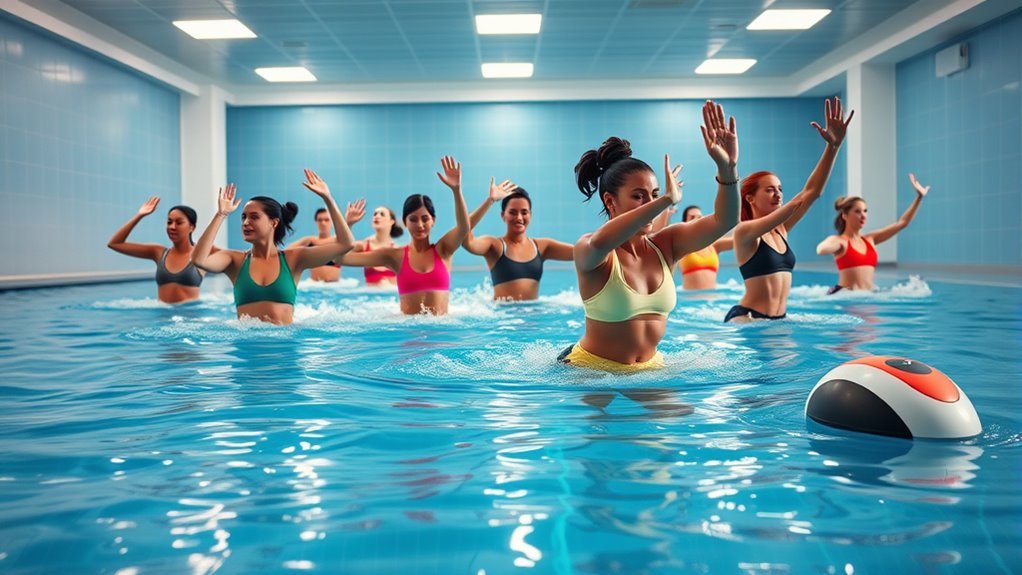
Water aerobics routines offer a fun and effective way to improve your fitness while minimizing impact on your joints. When you engage in water-based exercises, you benefit from the natural resistance of the water, which challenges your muscles without the harsh strain that land workouts can cause. This water resistance is key to building strength and endurance, making your routines both efficient and safe. As you perform various movements, you also enhance your aquatic flexibility, which helps you move more freely and reduces stiffness. This combination of resistance and flexibility training results in a extensive workout that caters to all fitness levels.
Water aerobics enhances fitness safely through water resistance and increased flexibility.
You can start your routine by walking or jogging in place, using the water’s resistance to increase the challenge. As you lift your knees and swing your arms, you engage multiple muscle groups simultaneously. To further boost your aquatic flexibility, incorporate stretches and dynamic movements such as leg swings, arm circles, and torso twists. These exercises help loosen tight muscles, improve range of motion, and prevent injuries. The water supports your body, allowing you to stretch deeper and hold positions longer than you might on land, which accelerates your flexibility gains.
Next, add some arm exercises like water punches or circles, which enhance upper body strength and refine your coordination. These movements utilize water resistance to create a natural, low-impact workout that’s gentle on your joints yet effective at building muscle. For added intensity, try using water dumbbells or resistance gloves, which increase the difficulty of your movements and further activate your muscles. Keep your core engaged as you perform these exercises to improve stability and posture.
Incorporate some aerobic patterns like side steps, crossovers, or quick kicks to elevate your heart rate. The water’s resistance demands more effort from your legs and core, helping you burn calories and boost cardiovascular health. To maximize flexibility, include gentle side bends and forward reaches between high-intensity segments. These stretches loosen up your back and hip muscles, promoting better aquatic flexibility.
Finally, cool down with slow, flowing movements and deep breathing exercises. Focus on gentle stretches to elongate your muscles and improve mobility. Throughout your routine, remember that water resistance not only makes your workout more challenging but also encourages greater aquatic flexibility by allowing you to move through a full range of motion with less discomfort. Consistently practicing these water aerobics exercises at home can lead to increased strength, flexibility, and overall fitness, all while keeping your joints healthy and your workout enjoyable.
Frequently Asked Questions
Can Beginners Safely Do Water Aerobics at Home?
Yes, beginners can safely do water aerobics at home if you prioritize water safety and start slowly. Use a shallow pool or a sturdy, inflatable pool to maintain stability. Focus on aquatic strength exercises that suit your fitness level, and avoid overexertion. Always stay within your comfort zone, keep hydrated, and make sure someone is nearby in case of emergencies. With proper precautions, you can enjoy safe, effective water workouts at home.
What Equipment Is Necessary for Water Aerobics Routines?
Imagine building a toolkit for a new adventure—your water aerobics routine needs just a few essentials. You’ll want water weights to add resistance and aquatic noodles for support or fun exercises. These simple tools are affordable, easy to store, and perfect for home workouts. With water weights and noodles, you can target muscles, improve flexibility, and enjoy a low-impact workout that keeps you energized and safe.
How Often Should I Do Water Aerobics Weekly?
You should aim for water aerobics about 3 to 5 times a week to maximize hydrotherapy benefits and water resistance training. Regular sessions help improve cardiovascular health, build strength, and reduce joint stress. Consistency is key, so find a routine that fits your schedule and gradually increase intensity. Staying active this way supports your overall fitness while providing gentle, effective exercise that’s easy on your body.
Are There Any Water Aerobics Routines for Seniors?
Yes, there are water aerobics routines designed specifically for seniors. These routines focus on gentle water resistance to build strength without strain, promoting improved joint mobility. You can do simple movements like leg lifts, arm circles, and gentle walking in the water. Always listen to your body, start slow, and gradually increase intensity. These exercises help maintain flexibility, reduce joint pain, and boost overall health in a safe, enjoyable way.
Can Water Aerobics Help With Weight Loss?
Yes, water aerobics can help with weight loss by increasing calorie burning and muscle toning. When you engage in water exercises, the resistance of the water challenges your muscles, boosting calorie expenditure. Regular workouts can accelerate fat loss and improve muscle tone. Plus, the low-impact nature makes it suitable for all fitness levels, helping you stay consistent and motivated on your weight loss journey.
Conclusion
Don’t let limited access to a pool hold you back. With these water aerobics routines, you can enjoy the benefits of low-impact exercise right at home. Even if space is tight, you can adapt movements to your surroundings and still get a great workout. Remember, consistency is key. So, immerse yourself, stay motivated, and experience the health and fitness benefits—your body will thank you for it!