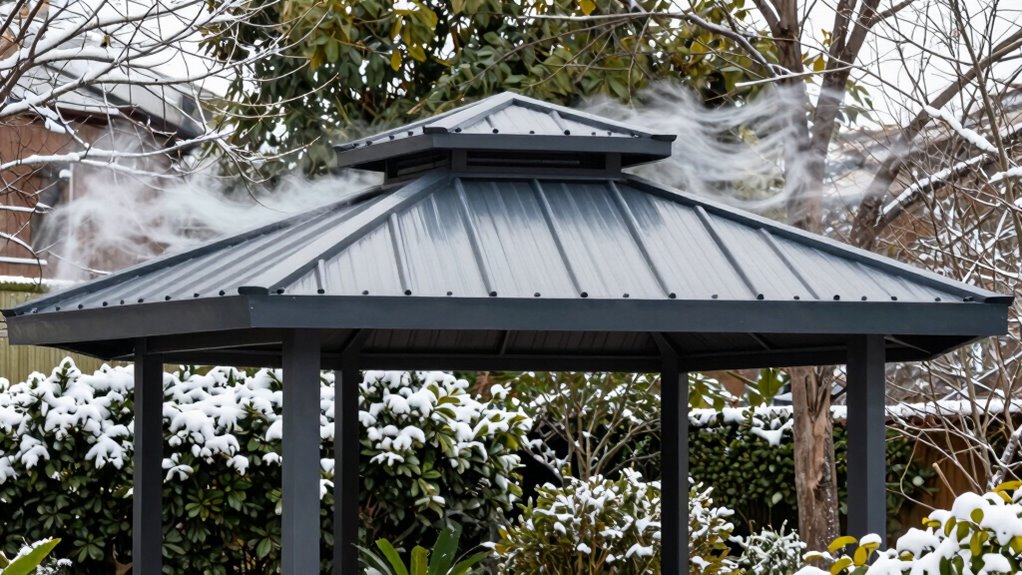
When choosing a hardtop gazebo, focus on roof materials like metal or polycarbonate for durability and weather resistance. Check snow load ratings to ensure it can handle heavy snow, and look for wind-resistant features such as secure fastening and aerodynamic design. Consider your climate’s weather patterns to select the best options, balancing cost and performance. To protect your investment and enjoy reliable outdoor comfort, explore how weather-resistant features vary across models and materials.
Key Takeaways
- Choose durable roof materials like metal or polycarbonate based on climate, weather resistance, and aesthetic preference.
- Check snow load ratings to ensure the gazebo can safely support winter snowfall without damage.
- Consider wind resistance features such as aerodynamic design, secure anchoring, and reinforced framing for storm resilience.
- Conduct weather resistance tests, including wind and rain simulations, to verify roof durability and water runoff performance.
- Balance cost, long-term performance, and climate compatibility to select a gazebo that offers optimal safety, durability, and value.
Why Your Gazebo Roof Material Matters for Durability
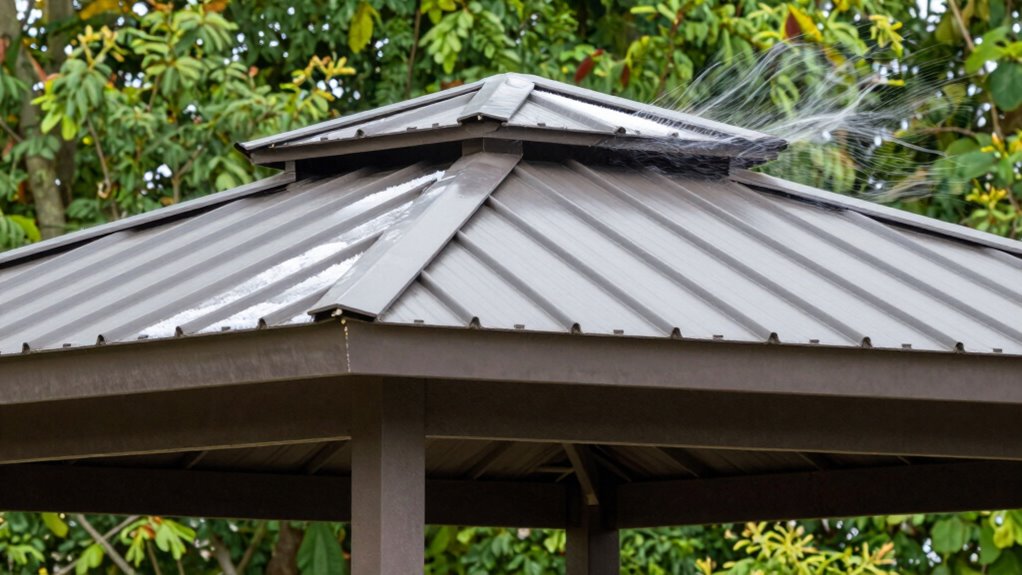
Choosing the right roof material for your gazebo is vital because it directly impacts its durability and lifespan. The material you select influences how well your gazebo withstands weather, especially in terms of roof insulation, which helps regulate temperature and protect against the elements. A sturdy, weather-resistant material ensures your gazebo stays intact longer, saving you money on repairs or replacements. Additionally, the roof’s aesthetic appeal plays an important role in your outdoor space’s overall look. A well-chosen material can complement your garden or patio design, boosting curb appeal. Whether you prefer a sleek metal roof or a more natural wooden finish, prioritize durability and style to create a functional, attractive outdoor retreat that lasts for years. Considering weather resistance and the specific climate of your area can further help in selecting the optimal roof material for longevity and performance. Furthermore, understanding snow load and wind resistance requirements is essential for ensuring your gazebo can withstand local weather conditions. Incorporating appropriate materials can also enhance the overall safety and stability of your gazebo in challenging weather scenarios, especially when you understand the local climate and how it affects material performance. Paying attention to installation techniques can also improve the overall durability and weatherproofing of your gazebo roof.
How Snow Load Ratings Impact Your Gazebo’s Performance
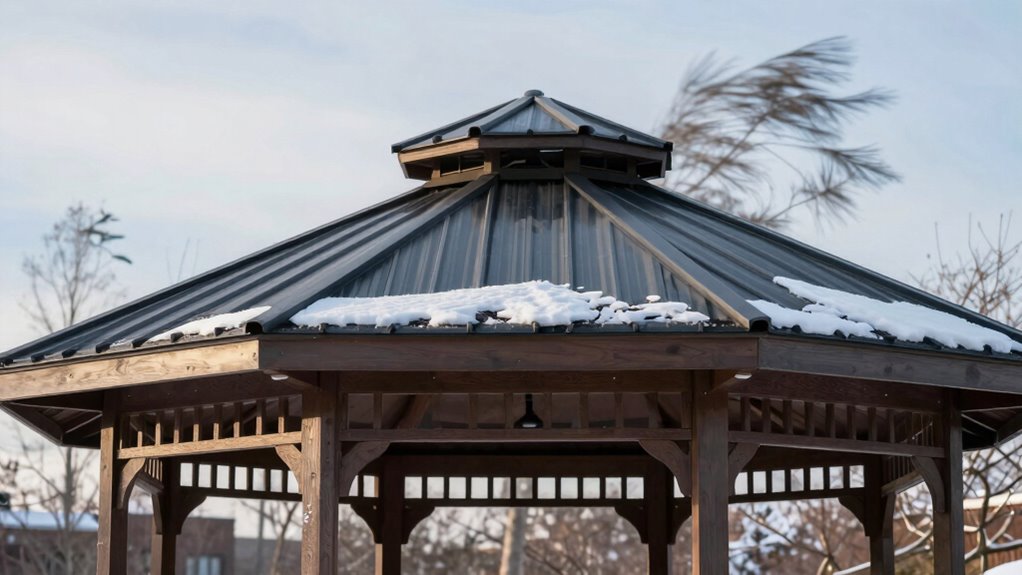
Snow load ratings are crucial because they indicate how much weight your gazebo roof can safely support during winter storms. If your gazebo’s snow load rating is too low, heavy snow accumulation can lead to roof damage or collapse, especially if the roof has a flat or minimal roof slope. A steeper roof slope helps shed snow more effectively, reducing weight buildup. Additionally, understanding content formats can help you choose the most appropriate roofing material for snow resistance. Consider these factors: – Higher snow load ratings mean better support during heavy snowfall – Roof slope influences snow sliding off or accumulating – Flat roofs tend to gather more snow, requiring higher ratings – Regular snow removal can mitigate risks with lower-rated roofs. Being aware of snow load ratings and their impact on roof durability can further inform your choice of gazebo, ensuring long-term safety. Moreover, selecting a roof with a suitable snow resistance rating can significantly extend the lifespan of your gazebo in snowy climates. Recognizing the local climate and typical snowfall patterns can also improve your decision-making process. Proper installation techniques and maintenance can further enhance the roof’s ability to handle winter conditions. Understanding snow load ratings ensures your gazebo performs safely and withstands winter weather without unexpected issues.
What Wind Resistance Features Should a Hardtop Gazebo Have?
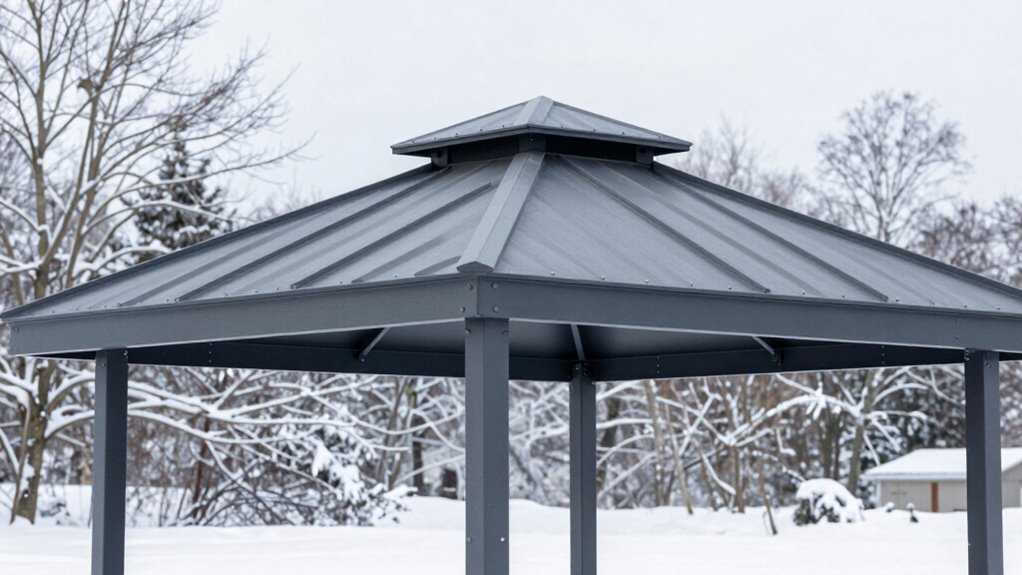
To guarantee your hardtop gazebo can withstand strong winds, look for a reinforced frame that offers extra durability. Secure anchoring systems are also essential to keep the structure stable during gusts. These features work together to provide the wind resistance you need for peace of mind. Additionally, incorporating high-quality materials like copper in the construction can enhance overall strength and longevity. Ensuring structural integrity through proper design and materials further solidifies your gazebo’s resilience against wind forces. Paying attention to wind resistance features during the selection process ensures your gazebo remains safe and durable over time. Moreover, choosing a design with wind load ratings helps you assess its capacity to handle specific weather conditions. Recognizing the importance of AI cybersecurity in protecting digital assets is crucial as technology advances.
Reinforced Frame Strength
A hardtop gazebo needs a reinforced frame that can withstand strong winds and harsh weather conditions. Ensuring proper frame reinforcement is vital for maintaining structural integrity during storms or heavy gusts. Look for gazebos with robust materials like galvanized steel or powder-coated aluminum, which add durability. Reinforced joints and thick support beams also boost stability, preventing wobbling or collapse. Features such as cross-bracing or additional corner reinforcements improve wind resistance. The frame’s design should emphasize strength without adding unnecessary weight. Incorporating wind-resistant features can further enhance the gazebo’s ability to withstand gusts and storms. Additionally, selecting a model with corrosion-resistant coatings can extend its lifespan in harsh weather. Proper anchoring and weatherproof design are essential components that contribute to a gazebo’s overall durability and safety. To maximize safety, consider the structural engineering aspects that influence wind resilience. Paying attention to frame reinforcement techniques can significantly increase the gazebo’s wind resistance and overall durability. Focus on these key elements to select a model that offers reliable wind resistance and enduring structural integrity.
Secure Anchoring Systems
Secure anchoring systems are essential for ensuring your hardtop gazebo stays stable during strong winds. Proper anchoring provides foundation stability, preventing the structure from shifting or tipping over. Look for gazebos with reinforced anchoring points designed to withstand high wind forces. Ground anchors, such as stakes, bolts, or concrete anchors, are effective options depending on your surface type. If your gazebo is placed on a deck or patio, choose heavy-duty base plates or weighted anchors that secure the legs firmly. Never underestimate the importance of a sturdy foundation; even the strongest frame can falter without proper anchoring. Additionally, selecting performance parts such as reinforced anchoring systems can enhance overall stability and safety. Ensuring your gazebo has reliable anchoring systems will give you peace of mind during storms and help maintain safety and durability over time. Using wind resistance features in your anchoring setup can significantly improve your gazebo’s ability to withstand severe weather conditions.
Comparing Metal, Polycarbonate, and Other Roof Materials
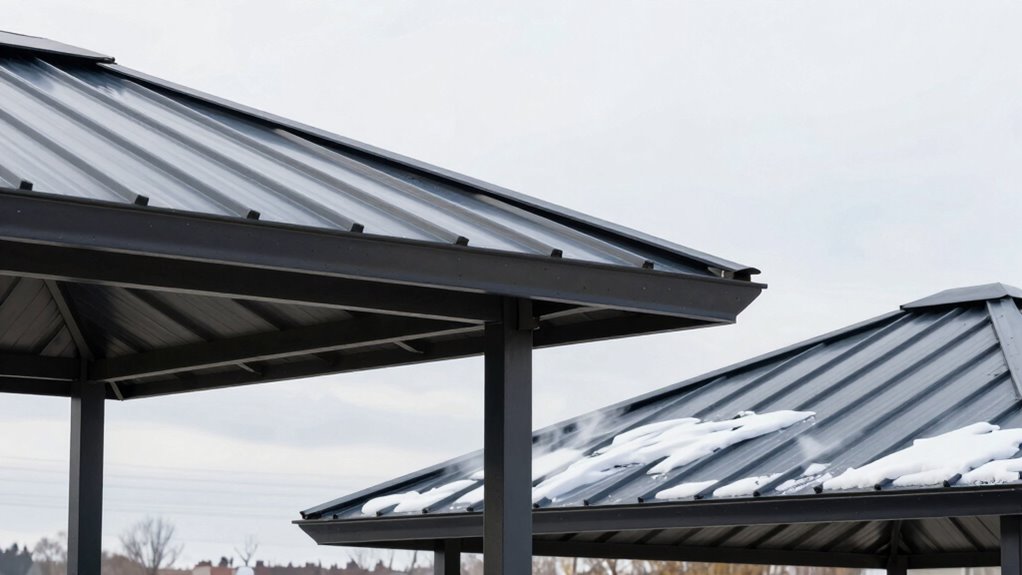
Choosing the right roof material for your hardtop gazebo depends on your priorities, whether it’s durability, aesthetics, or cost. Metal, polycarbonate, and other options each have unique advantages. Metal roofs are highly durable and long-lasting, providing excellent protection against weather and adding a sleek, modern look to your garden decor. Polycarbonate roofs are lightweight, impact-resistant, and offer great UV protection, making them ideal for a clear, airy aesthetic appeal. Other materials like shingles or composite panels can enhance visual charm but may require more maintenance. Consider these factors:
Choose durable, stylish roof materials like metal or polycarbonate for your gazebo’s perfect look and protection.
- Durability and lifespan
- Aesthetic appeal and style options
- Cost and installation ease
- Weather resistance, especially against snow and wind
How to Choose a Roof That Handles Your Climate’s Snow and Wind
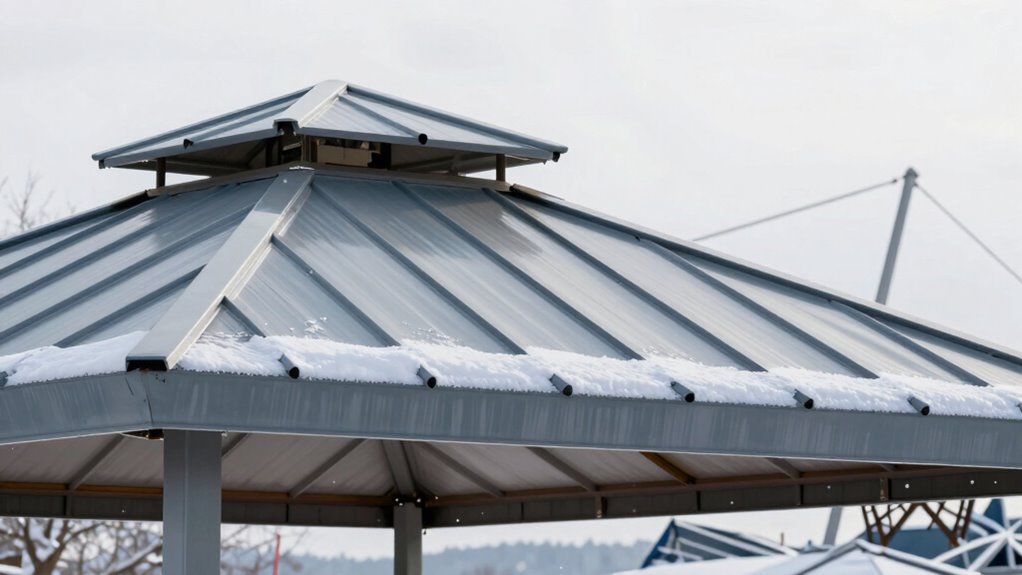
Selecting a roof material that can withstand your climate’s snow and wind is key to ensuring your gazebo remains sturdy and protected year-round. For snowy areas, opt for materials with high snow load capacity, like metal or reinforced polycarbonate. In windy regions, choose roofs with low wind resistance, such as those with aerodynamic shapes or secure fastening systems. Consider how your garden aesthetics blend with durability to protect your outdoor furniture and maintain visual appeal.
| Climate Type | Recommended Roof Features |
|---|---|
| Snowy | Strong support, steep angles to shed snow |
| Windy | Aerodynamic design, secure anchoring |
| Both | Reinforced materials, sturdy framing |
Tips for Testing Your Gazebo’s Weather Resistance
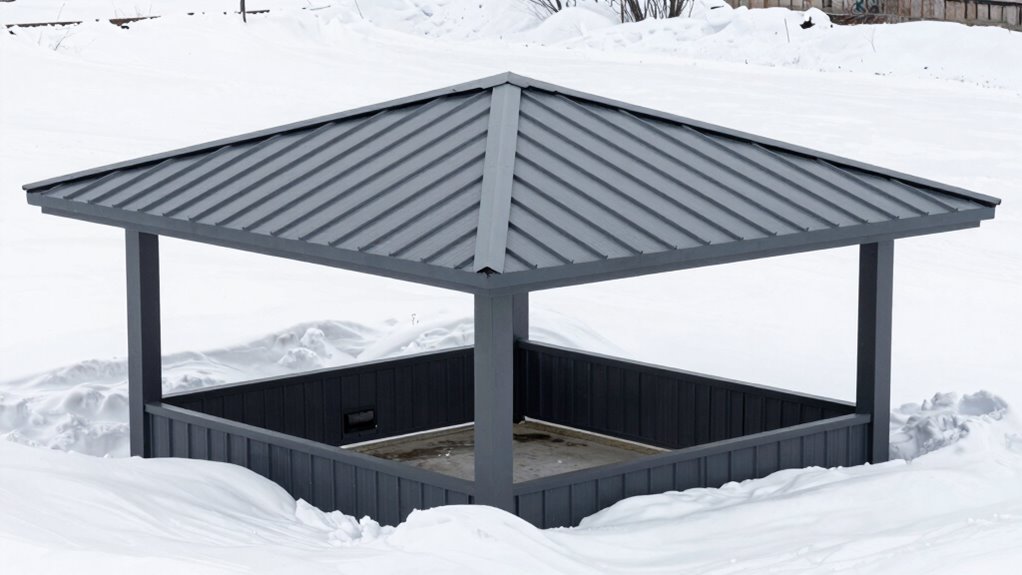
To make certain your gazebo can withstand harsh weather conditions, it’s essential to test its resistance before permanent setup. Start by simulating wind and rain exposure, checking how well the roof and fabric hold up. Ensure the fabric color options you choose don’t fade after weather exposure, maintaining your aesthetic design over time. Use a fan or gentle blow dryer to mimic gusts, and spray water to test for leaks or weak spots. Observe how the structure responds to these conditions, paying attention to stability and water runoff.
Test your gazebo’s weather resistance with simulated wind, rain, and fade-proof fabric checks before permanent setup.
- Check fabric durability under simulated rain
- Confirm wind resistance with fans or gust tests
- Evaluate how fabric color options resist fading
- Assess if aesthetic design remains appealing after testing
Key Features of All-Weather Hardtop Gazebos
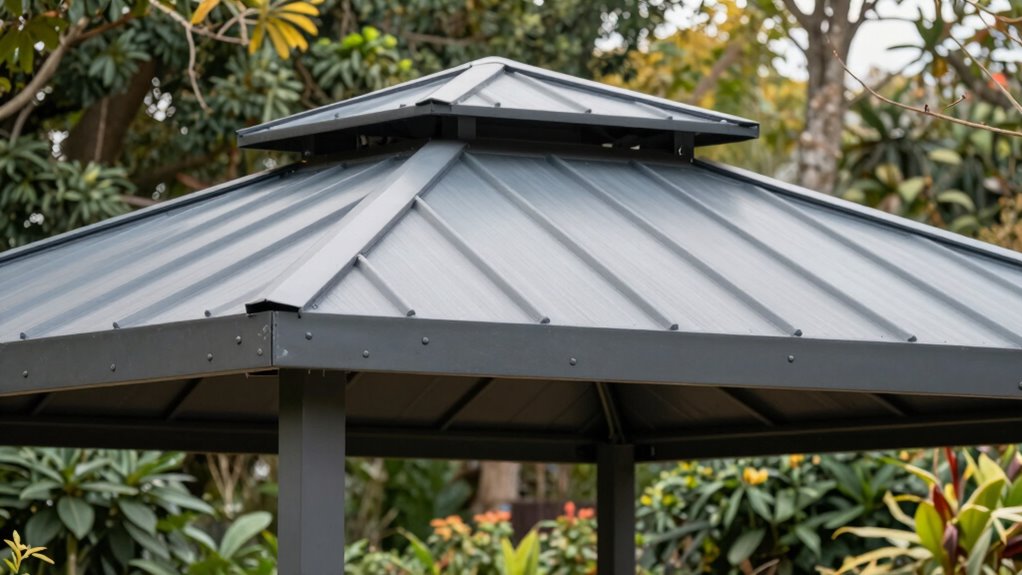
When choosing an all-weather hardtop gazebo, durability and design versatility are key factors. You want a structure that withstands harsh weather while fitting your style. Let’s explore how these features guarantee your gazebo performs year-round and complements your space.
Durability in All Weather
Durability in all weather conditions is essential when choosing a hardtop gazebo, especially if you want it to last through seasons of heavy rain, snow, or intense sun. A sturdy structure ensures your garden aesthetics remain intact, and your space stays inviting year-round. Look for gazebos made with corrosion-resistant metals and weatherproof coatings to withstand the elements. Reinforced roof panels prevent leaks and damage from wind or hail, protecting interior lighting and furnishings. Solid framing provides stability during storms, while UV-resistant finishes keep colors vibrant despite sun exposure. Features like sealed joints and high-quality sealants help prevent water intrusion. Investing in durable materials guarantees your gazebo remains a reliable centerpiece, enhancing your garden’s beauty and functionality regardless of weather conditions.
Design Versatility
A well-designed all-weather hardtop gazebo offers more than just protection from the elements; it provides flexibility to suit your outdoor lifestyle. Its design versatility allows you to customize with decorative accents that reflect your style, whether you prefer hanging lanterns, wind chimes, or elegant drapes. You also have a variety of color options, enabling you to match or contrast with your existing outdoor decor. This adaptability makes your gazebo a focal point that complements your space, whether you want a cozy retreat or a stylish entertainment area. Plus, adjustable features like removable panels or modular accessories add to its functionality, ensuring your gazebo remains both practical and visually appealing throughout the seasons.
Balancing Cost, Performance, and Climate Suitability When Buying
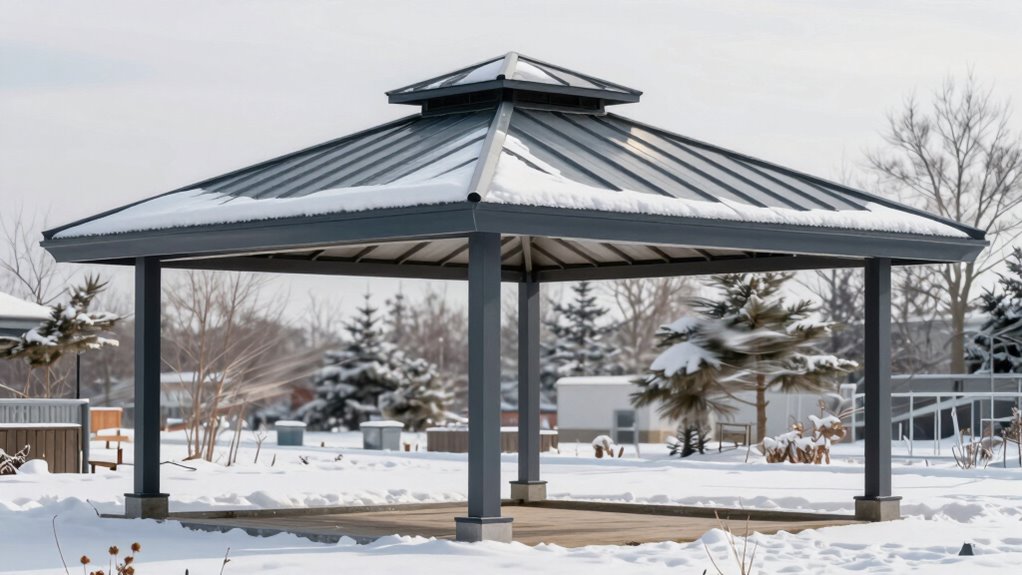
Balancing cost, performance, and climate suitability requires careful consideration to guarantee your hardtop gazebo meets your needs without overspending. You want a structure that withstands your local weather while fitting your budget. Consider options like color options to match your outdoor decor and durability needs. Think about installation tips—some models are easier to set up and maintain, saving you time and money. Prioritize materials that perform well in your climate, such as weather-resistant roofs or snow load capacity. Be mindful of upfront costs versus long-term performance to find the best value. Remember, investing in quality may cost more initially but pays off in longevity and performance. Evaluate these factors to strike the perfect balance for your outdoor space.
Frequently Asked Questions
How Long Do Hardtop Gazebo Roofs Typically Last?
Hardtop gazebo roofs typically last between 10 to 20 years, depending on the roof material and how well you maintain it. Metal roofs, for example, offer excellent roof durability and tend to have longer material longevity, often exceeding 15 years with proper care. Regular cleaning, inspections, and ensuring protection from harsh weather can extend the lifespan, so you get the most out of your gazebo’s roof.
Are There Eco-Friendly Roof Material Options Available?
Think of eco-friendly materials as a gust of fresh air for your outdoor space. Yes, sustainable options like bamboo, recycled metal, and reclaimed wood are readily available for gazebo roofs. These eco-friendly materials not only reduce your carbon footprint but also add natural charm. Choosing sustainable options means you’re nurturing the environment while creating a beautiful, durable shelter that stands the test of time and nature.
Can I Install Solar Panels on a Gazebo Roof?
Yes, you can install solar panels on a gazebo roof. Just make sure to take into account roof weight considerations because solar panels add extra weight, which might impact your gazebo’s structure. Check if your roof material can support the additional load and ensure proper mounting. Consulting a professional for solar panel installation helps guarantee safety, maximum performance, and compliance with local building codes.
How Often Should I Inspect My Gazebo for Damage?
You should inspect your gazebo at least once every three to six months. During each inspection, focus on roof cleaning to remove debris and check for signs of damage or wear. Regular inspections help prevent damage by catching issues early, ensuring your gazebo remains sturdy and safe. Don’t forget to examine the roof, joints, and supports, especially after storms or heavy weather, to keep everything in good condition.
What Maintenance Is Required to Keep My Gazebo Roof in Top Condition?
Imagine your gazebo’s roof is like a car needing regular care. You should periodically clean the roof to remove dirt, leaves, and debris, preventing mold and damage. Additionally, inspect for chipped paint or rust, and reapply paint or sealant as needed to maintain its appearance and protection. Regular roof cleaning and paint maintenance keep your gazebo in top shape, ensuring it stays durable and attractive for years to come.
Conclusion
Choosing the right roof material for your hardtop gazebo is like selecting the perfect suit—it’s about balancing durability, style, and climate needs. By considering snow load, wind resistance, and weather features, you guarantee your gazebo stands strong through any storm. Focus on quality and fit for your environment, and your gazebo will be a reliable retreat, weathering the elements like a sturdy ship sailing through rough seas.