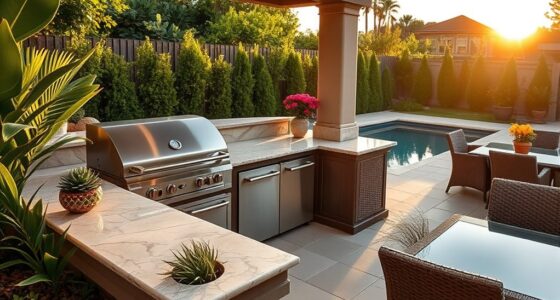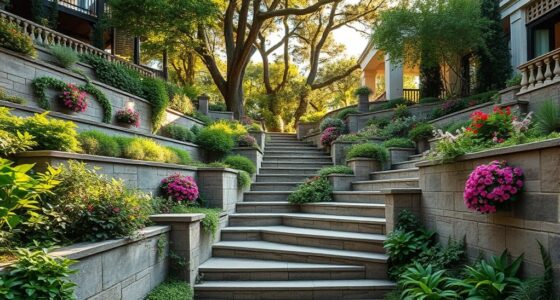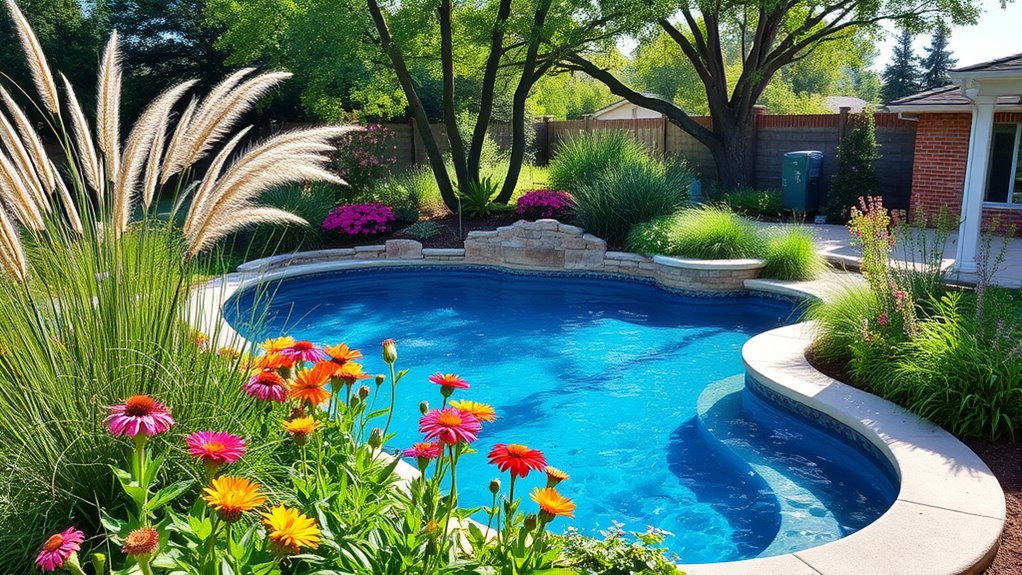

Integrating native plants and pollinator gardens into your pool landscape boosts visual appeal while supporting local ecosystems. You can plant species like coneflowers, milkweed, and goldenrod near water features or shaded areas to attract bees, butterflies, and hummingbirds year-round. These gardens reduce maintenance, prevent weeds, and encourage biodiversity. Choosing climate-adapted, eco-friendly mulch helps retain moisture naturally. For tips on creating a sustainable, low-maintenance pool landscape, explore more about native plant integration.
Key Takeaways
- Incorporate native plants around the pool to enhance beauty and create a natural, low-maintenance landscape.
- Select bee-friendly native species that bloom year-round to support local pollinators and promote biodiversity.
- Use eco-friendly mulch options like wood chips or straw to retain moisture and suppress weeds sustainably.
- Position pollinator-friendly plants near water features or shaded areas to attract beneficial insects and birds.
- Plan the landscape to serve as natural screens, soften hardscape edges, and reduce ongoing maintenance needs.

Incorporating native plants and pollinator gardens into your pool landscape not only enhances its beauty but also supports local ecosystems. When you choose to include bee-friendly plants, you’re providing essential food sources for pollinators like bees, butterflies, and hummingbirds. These creatures play a critical role in pollinating many plants in your yard, which helps maintain biodiversity and promotes healthier plant growth. To make your garden both attractive and environmentally conscious, consider using eco-friendly mulch around your native plants. This type of mulch helps retain soil moisture, suppress weeds, and decompose naturally without adding harmful chemicals to your environment. Organic options like shredded bark, straw, or wood chips are excellent choices that blend seamlessly into your landscape while supporting sustainability.
Adding native plants to your pool area creates a natural, inviting atmosphere. These plants are adapted to your local climate, meaning they require less water, fertilizer, and pesticides. This reduces your overall maintenance effort and minimizes environmental impact. When selecting bee-friendly plants, opt for varieties that bloom at different times of the year to provide a continuous source of nectar and pollen. Examples include coneflowers, milkweed, goldenrod, and a variety of native wildflowers. Not only do these plants attract pollinators, but they also add vibrant colors and textures to your landscape, making it a lively extension of your pool environment.
Integrating native plants and pollinator gardens around your pool also offers practical benefits. They can act as natural screens, providing privacy and reducing noise, while softening the hardscape of your pool area. Plus, they create a habitat that encourages beneficial insects and birds, which can help control pests naturally. When planning your garden, think about the placement of bee-friendly plants near water features or shaded areas to attract pollinators at different times of the day. Using eco-friendly mulch around these plants enhances their health and contributes to a sustainable landscape design. Additionally, understanding native plant adaptability can guide you in selecting species that will thrive with minimal intervention, ensuring a resilient and low-maintenance garden.
Frequently Asked Questions
How Do Native Plants Affect Pool Water Quality?
Native plants generally improve pool water quality by reducing runoff and filtering pollutants, thanks to their natural benefits. They attract pollinators and stabilize soil, which minimizes erosion and debris. You’ll notice less algae growth and clearer water, making maintenance easier. By incorporating native plants into your landscape, you support pollinator attraction and enjoy a healthier, more sustainable pool environment without harmful chemicals.
Are There Specific Native Plants Best Suited for Shady Pool Areas?
If you have a shady pool area, consider shade-tolerant native plants like oakleaf hydrangeas. They thrive in low light and add natural beauty. Native shrub options such as serviceberry or witch hazel also work well, providing structure and habitat for pollinators. In a case study, homeowners successfully used these plants to create a lush, low-maintenance landscape that enhances shade and supports local wildlife.
What Maintenance Is Required for Pollinator Gardens Near Pools?
You’ll need to establish a regular watering schedule for your pollinator gardens, especially during dry spells, to keep native plants healthy. Keep an eye out for pests and use eco-friendly pest control methods to protect bees and butterflies. Regularly remove weeds, deadhead flowers, and prune plants as needed. Maintaining good airflow and avoiding overwatering helps prevent disease, ensuring your pollinator garden thrives near your pool.
Can Native Plants Attract Pests to Pool Areas?
Native plants can be a double-edged sword in your pool area, but they’re generally like the calm in a storm—resistant to pests. Well-designed pollinator gardens attract beneficial insects, reducing pest issues, thanks to native plant pest resistance. By choosing the right pollinator garden design, you can keep pests away while enjoying native plants’ beauty. Proper placement and maintenance ensure your pool stays pest-free and inviting.
How Do I Prevent Pollinator Gardens From Contaminating Pool Water?
To prevent pollinator gardens from contaminating your pool water, you should use garden barriers like fencing or dense plantings to keep runoff away. Regularly maintain your garden by removing fallen leaves and debris that could wash into the pool. Avoid using chemicals near the garden, as runoff can carry pollutants into your pool water. By managing runoff and installing barriers, you protect your pool while supporting native pollinator habitats.
Conclusion
By incorporating native plants and pollinator gardens into your pool landscape, you create a harmonious space that benefits both your yard and the environment. As you nurture these vibrant ecosystems, you might find unexpected visitors, like hummingbirds or bees, drawn to your garden—reminding you that nature often returns the favor when you give it space. Ultimately, your thoughtful design becomes a reflection of balance, proving that small actions can lead to meaningful connections.