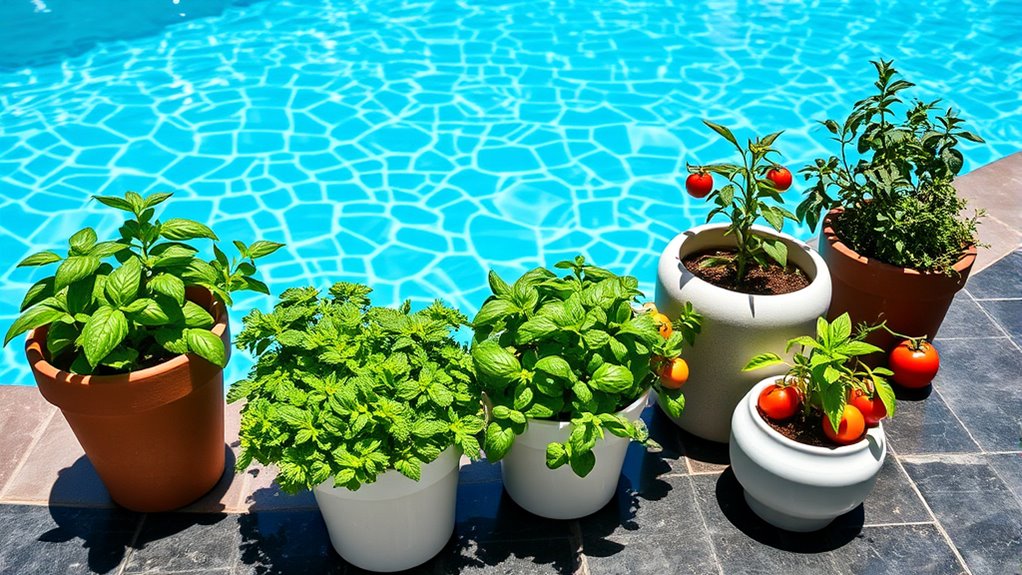

To create a thriving poolside herb and vegetable garden, choose durable, water- and UV-resistant planters like high-quality resin or fiberglass with proper drainage. Opt for sun-loving plants such as basil, rosemary, thyme, lettuce, and spinach that handle moisture and splashes well. Keep plants healthy by maintaining consistent watering, good drainage, and protecting them from pool chemicals. For more ideas on designing a vibrant garden, continue exploring expert tips and creative container options.
Key Takeaways
- Choose UV- and water-resistant planters made of resin, fiberglass, or treated wood for durability in poolside conditions.
- Select sun-loving herbs like basil, rosemary, and thyme, alongside vegetables such as lettuce, spinach, and radishes.
- Ensure planters have proper drainage with holes and gravel to prevent waterlogging and root rot.
- Place plants away from pool splashes using barriers or taller plants to protect them from chemicals and water exposure.
- Incorporate colorful, weather-resistant containers with varied heights and vertical planters for visual appeal and space efficiency.
Choosing the Right Materials for Poolside Planters

When selecting materials for poolside planters, it’s vital to take into account durability and resistance to water, sun, and temperature fluctuations. Poolside environments expose planters to constant moisture, intense sunlight, and temperature swings, so choose materials that can withstand these conditions without deteriorating. Materials like high-quality resin, fiberglass, or treated wood offer excellent resistance to water and UV rays, guaranteeing longevity. Avoid cheap plastics or untreated wood, which can crack, warp, or fade quickly. Consider the planter’s weight and stability, especially in windy areas. Proper drainage is also essential; select planters with adequate drainage holes to prevent waterlogging. Additionally, selecting materials that are weather-resistant will help maintain the planter’s appearance and structural integrity over time. Using UV-resistant coatings can further protect your planters from sun damage and preserve their vibrant appearance. Incorporating creative design elements can also enhance the visual appeal of your poolside garden. By choosing sturdy, weather-resistant materials, you’ll assure your garden remains vibrant and healthy season after season. Incorporating climate considerations and material durability into your material choice will also ensure your planters endure local environmental conditions effectively.
Best Herbs for Sun-Drenched Poolside Gardens

A well-chosen herb garden can thrive in the bright, sun-filled corners by your pool, adding fresh flavors and fragrant aromas to your outdoor space. Herbs like basil love direct sun and warm temperatures, making them perfect for poolside pots. Rosemary is hardy and drought-tolerant, thriving in full sun and requiring minimal watering once established. Thyme, especially varieties like lemon thyme, flourishes in sunny spots and offers both culinary and aromatic benefits. Parsley, while adaptable, prefers consistent moisture but still does well in bright conditions. Mint can grow vigorously, so plant it in contained pots to prevent spreading. These herbs are resilient, require plenty of sunlight, and can withstand the heat, making them ideal choices for your sun-drenched poolside garden. Additionally, selecting merchant services that support outdoor and garden retail can help streamline sales and enhance customer experience in your garden shop.
Vegetables That Flourish in Bright, Moist Environments

Vegetables that thrive in bright, moist environments are perfect for gardeners who want lush, productive crops in areas with plenty of sunlight and consistent watering. These vegetables love the combination of direct sun and steady moisture, making them ideal for poolside containers. Leafy greens like lettuce, spinach, and Swiss chard flourish under these conditions, providing fresh harvests throughout the season. Herbs such as basil and parsley also do well, adding flavor to your dishes while thriving in moist soil. Radishes and green onions are quick-growing options for these environments, offering fast rewards. Keep in mind, consistent watering is key to maintaining the moist soil they need. Incorporating proper workspace organization can help you manage your garden tools and supplies efficiently. Selecting vetted planters designed for moisture retention can enhance plant health and growth. Using appropriate soil amendments can further improve drainage and nutrient availability, supporting healthy development. Proper watering techniques ensure your vegetables receive the right amount of moisture without overwatering. Additionally, choosing containers with good drainage systems helps prevent overwatering and root rot. With proper care, your poolside garden will burst with vibrant vegetables throughout the warm months.
Drainage and Watering Tips for Poolside Containers

To keep your poolside containers healthy, make sure they have proper drainage systems that prevent water from pooling. Establish consistent watering routines to avoid over- or under-watering your herbs and vegetables. With the right drainage and watering strategies, your plants will thrive even near the water’s edge. Using adequate drainage systems can significantly improve plant health by preventing root rot and waterlogging. Additionally, regularly inspecting and maintaining your drainage components helps ensure ongoing fire safety compliance, especially if your setup involves heat sources or nearby structures. Proper storage in airtight containers can also prolong the freshness of your harvested herbs and vegetables, ensuring they remain nutritious and flavorful. Developing a good understanding of home maintenance can further enhance your success with poolside planting.
Proper Drainage Systems
Proper drainage is essential for poolside containers to prevent water from pooling and causing root rot. Without proper drainage, excess water can drown roots and lead to plant decline. To guarantee effective drainage, use containers with drainage holes and consider adding a layer of gravel or broken pottery at the bottom. This creates space for excess water to escape and improves airflow around roots. Regularly check that drainage holes aren’t blocked by soil or debris, especially after watering or heavy rain. Proper drainage systems help maintain healthy soil moisture levels, encouraging strong root growth and preventing disease. Incorporating appropriate drainage techniques and watering tips can extend the lifespan of your containers and promote healthier plants. Additionally, selecting containers made from materials that facilitate proper drainage can further support your gardening success, and choosing permeable materials can enhance overall drainage efficiency. Understanding the importance of drainage in container gardening can significantly improve plant vitality and longevity. Using smart watering practices aligned with good drainage can further optimize plant health and growth.
Consistent Watering Strategies
Maintaining consistent watering is essential for healthy plants in poolside containers, especially since the combination of sun, wind, and heat can quickly dry out soil. To keep your herbs and vegetables thriving, monitor soil moisture daily and water early in the morning or late afternoon to reduce evaporation. Use containers with drainage holes to prevent waterlogging, and check that excess water flows freely. Avoid letting plants sit in soggy soil, which can cause root rot. Consider using watering cans or drip irrigation systems for even, controlled watering. Mulching the soil surface helps retain moisture and keeps roots cool. Additionally, understanding the importance of proper watering frequency and avoiding overexposure to sun can help prevent skin damage if you tend to your plants outdoors during peak sunlight hours. Proper watering supports plant health and helps prevent pest issues. Incorporating proper drainage ensures excess water escapes to prevent root diseases. By establishing a regular watering routine and ensuring proper drainage, you’ll promote strong growth and healthy, productive plants poolside.
Protecting Your Plants From Pool Chemicals and Splashing

To keep your plants safe from pool chemicals and splashing, consider using barrier plants or physical barriers around your garden. Proper plant placement also helps prevent exposure, ensuring your herbs and vegetables stay healthy. By combining these strategies, you can enjoy a lush garden without worry.
Barrier Plants and Barriers
Ever wonder how to shield your garden plants from the harmful effects of pool chemicals and splashing? Using barrier plants and physical barriers can protect your herbs and vegetables effectively. Planting dense, hardy shrubbery like holly or boxwood creates a natural shield that absorbs splashes and reduces chemical exposure. You can also set up fencing or trellises around your planters to block direct contact with pool water. Additionally, placing raised beds or containers farther from the pool minimizes splashing risk. These barriers serve as a first line of defense, keeping chemicals out of your garden while maintaining easy access for watering and harvesting. With the right combination of plants and barriers, your poolside garden stays healthy and productive.
Proper Plant Placement
Placing your plants strategically is essential for protecting them from pool chemicals and splashing. Position herbs and vegetables away from the pool edge, especially where splashes are frequent. Use taller plants or decorative screens as barriers to shield your garden beds from direct exposure. Consider placing sensitive plants in containers or raised beds farther from the pool to prevent chemical drift. Avoid planting directly in areas where water runoff from splashing can carry chemicals onto roots. Regularly check your plants for signs of damage or chemical stress, and adjust their placement if needed. By thoughtfully positioning your garden, you reduce chemical exposure and create a healthier environment for your herbs and vegetables to thrive poolside.
Design Ideas for a Vibrant and Functional Poolside Garden

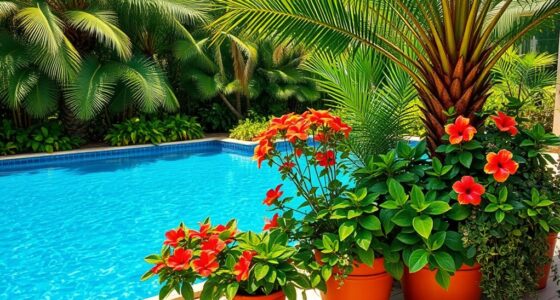
A vibrant and functional poolside garden can transform your outdoor space into a lively retreat. To achieve this, focus on creating visually appealing yet practical arrangements. Incorporate colorful containers for herbs and vegetables, mixing different heights and styles to add depth. Use raised beds or vertical planters to maximize space and keep plants accessible. Incorporate durable, weather-resistant materials that complement your pool area’s aesthetic. Add decorative elements like lanterns, sculptures, or garden lights for ambiance. Consider grouping plants with similar sun and water needs to simplify maintenance. With these ideas, your poolside garden becomes a lively, inviting spot perfect for relaxation and fresh harvests.
- Mix colorful, varied containers for visual interest
- Use vertical planters to save space and add height
- Incorporate durable accents for style and longevity
Frequently Asked Questions
How Often Should I Fertilize My Poolside Planters?
You should fertilize your poolside planters every 2 to 4 weeks during the growing season. Use a balanced, water-soluble fertilizer to guarantee your herbs and vegetables get the nutrients they need. Keep an eye on plant health; if leaves yellow or growth slows, you might need to fertilize more often. Be careful not to over-fertilize, which can harm your plants and the environment.
Can I Grow Tropical Herbs and Vegetables Near the Pool?
You might think tropical herbs and vegetables can’t grow near the pool, but with the right conditions, they can thrive. Tropical plants love warm, humid environments, so if your pool area provides consistent warmth and shade, you’re in luck. Just guarantee proper drainage and protect them from harsh sun or wind. With care and attention, you can enjoy lush, exotic herbs and vegetables right by your poolside.
Are There Specific Pests That Target Poolside Garden Plants?
You might encounter pests like aphids, spider mites, and whiteflies that target your garden plants. These pests are attracted to the moisture and warmth around pools, making your garden more vulnerable. Regularly inspect your plants, keep them healthy with proper watering, and use natural predators or organic treatments to prevent infestations. Staying vigilant helps protect your plants and keeps your poolside garden thriving.
What Are Eco-Friendly Options for Maintaining Poolside Planters?
You want eco-friendly ways to maintain your poolside planters, and there are great options. You can use organic fertilizers like compost or fish emulsion to nourish plants naturally. Mulching helps retain moisture and suppress weeds without chemicals. Additionally, choose pest control methods like introducing beneficial insects or using neem oil instead of synthetic pesticides. Regular watering and proper sunlight ensure healthy growth while keeping your environment safe and sustainable.
How Do I Winterize My Poolside Herb and Vegetable Containers?
Think of winterizing your planters as giving them a cozy blanket for the cold months. First, you remove any dead or diseased plants to prevent spreading. Next, store fragile containers indoors or elevate them off the ground. Drain excess water to avoid cracking, and insulate roots with mulch or straw. With these simple steps, your containers stay safe, and your garden is ready to flourish again come spring.
Conclusion
With the right materials and plant choices, your poolside garden can become a lush oasis that dances in the sunlight and refreshes your senses. Think of your containers as miniature ecosystems, thriving amidst splash and sun, turning your outdoor space into a vibrant tapestry of greenery. By tending to drainage, watering, and protection, you’re cultivating a living paradise that invites relaxation and joy—your very own botanical splash of paradise beside the pool.