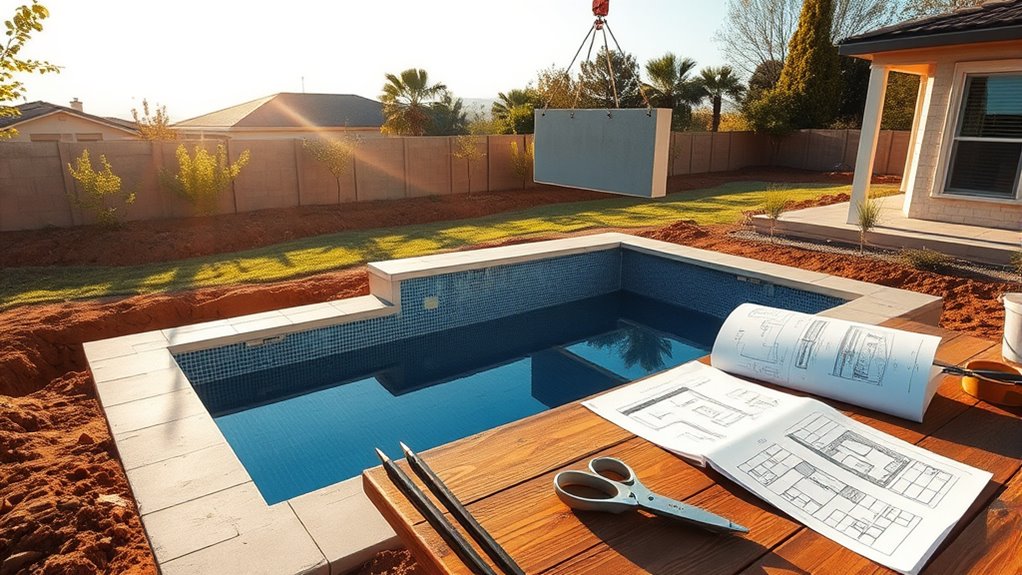

To plan your pool installation timeline, start by designing your pool and getting multiple contractor quotes early. Secure all necessary permits from your local building department, considering zoning and safety regulations, which can take several weeks. Coordinate with your contractor to schedule excavation, construction, and finishing work, keeping in mind the permitting process and weather delays. Proper planning helps you stay organized and on schedule—continue below to discover how each step fits into your project’s success.
Key Takeaways
- Set a realistic schedule by considering permit approval times and contractor availability early in planning.
- Obtain multiple contractor quotes and finalize your pool design before starting construction.
- Secure all necessary permits in advance to prevent delays during the construction phase.
- Plan for site preparation, excavation, and installation steps, estimating durations for each stage.
- Incorporate finishing touches like landscaping and decking into the timeline to ensure project completion aligns with your goals.

Installing a pool is an exciting project that requires careful planning and coordination. One of the first steps you should take is understanding the cost considerations involved in your pool installation. Budgeting early helps you decide what type of pool you want and influences every subsequent decision. Factor in not just the cost of the pool itself, but also expenses like site preparation, landscaping, and ongoing maintenance. Keep in mind that costs can vary widely depending on the size, shape, and materials you choose, so it’s wise to get multiple quotes from contractors. Being aware of your financial limits helps prevent surprises down the line and ensures you stay on track throughout the project.
Another critical aspect to consider early on is permit requirements. Before you start digging, you need to verify what permits are necessary in your area. Many municipalities have strict regulations regarding pool installation to ensure safety and compliance with local codes. Failing to secure the proper permits can lead to fines, delays, or even having to dismantle parts of your new pool. Contact your local building department to understand the specific requirements, which might include zoning reviews, safety barriers, or inspections at various stages of construction. Securing permits early not only keeps your project legal but also helps you avoid costly hold-ups once construction begins. It’s best to incorporate permit timelines into your overall schedule to ensure you don’t encounter unexpected delays.
Once you’re clear on your budget and permit requirements, you can start planning the actual timeline. This involves selecting a reputable contractor, finalizing your design, and scheduling inspections. Keep in mind that permitting and approvals can take several weeks, so it’s wise to start this process well before you want construction to commence. After permits are approved, the construction phase begins, which typically includes site excavation, laying the foundation, installing plumbing and electrical systems, and finishing touches like decking and landscaping. Each of these steps has its own timeline, which depends on the complexity of your design and weather conditions. By understanding the initial cost considerations and permit requirements, you’re setting yourself up for a smoother, more predictable pool installation process. Proper planning and reliable contractors can significantly reduce unexpected delays and ensure a successful completion. Planning ahead helps you stay organized, manage expectations, and ultimately enjoy your new pool without unnecessary stress or delays.
Frequently Asked Questions
What Permits Are Required for Pool Installation in My Area?
You’ll need to check local building codes and obtain permits for pool safety before starting installation. Contact your city or county office to find out specific requirements, which often include safety features and zoning approvals. During this process, choose a reputable contractor who understands permit requirements and prioritizes safety. They’ll help guarantee your pool complies with all regulations, making the project smoother and safer from start to finish.
How Do Weather Conditions Affect the Installation Schedule?
Weather conditions can cause delays in your pool installation schedule, especially during heavy rain, snow, or extreme temperatures. These weather delays often impact seasonal planning, so it’s wise to plan your project during favorable months. If unexpected weather hits, your timeline might shift, so stay flexible and stay in close contact with your contractor to adjust deadlines and guarantee a smooth process despite the weather challenges.
Can I Customize My Pool Design During Construction?
Yes, you can usually customize your pool design during construction. Many pool contractors offer design customization flexibility and allow you to choose from various pool material options like concrete, vinyl, or fiberglass. If you decide to make changes, inform your contractor early, as adjustments might impact timeline and costs. Keep in mind that some custom features may require additional planning or materials, but most modifications are feasible during the construction process.
What Maintenance Is Needed During the Installation Process?
Think of your pool installation as a symphony where every note counts. During construction, you’ll need to monitor pool chemicals to prevent algae and bacteria growth and guarantee water clarity. Regularly inspect safety measures, like fencing and covers, to keep everyone protected. Keep an eye on plumbing and equipment, and communicate with your contractor to address issues promptly. This active involvement helps create a smooth, safe installation process.
How Long After Installation Before I Can Swim?
You can usually start swimming about a week after installation, once the pool has been filled, the water has been balanced, and the necessary pool safety measures are in place. During this time, guarantee your pool accessories like filters and pumps are properly functioning. Always double-check that the water chemistry is safe, and consider installing safety features to prevent accidents. This way, you enjoy a safe, clean, and ready-to-use pool.
Conclusion
Believe it or not, planning your pool installation carefully can actually speed up the process and save you money. Some say rushing through design or construction doesn’t matter— but in reality, neglecting proper planning often causes delays and extra costs. So, take the time to follow a detailed timeline. Trust me, investing effort upfront guarantees your dream pool is ready to enjoy sooner and with fewer surprises along the way.