To avoid wasting money, start by measuring your pool’s size—note the length, width, and average depth—and consider its shape and debris levels. Match this info with a robotic cleaner designed for your pool’s size and surface type. Look for features like obstacle detection and debris capacity that suit your needs. If you keep these tips in mind, you’ll find the right robot quickly—and more ways to save might surprise you.
Key Takeaways
- Measure your pool’s length, width, and depth accurately to determine the right robot size and capabilities.
- Match your pool’s shape and surface type with a robot that features adaptive navigation and surface compatibility.
- Consider debris level and pool size to select a cleaner with appropriate debris capacity and cycle time.
- Choose energy-efficient models for smaller pools, and high-capacity, durable robots for large or irregular pools.
- Use trusted reviews and specifications to ensure the robot’s features align with your pool’s needs for efficient cleaning.
How to Measure Your Pool and Know What You Need
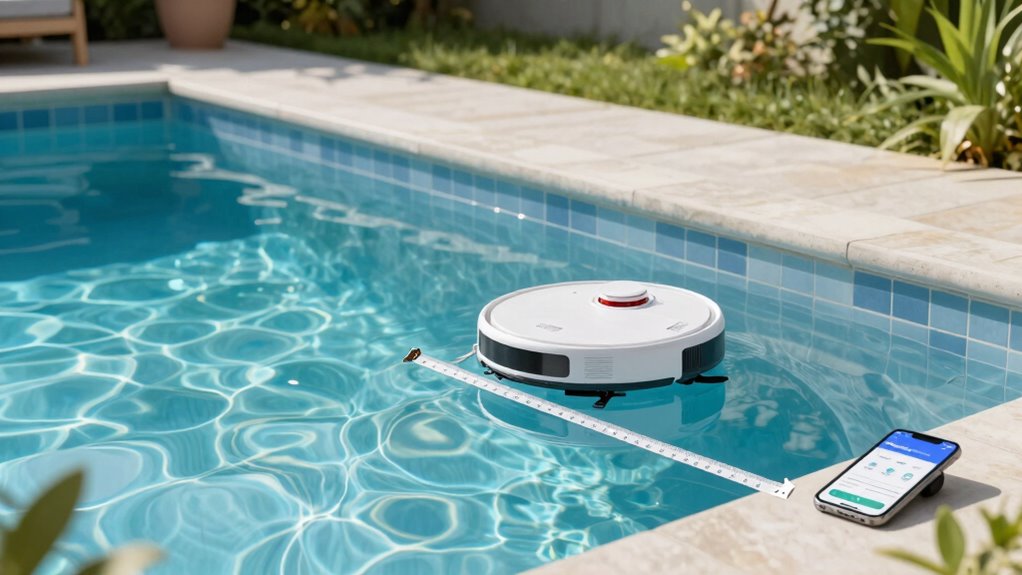
Before choosing a pool robot, you need to accurately measure your pool to determine what size and features it requires. Start by noting the pool’s length, width, and average depth. This information helps you select a robot that can cover the entire surface efficiently. Consider any specific needs, like managing pool chemical levels or ensuring proper pool lighting, which can affect cleaning requirements. If your pool has shallow and deep ends, choose a robot capable of handling both areas. Also, check if the robot can navigate around pool lights or clean around pool chemical dispensers without issue. Proper measurements and understanding your pool’s features guarantee you pick a robot that works seamlessly, saving you time and money while keeping your pool sparkling clean. Additionally, knowing your pool’s hydraulics and surface types ensures compatibility with selected cleaning equipment for optimal performance. Being aware of your pool’s surface material can also influence the choice of cleaning tools to prevent damage and enhance cleaning efficiency. Moreover, understanding your pool’s electric and mechanical components can help in selecting a robot that maintains performance and longevity. Recognizing the hydraulic flow characteristics of your pool helps optimize the robot’s navigation and cleaning coverage for better results. In addition, understanding the pool’s plumbing system can further enhance your ability to select the most compatible cleaning solutions.
Choosing the Best Robotic Pool Cleaner for Your Pool Size and Shape
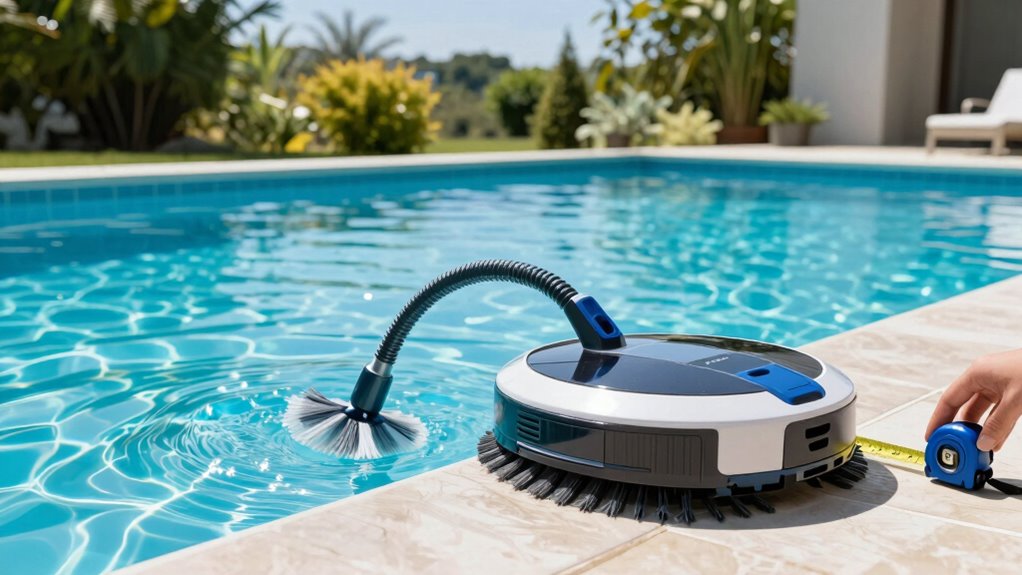
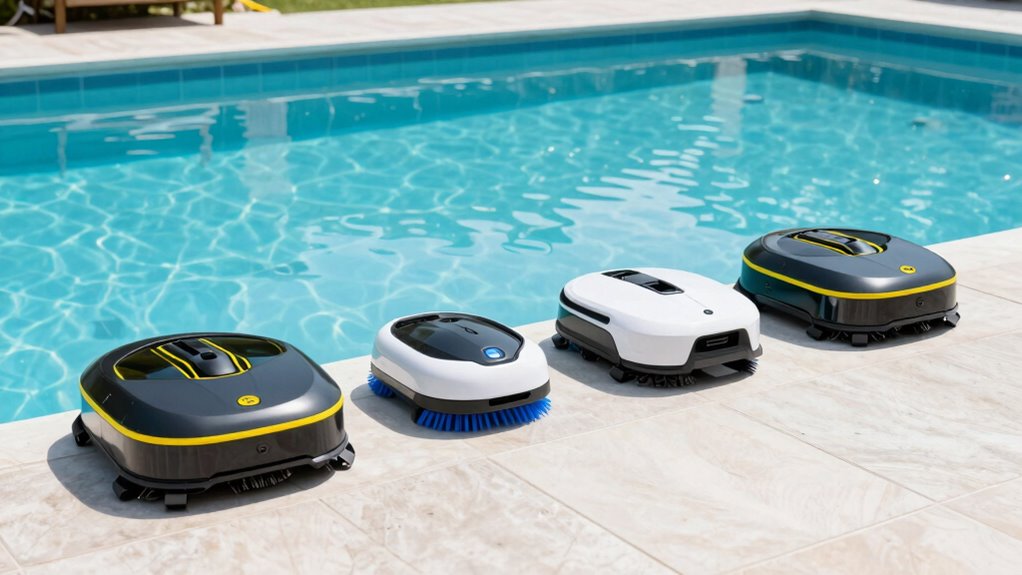
To pick the right robotic pool cleaner, you need to contemplate your pool’s size and shape. Larger or irregularly shaped pools may require models with better navigation and higher coverage. Make sure the cleaner you’re choosing can handle obstacles and reach all areas of your pool efficiently. Additionally, consider Free Floating capabilities and how they might influence the cleaner’s ability to adapt to different pool geometries. Incorporating Smart Navigation features can significantly improve cleaning efficiency in complex pool layouts. For optimal performance, also evaluate the Pool Surface compatibility to ensure effective cleaning across various materials and textures. Understanding navigation algorithms can help you select a model with advanced path planning for comprehensive coverage. Moreover, assessing sensor technology can enhance the cleaner’s ability to detect and avoid obstacles, ensuring thorough cleaning without getting stuck.
Pool Size Compatibility
Choosing the right robotic pool cleaner depends heavily on your pool’s size and shape. If your pool is large, you’ll need a model with a bigger debris capacity and faster coverage to ensure efficient pool maintenance. Smaller pools require less powerful cleaners that can still thoroughly clean without wasting energy. Consider the cleaning cycle time; longer cycles are better for bigger pools to cover every inch. Additionally, the right size and model help maintain proper water chemistry, preventing debris buildup that can disrupt balance. A cleaner suited for your pool size minimizes unnecessary wear and tear, saving you money in the long run. Matching your pool’s dimensions with the robot’s capabilities ensures effective cleaning and keeps your water chemistry stable. Properly matching your equipment can also prevent damage and extend the lifespan of your pool’s components.
Shape and Obstacle Navigation
When selecting a robotic pool cleaner, understanding your pool’s shape and obstacles is essential for ideal navigation. A cleaner with effective shape adaptation can maneuver smoothly around corners, curves, and irregular edges, ensuring thorough cleaning. Obstacle detection is equally important; it allows the robot to identify and avoid objects like ladders, toys, or pool fixtures, preventing damage and missed spots. Look for models equipped with advanced sensors that map your pool’s layout, enabling precise movement and efficient cleaning. If your pool has complex features or tight corners, choose a robot that excels in obstacle detection and adapts to various shapes. Proper shape adaptation and obstacle navigation ensure your cleaner works effectively, saving you time and effort while maintaining a pristine pool. Additionally, sensor technology plays a crucial role in enhancing these features, providing better accuracy in complex environments. Incorporating advanced mapping systems can further optimize cleaning patterns and coverage.
What Features Matter Most for Small, Medium, or Large Pools?

Have you considered how the size of your pool influences the features you should prioritize in a robot cleaner? For small pools, focus on compact design and efficient navigation to cover the area quickly. Medium pools benefit from robots with strong suction and multi-surface adaptability, especially if your pool has varied materials like tile or vinyl. Large pools demand energy-efficient models with larger debris capacity and longer battery life to minimize charging interruptions. Pool material also matters—robots with gentle brushes protect delicate surfaces, while durable materials withstand rougher surfaces in bigger pools. Prioritizing energy efficiency can save you money over time, especially if your pool requires frequent cleaning. Matching these features to your pool size ensures effective cleaning without wasting money or resources.
Matching Your Pool’s Debris Level to the Right Robot
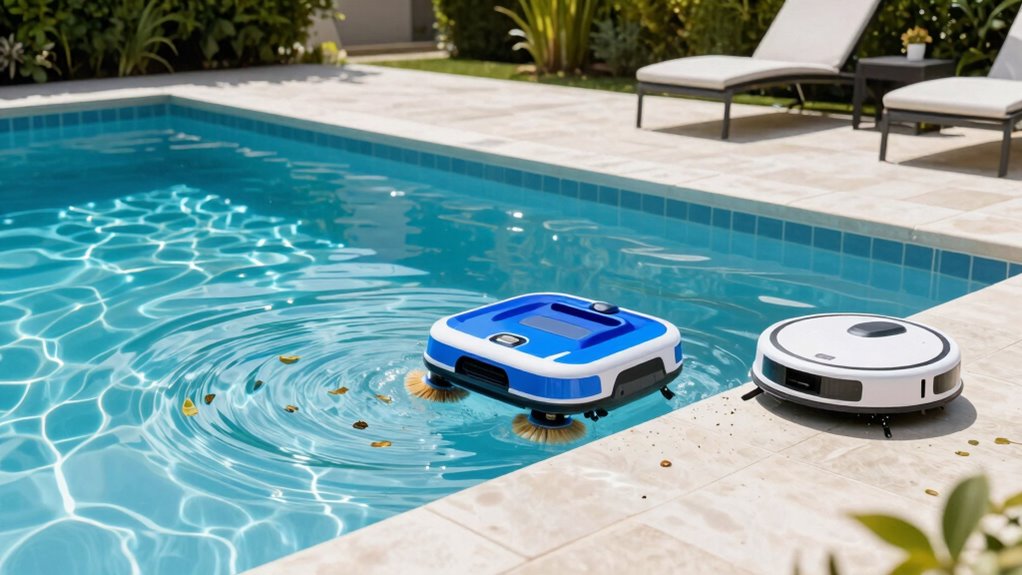
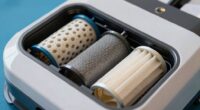
Your pool’s debris level plays a crucial role in selecting the right robot cleaner. If your pool regularly collects leaves, twigs, or larger debris, you need a robot equipped for heavy-duty cleaning. For daily debris, maintenance tips include choosing a model with a robust debris collection system and easy-access filters. Understanding debris types helps you decide whether a robot with a fine filter or a larger basket is best. Light debris, like pollen or dust, requires less intensive cleaning, so a basic model may suffice. Regularly check and empty filters or baskets to maintain peak performance. Additionally, selecting a robot designed to handle the specific debris type can improve cleaning efficiency. Considering debris characteristics can help you choose the most suitable robot for your pool’s needs. Being aware of debris accumulation patterns can further optimize your cleaning routine and equipment choice. Incorporating sustainable cleaning techniques and eco-friendly filters can also reduce environmental impact while maintaining optimal cleanliness. Using a robot with advanced navigation systems can further enhance cleaning coverage and efficiency.
Quick Tips to Save Money When Picking Your Pool Cleaner
Choosing the right pool cleaner doesn’t have to break the bank. To save money, consider models that prioritize energy efficiency, which lowers operating costs over time. Look for cleaners with smart features that reduce unnecessary cycles and conserve power, especially if your pool maintenance routine is straightforward. Opt for a robot suited to your pool size—overpowered models waste energy and money, while underpowered ones may need frequent replacements. Check for durable construction and easy maintenance, so you spend less on repairs and parts. Comparing brands and reading reviews can also help you find reliable options at better prices. Additionally, understanding trusted business listings can help you better evaluate the specifications and capabilities of different models, ensuring you choose an efficient and cost-effective cleaner. Selecting a model with energy-efficient features can significantly reduce your long-term costs, making pool maintenance more affordable in the long run. By selecting a model tailored to your pool’s needs, you ensure efficient cleaning without overspending, making pool maintenance more affordable in the long run.
FAQs: Finding the Perfect Robotic Pool Cleaner for Your Needs
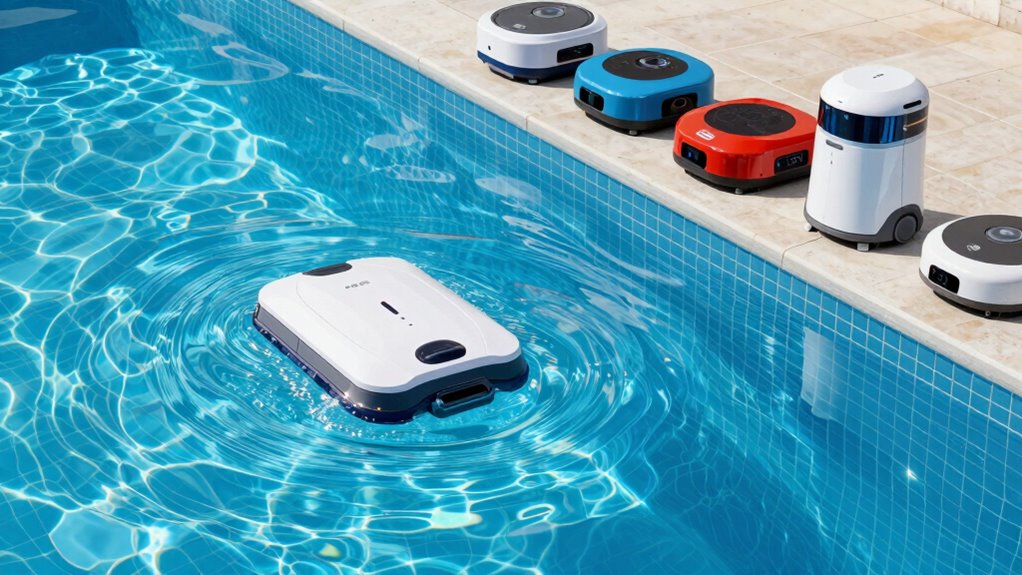
Are you unsure how to select the best robotic pool cleaner for your specific needs? When it comes to pool maintenance, choosing the right robot technology makes all the difference. Consider your pool size, shape, and debris type to match with a cleaner designed for those conditions. FAQs often focus on features like suction power, navigation, and cycle time, so ask yourself what’s most important—speed or thoroughness? Budget also plays a role, but investing in a reliable robot guarantees long-term savings and easier maintenance. Look for models with good reviews and warranty coverage. Remember, the right robotic pool cleaner simplifies pool care, reduces manual effort, and keeps your water sparkling. Matching your pool size with the appropriate robot saves money and guarantees better results.
Frequently Asked Questions
How Often Should I Run My Robotic Pool Cleaner?
You should run your robotic pool cleaner at least once a week for regular pool cleaning schedules, but if you swim frequently or have lots of debris, consider increasing the robot usage frequency to 2-3 times weekly. This guarantees your pool stays clean and reduces buildup. Adjust the schedule based on your pool’s size and usage to avoid unnecessary wear and save money.
Can Robotic Pool Cleaners Handle Algae or Heavy Staining?
Think of your robotic pool cleaner as a brave knight. While it handles regular debris well, it might struggle with algae removal or heavy staining, much like a knight facing a formidable dragon. For stubborn algae or stains, you’ll need to pre-treat with pool chemicals or scrubbing. Your robot’s strength lies in maintenance, but for deep algae removal, combine it with manual cleaning to keep your pool sparkling.
Are There Eco-Friendly Options for Robotic Pool Cleaners?
Yes, eco-friendly robotic pool cleaners are available. You can choose models powered by solar power, reducing electricity use and emissions. Look for cleaners with biodegradable filters, which break down naturally and minimize environmental impact. These options help you maintain your pool sustainably while saving energy and reducing waste. By selecting solar-powered robots with biodegradable filters, you make an eco-conscious choice that benefits both your pool and the planet.
How Long Do Robotic Pool Cleaners Typically Last?
Robotic pool cleaners typically last between 3 to 7 years, depending on usage and maintenance. Your robot’s lifespan hinges on durability factors like build quality, brush type, and motor strength. To extend its life, regularly clean filters, avoid harsh chemicals, and store it properly. Choose a model with good reviews and durable parts to maximize your investment and guarantee your pool stays pristine for years to come.
What Maintenance Is Required to Keep My Robot Working Efficiently?
Keeping your robot working efficiently requires regular maintenance. While it doesn’t need much, neglecting simple tasks can cause more work later. You should regularly check the pool chemical balance to prevent debris buildup, and clean the robot’s filters. Don’t forget battery replacement when needed; a fresh battery keeps it running smoothly. By staying on top of these tasks, you’ll extend your robot’s life and maintain ideal cleaning performance.
Conclusion
Now that you know how to match your pool size and debris level with the right robot, you’re ready to plunge in. Picture yourself effortlessly gliding over sparkling water, knowing you’ve chosen the perfect cleaner without wasting a dime. With a quick measurement and a smart pick, your pool will gleam like glass in no time. Save money, enjoy peace of mind, and let your robot do the hard work while you relax in your crystal-clear oasis.