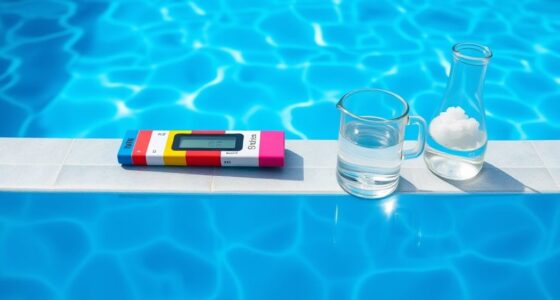
Cloudy water often happens because of filtration issues, chemical imbalances, or organic debris. Make sure your filter is properly sized, clean, and running long enough each day. Test and balance chemicals, especially pH and sanitizer levels. Remove leaves, dirt, and lotions regularly, and use clarifiers if needed. Proper circulation helps keep particles suspended and prevents algae growth. Keep these tips in mind, and you’ll find out how to restore sparkling clarity to your pool.
Key Takeaways
- Maintain proper chemical balance, including pH and sanitizer levels, to prevent mineral precipitation and microbial growth.
- Ensure the filtration system is appropriately sized, clean, and functioning efficiently to trap fine particles.
- Use water clarifiers to bind tiny particles, making them easier for filters to remove.
- Regularly remove organic debris through skimming, brushing, and vacuuming to reduce organic matter that causes cloudiness.
- Promote proper water circulation by running the pump adequately to distribute chemicals and suspend particles for effective filtration.

Have you ever wondered why your pool water turns cloudy? It’s a frustrating problem that can make your swimming experience less than enjoyable. Often, the culprit lies in how well your filtration system is working. Filtration systems are crucial for keeping your pool water clear because they trap dirt, debris, and particles that naturally accumulate over time. If your filter isn’t functioning properly or isn’t powerful enough for your pool’s size, small particles can slip through and stay suspended in the water, causing that cloudy appearance. Regularly cleaning or backwashing your filters ensures they operate efficiently, but sometimes, even the best filters struggle to clear up stubborn cloudiness caused by fine particles or algae. That’s when water clarifiers come into play. These are specially formulated chemicals designed to bind tiny particles together, making them larger and easier for your filtration system to trap. Using a water clarifier can dramatically improve water clarity, especially when combined with proper filtration.
Another common cause of cloudy water is an imbalance in your pool’s chemistry. When pH, alkalinity, or sanitizer levels aren’t properly maintained, it can lead to the formation of cloudy water. For example, high pH levels can cause minerals to precipitate out of the water, creating a hazy appearance. Similarly, inadequate sanitization allows algae and bacteria to grow, which can also cloud the water and make it look uninviting. To prevent this, you need to regularly test your water and adjust chemicals as needed. Proper chemical balance not only keeps your water crystal clear but also supports the effectiveness of your filtration system and clarifiers.
Debris and organic matter such as leaves, dirt, and sunscreen lotions can also contribute to cloudiness if not promptly removed. Regular skimming, brushing the pool walls, and vacuuming help minimize these particles. Additionally, ensuring proper circulation is essential, as stagnant water can lead to buildup and cloudiness. When circulation is poor, particles settle and algae can flourish, making the water look dull. Running your pump long enough each day ensures even distribution of chemicals and keeps debris suspended in the filter’s grasp.
Frequently Asked Questions
Can Cloudy Water Indicate a Serious Health Risk?
Cloudy water can indicate potential health risks, so you should take it seriously. Poor water clarity may mean bacteria, algae, or other contaminants are present, which could have health implications if ingested or used for bathing. Always avoid drinking or using cloudy water for cooking until you identify and resolve the cause. Testing your water and consulting professionals guarantee your water quality improves and safeguards your health.
How Long Does It Typically Take to Clear Cloudy Water?
You wonder how long it takes to clear cloudy water, and the answer depends on your actions. Usually, if you promptly perform filter maintenance and adjust chemical balancing, you could see clarity in just 24 to 48 hours. But delay or neglect might prolong the cloudiness for several days. Stay vigilant, follow these steps carefully, and you’ll be surprised how quickly your water transforms from murky to crystal clear.
Are There Specific Chemicals to Treat Cloudy Water Effectively?
Yes, there are specific chemical treatments you can use to treat cloudy water effectively. Clarifiers are commonly employed to help particles settle faster, making the water clearer. Chemical treatments like coagulants and algaecides can also help bind particles and eliminate algae, respectively. Always follow the manufacturer’s instructions for proper application and dosage to guarantee safe and effective results. Regular testing will help you monitor water clarity and adjust treatments as needed.
Is Cloudy Water Always Caused by Algae or Bacteria?
No, cloudy water isn’t always caused by algae growth or bacteria presence. It can also result from other factors like dirt, minerals, or chemical imbalances. While algae and bacteria are common culprits, you should check for any debris or high mineral content that might also cause cloudiness. Proper filtration and water testing can help identify the real cause, so you can treat it effectively and restore clarity.
Can Cloudy Water Damage Pool Equipment or Surfaces?
Cloudy water can indeed harm your pool surface and equipment. When water remains cloudy, it can lead to buildup of minerals and other debris that cause surface staining or etching. Additionally, persistent cloudiness may promote corrosion of pool equipment like pumps and filters due to imbalanced water chemistry. Regular maintenance and proper chemical balancing help prevent damage, ensuring your pool stays clear and equipment remains in good condition.
Conclusion
To clear cloudy water, you need to understand its causes like excess algae, debris, or chemical imbalances. Think of your pool like a clear glass of water—if dirt or algae sneak in, it turns cloudy. By regularly testing and balancing your chemicals, removing debris, and using clarifiers, you can keep your water sparkling. Remember, addressing the root cause guarantees your water stays crystal clear, so your swimming experience remains enjoyable and safe.