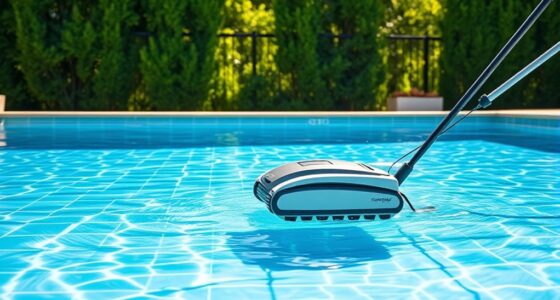
To keep your pool in top shape, follow a weekly routine of skimming the surface to remove leaves and debris, brushing the sides and bottom to prevent algae buildup, and vacuuming the pool floor to remove settled dirt. Use a leaf skimmer net, a suitable pool brush, and a vacuum cleaner suited for your pool type. Maintaining these steps regularly helps your pool stay clear, clean, and inviting—continue on to learn how to optimize each task for best results.
Key Takeaways
- Perform surface skimming daily or as needed to remove floating debris and maintain clear water.
- Brush pool sides and bottom weekly to loosen dirt and prevent algae buildup.
- Vacuum the pool weekly to eliminate settled debris and promote water clarity.
- Check and clean skimmer and pump baskets regularly to ensure proper filtration.
- Test and adjust chemical levels weekly to maintain proper pH and chlorine balance for water health.

Are you wondering how to keep your pool sparkling and safe all week long? The key lies in a consistent maintenance routine that tackles the essentials—skimming, brushing, and vacuuming—while guaranteeing your equipment is in top shape and the chemical balance remains stable. Staying on top of these tasks prevents dirt buildup, algae growth, and chemical imbalances that can compromise water quality and safety.
Start by inspecting your equipment regularly. Before you begin any cleaning, check your pump, filter, and skimmer baskets to make sure they’re functioning properly. Clean out skimmer baskets and the pump strainer to promote efficient circulation. If your equipment shows signs of wear or malfunction, address these issues promptly to avoid disruptions during your routine. Proper equipment inspection ensures your pool remains clear and properly filtered, reducing the effort needed to keep the water pristine. When you maintain your equipment, you also prevent potential breakdowns that could lead to costly repairs or water quality issues.
Regularly inspect and clean your pool equipment to ensure optimal performance and water clarity.
Next, focus on maintaining the chemical balance. Test your pool water with reliable test strips or a liquid testing kit at least once a week. Adjust the pH levels to stay between 7.2 and 7.6, as this range helps chemicals work effectively and prevents skin irritation or equipment corrosion. Also, monitor chlorine levels to keep the water sanitized; generally, you want free chlorine between 1 and 3 parts per million. Balancing your chemicals not only keeps the water safe but also minimizes the need for excessive chemical additions later on. Proper chemical balance inhibits algae growth and keeps your water clear and inviting.
After ensuring your equipment is inspected and your chemicals are balanced, move on to skimming the surface. Use a leaf skimmer net to remove floating debris like leaves, insects, and dirt. Doing this regularly prevents debris from sinking to the bottom, where it becomes harder to remove and can clog your filtration system. Once the surface is clear, brush the sides and the bottom of your pool to loosen dirt and algae that may be clinging to surfaces. Use a pool brush suitable for your pool’s finish to reach all areas thoroughly. These steps not only improve water clarity but also make vacuuming easier by loosening dirt before you use the vacuum.
Finally, vacuum the pool to remove settled debris from the bottom. Manual vacuuming or automatic cleaners can be used, depending on your preference. Regular vacuuming prevents dirt accumulation, maintaining a clean and inviting pool. When you combine these tasks—checking your equipment, balancing chemicals, skimming, brushing, and vacuuming—you create a detailed weekly routine that keeps your pool water sparkling, balanced, and safe for swimming. Consistency is key; sticking to this schedule ensures your pool stays in excellent condition with minimal surprises.
Frequently Asked Questions
How Often Should I Adjust the Pool’s Chemical Levels?
You should adjust your pool’s chemical levels after every water testing, ideally weekly or whenever you notice changes. Maintaining proper chemical balance is vital for safe swimming and preventing algae or bacteria growth. Regular testing helps you identify if pH, chlorine, or alkalinity levels are off. Adjust chemicals promptly, following the test results, to keep your water clean, clear, and balanced.
What Signs Indicate My Pool Needs Professional Maintenance?
You should call a professional if you notice pool algae buildup that won’t clear with regular cleaning or if your equipment shows signs of corrosion. Unusual cloudy water, persistent algae, or equipment making strange noises are clear indicators. Regular maintenance can prevent these issues, but if problems persist despite your efforts, a professional can diagnose and fix underlying issues, ensuring your pool stays safe, clean, and functioning efficiently.
Are There Eco-Friendly Pool Cleaning Options Available?
Did you know that eco-friendly pool cleaning options are growing in popularity? You can use biodegradable cleaners to effectively clean your pool without harming the environment. Solar-powered skimmers are another great option, reducing energy consumption while keeping your pool debris-free. These sustainable choices help protect water quality and reduce your carbon footprint, making pool maintenance safer for you and the planet.
How Do Seasonal Changes Affect My Weekly Pool Schedule?
Seasonal weather changes can considerably impact your pool schedule. In colder months, you might need to reduce skimming and vacuuming since debris decreases, but regularly check and adjust your routine. Using a pool cover during off-season helps protect your pool, reduce debris, and minimize cleaning efforts. When the weather warms, increase cleaning frequency to keep your pool water balanced and clean, ensuring a safe, inviting swimming environment year-round.
What Tools Are Best for Effective Skimming and Brushing?
Imagine a sunny afternoon as you reach for your pool tools; robotic cleaners are perfect for effortless skimming, quietly removing debris without you lifting a finger. For brushing, a telescoping pole gives you reach and control to scrub walls and tiles effectively. Together, these tools guarantee your pool stays sparkling clean, making maintenance easier and more efficient—so you can enjoy your pool without the hassle of manual labor.
Conclusion
By sticking to this weekly schedule, your pool stays crystal clear and inviting. Skimming, brushing, and vacuuming become your trusted rhythm—your dance with cleanliness. Remember, consistency turns maintenance into a breeze, transforming your pool from a murky mess to a sparkling oasis. So, commit to this routine, and watch your efforts ripple into endless poolside enjoyment. After all, a well-maintained pool isn’t just a chore—it’s the heart of your summer paradise.