To guarantee pool safety, your fence should be at least 4 feet high, with any gates self-closing and self-latching, placed high enough to prevent children from reaching. Choose durable materials like vinyl, aluminum, or steel to withstand weather and prevent climbing. Make sure your fence is continuous, with no gaps, and complies with local regulations. For detailed design tips, understanding specific height requirements, materials, and safety standards will help you create an effective, compliant barrier.
Key Takeaways
- Minimum fence height of at least 4 feet (1.2 meters) is recommended, with higher fences possibly required by local codes.
- Fencing must fully enclose the pool perimeter without gaps or openings for safety.
- Common materials include wood, vinyl, aluminum, and steel, each with different durability and maintenance profiles.
- Gates should be self-closing, self-latching, and positioned high enough to prevent children from reaching.
- Installation must comply with local safety standards and building codes to ensure stability and legal compliance.
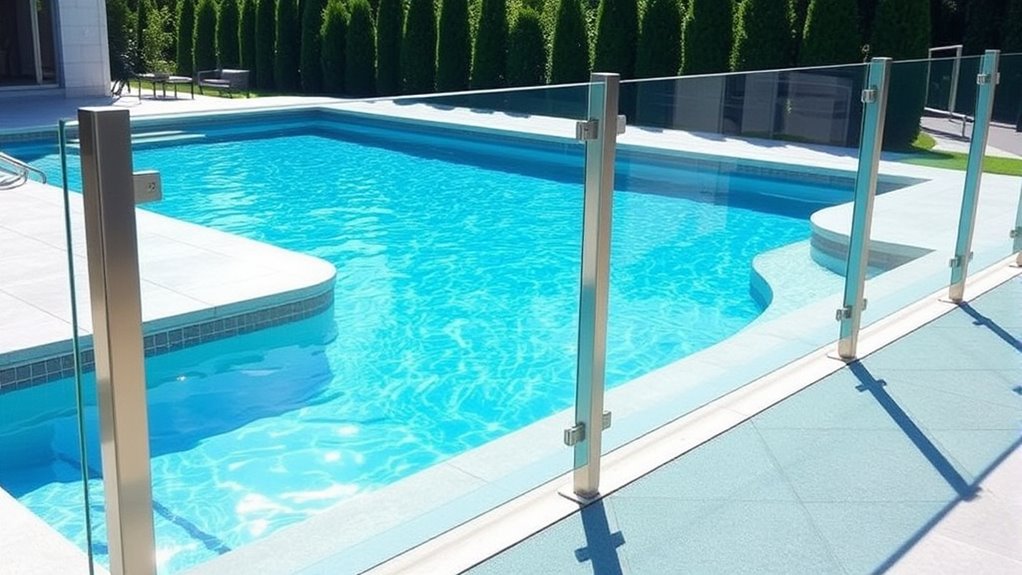
Designing a pool fence that is both safe and compliant starts with understanding key guidelines. Your primary goal is to create a barrier that prevents children and pets from accessing the pool area unsupervised, reducing the risk of accidents. To do this effectively, you need to pay close attention to pool safety standards and select appropriate fencing materials. The right fencing can make all the difference in ensuring safety while also blending seamlessly with your landscape.
Creating a safe pool barrier is essential for protecting children and pets from unsupervised access.
When considering pool safety, one of the most important factors is the height of your fence. Most regulations recommend a minimum height of at least 4 feet (around 1.2 meters) for residential pools. This height helps keep young children from climbing over or slipping through the barrier. Some jurisdictions might require higher fences, especially if your pool is in a high-traffic or accessible area. Keep in mind that the fence should extend around the entire pool perimeter, without gaps or openings that could allow a child to crawl through. Gates should be self-closing and self-latching, positioned high enough so that children can’t reach the latch. Regularly inspect and maintain your fencing to guarantee these safety features are always in place.
Choosing the right fencing materials is essential for both safety and durability. Common options include wood, vinyl, aluminum, and steel. Wood provides a classic look but needs regular maintenance to prevent rot and splintering. Vinyl fencing is low-maintenance and resistant to weather, making it a popular choice for many homeowners. Aluminum fences are lightweight, rust-resistant, and relatively easy to install, offering a sleek look that doesn’t compromise security. Steel fences are incredibly sturdy and provide a high level of security but can be heavier and more costly. Whichever material you choose, ensure it’s sturdy enough to withstand pressure and prevent climbing or breaching. The fencing should have no sharp edges or points that could cause injury, and the surface should be smooth and secure.
Adhering to fencing regulations isn’t just about choosing the right materials and height; it’s also about installation. Proper installation guarantees the fence remains stable over time, resisting weather and accidental impacts. Make sure to follow local building codes and safety standards, as these often specify the exact height, gate requirements, and fencing materials permitted. Consulting with a professional can help you design a fence that meets all safety and legal standards, giving you peace of mind that your pool area is secure for everyone. Additionally, understanding regulatory standards can help you avoid potential legal issues related to fencing compliance. Ultimately, a well-designed, compliant pool fence guarantees safety, peace of mind, and adds value to your property.
Frequently Asked Questions
Are There Eco-Friendly Pool Fence Options Available?
Yes, eco-friendly pool fence options are available. You can choose sustainable materials like bamboo, recycled wood, or metal made from recycled content. Biodegradable options, such as certain biodegradable plastics, are also available for temporary fencing. These choices help reduce environmental impact while maintaining safety and durability. By selecting these sustainable or biodegradable materials, you can create a safe, eco-conscious pool area that aligns with your green values.
How Do Weather Conditions Affect Fence Material Choices?
Weather conditions greatly impact your fence material choices by affecting durability. For example, harsh sun can cause fading or warping, while heavy rain or snow may lead to rust or rot. You should choose materials with strong weather resistance, such as vinyl or treated wood, to guarantee longevity. Considering weather impact helps you select a fence that withstands your climate, reducing maintenance and replacement costs over time.
Can Pool Fences Be Customized for Aesthetic Purposes?
Yes, you can customize your pool fence for aesthetic purposes by choosing decorative fencing options and incorporating personalized designs. You might opt for unique colors, patterns, or materials that complement your landscape or home style. Adding decorative elements like motifs or artwork makes your fence more visually appealing. Personalizing your fence allows you to create a safe, stylish feature that enhances your outdoor space and reflects your personality.
What Are the Costs Associated With Different Fencing Materials?
The costs for different fencing materials vary, impacting your fence installation and maintenance expenses. Vinyl fences tend to have higher initial costs but low maintenance, saving you money long-term. Wood fences are cheaper upfront but require regular upkeep, increasing maintenance costs. Chain-link fences are affordable initially and durable, but may need occasional repairs. Consider your budget and long-term upkeep when choosing materials to guarantee your pool fence remains safe and cost-effective.
Are There Specific Regulations for Pool Fence Gates?
Did you know that nearly 80% of pool-related accidents involve unsecured gates? Regulations specify that your pool fence gate must have a self-closing, self-latching latch high enough to prevent small children from opening it. You should also implement access control measures, like alarms or locks, to enhance safety. Make sure your gate complies with local codes to avoid penalties and ensure maximum protection for everyone around your pool area.
Conclusion
By following these pool fence design guidelines, you guarantee safety and compliance while enhancing your outdoor space. Remember, a properly designed fence can reduce drowning risks by up to 83%, making it an essential investment. Focus on appropriate height, durable materials, and adherence to local regulations. When you prioritize safety with thoughtful design, you create a secure environment where family and guests can enjoy your pool worry-free.