To keep your pool safe, aim for a fence at least 4 feet high, ensuring it meets local height requirements. Install childproof, self-closing, and self-latching gates with latches out of children’s reach. Keep the fence climb-resistant by avoiding footholds and horizontal rails, and remove objects that could serve as footholds nearby. Proper material choices and regular maintenance are key to safety and durability. For more tips on creating a secure pool environment, continue exploring the essentials.
Key Takeaways
- Maintain a minimum fence height of 4 feet (48 inches), with regional variations for public pools.
- Ensure gates are self-closing, self-latching, with latches at least 54 inches high to prevent child access.
- Eliminate footholds, handholds, and horizontal rails that facilitate climbing on the fence.
- Use durable, weather-resistant materials and conduct regular inspections for damage or loose hardware.
- Comply with local safety standards and regulations regarding height, gate security, and climbability restrictions.
How High Should a Pool Fence Be for Safety and Compliance?
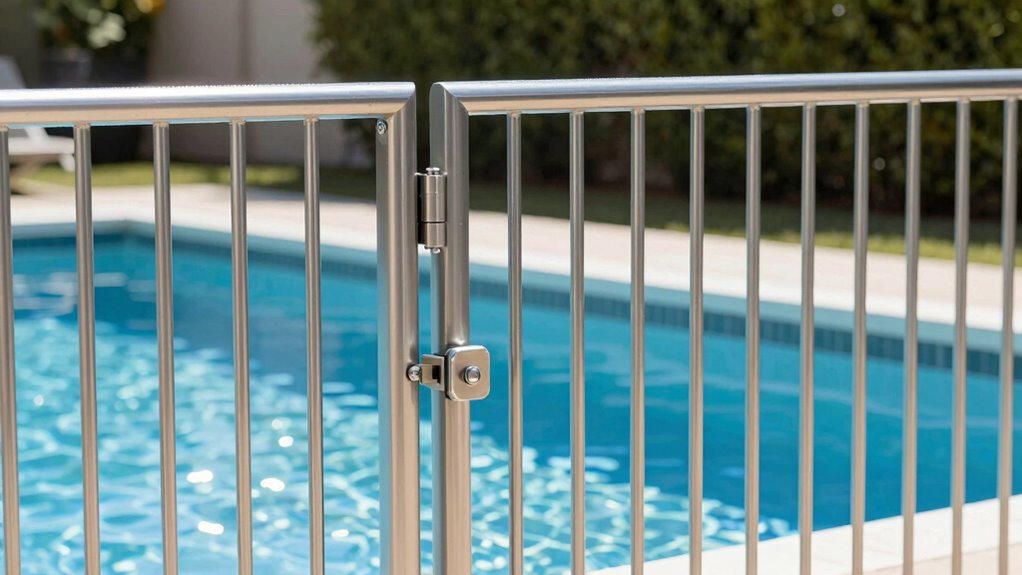
Have you ever wondered how high your pool fence should be to keep everyone safe and guarantee compliance with regulations? The answer depends on local safety standards, but generally, the recommended pool height is at least 4 feet (48 inches). This height helps prevent children from climbing over easily and ensures safety compliance. Keep in mind that some regions might require a taller fence, especially for commercial or public pools. A properly measured pool height creates a physical barrier that discourages accidental access. Remember, the right height isn’t just about meeting legal standards; it’s about providing peace of mind for your family and visitors. Understanding safety standards can help you make informed decisions about your pool fencing. Additionally, considering local building codes ensures that your fencing meets all regional requirements and provides maximum safety. Being aware of climbability factors can further enhance your pool’s safety features. Ensuring your fence’s design minimizes climbing aids can significantly reduce the risk of accidental breaches. Evaluating fence material and design can also contribute to preventing climbability and improving overall safety.
What Features Make a Pool Gate Childproof and Secure?
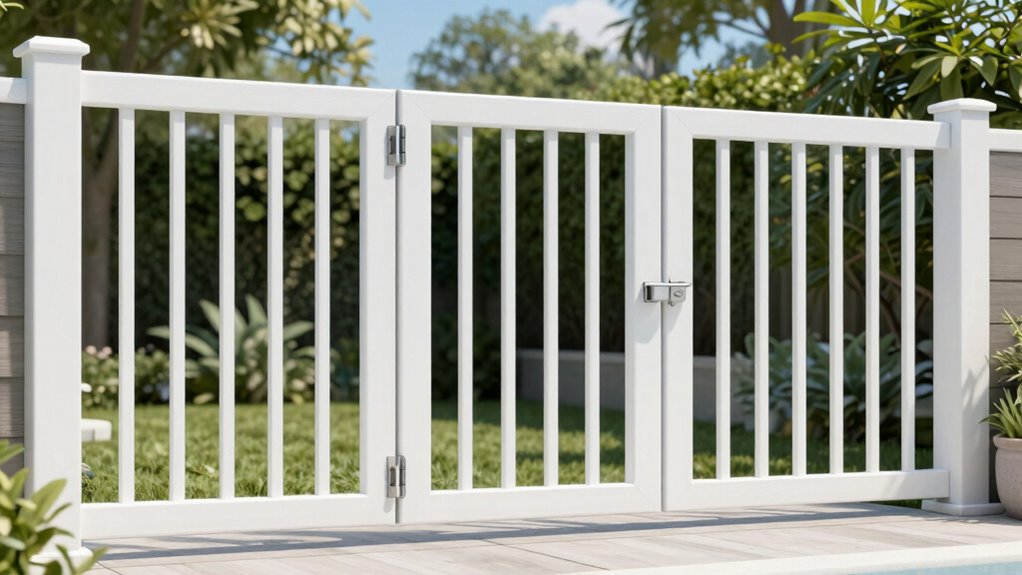
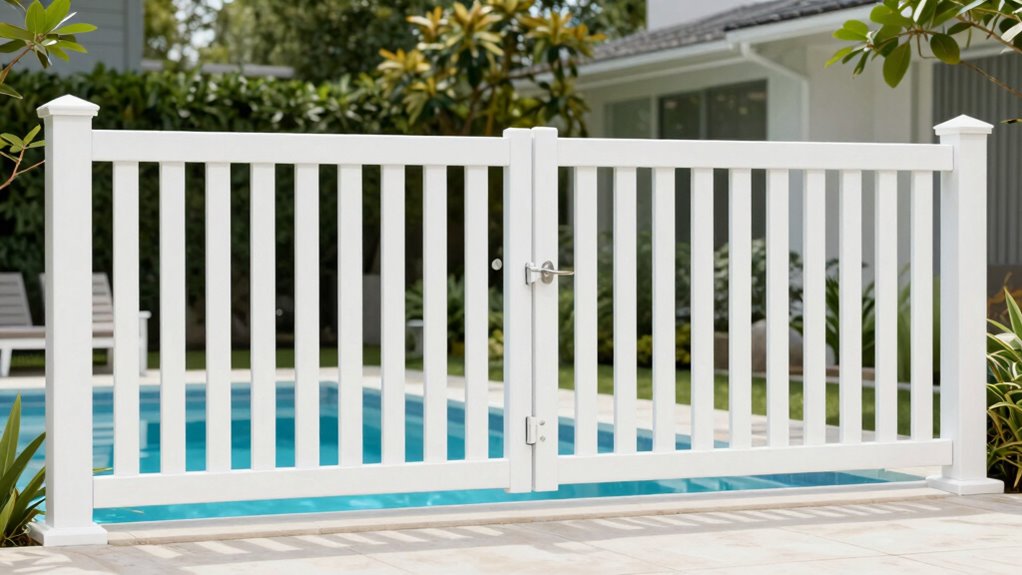
What features guarantee your pool gate stays childproof and secure? First, choose a self-closing, self-latching gate with a latch that’s out of a child’s reach. The latch should be at least 54 inches above the ground and operate with a secure, one-handed release. Keep the gate’s hinges and latches in good condition to prevent accidental openings. To maintain fence aesthetics and landscaping integration, select a gate design that complements your yard’s style without sacrificing safety. Ensure the gate fits tightly within its frame, with no gaps that a child could squeeze through. Regularly inspect all hardware and fix any wear promptly. Additionally, proper installation techniques are essential to ensure the gate functions correctly and remains secure over time. Conducting routine safety inspections helps identify potential vulnerabilities before they become hazards. Proper fencing material quality also plays a crucial role in maintaining the integrity and safety of your pool barrier. Moreover, choosing innovative materials can enhance durability and childproof features in your fencing. Finally, adhere to local regulations and standards to ensure your pool fencing offers maximum protection. By combining these features, you create a secure, visually appealing barrier that keeps children safe around your pool area.
How Can You Reduce Climbability of Your Pool Fence?

To effectively reduce the climbability of your pool fence, focus on eliminating footholds and handholds that children can use to scale it. Climb prevention is essential, so consider adding smooth, flat surfaces without gaps or indentations where kids might grip. Barrier enhancement can include installing a self-closing, self-latching gate that’s difficult to open from the inside, deterring attempts to climb over. Avoid designs with horizontal rails or wide spacing, as these create natural footholds. Regularly inspect your fence for any damage or loose parts that could make climbing easier. Additionally, applying climb-resistant materials can further discourage scaling by making it more difficult for children to grip or climb. Using proper fence height guidelines ensures your barrier remains effective, as taller fences are inherently harder to climb. Ensuring that your fence has no climbable features and is constructed with safety in mind can significantly improve its effectiveness. Incorporating design principles for safety can help you create a more secure barrier that minimizes the risk of climbing. Moreover, integrating visual deterrents such as weatherproof stickers or reflective tape can discourage children from attempting to climb by making the fence less appealing or more intimidating. By minimizing climbable features and maintaining the integrity of your barrier, you create a safer environment and discourage children from attempting to scale your pool fence.
Why Material and Design Choices Matter for Your Pool Fence

Choosing the right materials and design for your pool fence affects both its longevity and appearance. Durable materials reduce maintenance and guarantee safety over time, while the design should match your home’s style. Making thoughtful choices now helps you create a fence that’s both functional and visually appealing.
Material Durability and Maintenance
The material and design of your pool fence directly impact its ability to withstand weather conditions, wear, and the test of time. Choosing durable materials guarantees long-lasting performance with minimal maintenance. Additionally, selecting support networks for new fathers or consulting professionals can help ensure your fence remains secure and effective over the years. Consider these factors: 1. Paint durability – Opt for high-quality, weather-resistant paint to prevent peeling and fading. 2. Material resistance – Use corrosion-resistant metals or treated wood to combat moisture and rust. 3. Weather resistance – Select materials that endure sun, rain, and temperature fluctuations without degrading. 4. Maintenance needs – Regular inspections and cleaning help preserve the fence’s integrity and appearance. Incorporating material durability into your planning can significantly extend the lifespan of your pool fence and reduce long-term costs, especially when selecting materials with proven Weather resistance and low maintenance requirements. Additionally, considering electric bike features such as corrosion-resistant components can offer insights into selecting weatherproof materials for outdoor applications.
Design Aesthetics and Compatibility
Selecting the right materials for your pool fence not only affects its durability but also shapes its overall look and harmony with your outdoor space. You want a design that complements your landscaping harmony, creating a seamless progression between your yard and pool area. Consider color coordination to guarantee your fence enhances existing features rather than clashing with them. For example, natural wood fences blend well with earthy tones, while sleek metal options might suit modern landscapes. The style and material should reflect your home’s architecture and personal taste, making your outdoor space feel cohesive. Thoughtful choices in design aesthetics help your pool fence serve as both a safety feature and an attractive element, elevating your entire backyard ambiance. Incorporating brewing science features into your fence design can further enhance safety and peace of mind.
What Are Best Practices for Maintaining Your Pool Fence?

To keep your pool fence secure, you should regularly inspect it for damage or wear. Proper gate maintenance is also vital to guarantee it latches properly and stays closed. Staying on top of these practices helps keep your pool area safe for everyone. Additionally, considering inclusive safety standards can ensure your fence design accommodates diverse needs and enhances overall safety.
Regular Fence Inspections
Regular fence inspections are essential for keeping your pool area safe and secure. Regular checks help identify issues like loose panels, rust, or damage that could compromise safety. During inspections, consider landscaping integration to ensure plants don’t interfere with the fence’s integrity, and check that aesthetic customization elements remain intact.
Here are four best practices:
- Examine the entire fence for loose or damaged panels.
- Inspect the gate latch and hinges for proper operation.
- Assess landscaping around the fence to prevent obstruction or damage.
- Verify that aesthetic features, like decorative elements, are secure and undamaged.
Consistent inspections guarantee your fence remains functional and visually appealing, maintaining safety and harmony with your yard’s design.
Proper Gate Maintenance
A well-maintained gate is essential for keeping your pool area secure. To guarantee proper gate function, regularly check the gate latch positioning, making sure it’s high enough to prevent children from opening it easily. Adjust or replace the latch if it becomes loose or misaligned. Additionally, inspect the fence hinge quality; loose or rusted hinges can cause the gate to sag or not close properly. Tighten or replace hinges as needed to maintain a secure seal. Lubricate moving parts to prevent stiffness or sticking. Consistent maintenance of these components keeps your gate functioning smoothly and reduces the risk of accidental openings. Regular checks and prompt repairs are your best defense against pool safety hazards.
How to Pick the Right Fence Height and Secure Gate Locks

Choosing the right fence height and securing gate locks are essential steps in ensuring your pool area stays safe. When selecting a fence height, consider local regulations, typically 4 feet or higher, and how landscaping integration affects visibility. For privacy considerations, taller fences can block views and add seclusion. To maximize safety and functionality, keep these tips in mind:
- Opt for a height that complies with safety codes and blends with your landscaping.
- Use locks that are child-proof and positioned out of reach.
- Ensure gates are self-closing and self-latching for added security.
- Regularly inspect and maintain locks and hinges to prevent tampering or failure.
These measures help prevent unauthorized access while maintaining a cohesive outdoor aesthetic.
Which Climbable Elements Should You Watch Out For?
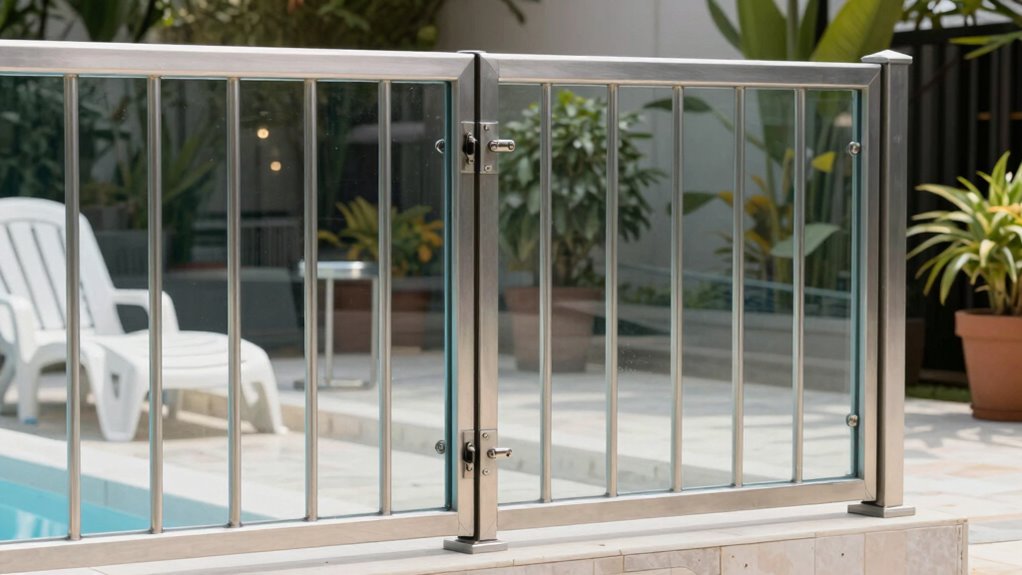
To keep your pool area safe, it’s crucial to identify and address climbable elements that can be used to gain unauthorized access. These climbable elements include objects like nearby furniture, trees, or structures that can act as fence obstacles, making it easier for someone to scale your fence. Pay attention to anything within a few feet of your fencing that could serve as a step or foothold. Even small additions like planter boxes or low walls can help climbers bypass your barriers. Keep these obstacles away from your fence or modify them to prevent climbing. Regularly inspect your fence and surrounding area to ensure no new climbable elements have appeared. Eliminating these hazards is key to maintaining a secure, child-proof pool environment.
How Do Local Pool Fence Regulations Affect Your Safety Setup?
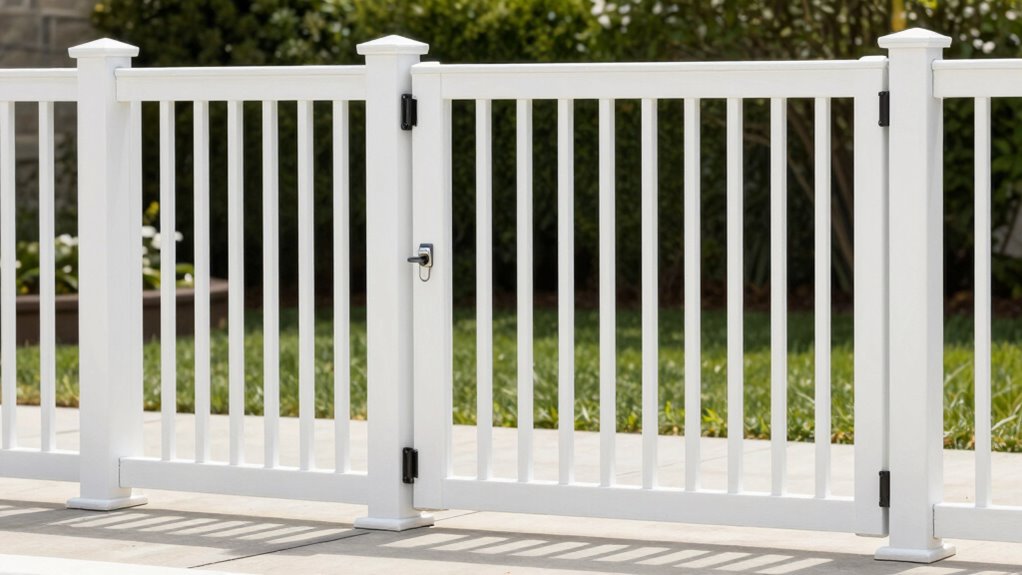
Local pool fence regulations directly impact how you set up and maintain your safety measures. They determine fence height, gate security, and climbability, influencing your landscaping considerations and lighting safety plans. Here’s what to keep in mind:
- Regulations may specify minimum fence height, affecting your choice of landscaping plants and structures.
- Gate requirements ensure only authorized access, impacting lighting safety around entry points.
- Restrictions on climbable elements prevent hazards near the fence, influencing landscaping design.
- Local rules might specify lighting safety standards to improve visibility at night, enhancing overall safety.
Understanding these rules helps you create a compliant, effective safety setup that minimizes risks and keeps your pool area secure.
Frequently Asked Questions
What Are Common Mistakes to Avoid When Installing a Pool Fence?
When installing a pool fence, avoid common mistakes like placing the gate latch too high or low, which can compromise safety. Make sure to select durable fence materials suited for weather and impact resistance. Don’t forget to check that gates swing outward and are self-closing. Proper latch placement guarantees easy access for adults but keeps children out, and choosing the right material prevents quick deterioration or breaches, keeping your pool area safe.
How Do Weather Conditions Impact Fence Durability and Safety?
Weather conditions profoundly impact your fence’s durability and safety. Harsh weather like heavy rain, snow, or intense sun can weaken materials over time, reducing weather resilience. You should regularly inspect for rust or corrosion, especially if you have metal components, and apply corrosion prevention treatments. Proper maintenance helps your fence withstand the elements, ensuring it remains secure and safe for your family and guests.
Can Landscaping Improve Pool Safety Beyond Fencing?
Yes, landscaping enhancements can boost pool safety by creating natural barriers that complement your fence. Planting dense shrubs or thorny bushes around the pool area makes it harder for children or pets to access. You can also use strategic landscaping to direct foot traffic away from the pool. These natural barriers add an extra layer of security, making it more difficult for unauthorized or unsupervised access, enhancing overall safety.
Are There Specific Safety Standards for Above-Ground vs. In-Ground Pools?
You’ll find that safety standards differ markedly between above-ground and in-ground pools. For above-ground pools, regulations focus on sturdy barriers and secure ladders, while in-ground pools require extensive fencing, alarms, and covers. These safety standards aren’t just guidelines—they’re your best defense against accidents. Knowing the specific requirements for each pool type ensures you stay compliant and protect your loved ones effectively. It’s like having an invisible shield guarding your backyard oasis.
How Often Should Pool Fences Be Inspected for Safety Compliance?
You should inspect your pool fence at least once a year to guarantee safety compliance. Regular inspections help you spot any damage, loose hardware, or climbable objects that could compromise safety. After severe weather or if you notice any issues, perform an additional check promptly. Staying vigilant with inspection frequency keeps your pool area secure, minimizes accidents, and ensures your fence continues to meet safety standards consistently.
Conclusion
So, after all this talk about fence heights, gate locks, and climbability, you’d think safety would be foolproof. But don’t forget, a fence that looks secure might just invite curiosity—and trouble. While you aim to outsmart those sneaky little climbers, remember that no fence is perfect. Sometimes, the best safety measure is keeping a watchful eye. Ironically, the more you try to secure your pool, the more you realize safety’s a game of constant vigilance.