Having the right rescue equipment like life rings, reaching poles, and first aid kits is essential for quick and effective water rescue responses. Life rings provide immediate buoyancy, making it easier to save someone drowning, while reaching poles let you assist from a safe distance. First aid kits help treat injuries on the spot, improving survival chances. Mastering how these tools work can make all the difference in emergencies—stay with us to learn more about each item.
Key Takeaways
- Life rings provide immediate flotation support and are designed for quick, accurate throwing to drowning victims.
- Reaching poles extend assistance while allowing rescuers to maintain a safe distance from the water.
- First aid kits contain essential supplies for treating injuries, preventing infections, and stabilizing victims until help arrives.
- Proper knowledge of equipment use enhances rescue efficiency, safety, and increases the chances of saving lives.
- Regular rescue training ensures responders are confident, prepared, and capable of handling water emergencies effectively.
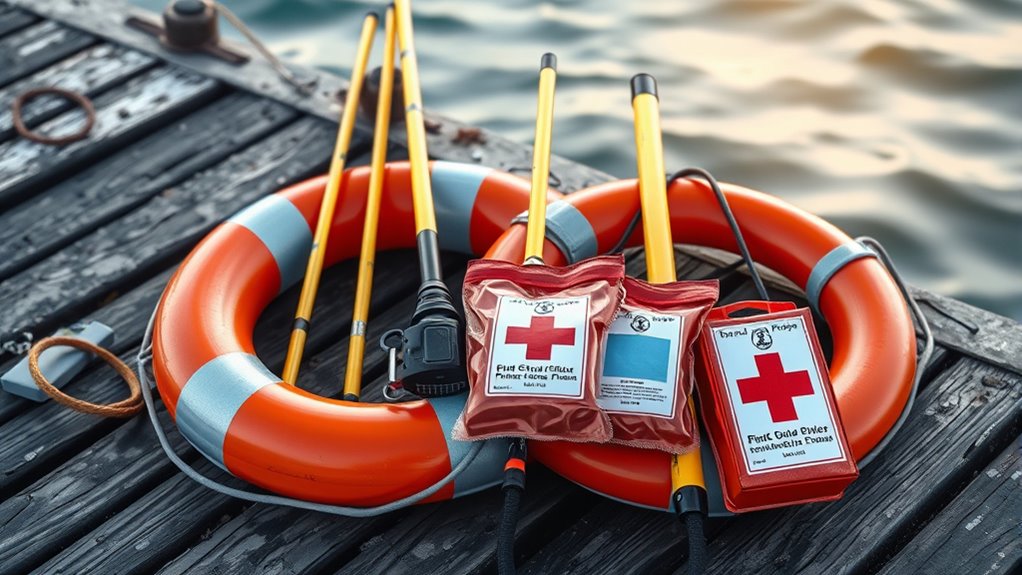
Have you ever wondered what tools are vital for saving lives during emergencies? When it comes to water safety and rescue situations, having the right equipment can mean the difference between life and death. Rescue training teaches you not only how to handle these tools but also how to use them effectively under pressure. Life rings, reaching poles, and first aid kits are fundamental components of any rescue setup, each serving a specific purpose to guarantee swift and safe assistance.
Water safety is a top priority in any aquatic environment, and rescue equipment plays an essential role in maintaining it. Life rings, also known as lifebuoys, are designed to be thrown quickly to someone in distress in the water. Their bright colors and buoyant materials make them easy to spot and highly effective at providing immediate flotation support. Proper training guarantees you understand how to deploy a life ring accurately, minimizing risk for both the rescuer and the victim. Rescue training emphasizes the importance of evaluating the situation first, then calmly administering aid with the right equipment, rather than rushing in blindly. Knowing how to throw a life ring correctly can save precious seconds and increase the chances of a successful rescue.
Reaching poles are invaluable in situations where the victim is close to the edge but out of reach. These extendable tools allow you to maintain a safe distance while providing assistance, reducing the risk of falling into the water yourself. Mastering rescue training helps you understand the best angles and distances to use reaching poles effectively. You learn to communicate clearly with the person in need, reassuring them and guiding their movements as you extend the pole. This equipment is especially useful during rapid response scenarios, where quick action is needed without putting yourself in immediate danger. Additionally, understanding rescue equipment options enhances overall preparedness and response efficiency.
First aid kits are another essential element of rescue equipment. They contain supplies to treat minor injuries on the spot, preventing infections or worsening conditions until professional help arrives. Rescue training highlights the importance of knowing how to use these kits properly, including performing CPR, controlling bleeding, and addressing shock. When combined with water safety protocols, a well-stocked first aid kit guarantees you’re prepared for various emergencies, whether in the water or on land.
In any rescue situation, the key is to be prepared and trained. Properly understanding the use of life rings, reaching poles, and first aid kits enhances your ability to respond effectively. This knowledge, coupled with rescue training, empowers you to act confidently and save lives when every second counts.
Frequently Asked Questions
How Often Should Rescue Equipment Be Inspected and Maintained?
You should inspect your rescue equipment regularly, ideally on a weekly basis, and follow a strict inspection schedule. During these inspections, check for damage, wear, or deterioration. Maintenance procedures must be promptly carried out if issues are found, including cleaning, repairs, or replacements. Keep detailed records of inspections and maintenance to guarantee your equipment remains reliable and ready for emergencies. Consistent care helps prevent failures when seconds count.
What Training Is Required to Use Rescue Equipment Effectively?
You need training certification and regular practical drills to use rescue equipment effectively. Think of it as preparing for a life-or-death situation where every second counts. Enroll in certified courses that cover rescue techniques and safety protocols. Practicing these skills repeatedly guarantees you respond confidently and correctly when emergencies happen. Continuous training keeps your skills sharp, so you’re always ready to act swiftly and save lives.
Are There Different Types of Life Rings for Various Environments?
Yes, there are different types of life rings designed for various environments. You’ll find material variations like foam, plastic, or woven synthetic fibers, each suited for specific conditions. Environmental adaptations also matter; for instance, UV-resistant rings are ideal for sunny outdoor areas, while corrosion-resistant options are best for saltwater settings. Selecting the right type guarantees durability and effective rescue performance in any environment you encounter.
How Should First Aid Kits Be Stocked for Emergencies?
A stitch in time saves nine, so you should stock your first aid kit thoughtfully. Make certain it includes basic first aid kit contents like bandages, antiseptic wipes, gauze, scissors, and gloves. Follow an emergency supply checklist to cover cuts, burns, and CPR needs. Keep it in a waterproof container, check regularly, and tailor supplies to your environment. Being prepared helps you act swiftly when every second counts.
Can Rescue Equipment Be Used in Water Rescue Simulations?
Yes, you can use rescue equipment in water rescue simulations to practice water rescue techniques safely. Make certain the equipment’s durability, so it withstands repeated use without damage. Using realistic gear helps you develop confidence and proper techniques for actual emergencies. Simulations allow you to refine skills, understand equipment limits, and improve response times, making real rescues safer and more effective.
Conclusion
Having the right rescue equipment like life rings, reaching poles, and first aid kits can make all the difference in an emergency. Are you prepared to act quickly and effectively when someone needs help? Remember, safety isn’t just about knowing what to do—it’s about having the right tools at your fingertips. Stay vigilant, keep your rescue gear ready, and always prioritize safety—because every second counts when lives are on the line.