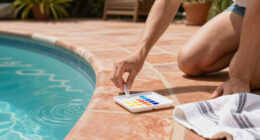
To protect your skin at the pool, combine shade, sunscreen, and protective clothing. Use a broad-spectrum SPF 30+ sunscreen and reapply every two hours, especially after swimming or sweating. Wear a wide-brimmed hat and UV-protective sunglasses, and seek shade during peak hours (10 a.m. to 4 p.m.). Cover all exposed skin, including ears and neck, for complete protection. Keep your skin healthy by following these tips—you’ll find more ways to shield your skin effectively if you continue.

Get pool and patio gear delivered free with Prime
- Fast, free delivery on millions of items
- Prime Video, Amazon Music and more included
- Member-only deals all year
Key Takeaways
- Apply a broad-spectrum SPF 30+ sunscreen generously on all exposed skin before swimming and reapply every two hours.
- Use shade, umbrellas, or UV-protective clothing to reduce direct sun exposure around the pool.
- Wear wide-brimmed hats and UV sunglasses to protect your face, neck, and eyes from UV rays.
- Seek shade during peak hours (10 a.m. to 4 p.m.) to minimize UV damage while outdoors.
- Keep skin hydrated with water and moisturizers to prevent dehydration and skin dryness caused by sun and chlorine.

Spending time at the pool is a great way to relax and enjoy the sun, but it’s important to protect your skin from harmful UV rays. UV protection is essential because prolonged exposure can lead to sunburns, premature aging, and even skin cancer. To keep your skin safe, start by applying a broad-spectrum sunscreen with at least SPF 30 before you head outside. Reapply every two hours, and more often if you’re swimming or sweating. Remember, sunscreen isn’t just for your face—cover all exposed skin, including your ears, neck, and the tops of your feet. Wearing protective clothing, like a wide-brimmed hat and UV-protective sunglasses, adds an extra layer of defense. Seeking shade during the peak sun hours, typically between 10 a.m. and 4 p.m., can considerably reduce your UV exposure.
While protecting your skin from UV rays, don’t forget about skin hydration. The sun and chlorine can strip moisture from your skin, leaving it dry, dull, and more susceptible to damage. Keep a water bottle nearby and take regular sips to stay hydrated from the inside out. Additionally, applying a moisturizer after swimming helps lock in hydration and repair any minor skin damage caused by sun exposure. Look for products with hydrating ingredients like hyaluronic acid or aloe vera, which soothe and replenish your skin. If you notice your skin feeling tight or flaky, it’s a sign that you need to boost your hydration routine. Drinking plenty of water throughout the day supports your skin’s natural barrier and keeps it looking healthy and vibrant. Incorporating proper skincare practices can further enhance your sun safety efforts and maintain skin health.
To maximize your sun safety efforts, combine physical barriers with proper skin care practices. Using shade cloths or umbrellas not only provides immediate relief from the sun’s rays but also reduces the risk of UV damage. Remember, even on cloudy days, UV rays can penetrate clouds and cause harm, so consistent protection is key. By prioritizing UV protection and skin hydration, you ensure your time at the pool remains enjoyable without compromising your skin’s health. Taking these small steps can make a big difference in preventing skin issues later in life, so be proactive and make sun safety a regular part of your pool routine.
Products Worth Considering

Bose SoundLink Flex Bluetooth Speaker (2nd Gen), Portable Waterproof Speaker, Black

Levoit Core 600S-P Smart Air Purifier for Large Rooms

Ring Battery Doorbell Plus, Satin Nickel
As an affiliate, we earn on qualifying purchases.
Frequently Asked Questions
How Often Should I Reapply Sunscreen at the Pool?
You should reapply sunscreen every two hours to maintain proper protection, especially when you’re at the pool. Keep in mind, the application frequency depends on the sunscreen’s longevity and your activities — swimming or sweating can wear it off faster. Even if it’s water-resistant, reapply promptly after swimming, toweling off, or sweating. Staying vigilant guarantees your skin stays protected from harmful UV rays throughout your pool day.
Are Waterproof Sunscreens Truly Effective During Swimming?
Waterproof claims can be convincing, but they aren’t completely foolproof. You might think your sunscreen is super-strong, but water and sweat can still strip away its durability. To stay protected, you’ll want to reapply regularly, especially after swimming, toweling off, or sweating. Remember, no sunscreen is entirely waterproof—so, stay vigilant and reapply often to guarantee your skin stays shielded from UV rays.
Can Clothing Provide Enough Sun Protection Instead of Sunscreen?
Clothing can provide sufficient sun protection if it has high durability and strong UV protection ratings. Look for tightly woven fabrics labeled with UPF (Ultraviolet Protection Factor) ratings, ideally 30 or higher. This type of clothing blocks a significant amount of UV rays, reducing your need for sunscreen. Keep in mind, though, that coverage matters—long sleeves and full coverage offer better protection than lighter, loose-fitting options.
What Are the Signs of Sunburn or Skin Damage?
You’ll notice signs of sunburn like redness, pain, and warmth on your skin. It may feel tender or itchy, and in severe cases, blistering can occur. UV damage can cause skin sensitivity, making your skin more prone to future burns and aging. Keep an eye out for discoloration or peeling, which are signs your skin has been overexposed. Recognizing these signs helps you take quick action to protect your skin.
Is It Safe to Swim Immediately After Applying Sunscreen?
It’s best to wait about 15 minutes after applying sunscreen before swimming to guarantee proper absorption and maximize protection. If you jump in too quickly, the sunscreen might not have fully set, reducing its effectiveness and compromising swimming safety. Giving it time allows the sunscreen to bond with your skin, so you stay protected from harmful UV rays while enjoying the pool. Always follow the product’s specific instructions for ideal results.
Conclusion
To stay safe, seek shade, wear sunscreen, and cover your skin. Protect your skin from harmful rays, prevent sunburns, and reduce the risk of skin cancer. Make shade your refuge, sunscreen your shield, and clothing your armor. By doing so, you enjoy the pool, preserve your skin, and stay healthy. Remember, sun safety isn’t a one-time choice but a daily commitment. Stay vigilant, stay protected, and make every sunny day a safe one.