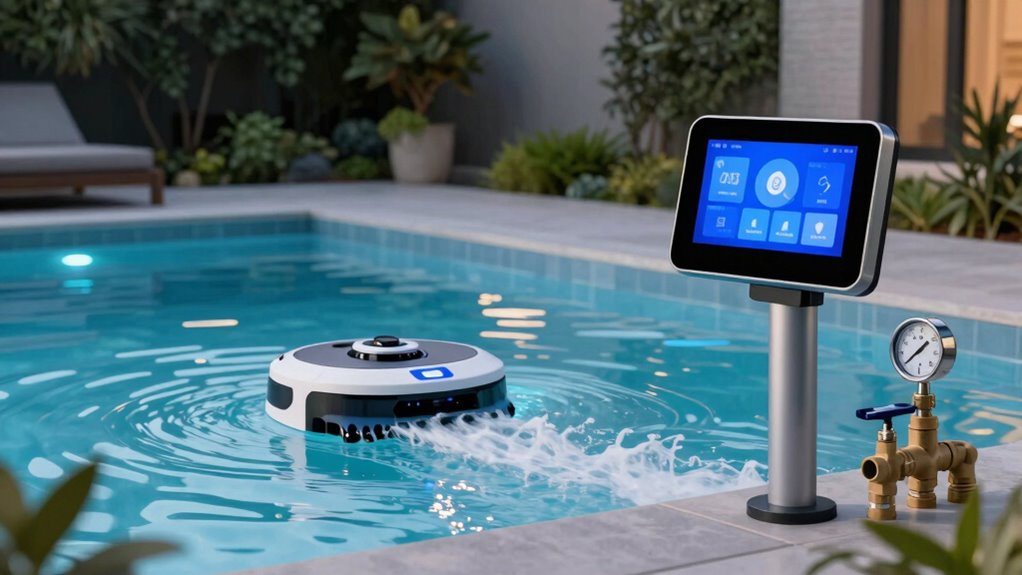

Smart pool controllers can automate tasks like adjusting water temperature, balancing chemicals, controlling lighting, and running water features, making pool care easier. They can schedule pump cycles, monitor water quality, and turn on safety alerts, but some tasks still need manual attention, such as cleaning debris or inspecting equipment. While future tech may enhance automation, current systems have limitations. Keep exploring to learn how to maximize your pool’s smart capabilities.
Key Takeaways
- Pool heaters, lighting, water features, and pump schedules are fully automatable with smart controllers.
- Water quality parameters like pH and chlorine can be monitored and automatically balanced.
- Manual tasks such as debris removal and equipment inspection still require human effort.
- Current systems struggle to fully automate pool covers, cleaning robots, and complex environmental adjustments.
- Future innovations like AI and voice control will expand automation capabilities but are not yet standard.
What Tasks Can Be Fully Automated With a Smart Pool Controller?
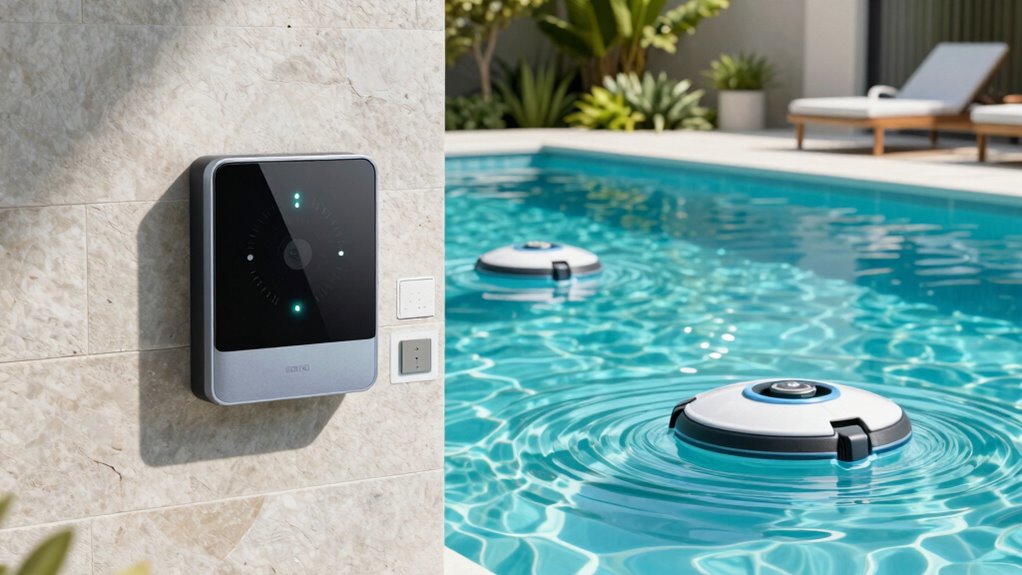
A smart pool controller can handle many routine tasks automatically, saving you time and effort. It can manage your pool heater, adjusting the temperature based on your preferences or the weather, ensuring your pool stays comfortable without manual adjustments. Safety sensors play a vital role, as the controller monitors them to detect issues like low water levels or overheating, activating safety features when needed. These sensors automatically shut off the pool heater or alert you to potential problems, preventing damage or accidents. You don’t need to constantly check on these functions; the system keeps everything running smoothly. This automation not only enhances safety but also optimizes energy use, making your pool experience more convenient and worry-free. Additionally, integrating performance upgrades like efficient pumps or smart valves can further improve overall system efficiency and longevity, helping you achieve better water system performance with minimal manual intervention. For example, some systems incorporate automated chemical feeders, ensuring proper water chemistry without manual testing, which further simplifies pool maintenance. Proper integration of sensor technology can also enhance early problem detection, reducing the risk of costly repairs, and incorporating smart diagnostics can provide real-time insights into system performance.
How Do Water Quality Monitoring and Chemical Balancing Work?

Smart pool controllers constantly monitor your water chemistry to keep it balanced. When levels get out of whack, they automatically adjust chemicals to restore proper balance. This seamless process guarantees your pool stays safe, clean, and inviting with minimal effort.
Monitoring Water Chemistry
Monitoring water chemistry is crucial to keep your pool safe and clear, as it guarantees the water maintains the right balance of chemicals. Modern smart pool controllers use chemical sensors to continuously measure parameters like pH, chlorine levels, and alkalinity. These sensors provide real-time data, reducing the need for manual water testing and guesswork. Accurate water testing ensures that chemical levels stay within safe ranges, preventing issues like algae growth or corrosion. By constantly monitoring these essential factors, your system can alert you to imbalances before they become problems. This proactive approach helps maintain ideal water quality, minimizes chemical waste, and keeps your pool inviting and safe for swimmers. Additionally, understanding water chemistry fundamentals can help you interpret sensor data more effectively and optimize maintenance routines. Household products can also contribute to safer and more efficient pool maintenance practices. Additionally, integrating automatic chemical dosing can further optimize water balance and reduce manual intervention. For example, some systems incorporate cloud-based data to enhance monitoring accuracy and provide remote management options.
Adjusting Chemical Levels
Since water chemistry sensors provide real-time data on your pool’s chemical levels, adjusting those levels becomes a straightforward process. With smart controllers, chemical adjustments happen automatically or with minimal input. If sensors detect a high pH, the system can add pH reducers to restore balance. Conversely, if pH is too low, it can add pH increasers. Maintaining proper chemical levels is essential for water clarity and swimmer comfort. For pH balancing, the controller monitors constantly and adjusts as needed, preventing issues like corrosion or scaling. You can also set parameters to trigger alerts if manual intervention is required. Additionally, water quality monitoring ensures the system responds promptly to changes, keeping your pool safe and well-maintained. water chemistry sensors play a crucial role in providing accurate data to support these automatic adjustments. Overall, smart pool controllers simplify chemical adjustments, ensuring your water stays safe, clean, and properly balanced with minimal effort.
Can I Automate Pump, Filter, and Water Circulation?
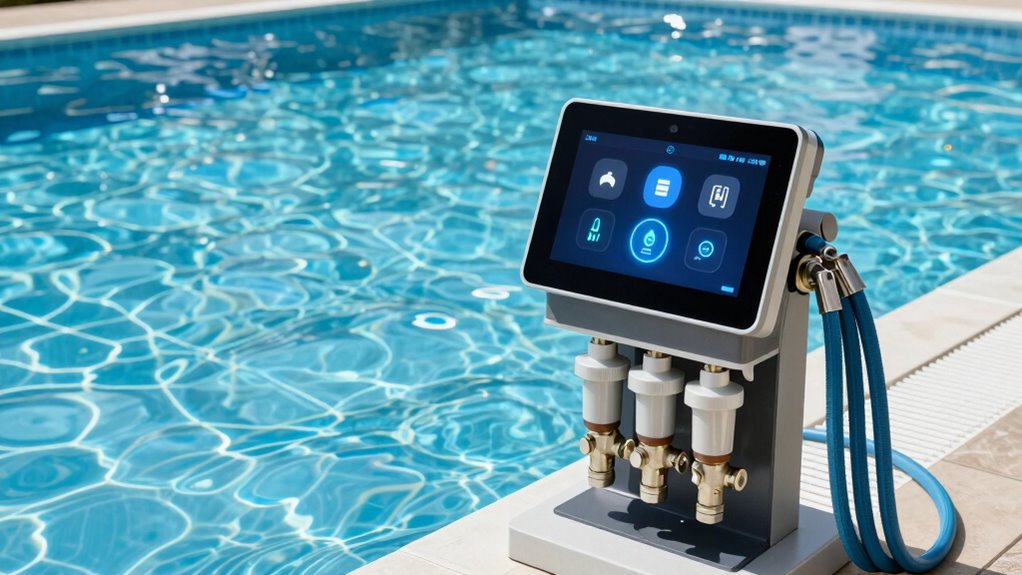
You can definitely automate your pool’s pump, filter, and water circulation with smart controllers. This allows you to optimize pump automation and filter control, ensuring efficient operation and energy savings. With smart technology, you can:
- Schedule pump run times for different days or times
- Adjust circulation cycles based on weather or usage
- Set alerts for filter maintenance or issues
- Integrate with other smart devices for seamless control
These features let you customize water flow to maintain ideal chemical levels and clarity. Automating your pump and filter not only simplifies pool maintenance but also conserves energy and extends equipment lifespan. Smart controllers make it easy to keep your water circulating properly without manual intervention, giving you more time to enjoy your pool. Additionally, understanding cabling solutions can help ensure your smart system is properly installed and reliable.
How Can I Automate Pool Lighting and Water Features?

You can easily automate your pool lighting to create the perfect ambiance at any time. Controlling water features like fountains or waterfalls with smart systems adds a dynamic touch to your backyard. With automation, you’ll enjoy seamless scheduling and effortless management of these features.
Automate Lighting Schedules
Automating your pool lighting and water features guarantees a seamless and customizable outdoor experience. With lighting automation, you can set schedules that turn lights on and off automatically, creating the perfect ambiance. You can also easily make schedule adjustments to suit different moods or events without manual intervention. To get started, consider these options:
- Program lights to activate at sunset and turn off at dawn
- Adjust brightness levels for special occasions
- Sync lighting with water features for synchronized displays
- Set different schedules for weekdays and weekends
- Incorporate color accuracy adjustments to enhance the visual effect of your lighting setup
Implementing these automation features can also help improve energy efficiency and reduce maintenance efforts over time. Additionally, understanding smart home integration allows you to control your pool environment more intuitively. Utilizing remote access capabilities enables you to manage your pool settings from anywhere, adding another layer of convenience. For example, integrating collaborative platforms can facilitate seamless coordination between different systems and users. These features ensure your pool environment is always inviting, energy-efficient, and tailored to your preferences. Automated lighting simplifies management while enhancing your outdoor space’s ambiance and functionality.
Control Water Features
Integrating water features with your pool’s automation system allows for synchronized displays and effortless control. With automation integration, you can schedule water features to turn on or change colors at specific times, creating dynamic visual effects. You can also set water jets, fountains, or waterfalls to activate during parties or relaxations, all with a tap or voice command. This setup not only enhances your pool’s ambiance but also simplifies management, eliminating manual adjustments. Many smart controllers allow you to create custom scenes that combine lighting and water features for seamless progression. Overall, automating your water features adds a layer of convenience and excitement, turning your pool area into a stunning, automated oasis.
Which Pool Maintenance Tasks Still Need Manual Attention?
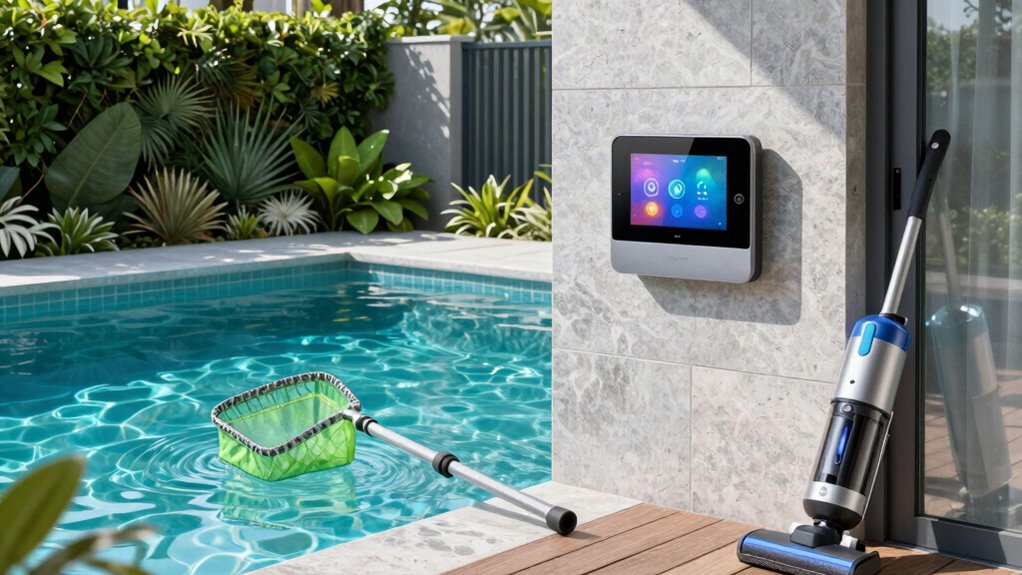
Despite the advancements in smart pool controllers, some maintenance tasks still require manual effort. You’ll need to perform manual cleaning to remove debris, algae, and dirt that automated systems can’t catch. Regular equipment inspection is vital to identify wear, leaks, or malfunctions early. Tasks like checking the filter and pump components ensure everything runs smoothly. Additionally, you’ll need to:
Manual cleaning and regular inspections are essential for optimal pool maintenance and longevity.
- Clean skimmer baskets and brushes
- Inspect and replace worn-out parts
- Test water chemistry manually
- Adjust equipment settings as needed
Maintaining home safety and proper pool environment is essential, and manual oversight plays a key role in that process. While smart controllers handle many functions, these hands-on tasks are essential for maintaining water quality and equipment longevity. Staying proactive with manual cleaning and inspection helps prevent costly repairs and keeps your pool in top shape.
What Limitations Do Current Smart Pool Controllers Have?
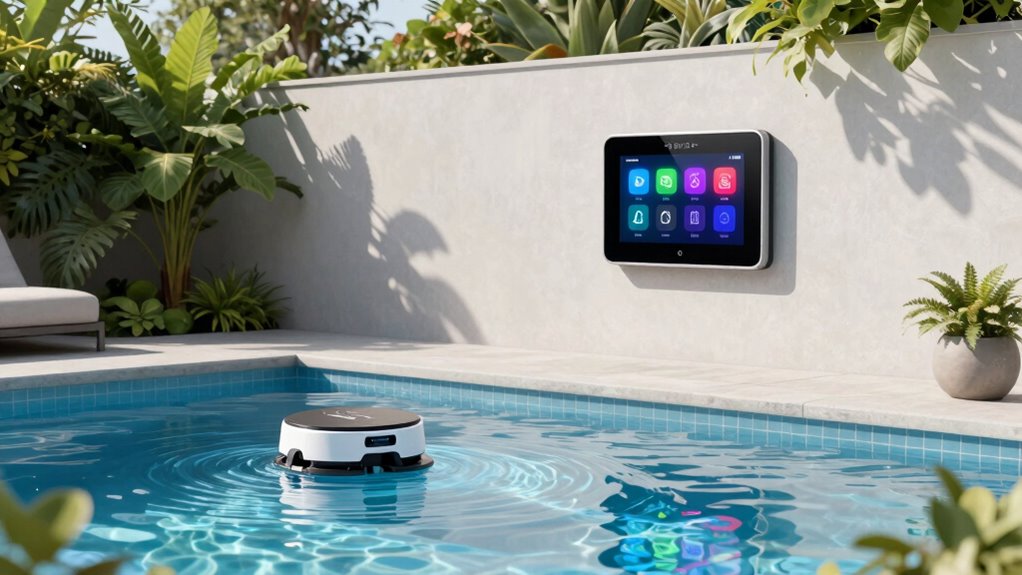
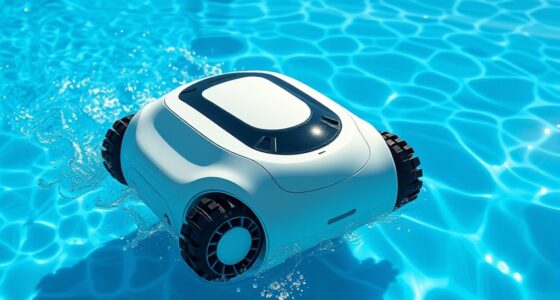
While smart pool controllers have advanced considerably, they still face limitations that can impact their effectiveness. For example, automating features like pool cover automation or coordinating pool cleaning robots can be inconsistent. They often rely on preset schedules that don’t adapt to weather changes or usage patterns. Additionally, home theater fundamentals such as sound, picture, lighting, and comfort are essential to creating an enjoyable environment, but integrating these elements seamlessly with pool automation remains challenging. Achieving true synchronization between systems requires more sophisticated technology and customization options that are not yet widely available. Moreover, current automation capabilities often lack the flexibility needed to accommodate dynamic environmental conditions or individual preferences.
What Future Technologies Could Automate More Pool Tasks?
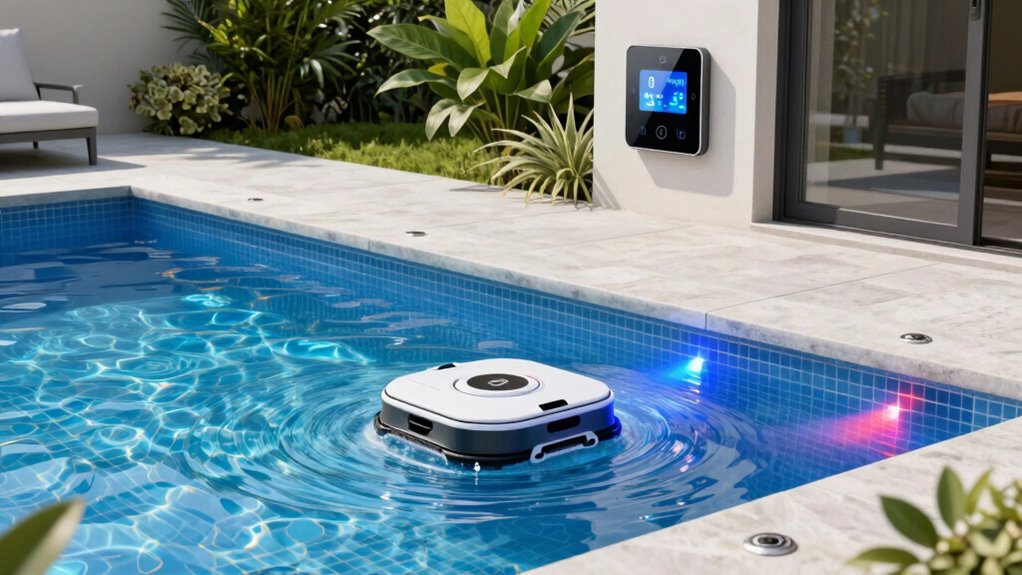
Advancements in artificial intelligence and machine learning are poised to considerably enhance smart pool controllers, enabling them to automate more complex tasks seamlessly. These technologies could improve pool safety by detecting potential hazards in real-time and adjusting safety protocols automatically. They may also optimize energy efficiency by learning your usage patterns and adjusting filtration and heating schedules accordingly. Future innovations could include voice-activated commands for quick adjustments or predictive maintenance alerts before issues arise. Additionally, AI could coordinate with weather forecasts to adapt pool functions, conserving energy during off-peak times and ensuring safety during storms. Smart technology integration will further streamline pool management, making it more intuitive, safer, and more efficient, reducing the need for manual interventions.
How Do I Decide What to Automate First and When to Do It Manually?
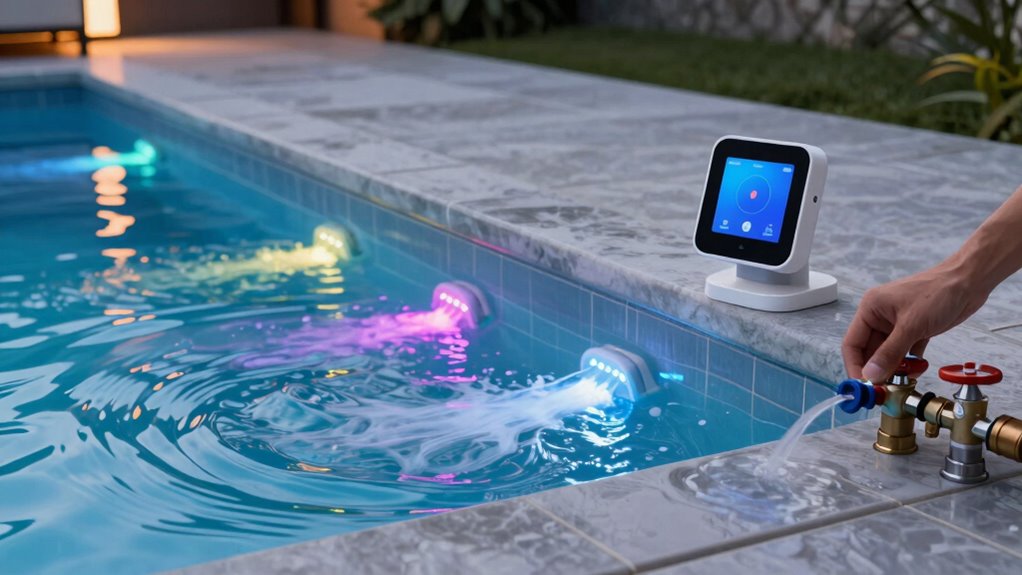
Deciding what to automate first depends on your daily pool use and biggest pain points. If you find yourself frequently testing water and adjusting chemicals manually, automating water testing and chemical dosing can save time and improve water quality. Start with these tasks if maintaining proper chemical levels is a challenge or if inconsistencies affect your pool experience. However, some tasks, like balancing certain chemicals or troubleshooting equipment issues, are better handled manually until you’re confident in your automation setup. Monitor your pool regularly, especially during peak usage or changing weather conditions, and determine when manual intervention is necessary. Automate the tasks that cause the most hassle first, but stay hands-on for complex decisions or troubleshooting until your system is fully reliable.
Frequently Asked Questions
Can Smart Controllers Integrate With Existing Home Automation Systems?
Yes, smart pool controllers can integrate with your existing home automation systems. This integration helps streamline pool maintenance and boosts energy efficiency by allowing you to control your pool equipment alongside other smart devices. You can schedule filtration, lighting, and chemical levels, all from one platform. Just make sure your system is compatible, and you’ll enjoy more convenient, energy-efficient pool management tailored to your home’s automation setup.
Are There Safety Features to Prevent Automation Failures?
Imagine you’re in a sci-fi movie, but safety is genuine. Smart pool controllers include safety mechanisms and fail-safe features that prevent automation failures, like automatic shutoffs if water levels are too low or sensors detect issues. These features ensure your pool stays safe and operational, even if a glitch occurs. You can trust that modern controllers prioritize safety, giving you peace of mind while enjoying your pool.
How Secure Are Smart Pool Controllers From Hacking?
Smart pool controllers have varying levels of security, but cybersecurity vulnerabilities can exist if you don’t take proper precautions. To prevent hacking, make certain you use strong, unique passwords and keep firmware updated regularly. Enable two-factor authentication if available, and avoid connecting your controller to unsecured Wi-Fi networks. Staying vigilant and practicing hacking prevention measures helps secure your system from potential threats.
What Is the Typical Cost of Installing a Smart Pool System?
Installing a smart pool system is like planting a seed for future savings. You’ll likely spend between $1,500 and $4,000, depending on installation costs and pricing factors like pool size, added features, and brand choices. To get an accurate estimate, consider your pool’s size and desired automation features. Budget wisely, as higher-end systems offer more customization, but basic setups can still provide significant convenience at a lower cost.
How Often Do Smart Pool Controllers Need Software Updates?
You should expect software updates for your smart pool controller roughly every few months, depending on the manufacturer. These updates are essential for security, bug fixes, and new features. Regular maintenance includes monitoring update notifications and installing them promptly to guarantee peak performance. Staying on top of software update frequency helps keep your system secure and functioning smoothly, minimizing potential issues and maximizing your pool’s automation benefits.
Conclusion
While smart pool controllers can automate many tasks, some aspects still require your manual touch. Think of them as helpful assistants—handling routine chores but not replacing your personal oversight. As technology advances, more functions will become automated, yet your eyes and judgment remain essential for perfect pool maintenance. Embrace the convenience without losing control, blending automation’s efficiency with your hands-on care for a sparkling, well-maintained pool.