Maintaining the right calcium hardness level is key to protecting your pool surfaces from corrosion and scale buildup. If calcium is too low, the water becomes aggressive and can damage metal fittings and liners. Too high, and it causes mineral deposits and scaling, which clutter filters and damage tiles. Regular testing and adjustments with chlorine, calcium chloride, or dilution help keep your water balanced. Keep your pool in top shape—more tips await you to guarantee lasting protection.
Key Takeaways
- Maintaining calcium hardness within 200-400 ppm prevents scale buildup and mineral deposits on pool surfaces.
- Proper calcium levels protect metal fittings, liners, and plaster from corrosion caused by aggressive water.
- Regular testing and adjustment of calcium hardness avoid scaling and prolong pool equipment lifespan.
- Using calcium chloride or dilution techniques helps correct low or high calcium levels effectively.
- Balancing calcium hardness along with pH and alkalinity ensures overall water stability and surface protection.
Have you ever wondered why your pool water feels cloudy or causes scaling on the surfaces? The answer often lies in the water’s calcium hardness level. When calcium levels are too high, mineral buildup occurs, leading to unsightly deposits on your pool tiles, steps, and liner. Conversely, if calcium is too low, your pool water becomes aggressive, which can cause corrosion of metal fittings and pool surfaces. Maintaining the right calcium hardness is essential for water balance, guaranteeing your pool remains clean, clear, and well-preserved.
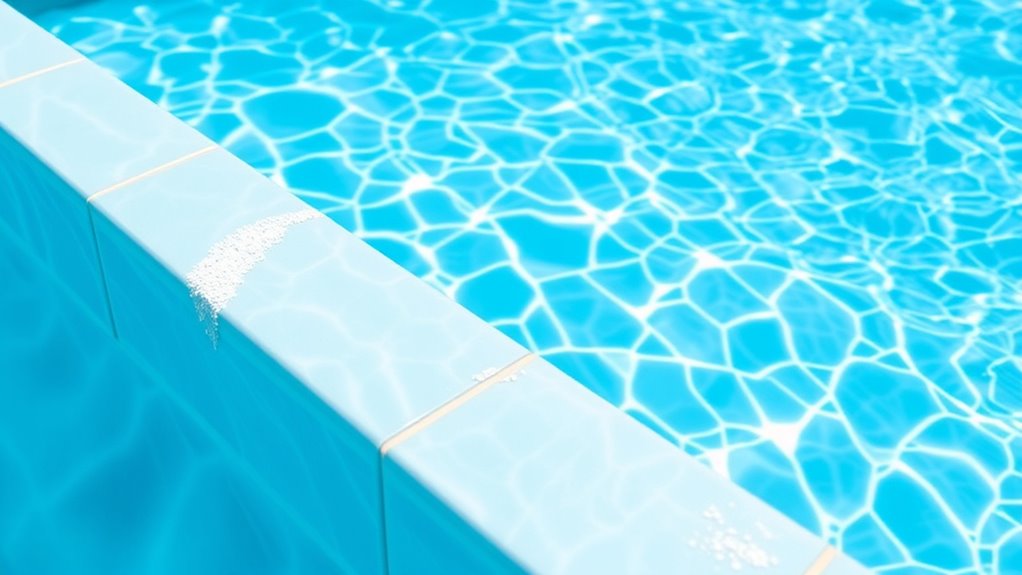
Calcium hardness refers to the amount of dissolved calcium in your pool water. When this level isn’t properly managed, it can upset the overall water balance. For example, high calcium hardness can cause scaling — a chalky, crusty buildup that clings to surfaces, clogging filters and reducing water flow. This mineral buildup not only looks bad but also hampers pool equipment and increases maintenance costs. On the other hand, low calcium levels make the water aggressive, which can corrode metal parts, liners, and plaster, leading to costly repairs and replacements over time.
To keep your water balanced, you should regularly test your calcium hardness levels using a reliable test kit. The ideal range for calcium hardness is typically between 200 and 400 ppm (parts per million). If your levels are too high, you can dilute the water with fresh supply or use specific chemical treatments designed to reduce calcium. If levels are too low, adding calcium chloride will help raise the calcium hardness to a safe, balanced range. Maintaining this balance prevents both scaling and corrosion, protecting your pool’s surfaces and extending its lifespan.
Proper water balance isn’t just about calcium — it involves monitoring pH, alkalinity, and other factors that influence corrosion and scaling. When these elements are in harmony, they prevent mineral buildup and keep your water clear and inviting. Regular testing and adjustments are essential, especially during seasonal changes or after adding chemicals, to guarantee your pool remains in ideal condition. Additionally, installing a whole-house water filtration system can help maintain consistent water chemistry by reducing impurities that affect calcium levels. By keeping a close eye on calcium hardness and overall water chemistry, you’re actively preventing problems before they start, saving yourself time, effort, and money.
Frequently Asked Questions
How Does Calcium Hardness Affect Pool Filter Performance?
Calcium hardness directly impacts your pool filter‘s performance. When calcium levels are too high, it can cause scale buildup, reducing water clarity and clogging your filter, which forces it to work harder. Conversely, low calcium levels may lead to corrosion of equipment. Maintaining proper calcium hardness guarantees clear water, smooth filtration, and extends equipment longevity, so your pool stays clean and functioning efficiently.
Can Adjusting Calcium Hardness Prevent Algae Growth?
Adjusting calcium hardness can help with algae prevention by maintaining calcium saturation levels in your pool. When calcium levels are balanced, it reduces the chances of scale formation, which creates a rough surface where algae can thrive. Keeping calcium hardness in check supports proper water chemistry, making it more difficult for algae to grow. Regular testing and adjusting calcium levels ensure your pool stays clear and algae-free, promoting a healthier swimming environment.
What Are Signs of Calcium Hardness Imbalance in a Pool?
Like a mirror clouded by fog, your pool shows signs of calcium hardness imbalance through poor water clarity and surface etching. You might notice cloudy water, rough or dull pool surfaces, and scaling deposits on tiles. These symptoms indicate the calcium levels are either too high or too low, risking damage to your pool surface. Regular testing and proper balancing keep your water clear and your pool surfaces smooth.
How Often Should Calcium Hardness Levels Be Tested?
You should test your pool’s calcium hardness levels at least once a month to maintain proper water balance and prevent mineral scaling. Regular testing helps you catch imbalances early, reducing the risk of surface damage and corrosion. If you notice changes in water clarity or scaling, increase testing frequency. Keeping calcium hardness in the recommended range guarantees your pool stays clear, smooth, and protected from damage caused by mineral imbalances.
Does Calcium Hardness Impact Pool Chemical Usage Efficiency?
Yes, calcium hardness impacts your pool’s chemical usage efficiency. When calcium levels are balanced, water clarity improves, and you need fewer chemicals to maintain proper pH and sanitizer levels. Proper calcium hardness also helps protect your equipment and surfaces from corrosion and scale buildup, extending their longevity. By monitoring and adjusting calcium hardness, you guarantee your pool stays clear and your chemicals work more effectively, saving you time and money.
Conclusion
By maintaining proper calcium hardness levels, you protect your pool’s surfaces from costly damage. Imagine a homeowner who neglected this balance and faced costly repairs after years of corrosion and scale buildup. Don’t let this happen to you. Regular testing and adjustments guarantee your pool stays pristine and safe for swimming. Keep an eye on calcium hardness, and enjoy a beautiful, long-lasting pool that’s always ready for your next swim.