
Cyanuric acid acts like a sunscreen for your pool’s chlorine, protecting it from sunlight that can break it down. When levels are right, it helps maintain disinfectant effectiveness longer, but too much can interfere with chlorine’s ability to sanitize. Proper testing and adjustments are key to keeping cyanuric acid balanced—preventing pool issues. If you’re curious about maintaining a healthy pool, there’s more important information ahead to help you succeed.
Key Takeaways
- Cyanuric acid protects chlorine from UV breakdown, acting as a “sunscreen” to extend sanitizer effectiveness in outdoor pools.
- Excessive cyanuric acid levels can hinder chlorine’s ability to disinfect, reducing overall water sanitation.
- Proper testing and monitoring are essential to maintain ideal cyanuric acid levels and prevent chlorine efficacy issues.
- Managing cyanuric acid involves balancing its protective benefits with potential interference by partial water replacement or dilution.
- Over-stabilization can cause water quality problems and reduce chlorine’s ability to sanitize effectively.
What Is Cyanuric Acid and Why Is It Important for Outdoor Pools?
Cyanuric acid is a chemical compound added to outdoor pool water to protect chlorine from sunlight breakdown. Without it, sunlight rapidly depletes chlorine, compromising pool safety and making it harder to maintain clean water. Cyanuric acid acts like a sunscreen for chlorine, enhancing its chemical stability so it lasts longer when exposed to UV rays. This helps you reduce the frequency of chlorine additions and keeps your pool safer for swimmers. By stabilizing chlorine, cyanuric acid ensures consistent sanitization, preventing harmful bacteria and algae growth. Proper use of cyanuric acid is essential for outdoor pools to maintain effective chlorine levels and safeguard your pool environment, especially during sunny months. It’s an important ingredient in preserving pool safety and maintaining chemical stability. Understanding pool chemistry is vital for optimal water maintenance and safety.
What Are Safe Cyanuric Acid Levels in Your Pool?
To keep your outdoor pool safe and properly sanitized, maintaining the correct cyanuric acid levels is essential. Ideally, cyanuric acid should be between 30 and 50 ppm to protect chlorine without hindering sanitizer effectiveness. If levels are too low, your chlorine can dissipate quickly, forcing you to add more. Too high, and it can interfere with pH balance and reduce sanitizer efficiency. Different sanitizer types, like stabilized versus unstabilized chlorine, respond differently to cyanuric acid levels. Keep an eye on your test results and adjust accordingly. Here’s a quick reference:
| Cyanuric Acid Level | Effect on Chlorine | Recommended Range |
|---|---|---|
| Below 30 ppm | Chlorine dissipates rapidly | 30-50 ppm |
| 50-80 ppm | Slight interference | 30-50 ppm |
| Above 80 ppm | Reduced sanitizer effectiveness | 30-50 ppm |
Maintaining proper levels guarantees a safe, balanced pH and effective sanitization. Additionally, understanding cyanuric acid behavior can help you better manage your pool’s chemistry. Being aware of cyanuric acid stability can also prevent unintended fluctuations that compromise water quality. Regular testing and proper chemical balance are key to keeping your pool safe and enjoyable. Monitoring pool water chemistry consistently ensures the longevity of your pool equipment and overall water clarity. Moreover, staying informed about cyanuric acid interactions can help prevent unexpected issues with your pool’s water chemistry.
Why Do Pools Need Cyanuric Acid to Protect Chlorine?

Since sunlight quickly breaks down chlorine, pools need cyanuric acid to act as a stabilizer that shields the sanitizer from UV rays. Without it, chlorine decomposes rapidly, making your pool unsafe and increasing chemical costs. Cyanuric acid helps maintain proper chemical balance, reducing the frequency of shocking and chlorinating. Here’s why it’s essential: mindful space and routines play a role in maintaining balanced water chemistry and overall pool safety. Additionally, understanding the horsepower of electric dirt bikes can be useful for those interested in alternative transportation options that are eco-friendly and efficient.
How Do I Test and Adjust Cyanuric Acid Levels Correctly?
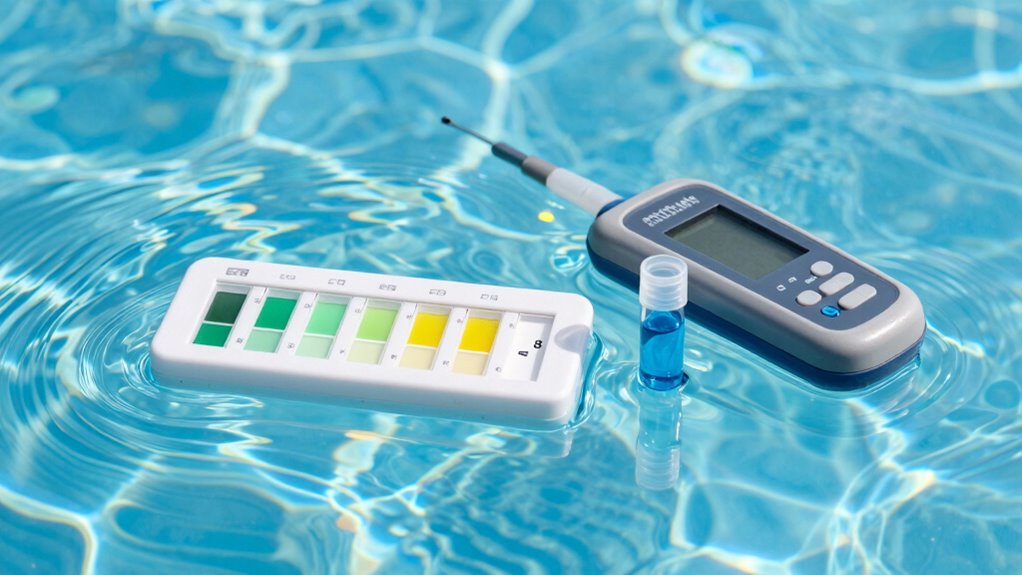
Testing and adjusting cyanuric acid levels guarantees your pool remains properly stabilized and safe for use. To do this, use reliable measurement tools like test strips or liquid test kits designed for cyanuric acid levels. Testing methods are straightforward: collect a water sample and follow the kit instructions to get an accurate reading. Check the cyanuric acid concentration regularly, ideally once a week or after heavy rain or pool refills. If levels are too low, add cyanuric acid to boost stabilization; if too high, dilute pool water by partial draining and refilling with fresh water. Precise measurement tools ensure you’re making informed adjustments, maintaining the right balance for effective chlorine protection without risking over-stabilization.
Can Cyanuric Acid Break Down or Be Removed From My Pool?
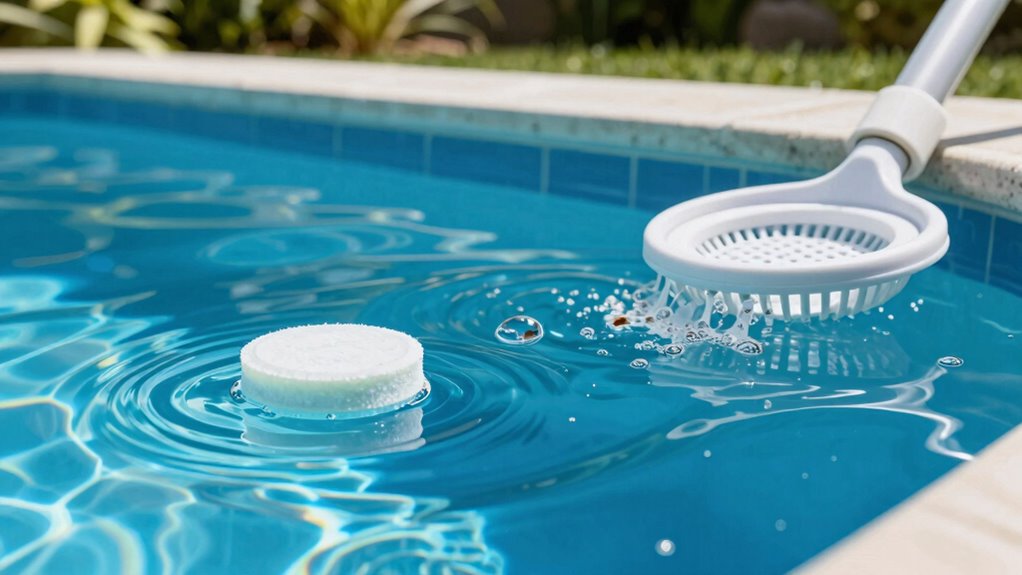
Can cyanuric acid break down or be removed from your pool? Yes, but it’s not easy. Cyanuric acid doesn’t naturally dissipate quickly, so removal methods are limited. Here are three ways to manage high levels:
- Drain and refill – partially or fully drain your pool, then refill with fresh water to lower cyanuric acid.
- Use a pool cover – reducing sunlight exposure slows algae growth and helps maintain proper chemical balance, indirectly affecting cyanuric acid levels.
- Algae prevention – keeping algae at bay minimizes the need for high cyanuric acid levels, which can be harder to remove once accumulated.
While these steps won’t instantly eliminate cyanuric acid, they help control and prevent excessive buildup, maintaining a balanced, safe swimming environment.
What Are the Risks of Having Too Much Cyanuric Acid?
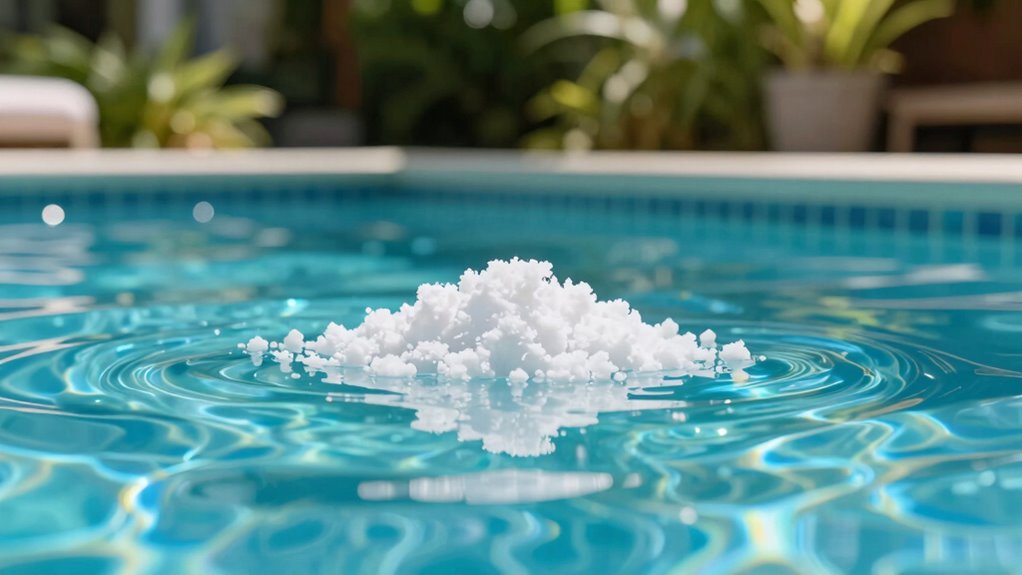
Excessive cyanuric acid in your pool can pose several risks to both water quality and your health. High levels interfere with chlorine’s ability to disinfect effectively, leading to increased bacterial growth and algae. It can also cause imbalanced chemical interactions, making water maintenance more challenging. Additionally, elevated cyanuric acid may have environmental effects if drained improperly, contaminating local water sources. Here’s a quick overview:
| Risk | Impact | Cause |
|---|---|---|
| Reduced chlorine efficacy | Increased bacteria and algae growth | Excess cyanuric acid |
| Water imbalance | Cloudy water, poor clarity | Chemical interactions |
| Environmental concerns | Pollution from improper drainage | Environmental effects |
| Skin and eye irritation | Contact with contaminated water | Chemical imbalance |
Monitoring levels helps prevent these issues and keeps your pool safe. Understanding chemical interactions is essential for effective water maintenance. Proper water testing can help detect dangerously high cyanuric acid levels before problems develop, as cyanuric acid accumulation can lead to long-term water quality issues. To ensure optimal water quality, it is also important to be aware of safe cyanuric acid levels and maintain them accordingly. Regularly checking your water chemistry can help catch problems early and maintain a healthy swimming environment.
What Should I Do If Cyanuric Acid Is Too High or Too Low?

If your cyanuric acid levels are off, you’ll need to modify them accordingly. Keep a close eye on your free chlorine levels to ensure your pool stays balanced. When in doubt, consulting pool professionals can help you make the right changes safely. Additionally, maintaining proper pool chemistry is essential for effective chlorine protection. Monitoring cyanuric acid levels regularly can help prevent imbalances before they become problematic. Being aware of water balance parameters can also support overall pool health. Regular testing helps identify issues early, preventing potential chemical imbalances that can harm your pool. Understanding how chlorine stabilization works can further optimize your pool’s chemical management.
Adjust Cyanuric Acid Levels
When your cyanuric acid levels are outside the ideal range, taking prompt action is essential to maintain a safe and balanced swimming environment. To adjust cyanuric acid levels effectively, focus on proper pool maintenance and chemical balance. You can also consider water testing to accurately assess the current levels and avoid over- or under-treatment. If levels are too high: 1. Drain a portion of the pool water and replace it with fresh water to dilute cyanuric acid. 2. Avoid adding more cyanuric acid until levels decrease. 3. Regularly test water to track changes. 4. Monitoring water quality ensures that chemical levels stay within safe limits. Additionally, understanding the impact of philosophical insights can help pool owners appreciate the importance of balance and moderation in chemical management. Recognizing the long-term effects of improper chemical levels can also guide better maintenance practices. If levels are too low: 1. Add cyanuric acid according to the manufacturer’s instructions. 2. Retest after a few days to confirm proper levels. 3. Maintain consistent testing to prevent fluctuations. Correct adjustments help ensure your pool remains safe, clean, and properly balanced.
Monitor Free Chlorine Regularly
Monitoring your free chlorine levels regularly is vital to maintaining a safe and balanced pool, especially when cyanuric acid levels are out of sync. If cyanuric acid is too high, it can hinder chlorine’s effectiveness, making it harder to disinfect the water. Conversely, if it’s too low, your chlorine may break down quickly, risking bacteria growth. Check your chlorine levels frequently—at least every few days—and adjust accordingly. Maintaining proper free chlorine ensures optimal pool safety and chemical balance, preventing issues like algae or bacteria buildup. Use reliable test kits or digital meters for accurate readings. Staying vigilant helps you keep your pool safe, clean, and inviting, regardless of cyanuric acid fluctuations. Consistent monitoring is your best defense against imbalance-related problems.
Consult Pool Professionals
Unsure about how to handle cyanuric acid levels that are too high or too low? It’s best to consult pool professionals to guarantee safety and proper chemical balance. They can assess your pool’s condition and recommend precise adjustments to your pool chemicals. When cyanuric acid is off, taking safety precautions is pivotal to avoid damaging your equipment or harming swimmers. Here are steps to consider:
- High cyanuric acid levels: Professionals may suggest partial drain and refill to dilute the stabilizer.
- Low cyanuric acid levels: They might recommend adding cyanuric acid specifically designed for pools.
- Regular testing: Pool pros can set up a maintenance plan to keep your cyanuric acid within ideal ranges, preventing future issues.
Always rely on experts to handle chemical adjustments safely and effectively.
Frequently Asked Questions
Can Cyanuric Acid Cause Skin or Eye Irritation?
Cyanuric acid can cause skin sensitivity and eye irritation if you have direct contact, especially in high concentrations. You should always wear protective gear when handling or dosing it to guarantee eye safety and prevent skin reactions. If you get cyanuric acid on your skin or in your eyes, rinse thoroughly with water immediately. Staying cautious helps protect you from potential irritation and keeps your swimming environment safe.
Does Cyanuric Acid Affect Chlorine’s Disinfectant Ability?
Imagine a shield around your pool’s chlorine; cyanuric acid acts as this barrier, but beware—it can weaken chlorine’s stability, reducing its disinfectant effectiveness. When cyanuric acid levels rise too high, it diminishes chlorine’s ability to sanitize effectively, making your pool less safe. So, yes, cyanuric acid impacts chlorine’s disinfectant power by stabilizing it, but overdoing it can hinder chlorine’s vital role in keeping your water clean and clear.
How Quickly Does Cyanuric Acid Break Down in Pool Water?
Cyanuric acid breaks down slowly in pool water, with a typical breakdown rate of about 0.1 to 0.3 ppm per day under standard conditions. Factors like sunlight, temperature, and water circulation influence stabilizer degradation. You’ll notice it takes several days to weeks for significant reduction, so regular testing helps you maintain proper cyanuric acid levels and prevents over-stabilization, which can hinder chlorine’s disinfectant effectiveness.
Are There Alternative Stabilizers to Cyanuric Acid?
Think of your pool’s chemistry as a delicate dance where alternative stabilizers like sodium bicarbonate or potassium monopersulfate step in to help preserve chlorine. These options can boost chlorine levels and maintain water clarity without relying solely on cyanuric acid. By using these stabilizers, you keep your chlorine active longer, ensuring your pool stays sanitized while avoiding the potential downsides of cyanuric acid buildup.
Can Cyanuric Acid Buildup Lead to Algae Growth?
Yes, cyanuric acid buildup can lead to algae proliferation. When it accumulates, it causes a chemical imbalance in your pool, reducing chlorine’s effectiveness. This allows algae to grow more easily, making your pool cloudy and green. To prevent this, regularly test the cyanuric acid levels and maintain proper chlorine levels. Keeping the stabilizer within recommended ranges guarantees a balanced chemical environment and helps prevent algae growth.
Conclusion
Think of cyanuric acid as the guardian sunshield for your pool’s chlorine—protecting it from the harsh rays while sometimes battling to break it down. Keep it balanced, and your pool becomes a sparkling oasis of clarity and safety. But let it drift too high or too low, and it’s like losing that essential armor, leaving your pool vulnerable to algae and bacteria. Stay vigilant, and let your pool shine bright all season long.