To read a pool water test like a pro, start by preparing a clean testing area and gathering your test kit, then follow the instructions carefully. Compare the color of your test strips or reagent results to the provided chart, focusing on the closest match and noting the exact levels. Keep detailed records, so you can spot trends and make precise adjustments. If you want to master this skill, keep going—you’ll discover how to interpret results easily and keep your pool perfect.
Key Takeaways
- Compare test strip or reagent colors to a standardized chart, focusing on the closest match rather than exact hues.
- Record your results immediately with date and time to track water chemistry trends accurately.
- Ensure samples are well-mixed and collected from the proper depth for reliable readings.
- Keep testing tools clean and reagents fresh to prevent inaccurate or false results.
- Understand the significance of each parameter’s reading to make informed chemical adjustments efficiently.
Why Pool Water Testing Matters for Your Pool’s Health

Testing your pool water regularly is essential because it helps you maintain a healthy and safe swimming environment. One key aspect you need to monitor is the pH balance, which should stay between 7.2 and 7.8. When the pH is off, it can cause skin irritation, cloudy water, and damage to your pool equipment. Proper pH levels also support algae prevention by ensuring sanitizers work effectively. If the water becomes too alkaline or acidic, algae can quickly take hold, turning your pool green and making cleaning more difficult. By routinely checking and adjusting your water’s chemistry, you prevent these problems before they start. Free floating testing can help you quickly identify issues and maintain proper levels. A smart lock or other advanced pool equipment can also assist in monitoring water conditions remotely, making maintenance even more convenient. Consistent testing ensures your pool stays clear, healthy, and inviting for every swim. Using the right DIY tools and safety tips can make testing easier and safer for you. Additionally, understanding test result interpretation allows you to make accurate adjustments and keep your pool in optimal condition. Regular testing also helps you recognize chemical imbalances early, preventing costly repairs or chemical overuse.
Which Water Parameters Should You Test?
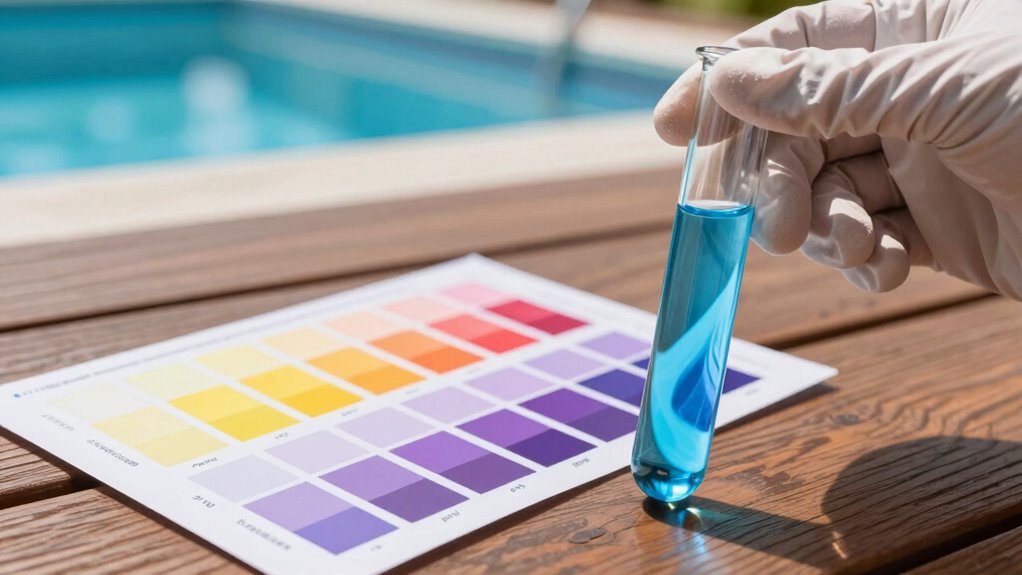
To keep your pool water safe and inviting, you need to monitor several key parameters regularly. Focus on these four critical measurements:
Maintaining proper pH, chlorine, alkalinity, and calcium hardness ensures a safe, clean, and inviting pool.
- pH balance – Ensures water isn’t too acidic or alkaline, which can cause irritation and damage equipment. Maintaining proper pH levels also helps optimize the effectiveness of sanitizers like chlorine. Proper pH adjustment is essential for optimal water quality. Regular testing of pH helps prevent issues like skin irritation and equipment corrosion, making water chemistry management crucial for pool maintenance.
- Chlorine levels – Maintains sanitation, preventing bacteria and algae growth. Consistent testing helps avoid issues such as over-chlorination or insufficient disinfection.
- Total alkalinity – Stabilizes pH balance and prevents swings that can compromise water quality. Proper alkalinity levels act as a buffer against sudden changes in water chemistry.
- Calcium hardness – Protects pool surfaces and equipment from corrosion or scale buildup. Regular testing helps prevent issues like cloudy water or equipment malfunction, which can be caused by imbalanced water chemistry. Understanding and managing water hardness is essential for long-term pool maintenance.
How to Use a Pool Water Test Kit Correctly
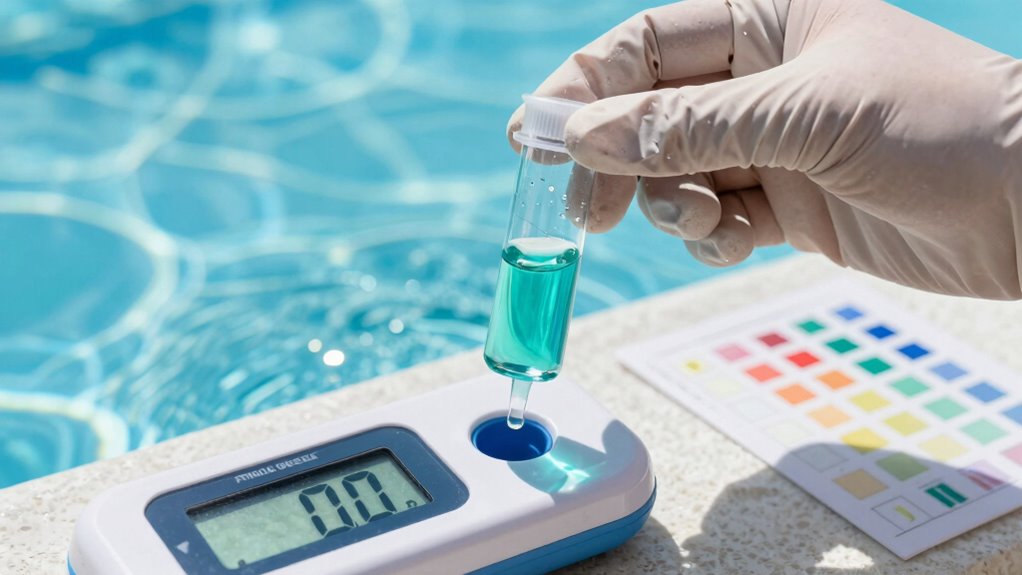
To get accurate results, start by preparing your testing area, making sure everything is clean and ready. Follow the instructions on your test kit carefully to avoid mistakes, then record your results accurately. Interpreting these results correctly helps you maintain balanced water and keep your pool safe. Additionally, understanding proper testing procedures ensures you make informed decisions about your pool’s health. Being familiar with measurement units like ppm or pH levels can help you better evaluate your water quality. Properly understanding testing accuracy techniques can further improve your confidence in maintaining optimal pool conditions. Recognizing the importance of test timing can also ensure you get reliable readings every time. Knowing the impact of temperature on test results can help you adjust your testing routine accordingly.
Prepare Your Testing Area
Have you prepared your workspace to get accurate results? Setting up a proper testing area guarantees reliable readings. First, clear away any clutter and keep cleaning supplies nearby to quickly wipe spills or splashes. Second, select a flat, stable surface to prevent spilling or dropping testing tools. Third, gather all testing tools—test tubes, reagents, and strips—in one spot for easy access. Fourth, ensure good lighting so you can see color changes clearly. Keep your cleaning supplies handy to maintain a tidy space and avoid cross-contamination. Additionally, familiarize yourself with common cabling failures to troubleshoot issues quickly if problems arise during testing. Recognizing potential testing errors can help you interpret your results more accurately. To further improve your testing accuracy, it’s helpful to understand how proper sample collection impacts the reliability of your results. A well-organized testing area minimizes the risk of contamination and ensures more consistent readings. Implementing quality control measures can also help maintain test consistency over time. By organizing your testing area, you reduce errors and improve accuracy. A clean, well-arranged workspace makes testing quicker and more precise, helping you better understand your pool’s water chemistry without hassle.
Follow Testing Instructions Carefully
Once your testing area is ready, it’s important to follow the instructions provided with your test kit carefully. Accurate results depend on proper testing protocols and understanding chemical reactions involved. Pay close attention to how much water and reagent to use, timing, and mixing techniques. Missteps can lead to incorrect readings, making your pool maintenance harder. To help, here’s a quick overview:
| Step | Action |
|---|---|
| 1 | Read instructions thoroughly |
| 2 | Measure water and reagents precisely |
| 3 | Follow timing and mixing instructions |
Being aware of sound healing science principles can also help you stay relaxed while testing, reducing stress and ensuring better accuracy. Incorporating mental focus techniques can further improve your attention to detail during testing.
Record and Interpret Results
After completing your test, it’s vital to record your results accurately and interpret them correctly. Proper record keeping helps you track trends and maintain test result accuracy over time. To do this effectively:
- Write down the exact readings from each test, noting the date and time.
- Use clear labels for each parameter, like pH, chlorine, or alkalinity.
- Compare your results against recommended pool levels to identify imbalances.
- Keep a dedicated log or digital record for easy reference and trend analysis.
- Regularly monitor water quality to ensure your pool remains balanced and safe for swimmers.
Accurate record keeping ensures you catch issues early and adjust your pool’s chemicals correctly. Interpreting the data correctly lets you make informed decisions, keeping your water balanced and safe for swimmers. Remember, consistent documentation enhances test result accuracy and simplifies maintenance.
How to Read Your Pool Water Test Results
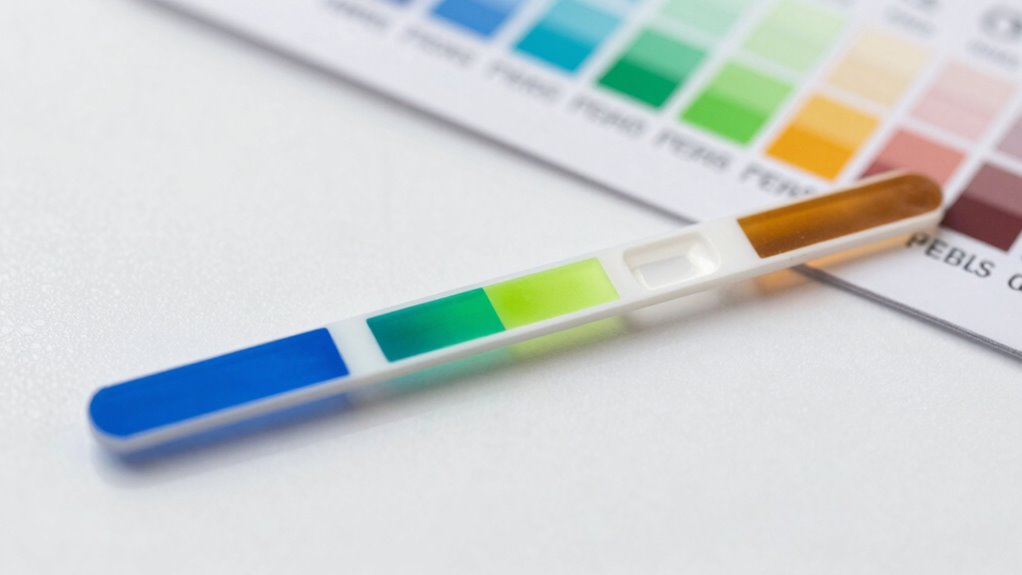
When you read your pool water test results, it’s important to understand what each parameter means and how it affects your pool. You’ll need to interpret color changes accurately to determine if your water is balanced or needs adjustment. By knowing how to read these results, you can make the right chemistry adjustments to keep your pool clean and safe.
Understanding Test Parameters
Understanding your pool water test parameters is essential for maintaining a safe and healthy swimming environment. Knowing how to interpret these values helps you keep the water balanced and safe. Here are four key parameters to focus on:
- pH balance – Ensures the water isn’t too acidic or alkaline, which can cause irritation and damage equipment.
- Chlorine levels – Indicates whether your sanitizer is effectively killing bacteria and algae.
- Total alkalinity – Acts as a buffer for pH balance, helping prevent sudden changes.
- Calcium hardness – Prevents scaling and corrosion by maintaining appropriate mineral levels.
Mastering these parameters empowers you to keep your pool crystal clear and safe for everyone.
Interpreting Color Changes
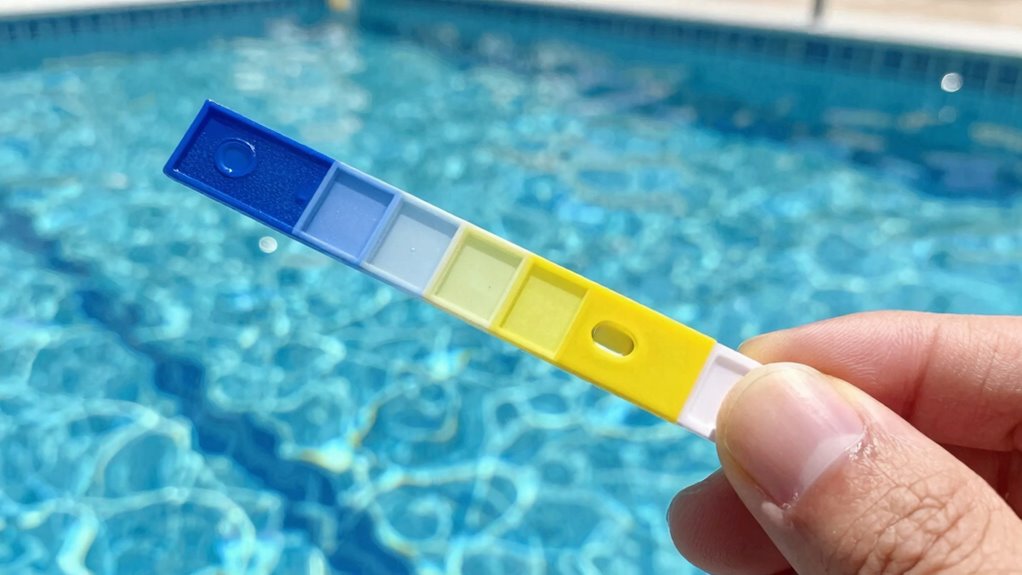
Reading your pool water test results often involves comparing the color changes on test strips or liquid reagents to a designated color chart. This process, called shade matching, helps you interpret the specific levels of chemicals like chlorine, pH, or alkalinity. Focus on identifying the closest color match, rather than trying to match colors exactly. Keep in mind that slight variations are normal, so look for the overall shade and its position on the chart. Accurate color interpretation ensures you understand your pool’s chemistry and can determine if adjustments are needed. Take your time, and if unsure, compare multiple times or under different lighting conditions. Remember, the goal is to match the color as closely as possible for reliable results.
Adjusting Pool Chemistry
Once you’ve interpreted your test results, the next step is to adjust your pool’s chemicals accordingly. Proper chemical balancing is key to maintaining healthy water chemistry and preventing issues. To do this effectively, consider these steps:
- Add chlorine or sanitizer if levels are low to disinfect the water.
- Adjust pH with pH increaser or decreaser to keep it between 7.2 and 7.6.
- Correct alkalinity to stabilize pH and overall water chemistry.
- Balance calcium hardness to prevent scaling or corrosion.
What Do Your Test Numbers Mean?

When you test your pool water, the numbers on the test kit reveal the current state of your pool’s chemistry. These readings are the result of chemical reactions happening within your sample, which produce color changes that your test kit interprets. Understanding what these numbers mean helps you determine if your water is balanced or needs adjustment. Keep in mind, test accuracy is key—improper sampling, expired reagents, or misreading colors can lead to incorrect results. Once you know what your test numbers indicate, you can take targeted action, such as adding chemicals to raise or lower pH, alkalinity, or sanitizer levels. Properly interpreting these numbers is essential for maintaining safe, clear, and healthy pool water.
Troubleshooting Common Testing Confusions

Even experienced pool owners can encounter confusion when test results don’t match expectations or seem inconsistent. Common issues include misreading pH balancing or chlorine levels, leading to incorrect adjustments. To troubleshoot:
Even seasoned pool owners can get confused by inconsistent test results.
- Double-check test strip placement and timing—improper contact skews results.
- Confirm test reagents are fresh; expired chemicals give false readings.
- Ensure your sample is well-mixed before testing for accurate pH and chlorine levels.
- Consider environmental factors like sunlight or temperature, which can affect test outcomes.
If your pH seems off, verify you’re reading the color accurately. For chlorine levels, make sure you’re comparing against the correct color chart. Consistent testing and proper technique help you make smarter adjustments.
How to Adjust Pool Chemicals Based on Results

After you’ve interpreted your test results, adjusting your pool chemicals becomes straightforward. Focus on achieving proper chemical balancing by adding the right amounts of chemicals to correct pH, alkalinity, and calcium hardness. If your pH is too high, add pH reducer; if it’s too low, use pH increaser. For alkalinity adjustments, follow the product instructions carefully. Keep a close eye on sanitizer levels—if they’re low, add the appropriate sanitizer (chlorine or bromine) to keep your water safe and clear. Always add chemicals gradually, retest, and wait a few hours before making further adjustments. Maintaining balanced chemicals ensures your pool stays inviting, healthy, and free of algae or bacteria. Precise adjustments help prevent overcorrecting and keep your water in ideal condition.
Maintaining a Routine for Clear, Healthy Pool Water
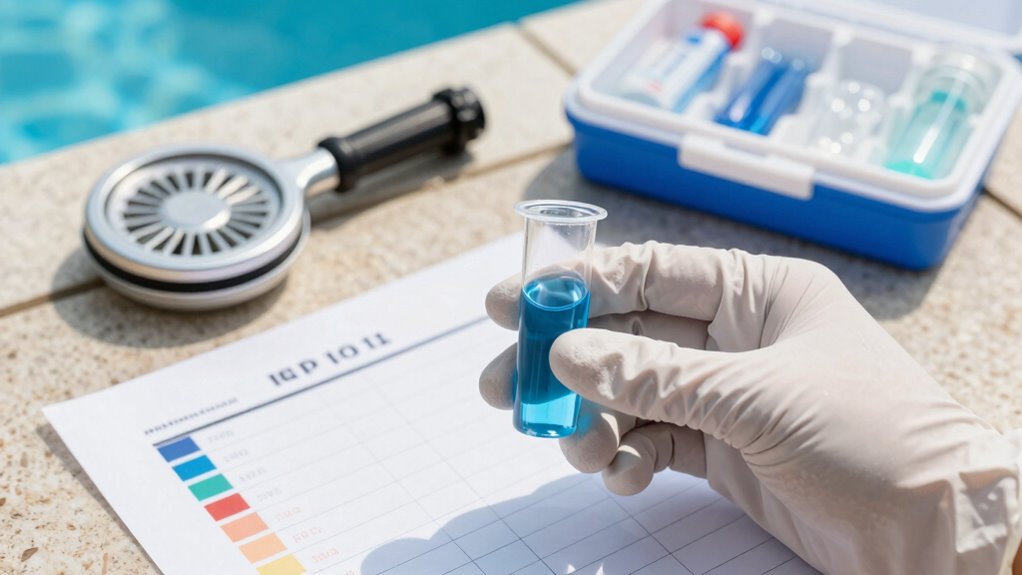
Maintaining consistent pool care routines guarantees your water stays clear and healthy over time. Regular pool maintenance is vital for ideal water quality. To keep your pool in top shape, follow these steps:
Consistent pool care ensures clear, healthy water through regular testing, chemical adjustments, and routine cleaning.
- Test your water weekly to monitor pH, chlorine levels, and other essential parameters.
- Adjust chemicals promptly based on test results to prevent imbalances.
- Skim debris daily and clean filters weekly to guarantee proper circulation.
- Shock the pool monthly to eliminate contaminants and maintain clarity.
Frequently Asked Questions
How Often Should I Test My Pool Water During Peak Season?
During peak season, you should test your pool water at least 2 to 3 times a week to keep up with pool maintenance. Regular test frequency helps you catch and correct issues like pH imbalance or algae growth early. If you notice heavy usage or after a storm, test more frequently. Staying on top of water quality guarantees a safe, clean, and enjoyable swimming experience all season long.
Can I Use Digital Testers Instead of Test Strips?
Yes, you can definitely use digital testers instead of test strips! Digital testers are like having a mini chemist in your hand, offering instant, accurate readings that can feel like magic. While test strip comparison is simple and budget-friendly, digital testers eliminate guesswork and provide precise results quickly. If you crave speed and accuracy, investing in a digital tester is a game-changer for maintaining perfect pool water.
What Should I Do if My Test Results Are Inconsistent?
If your test results are inconsistent, first double-check your testing method for accuracy, ensuring you’re following instructions precisely. Use fresh test reagents and clean testing containers to avoid contamination. Troubleshoot inconsistencies by comparing results with a different test strip or digital tester. Regularly calibrate your testing tools and record results to identify patterns. This approach helps maintain reliable readings, so you can effectively manage your pool’s water chemistry.
Are There Any Natural Ways to Balance Pool Chemicals?
Think of your pool as a garden needing gentle care. You can use organic alternatives like baking soda for alkalinity, vinegar for pH adjustments, and natural mineral salts to maintain water balance. These methods promote natural balancing, reducing chemical reliance. While they may take a little more patience, they help keep your pool safe and sparkling, all while embracing eco-friendly, natural solutions that protect your skin, eyes, and the environment.
How Long Does It Take for Chemicals to Stabilize After Adjustment?
After you perform pH adjustment and chemical stabilization, it typically takes about 4 to 6 hours for the chemicals to fully stabilize in your pool. During this period, avoid swimming to give the chemicals time to evenly disperse and balance. Keep testing the water periodically to ensure chemical levels remain consistent. Once stabilized, your pool water will be safer, clearer, and more comfortable for swimmers.
Conclusion
By mastering your pool water tests, you’re the captain steering a ship through crystal-clear waters. Think of each test as a compass, guiding you to perfect balance and sparkling clarity. With confidence in reading your results, you’ll navigate chemical adjustments effortlessly, turning pool maintenance from a chore into a breeze. Immerse yourself in the joy of a healthy, inviting pool—your personal oasis where every swim feels like a invigorating voyage.