
Maintaining your pool’s pH between 7.2 and 7.8 is key to keeping the water safe, clear, and comfortable. When pH is in this range, chlorine works efficiently to disinfect and prevent algae growth, saving you money and effort. It also protects your pool equipment from corrosion and reduces skin and eye irritation for swimmers. Staying within these levels helps guarantee your pool stays inviting and healthy—discover more tips on keeping your water balanced.
Key Takeaways
- Maintaining pH between 7.2 and 7.8 ensures optimal chlorine effectiveness for sanitization.
- Balanced pH prevents algae growth, cloudy water, and bacterial issues, keeping water clear and safe.
- Proper pH levels reduce corrosion of pool surfaces and equipment, extending their lifespan.
- Staying within this range minimizes skin and eye irritation for swimmers.
- Regular testing and adjustments keep water quality consistent, promoting overall pool health and safety.

Have you ever wondered why maintaining the right pH level in your pool is so vital? The answer lies in how it influences the overall health of your pool and the effectiveness of your sanitation efforts. When your pool’s pH drifts outside the ideal range of 7.2 to 7.8, it can cause a cascade of problems that make maintaining a clean, safe swimming environment more challenging. Staying within this range ensures your chlorine works efficiently, which is essential for both sanitation and algae prevention. If the pH is too high or too low, chlorine’s ability to kill bacteria and other contaminants diminishes, leaving your pool vulnerable to algae growth and bacterial buildup. Conversely, proper pH levels optimize chlorine’s effectiveness, so you use less of it and keep your pool safer and clearer.
When the pH is balanced, chlorine can do its job without extra effort. Chlorine performs best in the 7.2 to 7.8 range, rapidly neutralizing algae, bacteria, and other organic matter. This means less chemical use overall, saving you money and reducing chemical exposure. An imbalanced pH, especially if it’s too high, causes chlorine to become less effective, leading to a higher risk of algae blooms and cloudy water. You might notice greenish or slippery algae forming because the sanitizer isn’t doing its job properly. On the other hand, if the pH is too low, your water can become corrosive, damaging your pool surfaces and equipment, and irritating your skin and eyes. Maintaining the proper pH helps prevent both of these problems, keeping your pool inviting and safe.
Algae prevention hinges notably on pH control. When pH levels are within the proper range, algae find it harder to take hold because the environment isn’t conducive to their growth. Proper pH levels also support the effectiveness of algaecides and other sanitizers you might add to your pool. Regular testing and adjusting your pH ensures that algae don’t get a foothold, which can save you hours of cleaning and chemical treatments later. Keeping your pH steady minimizes the risk of algae outbreaks, reduces chemical consumption, and promotes clearer, healthier water. Maintaining a balanced pH is essential for pool water health and overall hygiene, making your swimming experience safer and more enjoyable.
Frequently Asked Questions
How Often Should I Test My Pool Ph Levels?
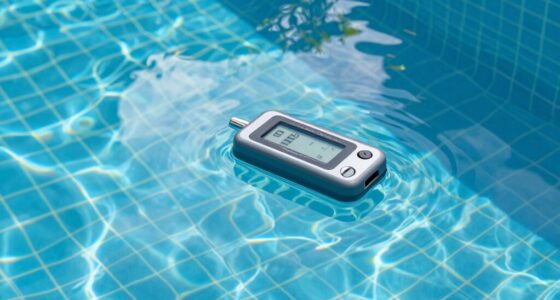
You should test your pool pH levels at least twice a week using reliable testing equipment. Regular testing helps you maintain the ideal frequency needed to keep your water balanced and safe. If you notice changes in water clarity or chemistry, test more often. Consistent checks ensure your pH stays within the perfect 7.2–7.8 range, preventing issues like corrosion or algae growth.
What Causes Ph Levels to Fluctuate Unexpectedly?
Did you know that pool pH can fluctuate by up to 0.4 in just a day? You cause these shifts through environmental factors like rain, which introduces contaminants, or increased swimmer activity, which releases body oils and sweat. Chemical imbalance can also occur if you don’t regularly test and adjust your water. These factors combine, making it essential to monitor your pH frequently to keep your pool balanced.
Can I Swim if Ph Levels Are Outside 7.2–7.8?
You shouldn’t swim if pH levels are outside 7.2–7.8 because it can jeopardize pool safety and your comfort. Low pH causes skin and eye irritation, while high pH reduces chlorine effectiveness, leading to bacteria growth. Swimming in unbalanced water increases risks and discomfort. Always test and adjust your pool’s pH before swimming to guarantee a safe, pleasant experience for everyone.
What Are the Risks of Consistently Low or High Ph?
If your pool’s pH stays consistently low or high, you risk algae growth and equipment corrosion. Low pH can cause corrosion of metal parts and damage to your pool’s surface, while high pH encourages algae growth, making the water cloudy and unsafe. Both conditions strain your pool’s filtration system and increase maintenance costs. To keep your pool safe and clear, aim to keep pH within the ideal range of 7.2–7.8.
How Does Ph Impact Chlorine Effectiveness in Pools?
You’ll notice that pH balance directly affects chlorine efficiency in your pool. When the pH is between 7.2 and 7.8, chlorine works most effectively to sanitize and disinfect. If the pH is too high or low, chlorine becomes less efficient, leading to potential algae growth and bacteria buildup. Maintaining proper pH guarantees maximum chlorine performance, keeping your pool clean, safe, and clear.
Conclusion
Think of your pool’s pH as its heartbeat—keeping it within 7.2–7.8 is like maintaining a steady rhythm that keeps everything in harmony. When your pH level stays balanced, your pool remains inviting and vibrant, much like a clear, sparkling gem. Don’t let imbalance turn your oasis into chaos. By understanding and monitoring pH, you’re safeguarding your pool’s health, ensuring it stays a peaceful sanctuary where every swim feels like a invigorating escape.