

To minimize chlorine smell in your infinity pool, regularly test and balance your water chemistry, ensuring proper pH and alkalinity levels. Consider using alternative sanitizers or shock treatments to reduce chlorine dependence. Improve your pool’s circulation and filtration systems to keep water fresh and clear. You can also add natural deodorizers or enzymes to break down contaminants. Maintaining good pool hygiene and cleaning practices will help keep odors at bay—keep going to discover more effective tips.
Regularly Test and Balance Water Chemistry
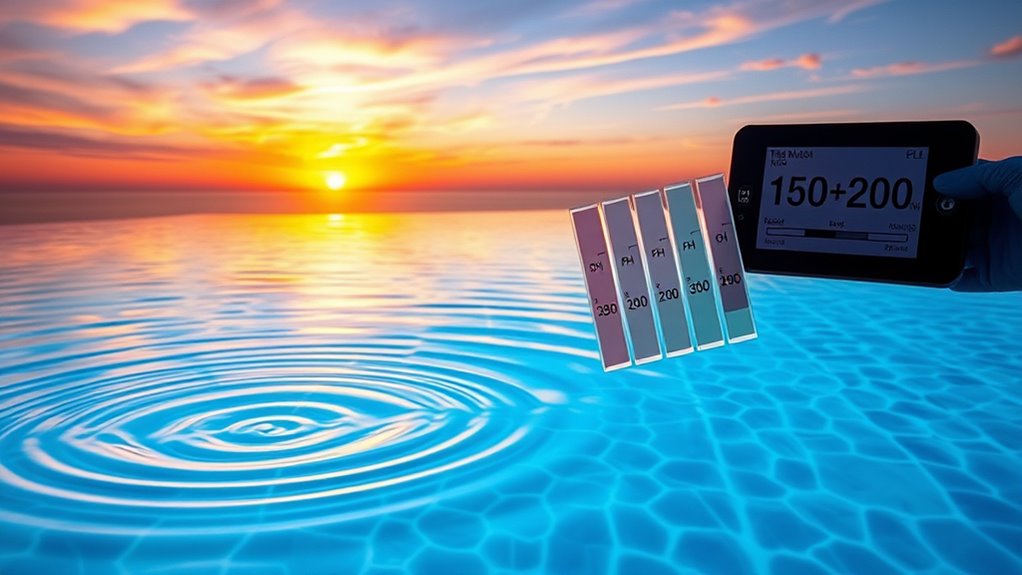
To effectively minimize the chlorine smell in your infinity pool, you need to regularly test and balance the water chemistry. Use a reliable test kit to check pH, alkalinity, and sanitizer levels at least once a week. Keeping pH between 7.2 and 7.6 is essential because high pH can cause chlorine to off-gas, increasing the smell. If your pH or alkalinity is off, adjust with the appropriate chemicals until levels are within the recommended ranges. Maintaining proper sanitizer levels ensures effective disinfection without excess chlorine, which can cause strong odors. Regular testing and balancing prevent problems before they arise, keeping your pool clean, safe, and odor-free. Proper storage of pool equipment also helps prevent contamination and chemical imbalance, contributing to a more pleasant swimming environment. Regular maintenance is your best defense against a persistent chlorine smell in your infinity pool.
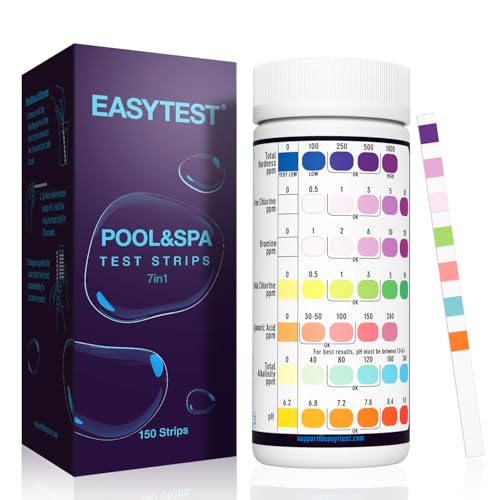
EASYTEST 7-Way Pool Test Strips, 150 Strips Water Test for Hot tub and Spa
- 150 Test Strips Included: Enough for frequent water testing
- Quick and Accurate Results: Soak for 1 second, read in 15 seconds
- 7-in-1 Water Testing: Measures Bromine, pH, Chlorine, and more
As an affiliate, we earn on qualifying purchases.
Use Alternative Sanitizers and Shock Treatments

Switching to alternative sanitizers like bromine, mineral systems, or ultraviolet (UV) light can considerably reduce the chlorine smell in your infinity pool. Bromine is less volatile and produces less odor, making it a popular choice. Mineral systems use natural minerals to sanitize, providing a softer feel and fewer fumes. UV systems disinfect water without chemicals, drastically cutting down on chlorine use. Shock treatments help break down organic contaminants and reduce chloramine buildup, which causes the strong smell.
- Use bromine instead of chlorine for a gentler scent
- Install mineral ionizers for natural sanitation
- Incorporate UV sterilizers to minimize chemical reliance
- Regularly shock your pool to eliminate chloramines
- Balance water chemistry to enhance sanitizer efficiency
Improve Circulation and Filtration Systems

Enhancing your pool’s circulation and filtration systems guarantees water stays clean and reduces chlorine odors. Proper circulation ensures that chemicals are evenly distributed, preventing stagnant areas where bacteria and algae can grow. Upgrading your pump or increasing run time helps keep water moving efficiently. A high-quality filter traps debris, dirt, and organic compounds that contribute to chlorine smell. Regularly cleaning and backwashing your filter maintains ideal performance. Guarantee your return jets are strategically placed to promote thorough water movement throughout the pool. By improving circulation, you minimize chemical imbalances and reduce chlorine byproducts responsible for odors. Consistent maintenance of your filtration system keeps your infinity pool clear, fresh, and inviting, making your swimming experience more enjoyable and odor-free. Louisiana Alimony Laws outline the importance of proper financial and legal management during such maintenance.
Incorporate Natural Deodorizers and Enzymes
Building on your efforts to improve circulation and filtration, incorporating natural deodorizers and enzymes offers an effective way to combat chlorine odors. These solutions break down organic compounds that cause foul smells, making your pool smell fresher without harsh chemicals. Natural deodorizers like essential oils can subtly mask odors, while enzymes target organic matter that contributes to smell buildup. Using these products regularly helps maintain a balanced and clean pool environment. Incorporating resilience strategies can further enhance your pool’s long-term health and safety. Consider adding: – Enzyme-based pool treatments – Essential oils like lavender or citrus – Algaecides with natural ingredients – Organic enzyme tablets – Plant-based deodorizers These options work synergistically with your existing systems, reducing chlorine smell and promoting a healthier, more inviting pool experience.
Maintain Proper Pool Hygiene and Cleaning Practices
Maintaining proper pool hygiene and cleaning practices is essential for reducing chlorine odors. Dirty filters and algae buildup can trap chloramine compounds, intensifying the smell. To keep your pool fresh, clean the skimmer baskets weekly, brush the walls and floor regularly, and vacuum thoroughly. Check and clean the filter system as needed to prevent debris from accumulating. Proper circulation helps distribute chemicals evenly and reduces stagnant areas where odors can develop. Regularly inspecting water chemistry and ensuring balanced levels further minimizes unpleasant odors. Use the following table to guide your routine:
| Task | Frequency | Purpose |
|---|---|---|
| Skimmer basket cleaning | Weekly | Remove debris and maintain flow |
| Brushing walls and floor | Weekly | Prevent algae and dirt buildup |
| Filter system maintenance | Monthly | Ensure efficient filtration |
| Vacuuming | Weekly | Remove settled dirt |
| Water testing and balancing | Bi-weekly | Keep water chemistry ideal |
Frequently Asked Questions
How Often Should I Replace Pool Filters to Reduce Chlorine Smell?
You should replace your pool filters every 1 to 3 years, depending on usage and maintenance. Regular cleaning of the filters every few months also helps reduce chlorine smell by removing debris and buildup. If you notice decreased water flow or persistent odors despite cleaning, it’s time for a replacement. Properly maintained filters ensure better water quality, minimize chemical odors, and keep your infinity pool sparkling clean and inviting.
Can Certain Pool Covers Affect Chlorine Smell Levels?
Yes, your pool cover can affect chlorine smell levels. If you use a cover that traps heat and moisture, bacteria and algae can grow more easily, increasing chlorine demand and resulting in a stronger smell. Choose a breathable cover or one suited for your climate to reduce these issues. Regularly cleaning and maintaining your cover also helps prevent buildup that contributes to chlorine odors, keeping your pool smelling fresh.
Are There Specific Natural Deodorizer Products for Infinity Pools?
Yes, there are specific natural deodorizer products for infinity pools. You can opt for mineral-based treatments, enzyme cleaners, or natural algae preventers that neutralize chlorine odors while balancing water chemistry. These products work by breaking down organic compounds, reducing chlorine by-products, and promoting clearer, fresher water. Regular use of these natural deodorizers, combined with proper filtration and maintenance, helps keep your infinity pool smelling fresh and inviting.
How Does Ambient Temperature Influence Chlorine Smell in Pools?
Higher ambient temperatures make chlorine molecules more volatile, releasing stronger chlorine odors in your pool. When it’s hot outside, chlorine evaporates faster, intensifying the smell. To keep this under control, you can lower the chlorine levels slightly, ensure proper filtration, and maintain good water circulation. Shade the pool area if possible, and consider adding stabilizers or natural deodorizers to diminish the chlorine scent while keeping your water safe and clean.
What Are the Signs of Over-Chlorination in an Infinity Pool?
Did you know that over-chlorination affects about 15% of pool owners annually? If you notice your infinity pool has a strong, chemical smell, eye irritation, or skin dryness, you might have too much chlorine. You may also see cloudy water or experience difficulty balancing pH levels. These signs indicate over-chlorination, so it’s crucial to dilute the water, reduce chlorination levels, and guarantee proper filtration to restore balance.
Conclusion
To keep your infinity pool smelling fresh, maintaining balanced water chemistry and proper filtration is key. Did you know that poorly maintained pools can emit overpowering chlorine odors, causing discomfort for over 60% of swimmers? By regularly testing your water, using alternative sanitizers, and keeping your pool clean, you can minimize that unpleasant smell. With consistent care, you’ll enjoy a pristine, odor-free infinity pool that’s perfect for relaxing and entertaining.