If your pool heater isn’t igniting or maintaining the right temperature, start by inspecting the gas valve to make certain it’s fully open and working properly. Check and clean the pilot assembly for dirt or corrosion, and verify the spark igniter is creating a steady spark. Also, inspect the ignition system wiring for damage. If these steps don’t resolve the issue, more detailed troubleshooting can help pinpoint the problem—keep going to learn more.

Get pool and patio gear delivered free with Prime
- Fast, free delivery on millions of items
- Prime Video, Amazon Music and more included
- Member-only deals all year
Key Takeaways
- Ensure the gas valve is fully open and functioning properly to enable ignition.
- Inspect and clean the pilot assembly for dirt, debris, or corrosion to ensure a steady flame.
- Check the ignition system for loose wires, damage, or corrosion and replace faulty components if needed.
- Verify the gas supply is adequate and that all connections are secure before troubleshooting further.
- Contact a professional technician for complex repairs or if troubleshooting steps do not resolve the issue.
When your pool heater isn’t working properly, it can turn your relaxing swim into a frustrating experience. One common issue involves problems with the ignition system, which is essential for heating your pool efficiently. If your heater isn’t igniting, the first thing to check is the gas valve. The gas valve controls the flow of propane or natural gas to the pilot assembly and main burner. If it’s stuck closed or malfunctioning, the heater won’t produce any heat. You might notice no smell of gas or the heater failing to produce a spark. To troubleshoot, ensure the gas valve is fully open. If it’s stuck or doesn’t respond when you turn the control knob, you may need to replace it or call a professional.
Check if your pool heater’s gas valve is fully open; a stuck valve can prevent ignition and heating.
Next, examine the pilot assembly, which is responsible for igniting the gas. The pilot assembly typically includes a small flame that ignites the main burner when the heater calls for heat. Over time, the pilot assembly can become dirty, clogged, or misaligned, preventing it from lighting the gas. You should turn off the heater and carefully inspect the pilot assembly for dirt, debris, or corrosion. Cleaning it with a soft brush or compressed air often restores proper function. If the pilot flame is weak or absent, it may be due to a faulty thermocouple or a misaligned pilot. Adjusting the pilot assembly to ensure a steady, blue flame can resolve ignition issues.
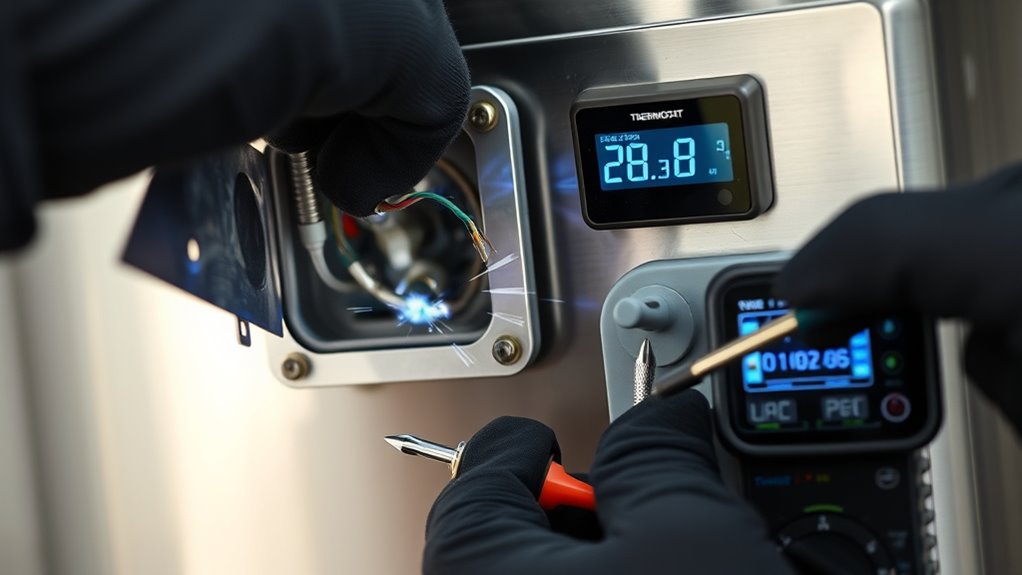
Sometimes, the problem isn’t just with the pilot assembly but involves the entire ignition system, including the spark igniter or electronic ignition module. If the spark isn’t creating a consistent flame, check for loose wires, corrosion, or damage in the ignition components. Replacing faulty parts may be necessary if cleaning doesn’t fix the issue. Also, ensure the gas supply is adequate and that the gas valve is fully open, as insufficient gas flow can cause ignition failures.
In many cases, issues with the gas valve or pilot assembly are simple to diagnose but require caution to handle safely. Always turn off the gas supply before inspecting or working on these components. If you’re unsure about any step, it’s best to contact a professional technician to handle repairs safely and correctly. Proper maintenance and timely troubleshooting of the gas valve and pilot assembly can restore your heater’s ignition system, ensuring your pool stays warm and ready for swimming whenever you want.
pool heater ignition replacement kit
As an affiliate, we earn on qualifying purchases.
As an affiliate, we earn on qualifying purchases.
Frequently Asked Questions
How Often Should I Perform Maintenance on My Pool Heater?
You should perform maintenance on your pool heater at least once a year to keep it running efficiently. Regularly check the pool chemical balance, as imbalanced chemicals can cause corrosion and reduce heater energy efficiency. Clear debris from vents and filters, and inspect the ignition system and thermostat for proper operation. Proper maintenance guarantees your heater stays energy-efficient, saves on energy costs, and prolongs its lifespan.
What Safety Precautions Are Necessary Before Repairing the Heater?
Before repairing your pool heater, make certain you turn off the power supply to prevent electrical shocks. Use proper electrical safety measures, like wearing insulated gloves and verifying the power is off with a tester. Check for gas leaks by smelling for gas or using a leak detection solution around connections. Ventilate the area well and follow manufacturer instructions to stay safe during repairs.
Can I Replace the Thermostat Myself or Should I Hire a Professional?
Replacing your pool heater thermostat might seem straightforward, but it’s often best left to professional service. While DIY repair can save money, incorrect installation risks damage or safety hazards. If you have experience and proper tools, you can try replacing the thermostat yourself. However, if you’re unsure or uncomfortable, hiring a professional ensures the job’s done safely and correctly, preventing costly errors or injuries down the line.
What Are Signs Indicating a Faulty Ignition System?
If your pool heater shows ignition failure or pilot light issues, it’s a sign of a faulty ignition system. You might notice the pilot light keeps going out, or the heater struggles to ignite altogether. Other signs include unusual clicking sounds, delayed ignition, or inconsistent heating. These issues indicate that the ignition system isn’t functioning properly, and you should inspect it promptly to prevent further damage or safety hazards.
How Long Does a Typical Pool Heater Repair Take?
A typical pool heater repair takes about 2 to 4 hours, depending on the issue’s complexity. During this time, you’ll focus on ignition system troubleshooting to guarantee proper ignition and restore pool heater efficiency. If the problem involves the thermostat or ignition system, it may take longer. Proper diagnosis speeds up the process, helping you get your heater back to ideal performance quickly.
Conclusion
If you follow these steps, you’ll quickly restore your pool heater’s ignition and thermostat functions. Regular maintenance can prevent up to 80% of common issues, saving you time and money. Remember to check your system periodically and address problems early. Keeping your heater in top shape guarantees a comfortable swimming experience all season long. Stay proactive, and you’ll enjoy a hassle-free pool without costly repairs—because a well-maintained heater can last up to 50% longer.
Halloween Picks
halloween
As an affiliate, we earn on qualifying purchases.