
To prevent and treat algae blooms, maintain proper chemical balance by keeping pH between 7.2 and 7.6 and regularly testing your water. Run your filter for at least 8-12 hours daily and clean it often to guarantee good circulation. Use algaecides proactively, especially during warm weather, and always shock the pool if algae appears. Consistent maintenance and monitoring are key; if you want to learn more, there’s plenty of simple steps to follow.

Get pool and patio gear delivered free — and shop member deals
- Fast, free delivery on millions of items
- Access to Prime Big Deal Days deals on October 6–7
- Prime Video, Amazon Music and more included
Key Takeaways
- Maintain proper pH (7.2-7.6) and chlorine levels to inhibit algae growth.
- Run and clean your filter regularly to ensure efficient debris and spore removal.
- Apply algaecides proactively during warm weather or after heavy rains.
- Shock the pool with chlorine and brush surfaces at the first sign of algae.
- Monitor water chemistry frequently for early detection and prompt treatment of algae issues.
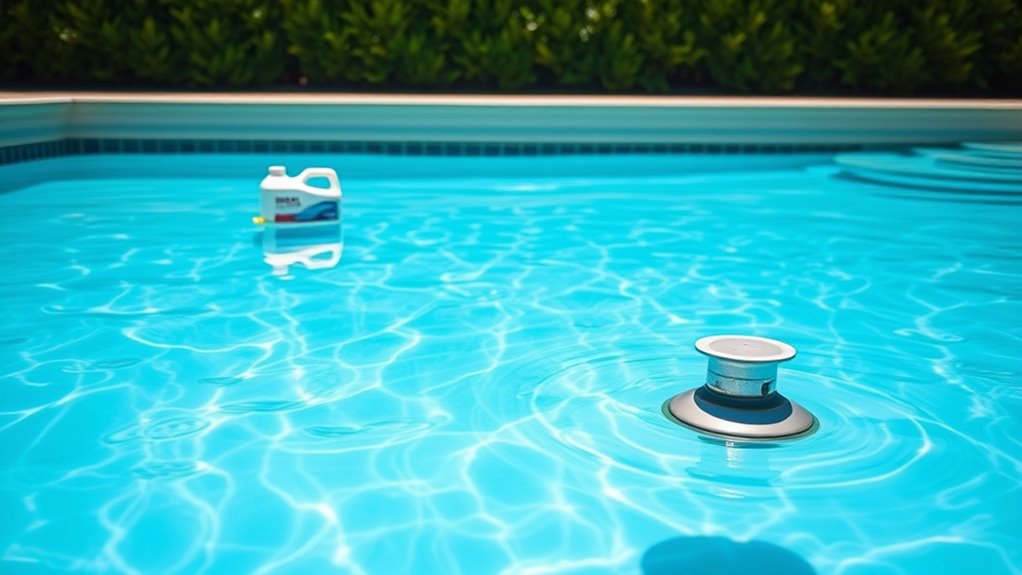
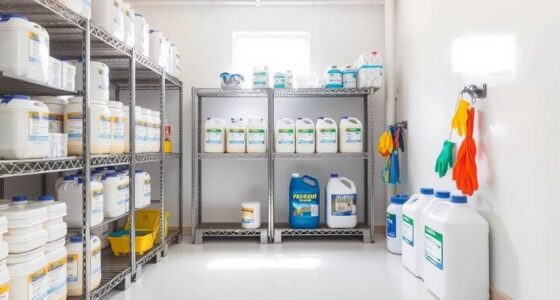
Algae blooms can quickly turn your pool into a green, cloudy mess if not properly managed. The key to preventing this chaos starts with maintaining the right chemical balance. When your pool’s pH, alkalinity, and sanitizer levels are off, algae find it easier to take hold and spread. Regular testing with reliable pool test kits helps you keep these levels in check. Ideally, your pH should stay between 7.2 and 7.6, and chlorine levels should be high enough to kill algae spores before they have a chance to grow. If your chemical balance is not perfect, algae can thrive despite your filtration efforts.
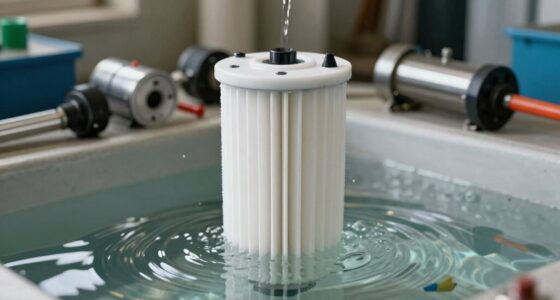
Your filtration system plays an essential role in algae prevention by continuously removing debris, algae spores, and other contaminants. Ensure your filter is clean and functioning properly, as a dirty or malfunctioning filter can’t trap the particles that lead to algae blooms. Running your filter for at least eight to 12 hours daily can greatly reduce the chances of algae gaining a foothold. For pools with an ongoing problem, consider upgrading to a better filtration system or adding a supplemental filter to boost circulation and debris removal. Regularly backwashing or cleaning your filter media keeps water flowing smoothly and prevents buildup that can harbor algae spores.
A clean, functioning filter is key to preventing algae by removing spores and debris effectively.
Prevention also involves using algaecides as a proactive measure, especially during warm weather or after heavy rains, which introduce nutrients that feed algae growth. Apply algaecides according to the manufacturer’s instructions, ideally before algae even appears. This preemptive step helps keep spores dormant and your pool clear. Remember, algaecides work best when your chemical balance is correct, so don’t forget to test and adjust your water chemistry beforehand.
When algae do appear, treat the problem promptly. Shock your pool with a high dose of chlorine to kill the existing algae and spores. After shocking, run your filtration system continuously to remove dead algae and debris. Brushing the pool’s surfaces helps dislodge algae that cling stubbornly to the walls and floor, making the filtration process more effective. Follow up with an algaecide to prevent regrowth, especially if conditions favor algae proliferation. Maintaining proper color accuracy in your pool’s water can also help you better spot early signs of algae or other issues, allowing for quicker intervention.
As an affiliate, we earn on qualifying purchases.
Frequently Asked Questions
How Does Algae Spread From Neighboring Pools or Natural Sources?
Algae can spread from neighboring pools or natural sources through splash-over or contaminated water exchange. Poor pool water circulation allows algae to settle and grow, making it easier for contamination to take hold. If your neighboring pool isn’t properly maintained, algae can easily transfer via shared equipment, wind, or even insects. To prevent this, make sure your pool has good circulation and avoid close contact with contaminated water sources.
Can Algae Blooms Occur in Saltwater Pools?
Yes, algae blooms can occur in saltwater pools. Saltwater algae thrive when your pool’s ecosystem is out of balance, especially if mineral levels or water chemistry aren’t properly maintained. Changes in the mineral balance or fluctuations in salt levels can create conditions for algae to grow. Regularly testing and adjusting your water chemistry helps prevent saltwater algae and keeps your pool clear and healthy.
Are There Natural Remedies to Prevent Algae Growth?
Yes, there are natural remedies for algae prevention. You can regularly use natural remedies like barley straw, which releases compounds that inhibit algae growth, or add beneficial bacteria that outcompete algae for nutrients. Maintaining proper chlorine levels, brushing your pool surfaces, and ensuring adequate filtration also help prevent algae. These natural methods work together to keep your pool clean and algae-free without harsh chemicals.
How Often Should Pool Water Be Tested for Algae Risk?
You should test your pool water at least once a week for algae risk as part of your regular pool maintenance. Frequent water testing helps you catch early signs of algae growth and maintain proper chemical balance. Use a reliable test kit to monitor pH, chlorine levels, and alkalinity. Consistent testing guarantees your pool stays clean, clear, and algae-free, making your swimming experience safe and enjoyable.
What Are the Environmental Impacts of Chemical Treatments?
Chemical treatments can harm the environment by causing runoff that contaminates soil and water sources. When chemicals from your pool spill or wash into nearby aquatic ecosystems, they can disrupt aquatic life, harming fish and plants. To minimize this impact, you should use the correct amount of chemicals, avoid over-treating, and guarantee proper disposal. This way, you protect both your pool and the surrounding environment from potential harm.
Conclusion
By staying vigilant and maintaining proper chemical balance, you’ll prevent algae blooms from taking hold—like a vigilant guardian guarding a treasured oasis. Remember, neglect allows nature’s chaos to seep in, turning your crystal-clear sanctuary into a murky pond. Keep up with regular cleaning, shocking, and filtration, and you’ll preserve your pool’s pristine allure. In doing so, you’re not just fighting algae; you’re safeguarding your personal paradise, much like a modern-day Icarus, soaring high but mindful of the sun’s harsh touch.
Fall Picks
fall essentials
As an affiliate, we earn on qualifying purchases.