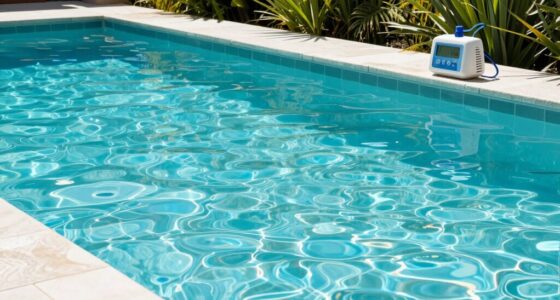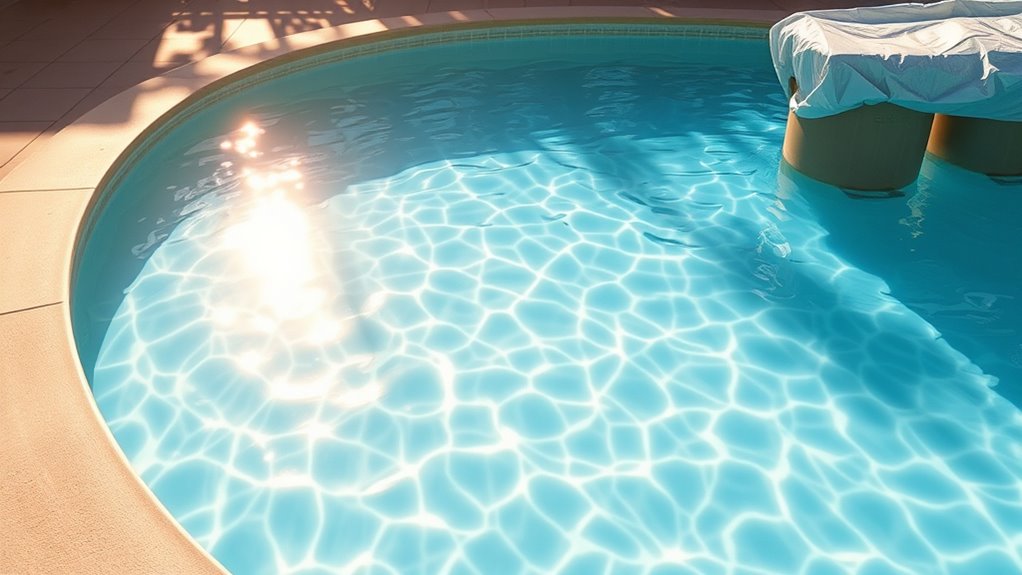
Sunlight and high temperatures can quickly deplete your pool’s chlorine by breaking it down chemically and encouraging algae growth. To prevent this, cover your pool when not in use and add stabilizers like cyanuric acid to shield chlorine from UV rays. Controlling water temperature with shading or cooling also helps preserve chlorine levels. If you want to discover effective ways to keep your pool sanitized longer, there’s more valuable information to uncover.
Key Takeaways
- Use pool covers to block sunlight and reduce UV exposure, slowing chlorine degradation.
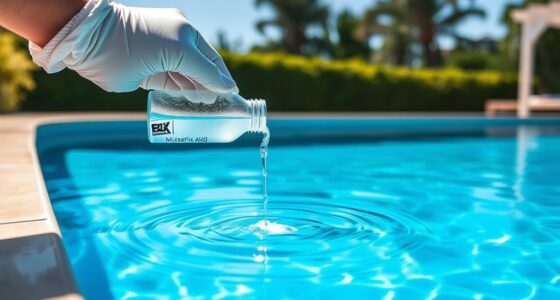
- Add stabilizers like cyanuric acid to protect chlorine molecules from UV rays.
- Maintain stable water temperature with shading or cooling to prevent accelerated chlorine breakdown.
- Test and adjust chlorine levels regularly, especially after exposure to high sunlight or heat.
- Avoid shocking the pool during peak heat hours; perform chemical treatments during cooler times.
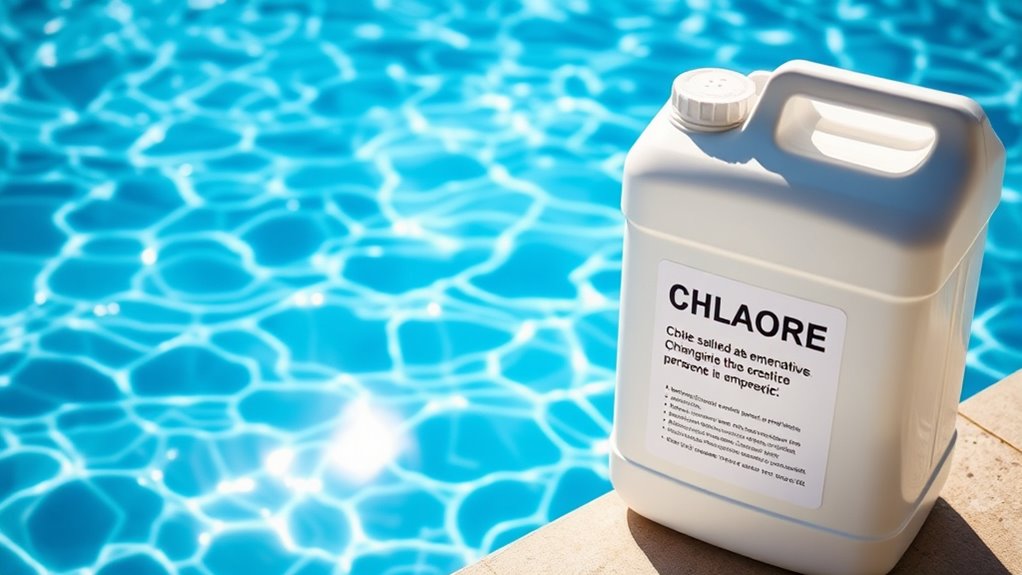
Chlorine loss can undermine your pool’s sanitation and safety, but you can prevent it with proper care. One major factor that accelerates chlorine depletion is exposure to sunlight. UV degradation, caused by ultraviolet rays, breaks down chlorine molecules, reducing their effectiveness in disinfecting your pool. When the sun shines brightly, it not only heats the water but also speeds up chemical reactions that diminish chlorine levels. This means your pool becomes vulnerable to algae growth and bacterial contamination if you don’t take steps to protect it. To combat UV degradation, consider using a pool cover when the pool isn’t in use. A cover acts as a barrier, blocking much of the sunlight and considerably slowing chlorine loss. Additionally, using stabilizers like cyanuric acid helps protect chlorine from UV rays by forming a protective layer around chlorine molecules, making them more resistant to degradation. Proper circulation is also essential; it ensures even distribution of chlorine and prevents stagnation zones where chlorine can degrade faster. Temperature stabilization plays an essential role too. Fluctuations in water temperature can accelerate chlorine loss, especially when the water gets too warm. Warmer water speeds up chemical reactions, including the breakdown of chlorine, leading to quicker depletion. Conversely, maintaining a stable temperature helps prolong chlorine’s effectiveness. If your pool tends to heat up during hot weather, consider shading or cooling measures to keep water temperature consistent. This not only preserves chlorine but also creates a more comfortable swimming environment. When you stabilize your pool’s temperature, you help guarantee that chlorine remains active longer, reducing the frequency of chemical additions and maintenance. Regular testing of your water and adjusting chlorine levels accordingly can also counteract the effects of UV degradation and temperature fluctuations. Adding chlorine after periods of heavy sunlight or temperature spikes helps maintain a consistent sanitizer level. It’s also wise to avoid shocking your pool during the hottest parts of the day, as this can increase chlorine loss. Instead, do it during cooler hours to maximize the longevity of your chlorine. Additionally, understanding the importance of chlorine stabilization can help you implement more effective preventive measures.
![QH.HOME 550D 18ft Pool Cover Round[Upgraded Tear Resistant & Quadruple Windproof] wth Pre-Installed Patented Winch and Rope, Pool Covers for Above Ground Pools-Snug Fit & Waterproof Protection](https://m.media-amazon.com/images/I/41zo5NnZO3L._SL500_.jpg)
QH.HOME 550D 18ft Pool Cover Round[Upgraded Tear Resistant & Quadruple Windproof] wth Pre-Installed Patented Winch and Rope, Pool Covers for Above Ground Pools-Snug Fit & Waterproof Protection
- Perfect Fit for 18ft Pools: Designed for various 18ft above ground pools
- Quadruple Windproof Design: Includes winch, segmented drawstrings, Velcros
- Heavy-Duty Tear Resistant Material: Made with upgraded 550D polyester fabric
As an affiliate, we earn on qualifying purchases.
As an affiliate, we earn on qualifying purchases.
Frequently Asked Questions
Can Chlorine Loss Affect Pool Water Safety?
Yes, chlorine loss can affect your pool water safety. When exposed to UV rays from sunlight, chlorine undergoes chemical reactions that reduce its effectiveness, compromising its ability to disinfect. This loss of chemical stability means bacteria and algae can grow more easily, making your pool unsafe. To prevent this, you should use stabilizers like cyanuric acid and limit direct sunlight exposure, ensuring your chlorine remains effective and your water stays safe.
How Does Chlorine Evaporation Impact Water Treatment Costs?
Losing chlorine to evaporation hits your wallet hard, making water treatment costs soar. When you don’t manage chlorine properly, it’s like pouring money down the drain. Effective chlorine management and evaporation control are key to keeping costs down and water safe. By reducing chlorine loss, you save on frequent refills and chemical expenses, ensuring your pool stays clean without breaking the bank. Proper care pays off in the long run.
Are There Any Long-Term Health Effects From Chlorine Degradation?
Long-term health effects from chlorine degradation are minimal if your water treatment maintains proper chlorine stability. When chlorine breaks down, it can form disinfection byproducts, which may pose health risks over time. However, ensuring effective chlorination and proper storage reduces these risks. You should be aware of potential health implications, but with proper management, the benefits of disinfected water outweigh the small risks associated with chlorine degradation.
What Are Alternative Methods to Chlorine for Disinfection?
Think of alternative disinfection methods as a shield protecting your water. UV sterilization uses powerful light to destroy germs without chemicals, like a sunbeam wiping out bacteria. Ozone treatment acts as a natural purifier, attacking contaminants with ozone gas. Both options avoid chlorine’s potential long-term health effects, offering cleaner water. You can choose between these methods to keep your water safe while reducing chemical reliance and safeguarding your health.
How Do Outdoor Pool Covers Help Reduce Chlorine Loss?
Outdoor pool covers help reduce chlorine loss by limiting exposure to sunlight and temperature fluctuations. The cover material acts as a barrier, preventing UV rays from breaking down chlorine molecules. Additionally, the insulation benefits of the cover maintain consistent water temperature, reducing the need for extra chlorination. This helps you save on chemicals, keeps your pool cleaner longer, and extends the effectiveness of your existing chlorine levels.
Conclusion
To keep your pool’s chlorine levels steady, remember that sunlight and temperature are the villains in disguise. Cover your pool when not in use, and opt for stabilizers to shield chlorine from UV rays. Think of it as giving your pool a suit of armor against the elements. By taking these simple steps, you guarantee your pool stays sanitized and inviting—because nobody wants a battleground, especially not your backyard oasis.