
When choosing sustainable materials for decking and furniture, focus on eco-friendly options like recycled plastic lumber, reclaimed wood, and eco-conscious finishes made from natural or low-VOC ingredients. These materials resist weathering, pests, and decay, ensuring durability and beauty over time. Combining recycled composites with environmentally friendly stains boosts your eco-commitment while maintaining style. To create long-lasting, responsible outdoor spaces, explore how these choices can work together—and there’s more to discover to make your space truly sustainable.
Key Takeaways
- Opt for recycled materials like plastic lumber or reclaimed wood to reduce environmental impact and promote sustainability.
- Choose eco-friendly finishes made from natural or low-VOC ingredients to minimize toxins and extend product lifespan.
- Prioritize durable, weather-resistant materials to ensure long-lasting outdoor furniture and decking.
- Verify products are certified or labeled as environmentally friendly for added confidence in sustainability claims.
- Combine recycled composite decking with eco-friendly stains for enhanced durability and eco-conscious outdoor spaces.
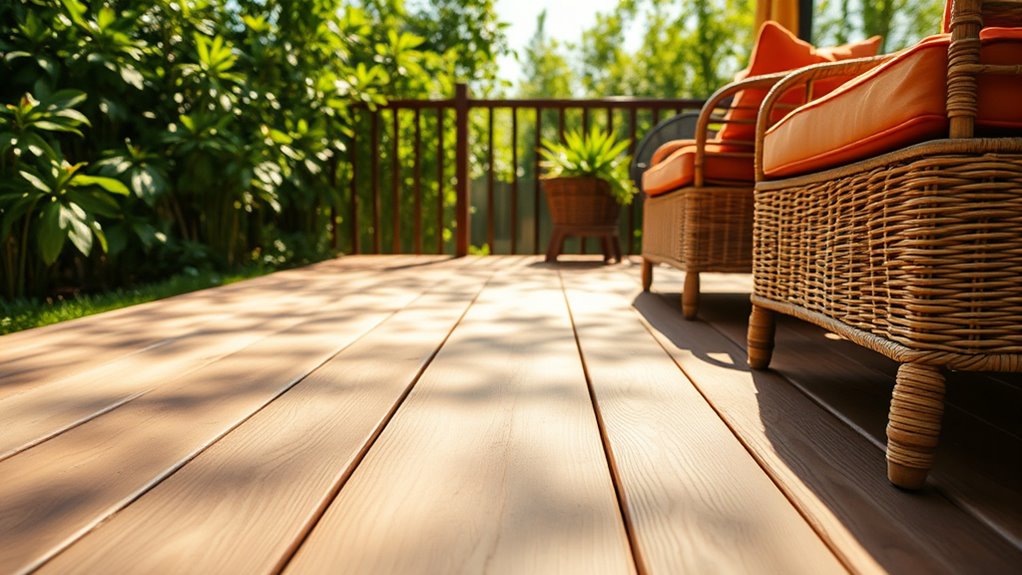
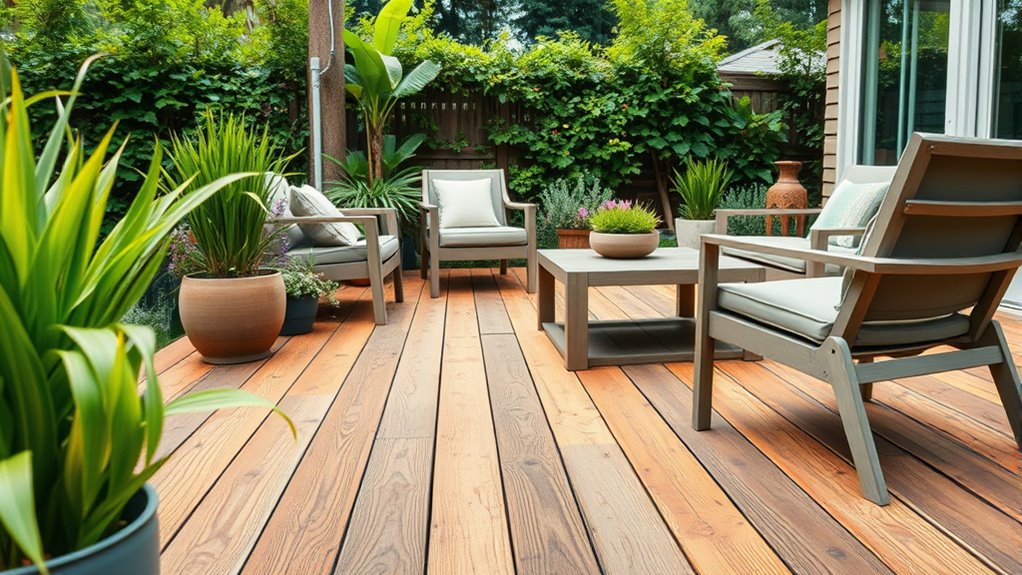
When selecting materials for decking and furniture, choosing sustainable options not only benefits the environment but also guarantees long-lasting quality. You want your outdoor space to be beautiful, durable, and eco-conscious. That’s why exploring eco-friendly finishes is essential. These finishes are specially designed to reduce environmental impact, often made from natural or low-VOC (volatile organic compounds) ingredients that emit fewer toxins. By opting for eco friendly finishes, you guarantee your furniture and decking resist weathering while maintaining a healthier atmosphere around your home. They help keep your outdoor space safe for your family, pets, and the environment, all without sacrificing style or longevity. Incorporating sustainable materials into your outdoor design further enhances your eco-friendly approach, ensuring that every element supports environmental conservation. Recycled materials options are another smart choice. They give new life to waste products, reducing landfill contributions and conserving resources. For example, recycled plastic lumber is a popular alternative to traditional wood; it’s resistant to rot, insects, and warping, making it ideal for outdoor furniture and decking. Similarly, reclaimed wood from old structures can add a rustic charm to your space while preventing the need to cut down fresh trees. When you choose recycled materials options, you’re making a statement about sustainability and reducing your carbon footprint. Plus, these materials often come with a unique character, giving your outdoor setup a distinctive look that’s hard to match with new wood or synthetic products.
Choosing sustainable decking and furniture ensures durability, eco-friendliness, and long-lasting beauty.
Combining eco-friendly finishes with recycled materials options amplifies your environmental benefits. For instance, using recycled composite decking with a natural, eco-friendly stain provides a durable, low-maintenance surface that’s kind to the planet. It’s a win-win: you get a long-lasting, attractive deck that’s made with minimal environmental impact. These choices also tend to be more resistant to weather, pests, and decay, meaning your outdoor furniture and decking will stay beautiful for years. Additionally, many manufacturers now prioritize transparency, so you can easily find products that are certified or labeled as environmentally friendly, giving you confidence in your choices.
Ultimately, selecting sustainable materials for your outdoor space isn’t just about being eco-friendly. It’s about investing in quality that lasts and creating a space that aligns with your values. By choosing items with eco friendly finishes and recycled materials options, you’re contributing to a healthier planet while enjoying a stylish, durable outdoor environment. It’s a responsible decision that reflects a commitment to sustainability and ensures your outdoor haven remains stunning for years to come.

BuyPlastic Tangent Poly Lumber – Cardinal Red, 2×6 (1.5" x 5.5"), 72" Length – HDPE Plastic Board for Outdoor Furniture and More
- Product Size: 2×6 inches, 72 inches long
- Material: HDPE plastic for durability
- Color Stability: UV stabilized, fade-resistant color
As an affiliate, we earn on qualifying purchases.
As an affiliate, we earn on qualifying purchases.
Frequently Asked Questions
How Do Sustainable Materials Compare in Cost to Traditional Options?
Sustainable materials often have a higher upfront cost compared to traditional options, but the cost comparison varies based on quality and longevity. You might spend more initially, but you save in maintenance and replacement over time. When considering your budget considerations, weigh the durability and environmental benefits. While they can be pricier at first, sustainable choices can be more cost-effective long-term, making them a smart investment for eco-conscious homeowners.
Are Sustainable Materials Suitable for All Climate Conditions?
Sustainable materials can be suitable for most climate conditions, but you need to take into account climate adaptability and material flexibility. Some eco-friendly options, like bamboo or composite wood, perform well in various environments, while others may require extra treatment or maintenance to withstand extreme weather. By choosing materials with high climate adaptability and flexibility, you ensure your decking and furniture last longer, regardless of temperature, humidity, or precipitation.
What Maintenance Is Required for Eco-Friendly Decking and Furniture?
You need to follow specific cleaning routines for eco-friendly decking and furniture, like regular sweeping and gentle washing to prevent dirt buildup. Weather resistance varies by material, so make certain you apply protective finishes or sealants as recommended. This upkeep helps maintain their appearance and durability, especially after harsh weather. Proper maintenance prolongs their lifespan, keeps them looking great, and ensures they stay sustainable and functional for years to come.
Can Sustainable Materials Be Recycled or Reclaimed?
Sustainable materials are like a boomerang—they can often be recycled or reclaimed. You can use recycling processes to turn old timber or composite materials into new products, reducing waste. Reclaimed sourcing involves repurposing existing wood or materials, giving them a second life. This way, you minimize environmental impact while creating beautiful, eco-friendly decking and furniture that lasts. Recycling and reclamation keep resources flowing and your outdoor space green.
Do Sustainable Materials Impact the Overall Durability and Longevity?
Sustainable materials often impact durability and longevity, but not necessarily negatively. Many are designed to withstand weather and wear, providing excellent durability. Their environmental benefits include reducing your carbon footprint and conserving resources. Plus, sustainable options can enhance aesthetic appeal, giving your space a natural, timeless look. With proper maintenance, these materials can last just as long as traditional ones, making them a smart, eco-friendly choice for your decking and furniture.
Conclusion
By choosing sustainable materials for your decking and furniture, you’re not just enhancing your space—you’re protecting the environment. It’s a simple act that contrasts the fleeting beauty of trendy, non-renewable options with the lasting impact of eco-friendly choices. So, while hardwoods and plastics may promise quick results, sustainable materials offer durability and peace of mind. Make your outdoor space a reflection of your values, blending style with responsibility for a greener tomorrow.