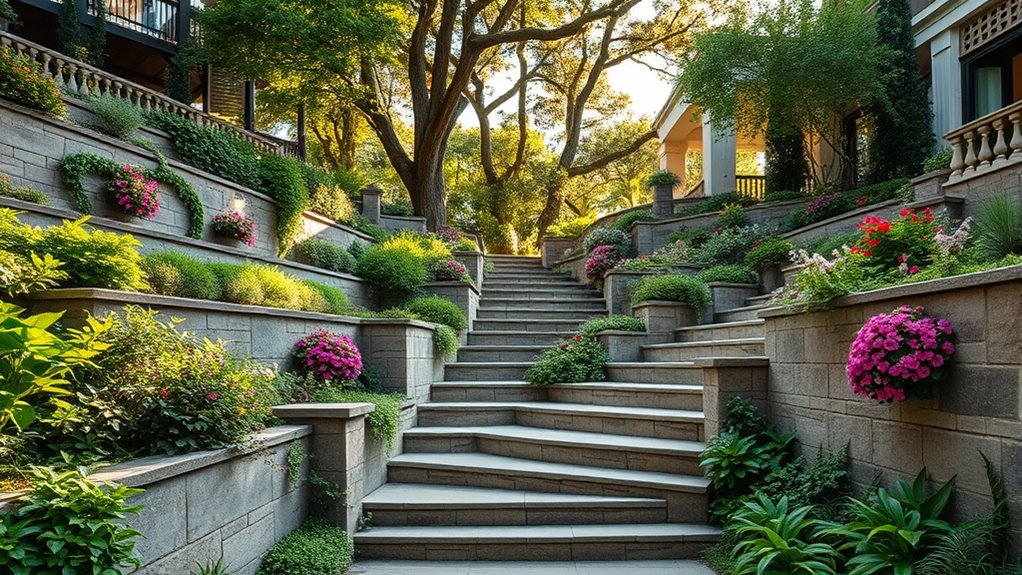

Creating multi-level outdoor spaces with terraces and steps lets you add depth, visual interest, and better functionality to your yard. You can define different zones for entertaining, relaxing, or gardening, making your outdoor area more versatile. Plant selection and strategic placement enhance the overall design, while thoughtful lighting highlights focal points and improves safety. Keep exploring to discover how these features can transform your landscape into a beautiful, cohesive retreat.
Key Takeaways
- Design terraces and steps to complement landscape architecture, creating distinct functional zones and visual interest.
- Select plants that enhance each level’s appeal, considering size, growth rate, and sun exposure.
- Incorporate vertical planting and climbing plants along rails and walls for added dimension.
- Use strategic lighting to highlight features, improve safety, and create ambiance across multiple levels.
- Plan layering of ambient, task, and accent lighting to enhance depth and visual cohesion of the outdoor space.
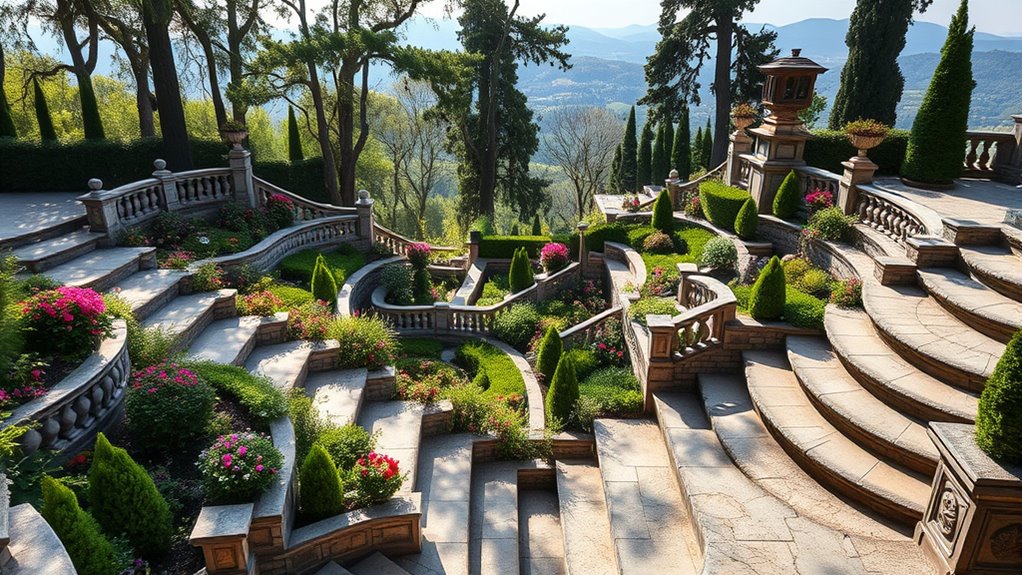
Designing multi-level outdoor spaces allows you to add visual interest and maximize your yard’s functionality. By incorporating terraces and steps, you create distinct zones that can serve different purposes, whether for entertaining, relaxing, or gardening. To make these areas truly stand out, you need to pay close attention to plant selection and lighting design. These elements work together to enhance the overall aesthetic and guarantee your outdoor space feels inviting and cohesive.
When selecting plants for your multi-level landscape, think about how they will interact with the architecture of your terraces and steps. Choose a mix of evergreen and seasonal plants to bring year-round color and texture. For the lower levels, consider low-maintenance ground covers and shrubs that can soften the edges of stone or wood structures. Use taller plants like ornamental grasses or small trees at the back of terraces to create visual depth and privacy. Climbing plants such as vines or jasmine can be trained along railings or walls, adding vertical interest and a lush feel. Selecting the right plants also involves considering their size, growth rate, and sun exposure, ensuring they won’t overwhelm the space or require excessive maintenance. Incorporating plant placement strategies can further improve the harmony and balance of your landscape.
Lighting design is equally vital when transforming multi-level outdoor areas into inviting retreats. Strategically placed lights not only improve safety but also highlight architectural features like steps and terraces. Use spotlights or uplights to accentuate focal points, such as a beautiful plant or a sculpture, while path lights can guide visitors along stairs and walkways. Incorporate soft, warm lighting around seating areas to create a cozy atmosphere for evening gatherings. Consider using solar-powered fixtures for an eco-friendly option that’s easy to install and maintain. Layering different types of lighting—ambient, task, and accent—adds depth and versatility to your outdoor space, allowing you to enjoy it day and night.

6 Pack DIY Outdoor Stairs Kit for Hillside Garden Steps
- Easy DIY Installation: No digging or heavy tools needed
- Suitable for Slopes and Hillsides: Ideal for uneven terrain and garden paths
- Slip-Resistant Surface: Textured for better grip in wet conditions
As an affiliate, we earn on qualifying purchases.
As an affiliate, we earn on qualifying purchases.
Frequently Asked Questions
How Do I Choose the Best Materials for Outdoor Steps?
To choose the best materials for outdoor steps, consider material durability and aesthetic appeal. Opt for options like natural stone, concrete, or brick, which withstand weather conditions and last long. Think about your outdoor style and existing landscape to guarantee the materials complement your space. Prioritize slip-resistant surfaces for safety, and select colors and textures that enhance visual appeal, creating a cohesive and attractive outdoor environment.
What Permits Are Needed for Building Multi-Level Landscapes?
About 65% of outdoor projects require permits, so you’ll need to check local building codes and zoning regulations first. You should contact your city or county building department to find out which permits are necessary for building multi-level landscapes. Typically, permits cover structural safety and setbacks. Failing to get approval can lead to fines or needing to undo your work, so always verify requirements before starting construction.
How Can I Prevent Erosion on Terraced Slopes?
To prevent erosion on terraced slopes, you should install a sturdy retaining wall to hold soil in place. Incorporate effective drainage solutions like gravel-filled trenches or weep holes to direct water away from the slope. Plant deep-rooted vegetation to stabilize the soil further. Regularly inspect and maintain these features, ensuring drainage stays clear and the retaining wall remains solid, keeping erosion at bay and your terrace secure.
What Plants Thrive in Shaded Multi-Level Garden Areas?
Don’t worry about finding shade-loving plants that thrive in your multi-level garden. You can choose evergreen foliage plants like hostas, ferns, and hellebores that flourish in shaded areas. These plants provide year-round greenery and require minimal sun. With proper planting and care, your shaded terraces will become lush, vibrant spaces. Just make certain you select plants suited to your specific shade level for maximum growth and beauty.
How Do I Ensure Safety With Multiple Steps and Terraces?
To guarantee safety with multiple steps and terraces, you should install sturdy handrails on both sides of staircases and along terraces for support. Use slip-resistant surfaces on all walking areas to prevent falls, especially in wet conditions. Regularly inspect the steps and terraces for loose or damaged materials and keep the surfaces clean and dry. These precautions help create a safe, enjoyable outdoor space for everyone.
Conclusion
Just as the ancient Greeks crafted their legendary terraces to elevate their view and status, you can transform your outdoor space into a harmonious oasis. By thoughtfully designing terraces and steps, you create a layered haven that invites both relaxation and admiration. Remember, like the timeless terraces of history, your outdoor masterpiece will stand as a declaration to your vision—an enduring space where beauty and function beautifully converge.