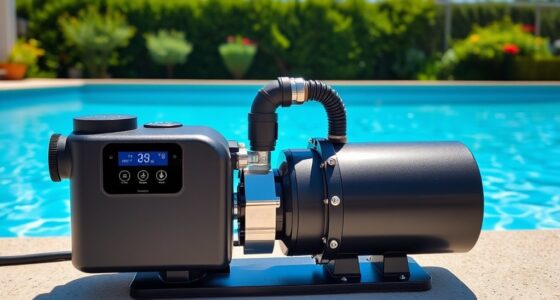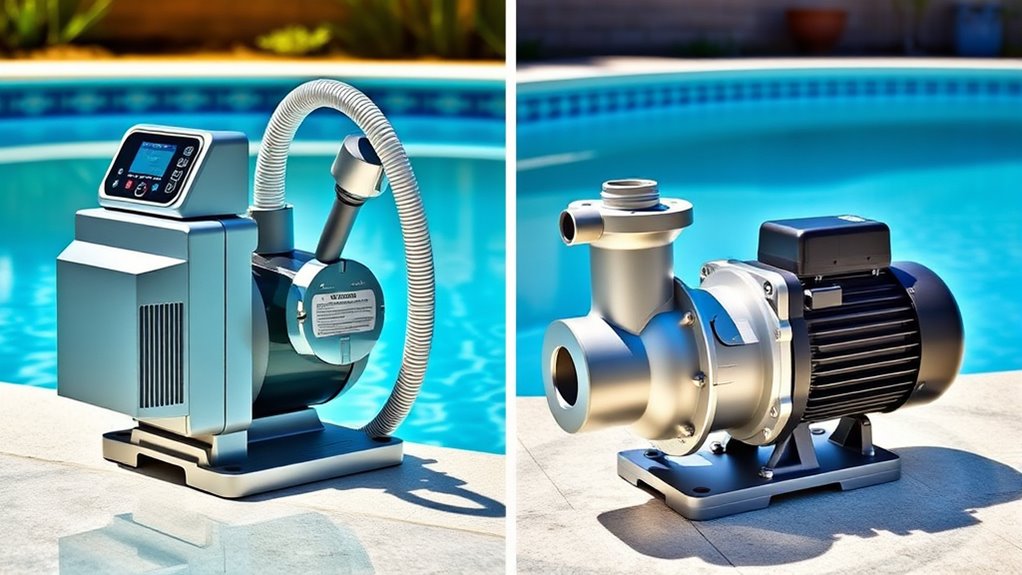

When choosing between a single-speed and a variable-speed pool pump, consider your energy costs, budget, and long-term savings. Single-speed pumps are cheaper upfront but run constantly at full power, using more energy and costing more over time. Variable-speed pumps cost more initially but offer adjustable speeds, reducing energy bills and extending pump life. To find the best option for your pool and learn more about benefits and costs, keep exploring the details below.
Key Takeaways
- Variable-speed pumps offer energy savings and adjustable operation, while single-speed pumps run constantly at full capacity.
- Single-speed pumps are less expensive initially but incur higher ongoing energy and maintenance costs.
- Variable-speed models have advanced control features for optimized performance and remote monitoring.
- Longer lifespan and reduced wear make variable-speed pumps more cost-effective over time.
- Your choice should balance upfront budget with long-term savings and pool management flexibility.

Selecting the right pool pump is essential for maintaining clean, clear water and ensuring efficient operation. When choosing between a variable-speed and a single-speed pump, you’ll want to consider how each impacts energy efficiency and maintenance costs. A single-speed pump operates at a fixed speed, which means it runs at full capacity whenever it’s on. While this simplicity might seem appealing, it often leads to higher energy bills because the pump consumes maximum power even when it’s not needed. Over time, those increased energy costs can add up, making it more expensive to operate. Additionally, running at full speed constantly can cause more wear and tear on the motor, potentially increasing maintenance costs and decreasing the pump’s lifespan.
Choosing a single-speed pump means higher energy costs and increased wear over time.
In contrast, a variable-speed pump offers much more flexibility. It allows you to adjust the motor’s speed to match your pool’s needs, which can substantially reduce energy consumption. Because it runs at lower speeds for tasks like filtering and circulating water, it uses less power, leading to lower energy bills. This energy efficiency not only saves you money but also makes your pool operation more environmentally friendly. Plus, the ability to fine-tune the pump’s operation can reduce strain on the motor, which tends to translate into lower maintenance costs over time. Fewer repairs and a longer-lasting pump make the variable-speed model a smart investment if you’re looking to minimize ongoing expenses.
Furthermore, modern variable-speed pumps often incorporate smart technology that allows remote monitoring and control, adding convenience and further optimizing energy use. However, the initial cost of a variable-speed pump is typically higher than a single-speed model. But when you factor in the energy savings and reduced maintenance costs over the long term, many find that the investment pays for itself. If you’re budget-conscious and prefer a straightforward setup, a single-speed pump might seem more attractive upfront. But you should be aware that its ongoing operational costs are usually higher, especially if you run it continuously. On the other hand, if you’re interested in long-term savings, energy efficiency, and less frequent maintenance, opting for a variable-speed pump is the smarter choice.
Ultimately, your decision depends on how much you’re willing to invest initially versus what you hope to save in energy and maintenance costs down the line. While a single-speed pump might be less expensive to purchase, the savings in energy efficiency and lower maintenance costs from a variable-speed pump can make it the more economical choice over its lifespan. Carefully weighing these factors will help you select the pump that best suits your needs, ensuring your pool stays clean, clear, and cost-effective to operate.
Frequently Asked Questions
How Long Do Variable-Speed Pumps Typically Last?
Variable-speed pumps typically last between 5 to 10 years, depending on various durability factors like proper maintenance, water quality, and usage. You can extend your pump’s lifespan by regularly cleaning the filter, avoiding electrical issues, and ensuring correct installation. Proper care and quality components help maximize durability, allowing you to enjoy efficient operation for years. Keep an eye on performance and schedule maintenance to get the most from your investment.
Are There Specific Brands Recommended for Reliability?
You’ll find that brands like Pentair, Hayward, and Jandy are highly recommended for reliability. Their strong brand reputation and extensive warranty coverage give you peace of mind. These companies prioritize quality and customer service, ensuring your variable-speed pump lasts longer and performs efficiently. When choosing, look for models with solid warranty options, as this indicates confidence in their durability. Trust these trusted brands to keep your pool running smoothly.
What Maintenance Is Required for Each Pump Type?
For both pump types, you need to regularly clean the filter to guarantee efficient operation. Single-speed pumps require less maintenance but should be checked for motor lubrication annually, especially if they’re older. Variable-speed pumps need similar filter cleaning, but their motors often have sealed bearings, reducing lubrication needs. Always follow manufacturer instructions for maintenance to extend your pump’s lifespan and keep your pool running smoothly.
Can a Pool Pump Be Upgraded Later?
Yes, you can upgrade your pool pump later, but it’s like swapping out a car engine—you’ll face some installation challenges and increased pool pump noise during the switch. Upgrading allows you to improve efficiency and reduce energy costs over time. Just make certain your current setup can accommodate the new pump, and consider consulting a professional to smooth out any technical hurdles. This way, your pool stays in top shape.
How Do Energy Savings Compare Over Time?
You’ll find that over time, variable-speed pumps save you more money through lower energy costs, making them a smarter choice in a cost analysis. They’re also better for the environment because they use less electricity, reducing your carbon footprint. Although they cost more upfront, the long-term savings and reduced environmental impact make them a wise investment, especially if you prioritize energy efficiency and sustainability.
Conclusion
Ultimately, choosing between a variable-speed and single-speed pump is like selecting your own Odyssey—each offers a different journey. While the single-speed may seem like the familiar path, the variable-speed invites you to navigate efficiency and savings, much like a hero forging their own destiny. Whichever you choose, remember that your pool’s health and your wallet’s well-being depend on making a wise decision—one that echoes the wisdom of the ages.