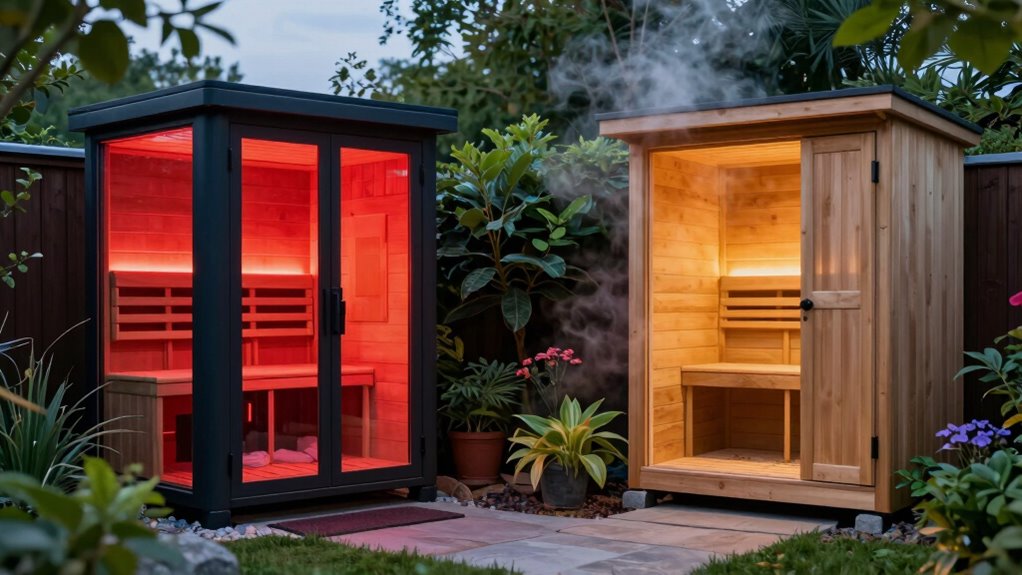

If you want a quick, easy-to-install option that fits into a busy backyard routine, an infrared sauna is the best choice because it heats the body directly at lower temperatures, requires less setup, and uses less space. Traditional saunas offer a deeper, more intense experience but need more space and time for installation. For more tips on choosing your ideal outdoor sauna, keep exploring your options and priorities.
Key Takeaways
- Infrared saunas are quick to install, energy-efficient, and ideal for limited outdoor space, fitting seamlessly into a backyard routine.
- Traditional saunas offer a more intense heat experience, perfect for those seeking deep detoxification and relaxation routines.
- Infrared units operate at lower temperatures (120°F–140°F), enabling longer, more comfortable sessions suited for regular use.
- Traditional saunas require more setup, ventilation, and space, making them better for dedicated, long-term outdoor wellness areas.
- Both can enhance outdoor wellness routines; choose based on space, desired heat intensity, installation time, and maintenance preferences.
outdoor infrared sauna for backyard
As an affiliate, we earn on qualifying purchases.
As an affiliate, we earn on qualifying purchases.
Main Differences Between Infrared and Traditional Saunas
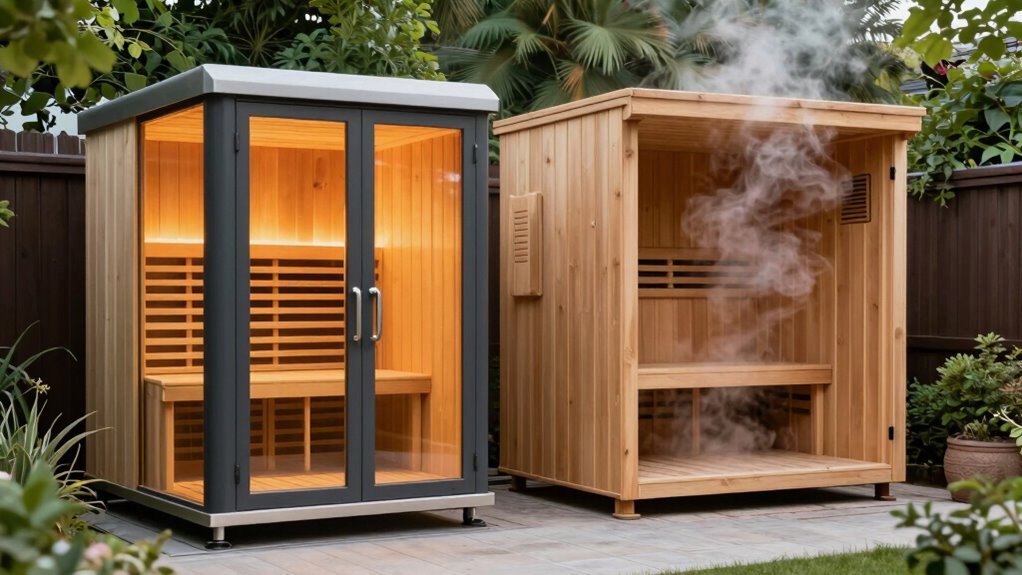
Infrared and traditional saunas differ primarily in how they heat your body. Infrared saunas use infrared panels to emit radiant heat directly onto your skin, making them more energy-efficient since they operate at lower temperatures and consume less power. Traditional saunas, on the other hand, heat the air inside using a stove or heater, which then warms your body through ambient heat. This difference impacts not only energy efficiency but also aesthetic appeal; infrared units often have sleek, modern designs that blend seamlessly into outdoor or indoor spaces. Traditional saunas tend to have a classic, rustic look. Your choice depends on your priorities—if you want a more efficient, stylish setup, infrared might be the way to go. Energy efficiency is a key factor influencing the popularity of infrared saunas today, and the heating method also affects the overall experience and maintenance requirements of each type. Additionally, installation considerations can influence your decision based on available space and setup complexity. Understanding the different heating technologies can help you select the sauna that best fits your lifestyle and home environment. For example, user comfort can vary significantly depending on how quickly and evenly each type heats the body.
Infrared Saunas in Your Backyard Wellness Space
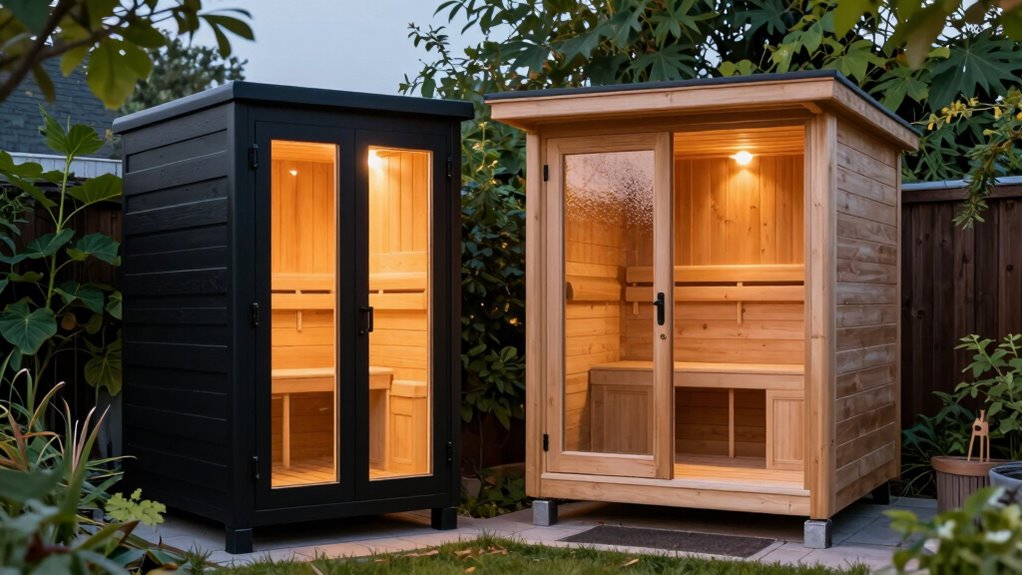
Setting up an infrared sauna in your backyard transforms your wellness space into a private retreat. Its portable design allows you to install it easily without permanent modifications, making it ideal for any outdoor area. Plus, infrared saunas are energy-efficient, consuming less power than traditional models, which saves you money over time. To visualize how these features work together, consider this table:
| Feature | Benefit | Example |
|---|---|---|
| Portable design | Easy setup and relocation | Move it around your yard easily |
| Energy efficiency | Lower energy bills | Uses less power during use |
| Space integration | Fits into various outdoor spaces | Compact size for tight spots |
This combination makes infrared saunas a practical, adaptable addition to your backyard wellness routine. Incorporating energy-efficient technology in your outdoor setup can further enhance comfort and cost savings. Additionally, selecting models with portable features ensures flexibility and convenience as your outdoor space evolves. Choosing models with safety features can also contribute to a secure and enjoyable experience. For optimal performance, consider integrating smart thermostat setup to monitor and control your sauna’s environment efficiently. Using outdoor-appropriate materials can also extend the durability and longevity of your sauna in various weather conditions.
Benefits of Traditional Saunas for Relaxation and Detox

Traditional saunas offer deep relaxation that can help ease tension and improve your mood. They also promote a more effective detoxification process by making you sweat out toxins more thoroughly. If you’re seeking a natural way to refresh your body, this classic approach might be just what you need. Incorporating regular use can also support your overall wellness by encouraging consistent routine checkups and health maintenance. Additionally, the warm environment of a traditional sauna can enhance circulatory health, promoting better blood flow throughout your body. Regular sessions in traditional saunas have been linked to improved heart health, making them a valuable addition to your wellness routine. Proper safety measures, like using bath mats to prevent slips, can further enhance your experience and ensure your safety during sessions.
Traditional Sauna Benefits
Many people turn to traditional saunas because they provide deep relaxation and effective detoxification. When you step into a traditional sauna, you’re transported to a luxury spa-like environment that helps melt away stress. The intense heat promotes sweating, which aids in flushing out toxins and impurities from your body. These health benefits extend beyond detox; many find that regular use improves circulation, relieves muscle tension, and supports overall well-being. The soothing warmth also encourages mindfulness and mental clarity, making it a perfect addition to your backyard routine. Incorporating temperature treatments like hot and cold therapy can further amplify these health benefits and aid recovery. Additionally, traditional saunas have a long history of promoting mental relaxation and stress relief, which enhances their appeal as a holistic wellness option. Utilizing the relaxation benefits of heat therapy can also contribute to better sleep and reduced anxiety.
Enhanced Detoxification Process
As you relax in a traditional sauna, the intense heat causes your body to sweat profusely, which is key to the detoxification process. Sweating helps eliminate toxins, heavy metals, and impurities stored in your fat cells, enhancing the detox benefits of the sauna. This cleansing process not only clears out harmful substances but also improves your skin’s health and clarity. By increasing circulation, a traditional sauna helps your body naturally rid itself of waste more efficiently. The deep sweating stimulates your lymphatic system, supporting your immune response. Additionally, the comedogenic ratings of skincare products used during sauna sessions can influence skin health, making appropriate choices important. Proper sauna temperature control can optimize your detox experience and ensure safety during your sessions. Maintaining appropriate water chemistry in the sauna environment can also enhance your comfort and safety. Overall, the heightened sweating during a session amplifies your body’s ability to detox, leaving you feeling refreshed and revitalized after each use. This natural detoxification makes traditional saunas a powerful tool for enhancing overall wellness, especially when combined with hydration to replace lost fluids.
Cost and Installation Requirements for Infrared and Traditional Saunas

When choosing between infrared and traditional saunas, you’ll want to contemplate installation complexity and costs. Infrared units are generally easier and quicker to set up, often fitting into existing spaces without major modifications. However, budget constraints can influence your choice, as the initial investment varies between the two options. Additionally, considering cabling and mounting requirements can help ensure a safe and secure installation.
Installation Complexity and Time
Installing an infrared sauna typically requires less time and fewer resources than setting up a traditional sauna. The installation process for infrared models is straightforward, often involving minimal construction or specialized electrical work. You can usually set up an infrared sauna in a few hours or a day, making it ideal if you’re short on time. Traditional saunas, however, demand a more complex setup, including proper ventilation, insulation, and often a dedicated electrical circuit. This increases both the time investment and the effort needed for installation. You might spend several days preparing the space and completing the wiring and construction. Overall, infrared saunas are more convenient if you want a faster, simpler setup without extensive modifications to your backyard or home.
Cost Considerations and Budget
Infrared saunas generally come with a lower upfront cost and simpler installation requirements compared to traditional models. This makes them a smart choice for budget planning, especially if you’re working with limited funds. Infrared units typically cost less to purchase and don’t require extensive electrical work or construction, reducing installation expenses. Traditional saunas, on the other hand, often involve higher initial costs due to larger size, specialized materials, and more complex setup. To make your decision easier, explore financing options that many suppliers offer, which can spread out payments over time. Considering these factors helps you align your sauna investment with your financial situation, ensuring you get the relaxation benefits without overspending.
Choosing the Best Outdoor Sauna for Your Space

Choosing the right outdoor sauna depends on your available space, climate, and personal preferences. Start by evaluating your yard size and layout to determine whether a compact or larger model fits best. Consider outdoor materials like cedar, which resists moisture and decay, or composite options for durability. Privacy considerations are essential; you might want a design with walls or windows positioned to shield you from neighbors or passersby. Think about whether you prefer a free-standing unit or one integrated into your landscape. Also, assess how well the sauna withstands your local weather conditions, ensuring it’s built with appropriate insulation and weatherproofing. By keeping these factors in mind, you can select an outdoor sauna that complements your space while providing the privacy and durability you need.
Typical Temperature Settings and Session Lengths

You’ll want to know the typical temperature ranges and session lengths for each type of sauna. Most infrared saunas operate between 120°F and 140°F, with sessions lasting around 20 to 45 minutes. Traditional saunas generally run hotter, between 150°F and 185°F, with recommended sessions lasting 15 to 20 minutes.
Typical Temperature Ranges
Have you ever wondered what temperature ranges are typical for infrared saunas compared to traditional ones? Infrared saunas usually operate between 110°F and 150°F, offering a gentler heat. Traditional saunas run hotter, typically between 150°F and 195°F, creating a more intense experience. The humidity levels differ: traditional saunas often have higher humidity with water poured over hot stones, while infrared saunas maintain lower humidity. Ventilation options also vary; traditional saunas rely on airflow for comfort, whereas infrared units usually have built-in ventilation to regulate heat. Here’s what to contemplate:
- Infrared: 110°F–150°F, lower humidity
- Traditional: 150°F–195°F, higher humidity
- Ventilation options enhance comfort
- Session temperatures impact your experience
Recommended Session Durations
Since temperature settings influence how long you should stay in an infrared or traditional sauna, understanding recommended session durations helps you maximize safety and benefits. Typically, a session duration ranges from 15 to 30 minutes, depending on your comfort level and user preferences. For infrared saunas, shorter sessions around 15-20 minutes are common because they operate at lower temperatures, making longer stays more tolerable. Traditional saunas, which reach higher temperatures, often recommend 15-20 minute sessions to prevent overheating. Listening to your body is key—if you feel dizzy or uncomfortable, it’s best to exit sooner. Adjust your session length based on your experience, health, and goals, ensuring you enjoy the benefits without risking safety.
Which Sauna Fits Your Wellness Goals?
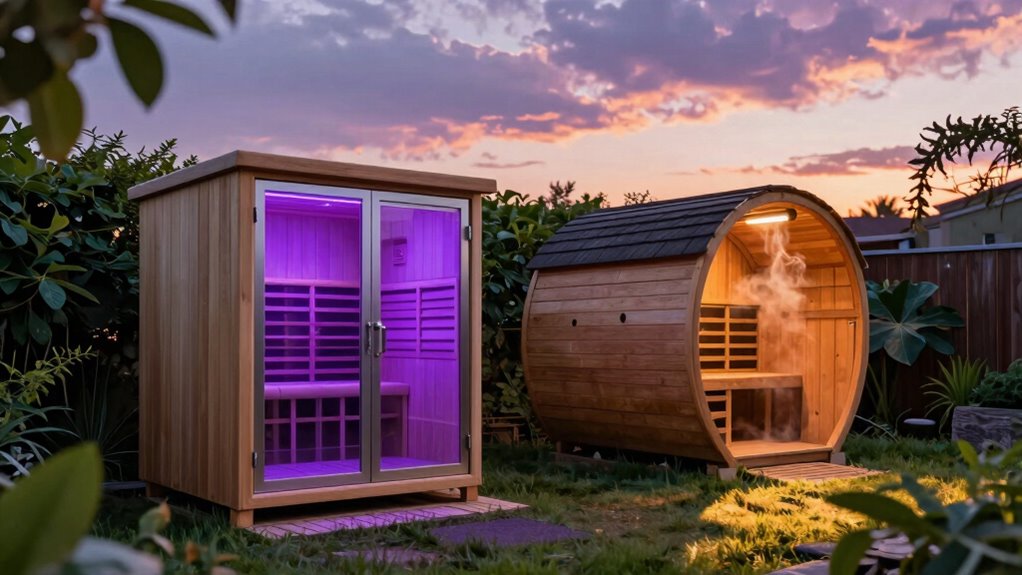
Choosing the right sauna depends largely on your specific wellness goals. If you seek targeted health benefits like detoxification or muscle relaxation, an infrared sauna might be ideal. For a more traditional experience focused on circulation and socializing, a traditional sauna could suit you better. Consider these options:
Choose an infrared sauna for targeted detox and muscle relief or a traditional sauna for relaxation and socializing.
- Health benefits: Infrared saunas offer deep tissue heat, aiding recovery and detox, while traditional saunas promote overall relaxation.
- Design options: Infrared models are often sleek and space-efficient, perfect for backyard setups. Traditional saunas provide a classic look with customizable sizes.
- Usage preferences: Infrared heats up quickly and operates at lower temperatures, ideal for quick sessions. Traditional saunas require longer warm-up times.
- Maintenance needs: Infrared saunas generally need less upkeep, while traditional saunas may require more frequent cleaning and wood care.
How Do Infrared and Traditional Saunas Hold Up Over Time?
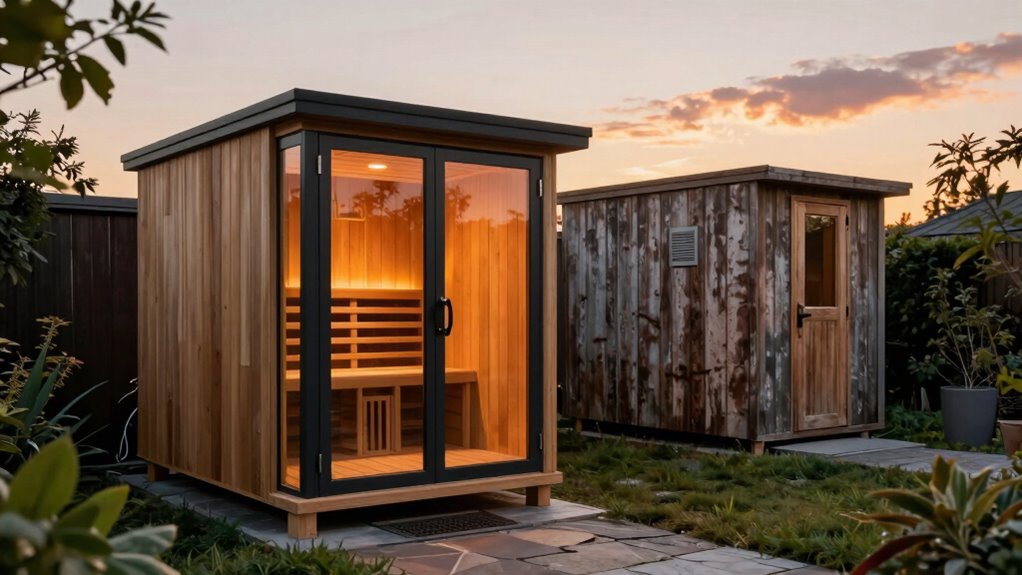
Infrared and traditional saunas are built to last, but their durability varies based on design, materials, and usage. In a durability comparison, infrared models often have fewer moving parts and simpler construction, making them less prone to wear and tear over time. Traditional saunas, with their wooden structures and heating elements, may require more maintenance to prevent issues like cracking or mold. You’ll find that infrared saunas generally need less upkeep, as their components are designed for longevity and easy cleaning. Traditional saunas might demand regular checks of wood condition and heater performance. Overall, both types can last many years if properly maintained, but infrared saunas tend to hold up with fewer maintenance requirements, making them a more durable choice for long-term backyard use.
Tips for Incorporating Your Sauna Into Your Routine
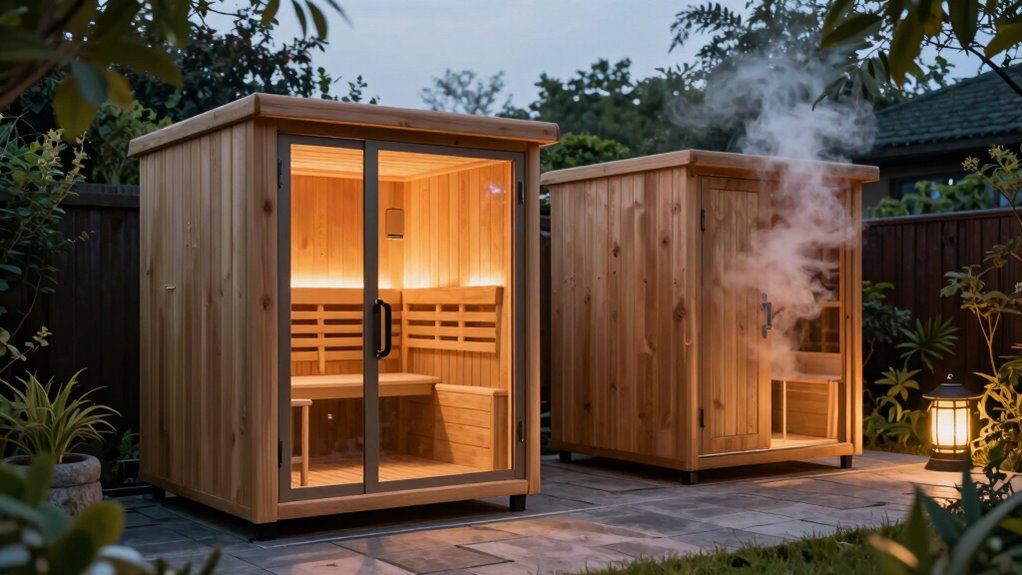
To successfully incorporate your sauna into your personal routine, start by setting aside specific times each day or week dedicated to using it. This helps create consistency and guarantees you make the most of your investment. To optimize space and streamline your routine, consider these tips:
- Designate a dedicated spot for your sauna, making it easily accessible.
- Incorporate it into existing wellness habits, like post-workout recovery or evening relaxation.
- Use timers to manage sessions and avoid overuse.
- Keep essentials nearby, such as towels and water, to maximize efficiency.
Key Questions to Ask Before Buying Your Outdoor Sauna
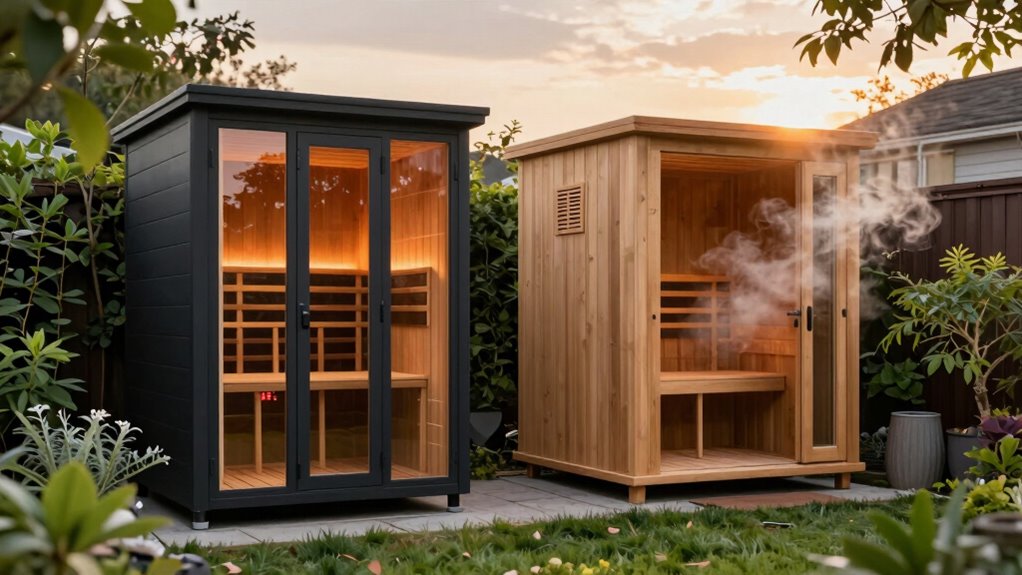
Before purchasing an outdoor sauna, it’s essential to ask yourself certain key questions to make sure it meets your needs and fits your space. Consider the maintenance tips needed to keep it in good condition, such as cleaning routines and protective coverings. Think about safety precautions, like proper ventilation, electrical wiring, and safe installation spots. Ask if the sauna’s size matches your available yard space and if it’s built with durable, weather-resistant materials. Check whether the model has clear instructions for safe use, especially if children or pets are nearby. Understanding these aspects helps you choose a sauna that’s easy to maintain, safe to operate, and fits seamlessly into your backyard routine. Being thorough now saves headaches later.
Frequently Asked Questions
Are Infrared Saunas Safer Than Traditional Saunas?
Infrared saunas are generally considered safer than traditional saunas because they operate at lower temperatures, reducing the risk of overheating. This enhances sauna safety, especially if you have health concerns. Plus, infrared heat penetrates deeper, offering similar health benefits like detoxification and relaxation with less strain. Always stay hydrated and listen to your body to maximize safety and health benefits in any sauna type you choose.
How Energy-Efficient Are Infrared Saunas Compared to Traditional Ones?
Infrared saunas are more energy-efficient than traditional ones because their heating efficiency is higher. They use less energy to reach and maintain desired temperatures, saving you money on energy consumption. You’ll notice faster heating times and less power usage overall, making infrared options ideal for backyard routines where cost and efficiency matter. Plus, their targeted heating means you get the benefits without wasting energy on unnecessary heat.
Can I Install an Outdoor Sauna on Uneven Terrain?
Yes, you can install an outdoor sauna on uneven terrain, but you’ll need to focus on ground leveling to guarantee stability. Start by evaluating the foundation requirements for your sauna model, as a solid, level base prevents shifting or damage. Use gravel, concrete pads, or wooden platforms to create a flat surface. Proper ground preparation guarantees safety, durability, and peak performance of your outdoor sauna.
What Maintenance Do Infrared and Traditional Saunas Require?
You’ll need to regularly clean your sauna to keep it hygienic and functioning well. For both infrared and traditional saunas, sauna cleaning involves wiping down surfaces and vacuuming vents. Additionally, you should inspect the heater periodically to confirm it’s working efficiently and safely. Regular maintenance like this prevents issues, extends your sauna’s lifespan, and keeps your backyard routine enjoyable and safe.
Do Different Sauna Types Affect Skin Health Differently?
Your skin’s health isn’t affected the same way by different sauna types. Infrared saunas penetrate deeper, boosting skin hydration and aiding pore cleansing, making your skin feel refreshed like a waterfall. Traditional saunas promote sweating that helps clear pores and improve circulation. Both support skin health, but infrared’s gentle heat is particularly effective for hydration and pore cleansing, leaving your skin glowing and revitalized.
Conclusion
Choosing between infrared and traditional saunas depends on your wellness goals and backyard space. Both offer unique benefits, but only one can transform your outdoor routine into an epic journey of relaxation. Do your research, consider your budget, and pick the sauna that fits your lifestyle best. With the right choice, you’ll elevate your wellness game to legendary status—your backyard will become a sanctuary of serenity that outshines even the most luxurious retreats!