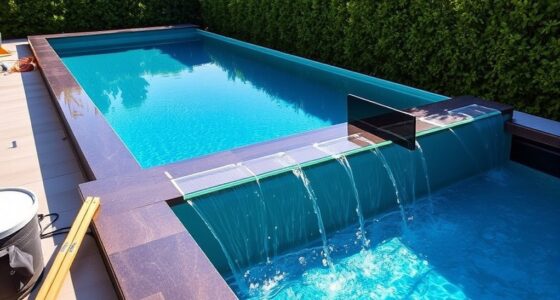

To maintain your infinity pool effectively, keep the overflow edge clear of debris to guarantee proper water flow and aesthetic appeal. Regularly monitor and clean the circulation system, including filters and pumps, to prevent blockages and assure even chemical distribution. Consistent checks of water chemistry balance also help maintain clarity and safety. By managing both overflow and circulation carefully, you’ll keep your pool stunning and functional—learn more about optimizing these processes for long-lasting beauty.
Key Takeaways
- Regularly inspect and clear the overflow edge to prevent debris buildup and ensure smooth water flow.
- Maintain proper circulation by checking pumps and filters for optimal performance and cleaning as needed.
- Ensure overflow systems are functioning correctly to support aesthetic appeal and water level stability.
- Monitor and balance water chemistry to prevent algae growth, cloudy water, and equipment corrosion.
- Conduct routine system checks and maintenance to extend equipment lifespan and sustain pool clarity.

Have you ever wondered what it takes to keep an infinity pool looking flawless? It’s not just about the stunning visual effect; maintaining the water’s clarity and safety requires attention to detail, especially when it comes to managing water chemistry and pump efficiency. These elements work together to ensure your pool remains inviting and functioning smoothly, even with that mesmerizing overflow edge.
First, you need to pay close attention to water chemistry. The water in your infinity pool must stay balanced to prevent issues like algae growth, cloudy water, or corrosion. Regular testing of pH levels, alkalinity, and sanitizer concentration is essential. Keep the pH between 7.2 and 7.8 to prevent corrosion of pool components and skin irritation. Too low or too high, and you risk damaging your pool’s structure and equipment. Chlorine or other sanitizers should be maintained at levels that inhibit bacteria without causing irritation or instability. Proper water chemistry isn’t a one-time task; it’s an ongoing process that requires consistent testing and adjustment. Using automated chemical feeders can help maintain steady levels, reducing manual effort and ensuring your pool stays pristine. Additionally, understanding the principles of water chemistry balance can help you troubleshoot issues before they become serious problems.
Regularly test and balance your pool’s water chemistry to prevent algae, cloudy water, and equipment damage.
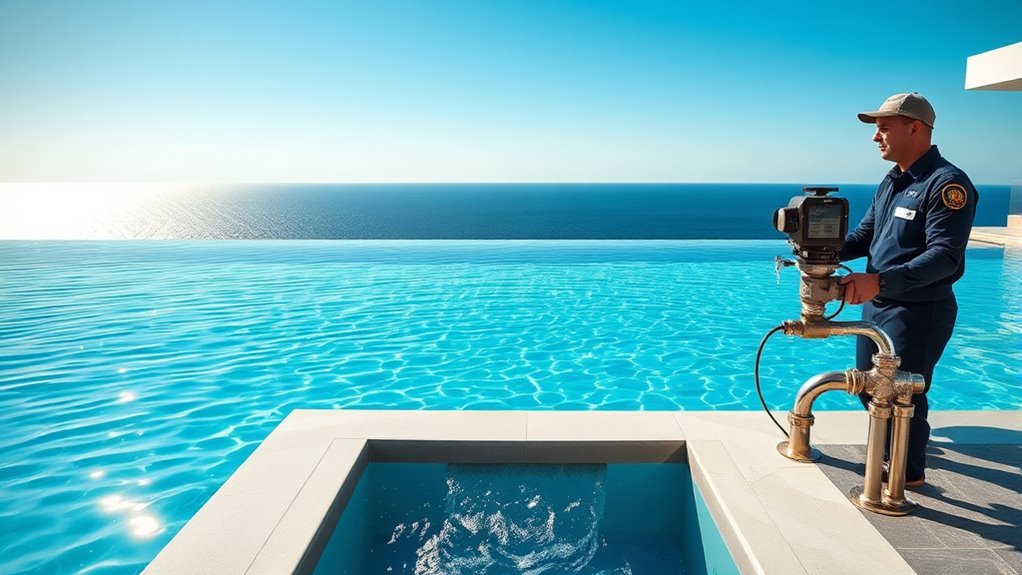
Pump efficiency plays a critical role in maintaining water quality and circulation. Your pool’s pump is responsible for moving water through the filtration system, ensuring that debris is removed and chemicals are evenly distributed. A well-maintained, efficient pump can save you money on energy costs and prolong the lifespan of your equipment. Regularly checking and cleaning the pump’s filters and impellers ensures optimal flow rates and prevents blockages that could compromise circulation. An inefficient pump may struggle to circulate water properly, leading to stagnant zones where bacteria and algae can thrive. To maximize efficiency, consider upgrading to a variable-speed pump, which adjusts its power based on demand, reducing energy consumption and providing better control over water flow. Proper circulation not only keeps your water clear but also ensures that chemicals are evenly dispersed, maintaining the delicate water chemistry balance necessary for a safe, beautiful infinity pool.
Additionally, managing overflow and ensuring the circulation system functions flawlessly requires vigilant monitoring. The overflow edge should be checked regularly to prevent debris buildup, which can disrupt water flow and compromise the infinity effect. By maintaining water chemistry and pump efficiency diligently, you keep the pool’s aesthetics pristine while extending the lifespan of your investment. In essence, a flawless infinity pool isn’t just about its shape or view—it’s about the careful, consistent management of water chemistry and circulation that keeps it looking perfect and operating smoothly day after day.
infinity pool overflow debris cover
As an affiliate, we earn on qualifying purchases.
As an affiliate, we earn on qualifying purchases.
Frequently Asked Questions
How Often Should Overflow Channels Be Cleaned?
You should clean overflow channels at least once a month to maintain proper water flow and prevent debris buildup. Regular cleaning guarantees your pool’s chemical balance stays stable and water retention techniques remain effective. Neglecting overflow channels can lead to clogged circulation, affecting water quality and safety. Consistent maintenance helps keep your infinity pool in top condition, providing clear, balanced water and a seamless aesthetic experience.
What Is the Ideal Water Circulation Rate for Infinity Pools?
You should aim for a water flow rate of about 50-100 gallons per minute (GPM) for your infinity pool, depending on its size. Ensuring your pump operates efficiently is key, so regularly check its performance and maintain peak pump efficiency. This circulation rate helps keep the water clean, balanced, and flowing smoothly, preventing stagnation and ensuring the overflow channels work effectively. Adjust the flow as needed for your pool’s specific requirements.
Can Overflow Water Affect Surrounding Landscaping?
Overflow water from your infinity pool can be a double-edged sword, like a gentle rain that soaks your landscape. It may cause landscape erosion and plant damage if not properly maintained. You should install overflow drainage systems and ensure proper slope to direct excess water away from delicate areas. This way, you protect your landscaping while enjoying the stunning infinity edge without worrying about water damage.
What Are Common Signs of Circulation System Failure?
You’ll notice signs of circulation system failure when the circulation pump makes unusual noises, or if the water flow slows down or stops altogether. You might see uneven chemical balance or cloudy water, indicating poor filtration. Additionally, increased algae or debris buildup suggests the pump isn’t functioning properly. Regularly check the pump and maintain chemical levels to prevent these issues and keep your infinity pool running smoothly.
How to Prevent Algae Growth Due to Overflow?
Think of your pool as a delicate garden. To prevent algae growth due to overflow, you need to master algae prevention and overflow management. Regularly clean the overflow area, ensure proper circulation, and maintain chemical balance. Use algaecides as a safeguard. This way, you keep the water clear and healthy, just like nurturing a vibrant garden, guaranteeing your infinity pool remains a stunning oasis without unwelcome green invaders.
Conclusion
Remember, a well-maintained infinity pool isn’t just about aesthetics—it’s about safety and longevity. Regularly checking the overflow and circulation systems guarantees your pool stays pristine and functional. Don’t wait until small issues become big problems; as the saying goes, “A stitch in time saves nine.” Stay proactive with your maintenance, and you’ll enjoy endless, worry-free relaxation by your stunning infinity pool for years to come.