Swim spa water care is different from a hot tub because its design and frequent use require precise chemical management, filtration, and regular maintenance to keep water clear, safe, and equipment running smoothly. You need to balance pH, alkalinity, and sanitizer levels, monitor water quality often, and clean filters regularly. Proper care prevents algae, cloudiness, and damage. To keep your swim spa in top shape, understanding these routines will help you enjoy it longer.
Key Takeaways
- Swim spas require tailored water chemistry management, including pH, sanitizer, and mineral levels, due to their continuous movement and higher agitation.
- Proper filtration and circulation are essential to prevent mineral buildup, scaling, and maintain water clarity.
- Regular water testing and chemical adjustments are crucial to avoid cloudy water, algae, and equipment damage.
- Maintaining optimal water temperature and sanitization prolongs equipment lifespan and ensures a safe, enjoyable exercise environment.
- Professional assistance may be needed for complex balancing, seasonal shutdowns, or troubleshooting to keep water quality optimal.
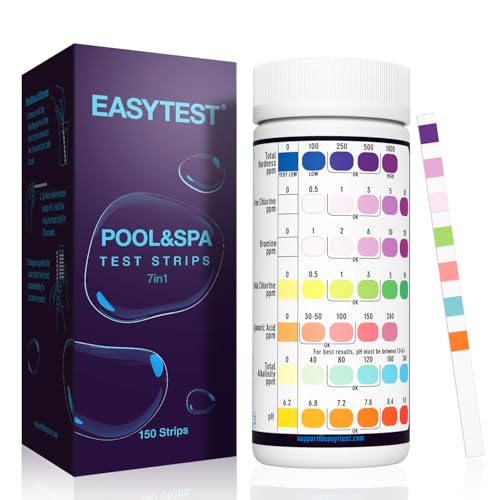
EASYTEST 7-Way Pool Test Strips, 150 Strips Water Chemical Testing for Hot tub and Spa, Accurate Test Bromine, Total Alkalinity, pH, Free Chlorine, Total Hardness, Cyanuric Acid, and Total Chlorine
AFFORDABLE 150 STRIPS: This water chemical testing kit contains 150 test strips. Enough balanced for your swimming pool,…
As an affiliate, we earn on qualifying purchases.
As an affiliate, we earn on qualifying purchases.
Why Water Care for Swim Spas Is Different From Hot Tubs
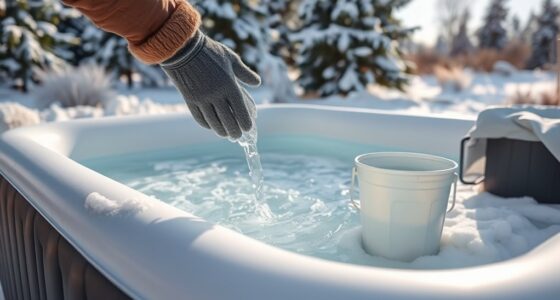
Although swim spas and hot tubs both require water care, their differences in design and usage mean you can’t treat them the same way. For swim spas, maintaining the right spa temperature is vital, especially since you’ll often use them for exercise, which can cause more water agitation. This increased activity affects water mineralization, making it more prone to mineral buildup and scaling. Unlike hot tubs, which are used mainly for relaxation, swim spas need a tailored approach to manage mineral levels and keep the water clear and balanced. Proper water care, including controlling mineralization and temperature, helps prolong your swim spa’s lifespan and ensures a pleasant experience every time. Additionally, understanding the importance of water quality management can significantly improve the longevity and performance of your swim spa. Regular testing and adjusting chemical levels are essential components of effective water maintenance, ensuring optimal conditions for both health and equipment durability. Maintaining proper water chemistry is also crucial to prevent issues like algae growth and corrosion. Implementing a routine of humidity management in surrounding areas can help reduce the risk of water-related damage and maintain overall spa integrity. Furthermore, paying attention to filtration effectiveness can help keep the water clean and minimize maintenance efforts.

In The Swim Spa Starter Kit – Hot Tub Water Balance Kit: Includes pH Plus & Minus, Calcium Hardness Increaser, Alkalinity Increaser, Water Test Strips, and Spa Sorb
In The Swim Spa Starter Kits include all the essential chemicals for every spa and hot tub owner
As an affiliate, we earn on qualifying purchases.
As an affiliate, we earn on qualifying purchases.
How to Balance Water Chemistry in Your Swim Spa
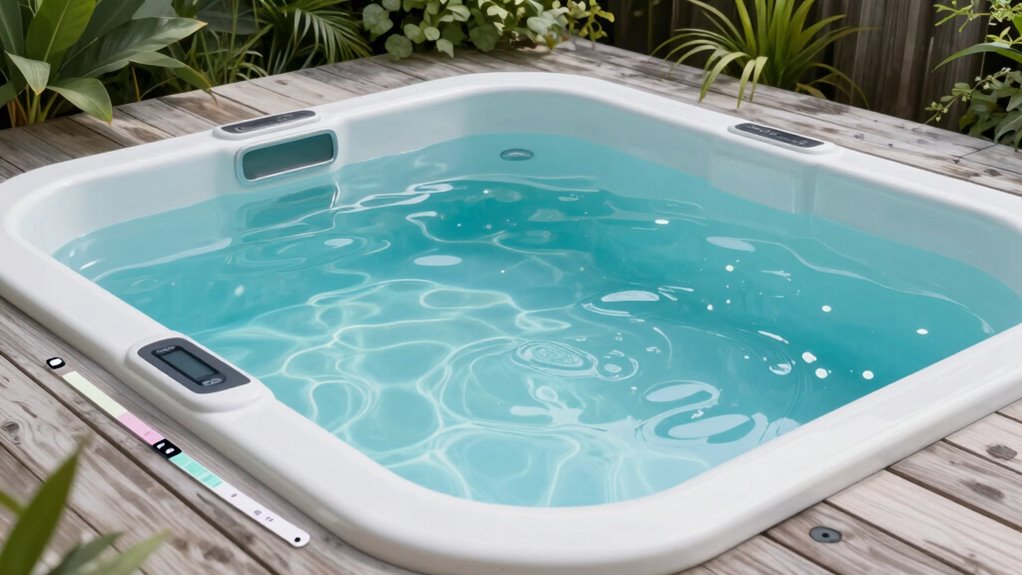
Maintaining proper water chemistry in your swim spa is essential for ensuring safe, clear, and comfortable use. To achieve this, regularly test your water’s pH balance using test strips or a digital tester. The ideal pH level should be between 7.2 and 7.6, which helps prevent skin irritation and equipment damage. If your pH is too high, add a pH reducer; if it’s too low, use a pH increaser. Keep chlorine or other sanitizers at proper levels to eliminate bacteria and algae. Consistently monitoring and adjusting water chemistry guarantees your swim spa remains inviting and safe for every swim. Remember, balanced water chemistry isn’t a one-time task — it’s an ongoing process to keep your swim spa in top condition, much like regular appliance maintenance plans help extend the lifespan of home appliances. Additionally, understanding the contrast ratio of your spa’s filtration system can further improve water clarity by enhancing the effectiveness of your sanitizers. Regularly inspecting your filtration system can also prevent issues related to clogged filters, which may compromise water quality. Incorporating routine water testing into your maintenance schedule ensures you catch and correct imbalances early, maintaining optimal water quality at all times. Moreover, staying informed about water chemistry fundamentals can help you troubleshoot common issues more effectively.

Malaka Spa Replacement Filter FD2007 Compatible with PWW50L 4CH-949 FC-0172, Hot Tub Replacement Filter Cartridge, 2-Pack
Length: 13 3/16" (34.7cm)
As an affiliate, we earn on qualifying purchases.
As an affiliate, we earn on qualifying purchases.
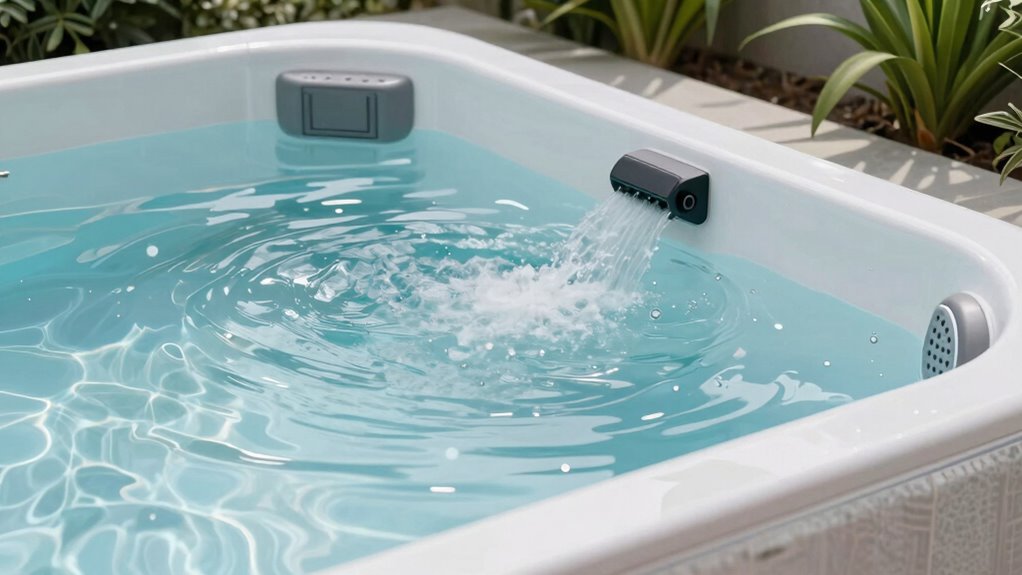
Maintaining Filtration and Circulation for Clear Water
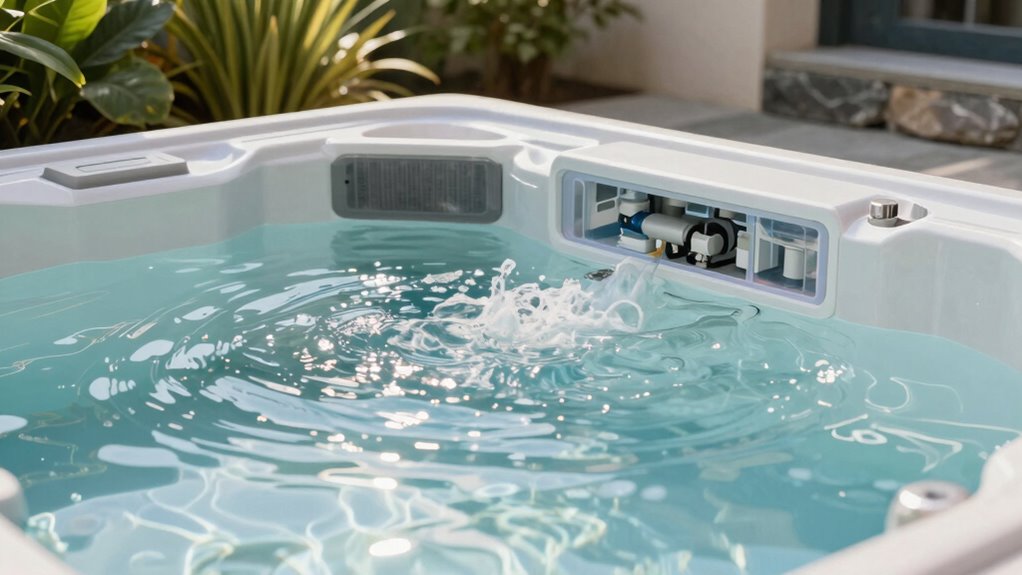
Keeping your filter clean and replacing it on schedule is key to clear water. Make sure your pump runs long enough each day to circulate the water properly. Proper maintenance and operation tips will help you maintain ideal filtration and circulation. Additionally, understanding the water chemistry helps prevent issues like algae growth and cloudy water, ensuring your swim spa stays inviting and safe. Regularly inspecting and maintaining your portable restrooms can further enhance your overall experience and hygiene standards. Remember, maintaining proper physical activity for your swim spa components can extend their lifespan and improve performance. Consistent water testing is essential to monitor and adjust chemical levels effectively. Incorporating preventative maintenance routines can further reduce the risk of problems and keep your swim spa functioning optimally.
Filter Maintenance Schedule
Regularly cleaning and replacing your swim spa’s filter is essential to guarantee proper water circulation and clarity. A clean filter prevents algae buildup and keeps your water sparkling. As part of your maintenance schedule, check your filter every 1-2 months, and replace it as recommended by the manufacturer. Remember to also clean algae from the filter surface and perform cover maintenance to prevent dirt and debris from entering the system. Proper filtration also supports solar system safety by maintaining balanced water chemistry, which reduces the risk of corrosion and damage to your equipment. Additionally, understanding filter efficiency can help optimize your maintenance routine and extend the lifespan of your filtration components. Monitoring water chemistry regularly can further ensure optimal filtration performance and water quality, especially since consistent water chemistry is vital for the longevity of electric components like electric dirt bikes and other electrical systems. Maintaining proper piercing hygiene and preventing infections can also be achieved by ensuring your filtration system effectively removes bacteria and contaminants from the water.
Pump Operation Tips
To guarantee your swim spa’s water stays clear and inviting, paying attention to pump operation is key. Regular pump troubleshooting helps identify issues like unusual noises, leaks, or decreased flow that can hinder circulation. Keep your pump well-maintained by cleaning the impeller and checking for debris that could cause strain. Ensure the pump’s filter basket stays clean, as a clogged filter reduces efficiency. Always follow manufacturer guidelines for pump maintenance and scheduled inspections. If you notice persistent problems, don’t hesitate to troubleshoot further or consult a professional. Proper pump operation promotes effective filtration and water circulation, preventing cloudy water and algae growth. Staying proactive with pump care ensures your swim spa remains a clean, revitalizing oasis. Routine maintenance can also help prevent more serious issues down the line by catching problems early.
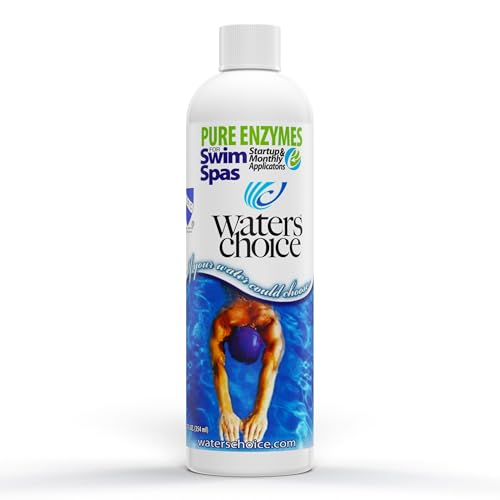
Waters Choice Water Clarifier Enzymes for Swim Spas – The First and Only Enzyme Application Designed Specifically for Swim Spas. No Shock. Minimal Sanitizer. Specialized, Safe, Effective Water Care.
Organic Swim Spa Enzymes-Our swim spa enzymes offer a natural and organic approach to swim spa water care….
As an affiliate, we earn on qualifying purchases.
As an affiliate, we earn on qualifying purchases.
Troubleshooting Common Water Quality Issues
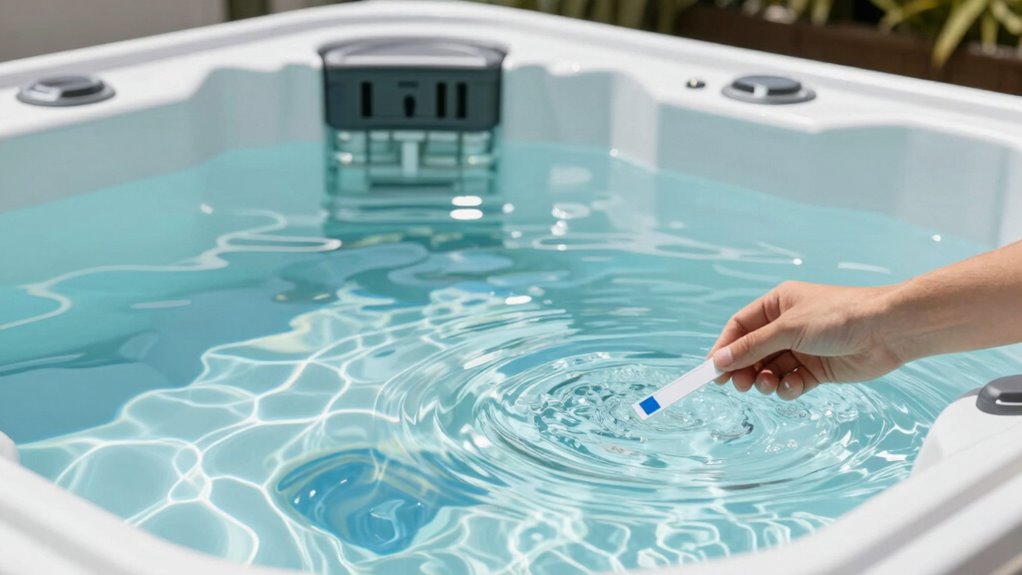
When water in your swim spa becomes cloudy, develops a strong odor, or shows signs of algae growth, it’s a clear indication that something’s off with the water quality. To troubleshoot, start with algae prevention; regularly shock the water and use algaecide as needed. Next, check your pH levels—if they’re too high or low, adjust pH to the ideal range of 7.2 to 7.6. Proper pH balance helps prevent algae buildup and ensures sanitizers work effectively. Also, clean filters frequently to remove debris and contaminants. If problems persist, consider draining and refilling the spa, then rebalancing the water. Consistent maintenance and monitoring are key to keeping your swim spa water clear, fresh, and healthy.
How to Test and Schedule Regular Water Treatments
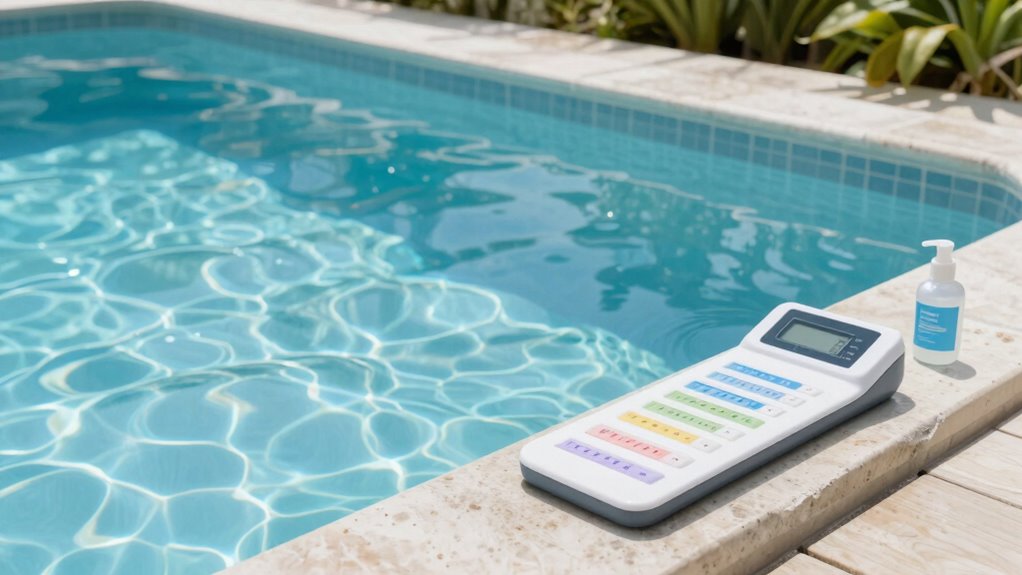
To keep your swim spa water clean and balanced, you need to test it regularly using reliable test strips or kits. Once you know the water’s condition, you can schedule treatments like adding chemicals or adjusting pH levels accordingly. Consistent maintenance guarantees your spa stays inviting and safe to enjoy.
Test Water Regularly
How often should you test your swim spa water to keep it clean and safe? Ideally, you should check the water at least two to three times a week, especially during heavy use or warm weather. Regular testing helps detect chemical imbalance early, preventing issues like cloudy water, skin irritation, or equipment damage. Use test strips or a liquid test kit to monitor pH, alkalinity, sanitizer levels, and calcium hardness. Consistent testing also plays a key role in algae prevention, ensuring nutrients don’t build up that could promote algae growth. If any readings are off, adjust your chemicals promptly to maintain balanced water. Staying on top of testing keeps your swim spa inviting, safe, and minimizes the need for extensive cleaning or chemical corrections later.
Schedule Maintenance Consistently
Establishing a consistent maintenance schedule is essential for keeping your swim spa water balanced and safe. Regular water testing helps identify when chemical adjustments are needed, preventing issues before they escalate. To stay on top of your water care, follow these steps:
- Test your water at least twice a week using proper testing kits.
- Record the results to track trends over time.
- Adjust chemicals such as pH, alkalinity, and sanitizer levels based on test results.
- Schedule treatments promptly after testing to maintain water clarity and safety.
Tips for Sanitizing Your Swim Spa Effectively
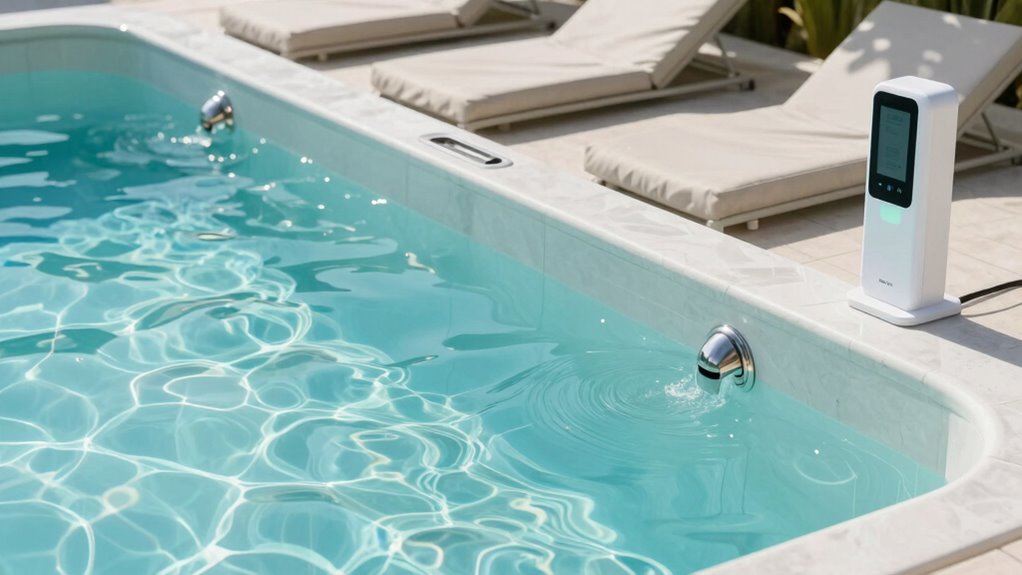
Properly sanitizing your swim spa is essential for keeping the water clean, safe, and inviting. To do this effectively, regularly test your water’s chemical levels and adjust them to prevent chemical imbalance, which can lead to cloudy water and bacteria growth. Use a reliable sanitizer, like chlorine or bromine, to kill germs and algae before they become a problem. Maintaining proper pH levels also helps your sanitizer work more efficiently. To prevent algae, keep your filtration system running consistently and consider adding algaecide as needed. Regular shock treatments help break down organic contaminants and keep your water fresh. By staying on top of these steps, you ensure your swim spa remains a healthy, enjoyable space for everyone.
When to Get Professional Water Care Help
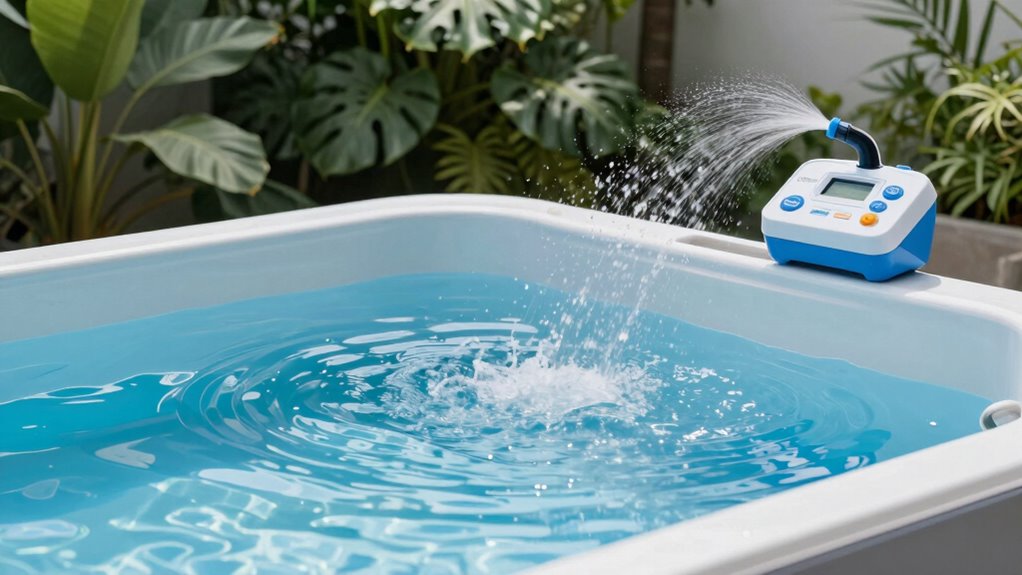
Even with regular maintenance, there are times when enlisting professional water care becomes essential. If you’re preparing for seasonal shutdowns, a pro can ensure proper chemical storage and drainage to prevent damage or contamination. You should also seek help if you notice persistent cloudy water, foul odors, or algae growth, which can indicate underlying issues. Additionally, if you’re unsure about balancing chemicals correctly or troubleshooting equipment problems, a professional can save you time and avoid costly mistakes. Furthermore, complex tasks like inspecting filters or managing sanitizer levels during extended absences are best handled by experts. Knowing when to call in help guarantees your swim spa stays safe, clean, and ready for use, especially during seasonal transitions or when routine issues arise.
Frequently Asked Questions
How Often Should I Replace the Water in My Swim Spa?
You should replace your swim spa water every 3 to 4 months, following a regular water replacement schedule. To keep the water clean and balanced, test it at least 2-3 times a week. Regular water testing helps you monitor pH, sanitizer levels, and alkalinity, ensuring a safe and enjoyable experience. Don’t forget, consistent maintenance keeps your swim spa in top condition and extends its lifespan.
Can I Use Regular Hot Tub Chemicals in a Swim Spa?
Using regular hot tub chemicals in your swim spa is a gamble that could turn your relaxing oasis into a chemical disaster. While some hot tub chemicals may seem compatible, they often lack the specific formulas needed for a swim spa’s larger volume and circulation. Always opt for swim spa compatibility products, ensuring your water stays crystal clear and safe. Don’t risk it—use the right chemicals for a pristine, healthy swim.
What Signs Indicate My Water Chemistry Is Off?
If your water starts turning cloudy or you notice a strong chemical smell, your water chemistry is likely off. Look for signs of water imbalance, like skin irritation, eye redness, or a foul odor. These issues indicate your pH or sanitizer levels need adjusting. Regular testing helps you catch these problems early, so you can maintain clear, safe water and avoid potential health risks.
Are There Eco-Friendly Water Care Options for Swim Spas?
Yes, you can use eco-friendly water care options for your swim spa. Natural alternatives like mineral-based systems and biodegradable sanitizers help keep your water clean without harsh chemicals. These options reduce environmental impact and are safer for your skin and eyes. Regularly using these eco-friendly products guarantees your swim spa stays hygienic while supporting sustainability. It’s a smart choice for both your health and the planet.
How Does Outdoor Temperature Affect Swim Spa Water Care?
Think of outdoor temperature fluctuations like a rollercoaster ride—they impact your swim spa’s chemical stability. When it gets colder, chemicals may become less effective, risking algae or bacteria growth. Conversely, hot weather speeds up chemical reactions, requiring more frequent adjustments. You need to monitor your water carefully, balancing pH and sanitizer levels to keep water clear and safe, no matter the outdoor temperature.
Conclusion
Think of your swim spa’s water as its heartbeat—you need to keep it healthy and steady. I once saw a family transform their murky, uninviting water into crystal-clear oasis by sticking to regular care routines. Just like tending a garden, consistent attention guarantees vibrant, inviting results. With proper balancing, filtering, and occasional professional help, your swim spa can become your personal sanctuary—refreshing, clean, and ready for every swim.