To prevent chlorine burn-off in strong sun, use a pool cover to block UV rays, reduce chlorine evaporation, and keep debris out. Add stabilizers like cyanuric acid to protect chlorine from UV degradation and maintain proper levels between 30-50 ppm. Test your water regularly and adjust chemical levels accordingly. Timing your chemical additions in the evening also helps reduce immediate UV exposure. Keep exploring for more tips to keep your pool balanced and clear.
Key Takeaways
- Use a pool cover to block sunlight and reduce chlorine exposure.
- Add chemical stabilizers like cyanuric acid to protect chlorine from UV degradation.
- Test and adjust chlorine and pH levels regularly, especially during hot, sunny days.
- Add chlorine in the evening or early morning to minimize UV exposure.
- Ensure proper water circulation and filtration to maintain stable chemical balance.
When the sun shines brightly, chlorine in your pool can quickly evaporate, leading to chlorine burn-off that leaves your water unbalanced and unsafe for swimming. This loss of chlorine means you’ll need to add more to maintain proper sanitation, but excessive chemical use can cause irritation and damage your pool’s equipment. To prevent this, you should take proactive steps to reduce chlorine evaporation during hot, sunny days.
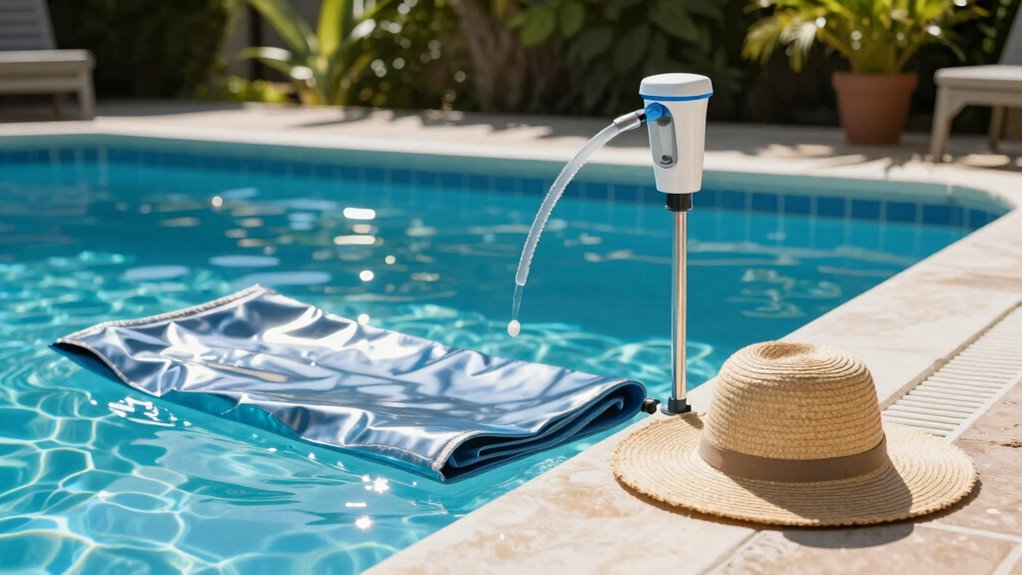
One effective method is to use a pool cover whenever the pool isn’t in use. A pool cover acts as a barrier, shielding the water from direct sunlight and significantly reducing chlorine loss. It also helps keep debris out of your pool and minimizes evaporation overall. When you cover your pool, you’re not only conserving chemicals but also saving water and energy, making your pool maintenance more efficient and eco-friendly.
Using a pool cover reduces chlorine loss, keeps debris out, and makes maintenance more eco-friendly.
Another crucial step involves the use of chemical stabilizers, specifically cyanuric acid. These stabilizers form a protective layer around chlorine molecules, making them less susceptible to ultraviolet (UV) degradation caused by sunlight. By maintaining the appropriate levels of cyanuric acid—usually between 30 and 50 parts per million—you create a buffer that allows your chlorine to last longer in the sun’s strong rays. Just be cautious not to exceed recommended levels, as too much stabilizer can reduce chlorine’s effectiveness and lead to other water quality issues. Additionally, understanding the role of UV protection in water chemistry can help optimize your pool’s chemical balance.
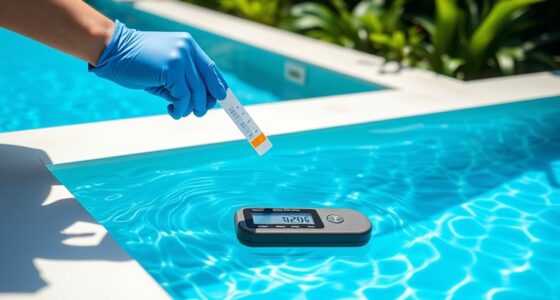
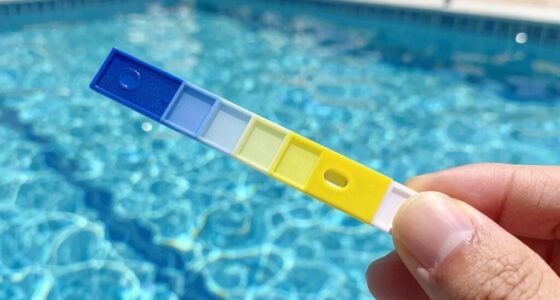
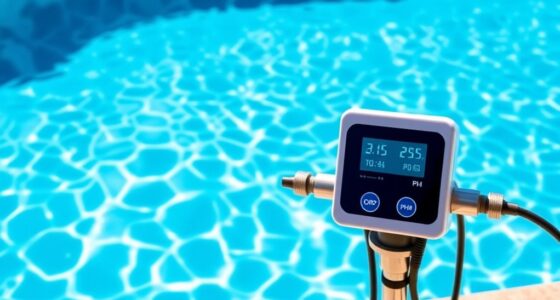
In addition to covering your pool and using stabilizers, you should regularly test your water’s chlorine levels and pH. During hot days, chlorine can burn off faster, so frequent testing keeps you informed about your water’s condition. Adjust the chlorine dosage as needed, but avoid overchlorinating, which can cause skin and eye irritation. Balancing your water chemistry is key to ensuring safe, enjoyable swimming conditions. Incorporating water chemistry principles can further help in maintaining a healthy pool environment. Furthermore, using water circulation techniques such as proper filtration can aid in reducing chemical loss and maintaining consistent water quality.
Furthermore, consider the timing of your chemical additions. It’s best to add chlorine in the evening or early morning when sunlight isn’t at its peak, minimizing immediate UV exposure and evaporation. Also, avoid shocking the pool during the hottest parts of the day unless necessary, and always follow manufacturer instructions carefully. Additionally, understanding the role of biodiversity in natural water purification can inspire eco-friendly pool maintenance practices that reduce chemical reliance. Implementing these preventative measures can extend the longevity of your pool chemicals and improve overall water quality.
As an affiliate, we earn on qualifying purchases.
Frequently Asked Questions
Does Using a Pool Cover Reduce Chlorine Evaporation?
Yes, using a pool cover reduces chlorine evaporation. When you cover your pool, it creates a barrier that limits exposure to sunlight, wind, and debris, all of which accelerate chlorine loss. A pool cover helps retain the chlorine you add, making your pool water more balanced and saving you money. It’s an effective way to maintain proper chlorine levels, especially during hot, sunny days when evaporation rates are high.
Can Adding Stabilizers Help Protect Chlorine From Sun Damage?
Adding stabilizers can definitely help protect chlorine from sun damage. Chemical stabilization increases UV protection, which slows down chlorine’s evaporation caused by sunlight. You should regularly add stabilizer to maintain proper levels, especially during intense sun exposure. This keeps your chlorine effective longer and reduces the need for frequent shocking. Just make sure to follow the manufacturer’s instructions for proper application and avoid over-stabilizing, which can cause other pool chemistry issues.
How Does Water Temperature Affect Chlorine Burn-Off?
Water temperature considerably impacts chlorine burn-off because higher temperatures reduce chemical stability, making chlorine more prone to rapid degradation during sun exposure. When the water warms, chlorine escapes faster, decreasing its disinfectant effectiveness. To prevent this, keep your pool water cooler when possible, especially during hot, sunny days. Using stabilizers can also help maintain chlorine’s chemical stability, slowing burn-off caused by direct sun exposure and maintaining better sanitation levels.
Is It Necessary to Lower Chlorine Levels During Peak Sunlight?
Think of your pool’s chlorine as a delicate flower that needs protection from harsh sunlight. During peak sunlight, it’s vital to lower chlorine levels to prevent rapid burn-off caused by intense sunlight exposure. Proper chlorine maintenance ensures your pool stays sanitized without overexposing it to sunlight. By adjusting chlorine levels, you safeguard your pool’s clarity and guarantee a revitalizing swim, even on the hottest, sunniest days.
What Are Alternative Sanitizers to Chlorine for Sunny Pools?
You can consider alternative sanitizers like bromine, mineral sanitizers, or UV systems to maintain pool chemistry without relying solely on chlorine. Bromine works well in sunlight, while mineral systems release natural disinfectants, reducing chlorine usage. UV sanitation uses light to neutralize bacteria, minimizing chlorine demand. These options help prevent chlorine burn-off, keep your pool safe, and maintain clear water even during hot, sunny days.
Conclusion
So, next time you’re basking in the sun’s glory, remember: your pool’s chlorine isn’t just a chemical—it’s your swim season’s diva. Protect it with cover-ups, check your sanitizer levels, and don’t forget to add some stabilizer. Otherwise, you’ll end up with a swimming pool that’s more “dry humor” than “refreshing dip.” Keep your chlorine happy, your pool sparkling, and your summer plans intact—because nobody wants a chlorinated desert.