
TL;DR
A former textile warehouse in Mumbai has been transformed into a showroom for Jaipur Rugs, showcasing fractal-inspired designs. The renovation emphasizes sustainable reuse of industrial spaces and innovative design.
The historic textile warehouse in Mumbai has been repurposed into a showroom for Jaipur Rugs, featuring fractal-inspired designs. This transformation highlights a trend of adaptive reuse of industrial spaces in Mumbai and underscores Jaipur Rugs’ focus on innovative design and sustainability.
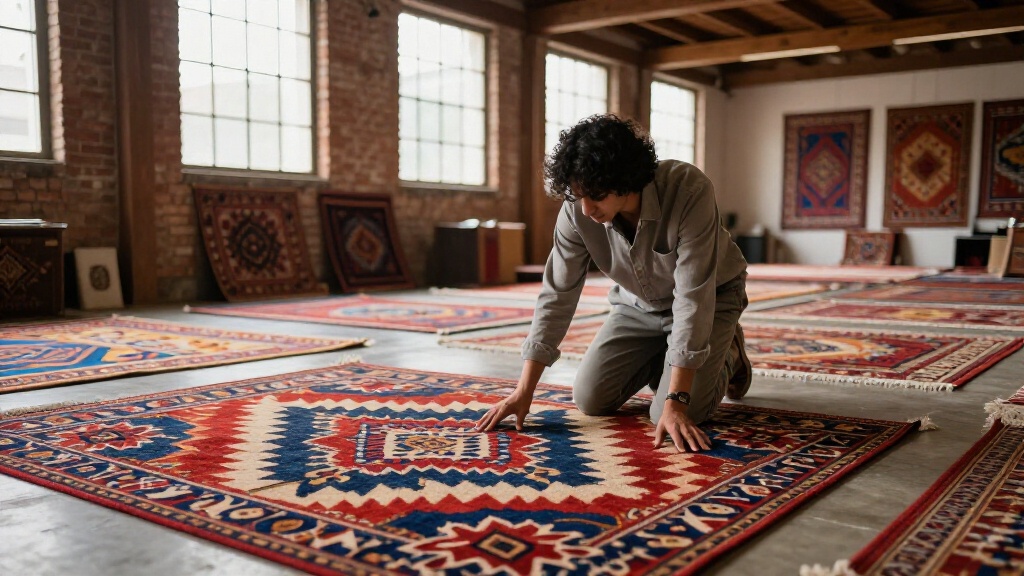
The former textile warehouse located in Mumbai’s industrial district has been renovated into a dedicated Jaipur Rugs showroom. The project was completed recently, with the space now showcasing a collection of rugs inspired by fractal geometry, a mathematical concept characterized by self-similarity and complex patterns.
The renovation was led by local architects and designers who aimed to preserve the industrial character of the building while integrating modern artistic elements. The showroom features expansive open spaces, high ceilings, and large windows, maintaining the warehouse’s original architecture. Jaipur Rugs, a prominent Indian rug manufacturer known for blending traditional craftsmanship with contemporary design, emphasizes this project as a showcase of innovative artistry and sustainable reuse.
Implications for Mumbai’s Industrial and Design Sectors
This project exemplifies the adaptive reuse of industrial heritage in Mumbai, promoting sustainable development and preservation of historic structures. It also positions Jaipur Rugs as a leader in innovative design within India’s growing interior decor market. The showroom could inspire similar initiatives, blending heritage conservation with modern aesthetics, and attract both tourists and industry professionals interested in design innovation.
As an affiliate, we earn on qualifying purchases.
Mumbai’s Industrial Spaces and Design Innovation
Mumbai has a long history of textile manufacturing, with many warehouses and mills now facing redevelopment due to urban expansion. In recent years, there has been a trend of converting these spaces into commercial and artistic venues, reflecting a broader shift toward sustainable urban renewal. Jaipur Rugs, established in 1978, has gained recognition for integrating traditional Indian craftsmanship with modern design, and this project aligns with their vision of innovative artistic expression. The use of fractal-inspired patterns in the showroom underscores a contemporary approach to design that appeals to global aesthetics while rooted in Indian craftsmanship.
“We aimed to preserve the industrial essence of the warehouse while infusing it with modern artistic elements, creating a space that celebrates both heritage and innovation.”
— Rohit Agarwal, Architect involved in the renovation
Details of the Renovation Process and Future Plans
It is not yet clear what specific renovations were undertaken to adapt the warehouse into a showroom or if there are plans for further development of the space. Details about the cost, timeline, or additional features remain undisclosed, and it is unclear whether this project is part of a larger redevelopment initiative in Mumbai’s industrial district.
Upcoming Events and Potential Expansion of the Space
The showroom is now open to visitors and industry professionals. Jaipur Rugs may host design exhibitions or workshops in the space, and there could be plans for further expansion or integration with other heritage projects in Mumbai. Monitoring local development initiatives will clarify whether this is a standalone project or part of broader urban renewal efforts.
Key Questions
What makes the showroom’s design unique?
The showroom features fractal-inspired patterns that blend mathematical complexity with artistic expression, creating visually striking rugs that reflect contemporary design trends.
Is the building protected as a heritage site?
There is no official confirmation that the warehouse is designated as a heritage site, but the renovation preserves many of its original architectural features, emphasizing adaptive reuse.
Will the showroom host public events?
While specific plans have not been announced, Jaipur Rugs has indicated interest in hosting exhibitions, workshops, and other events to engage the community and industry stakeholders.
Are there plans to replicate this project elsewhere?
There has been no official statement about expanding this concept to other industrial sites, but the success of this project could inspire similar initiatives in Mumbai and beyond.
Source: local