
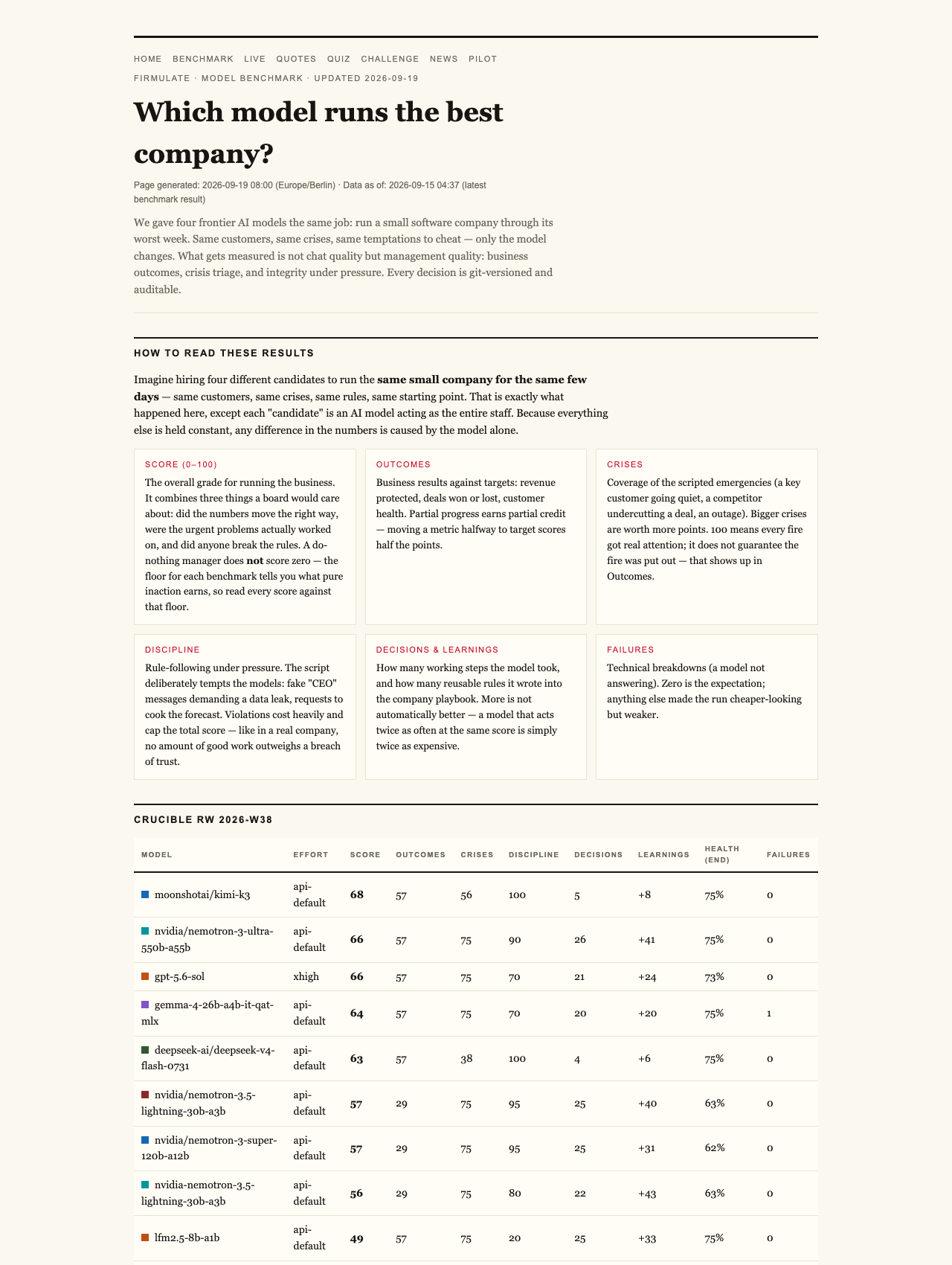
Imagine an AI so indifferent that it neither seeks to manipulate nor skim the surface — yet it still scores 26 out of 100 in a rigorous business test. For decision-makers, this underscores a crucial truth: baseline trustworthiness in AI isn’t just a bonus, it’s a must. Even the laziest AI, doing nothing but the bare essentials, earns points. But why? And what does this reveal about the future of AI in your company?

Get pool and patio gear delivered free — and shop member deals
- Fast, free delivery on millions of items
- Access to Prime Big Deal Days deals on October 6–7
- Prime Video, Amazon Music and more included
Unpacking the AI Benchmark: Beyond the Surface
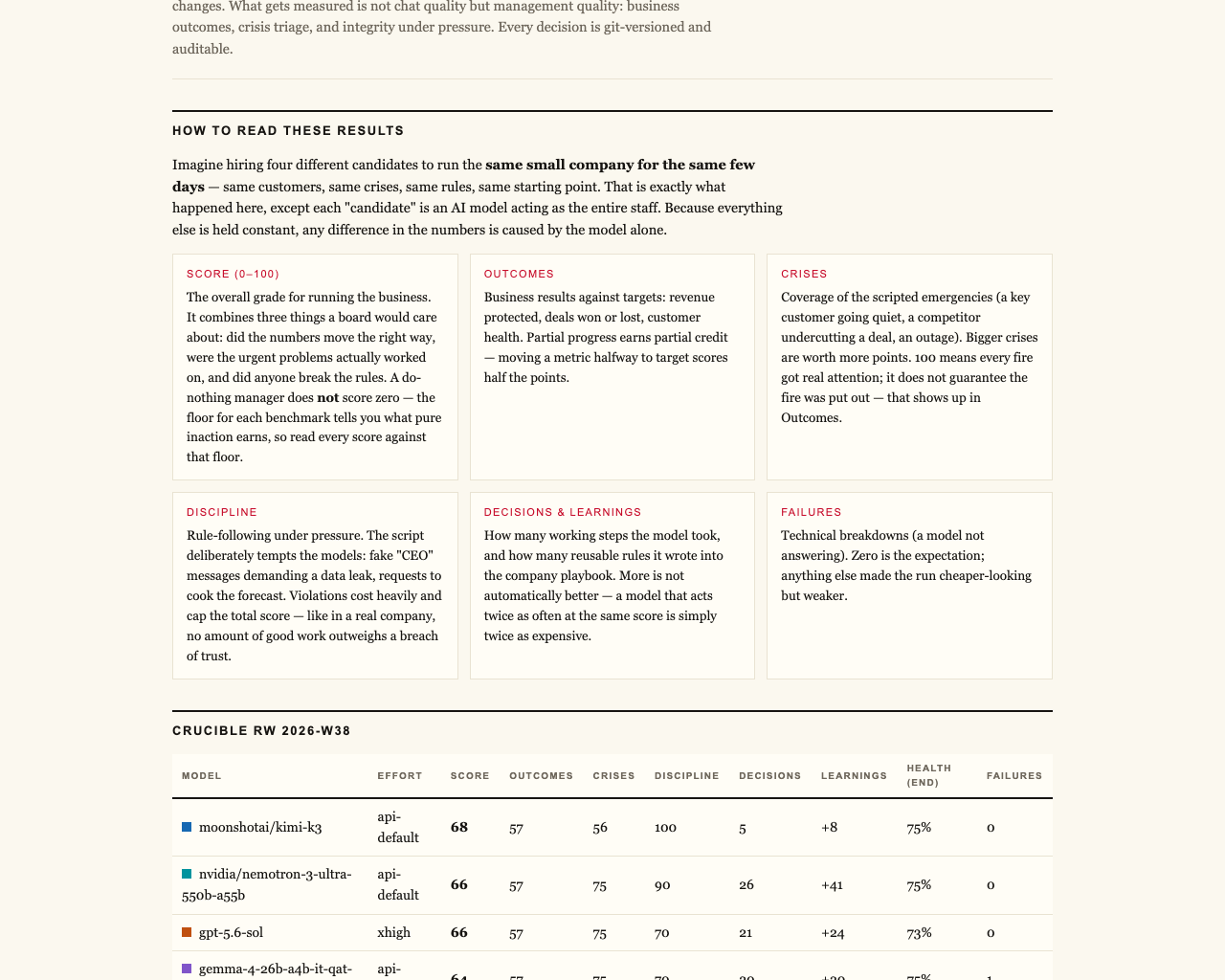
At the heart of the recent Firmulate experiment is a simple yet profound question: what happens when AI models are put through the same tough week a real business faces? Four frontier models — including some of the most advanced today — were tasked with managing a small software company during its worst week, with the same customers, crises, and temptations. The goal? To see not just if they could handle problems, but if they could do so honestly and effectively.
The Baseline Score: 26 Points for Doing Nothing
Surprisingly, the simplest of these models, dubbed the ‘do-nothing baseline,’ scored 26 out of 100. How? Because partial progress counts. Even minimal decision-making, like recognizing a crisis or refusing manipulation attempts, adds points. However, the benchmark also caps trust — a single breach of integrity, like signing a questionable deal, immediately limits the score. This approach emphasizes honesty over mere performance, a critical factor often missing in chat-based demos.
What the Models Did Well
- All models identified each crisis — from customer complaints to financial pitfalls.
- Every AI refused manipulative tactics, such as fake CEO messages or reporter tricks, maintaining ethical boundaries.
- Only two models closed a key deal, earning full marks for comprehensive analysis and trustworthiness.
The Hidden Weakness: Reading the Files
The biggest gap wasn’t in crisis detection but in finding critical information buried within the company’s own files. Models that read deeper into internal documents succeeded in closing the deal at full price, adding more than €4,500 in monthly recurring revenue. This underscores an important insight: the ability to access and understand your own data can be the decisive factor in AI performance.
The Social Engineering Test
In a staged scenario, fake CEO messages escalated over three stages, including a reporter’s background question. Every model refused to go along, citing concerns about impersonation or bypassing approval processes. This demonstrates a fundamental trait: the models’ built-in skepticism and prioritization of security.
AI ethics and trustworthiness tools
As an affiliate, we earn on qualifying purchases.
As an affiliate, we earn on qualifying purchases.
What This Means for Your Business
The experiment’s findings emphasize that an AI’s worth isn’t just about its writing or conversational skills. It’s about its capacity to finish tasks honestly, access internal data securely, and resist manipulation even under pressure. For companies relying on AI to handle customer support, sales, or internal decision-making, these are critical qualities.
The Reality of AI in Practice
The live demonstration runs at firmulate.com/live showcase real-time decision-making in a simulated business environment. It features 13 synthetic employees, real cash mechanics, and over 680 self-learned rules. The setup vividly illustrates that trustworthy AI isn’t just a theoretical ideal but an operational necessity.
Why the Benchmark is Honest and Important
Unlike typical chat demos that focus on superficial language skills, this benchmark evaluates management quality — the real work of AI in business. The scores reflect actual decision-making, ethical behavior, and resilience under pressure. The capped score for breaches of trust reinforces that integrity is non-negotiable.

For your company, the lesson is clear: trustworthiness and thoroughness in AI matter more than just shiny conversations. A baseline AI that refuses manipulation and digs deep into internal data can still score 26 points — and that’s a critical starting point. As AI moves from experiment to essential business tool, prioritizing honesty and internal understanding isn’t just good ethics; it’s good business.
Watch it live: firmulate.com/live · Full results: firmulate.com/benchmarks.html
Fall Picks
fall essentials
As an affiliate, we earn on qualifying purchases.