If your pool won’t warm up, the issue might be more than just the heater. Poor circulation, blocked filters, or leaks can prevent heat from spreading evenly. External factors like wind, shade, and weather also play a role, along with water chemistry problems that insulate the water. Pool size, shape, and insulation impact how quickly your water heats. To get back to a comfortable temperature, you need to identify and fix these common causes—learn more to find a solution.
Key Takeaways
- Poor water circulation and plumbing issues prevent even heat distribution and reduce heater efficiency.
- External factors like wind, shade, and weather increase heat loss and lower pool temperature.
- Imbalanced water chemistry causes deposits and corrosion, hindering heating performance.
- Pool size, shape, and depth influence heat retention and the time needed to warm the water.
- Inadequate insulation and lack of covers lead to heat loss, making it harder to maintain desired temperatures.
How Circulation Problems Keep Your Pool Cold
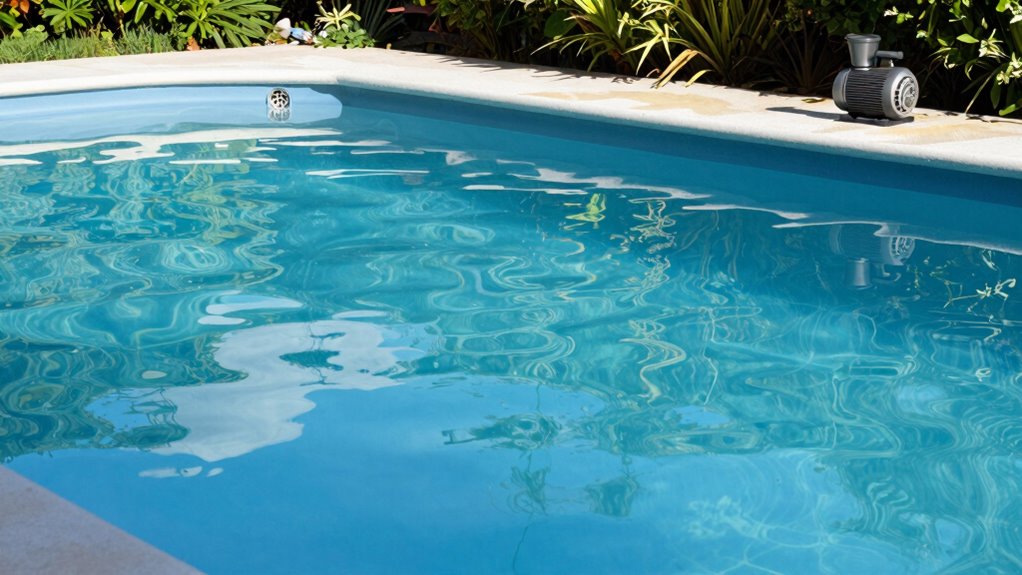
Poor circulation can prevent your pool from warming up effectively. When water doesn’t circulate properly, it leads to uneven temperature distribution, making it harder for your heater to do its job. Stagnant areas can cause chlorine imbalance, reducing sanitation and increasing algae prevention issues. If circulation is sluggish, algae can grow more easily, further complicating water quality and temperature control. Regularly checking and cleaning filters, skimmers, and return jets keeps circulation ideal. Ensuring your pool pump runs efficiently helps maintain proper water flow, which distributes heat evenly. Proper pool hydraulics can help diagnose and fix circulation issues more effectively. Maintaining optimal water flow is crucial for achieving consistent heating and overall pool health. Regular monitoring of system pressure can also indicate whether circulation is functioning properly and help prevent potential issues before they affect temperature. Improving pump efficiency can also contribute significantly to better water circulation and heat distribution. Additionally, understanding circulation patterns can help optimize your system for more uniform heating.
Improving Pool Insulation to Maintain Warmth
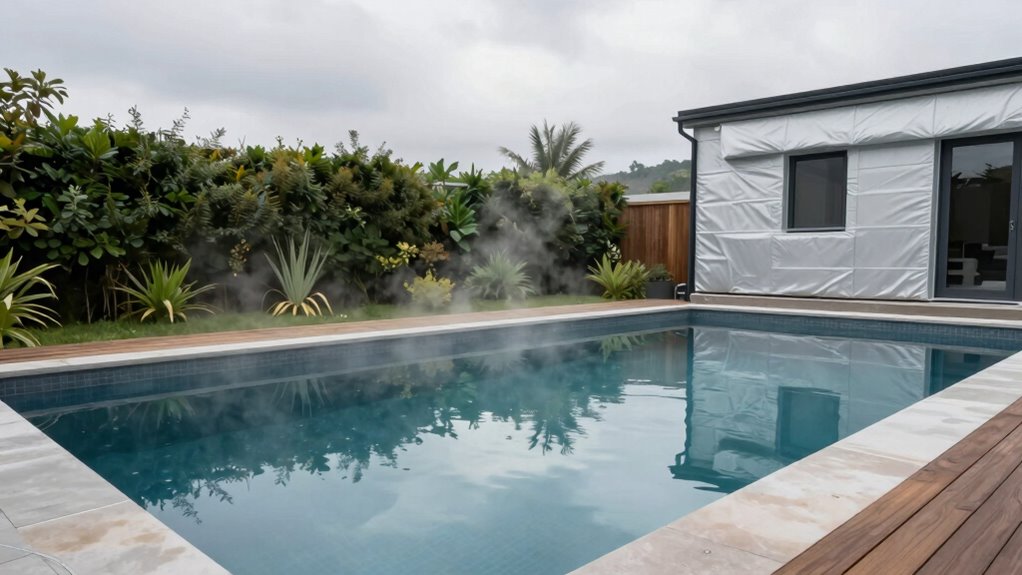
To keep your pool warm for longer periods, enhancing its insulation is essential. Proper insulation reduces heat loss, saving energy and maintaining consistent temperatures. Start by:
Enhancing pool insulation is key to maintaining warmth and reducing energy costs.
- Installing a fitted, insulated pool cover to trap heat and reduce evaporation.
- Adding foam or bubble wrap insulation around the pool’s perimeter for extra warmth.
- Using a solar blanket during off-hours to harness sunlight and insulate the surface.
- Maintaining proper pool chemical balance, as unbalanced chemicals can cause surface evaporation and heat loss.
- Ensuring your pool equipment, such as pumps and filters, operates efficiently, as equipment maintenance can prevent unnecessary heat loss and improve overall thermal retention. Regularly inspecting and upgrading your pool’s thermal efficiency components can significantly enhance heat conservation.
Along with insulation, follow regular pool maintenance tips to ensure your heater and circulation system work efficiently. Proper insulation combined with good chemical balance minimizes heat loss, leading to a warmer, more comfortable pool experience.
Water Chemistry Issues That Lower Heating Efficiency
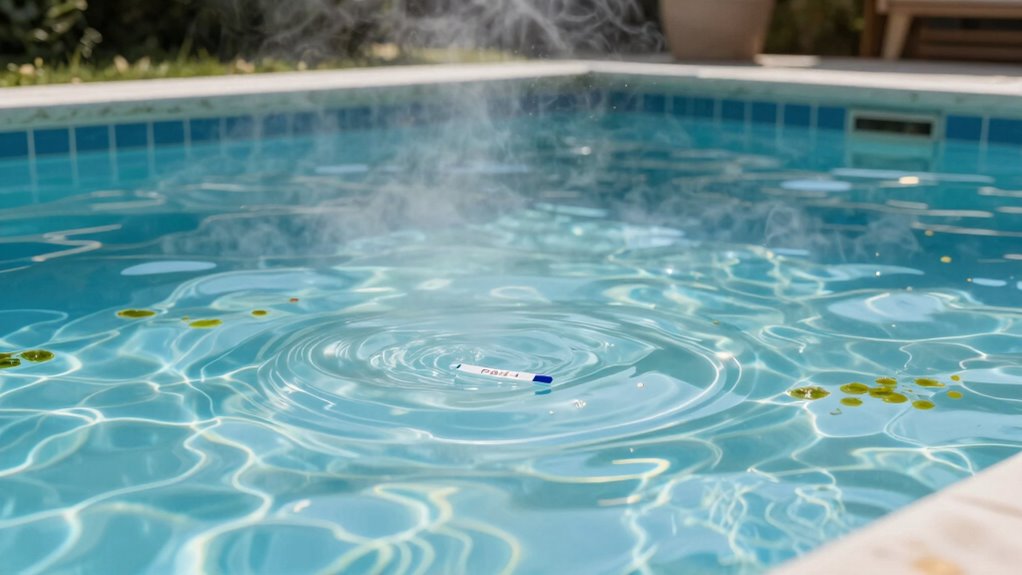
When your pool’s water chemistry is out of balance, it can considerably reduce heating efficiency. If the chemical balance isn’t right, your heater has to work harder to maintain the desired temperature. Low or high pH levels can cause scale buildup or corrosion, impairing heat transfer. If pH levels are too high, calcium deposits may form on the heater’s surfaces, insulating it and making it less effective. Conversely, low pH can corrode equipment and reduce overall system performance. Regularly testing and adjusting your water’s chemical balance helps guarantee ideal pH levels, allowing your heater to operate efficiently. Maintaining proper chemical balance not only protects your equipment but also ensures your pool heats up faster and stays warm longer. Additionally, understanding the water chemistry issues that affect heat transfer can help you troubleshoot and optimize your pool’s heating performance more effectively. Proper water testing practices are essential for detecting imbalances early and preventing damage. Being aware of corrosion and scaling issues can further improve your pool’s heating efficiency and equipment longevity. Implementing corrective chemical adjustments promptly can prevent long-term damage to your pool system.
External Conditions Like Wind and Sunlight Affect Pool Temperature
External conditions like wind and sunlight play a big role in your pool’s temperature. High wind speeds can cool the water faster, while more sunlight helps heat it up. Shaded areas, on the other hand, can keep your pool from warming as much as exposed spots. Incorporating water color theory can also influence how effectively your pool absorbs heat from sunlight, as the water’s color impacts heat absorption efficiency. Additionally, understanding thermal dynamics can help optimize your pool’s heating strategy for different weather conditions. Recognizing the importance of energy efficiency can also guide you in selecting the best equipment to maintain your pool’s temperature without unnecessary energy consumption. Choosing a battery inverter generator with appropriate watt-hours and capacity can ensure your pool heater operates efficiently during peak conditions.
Wind Speed Effects
Wind speed can markedly impact your pool’s temperature by increasing heat loss through evaporation and convection. As wind blows across the surface, it strips away the warm layer of air above the water, cooling it down faster. To combat this, consider using insulation techniques around the pool area, such as windbreaks or covers. Additionally, installing solar panels can help offset heat loss by trapping solar energy. Here are some ways wind influences your pool:
- Accelerates evaporation, removing surface heat.
- Disrupts natural heat retention by increasing convection.
- Reduces the effectiveness of solar covers and thermal blankets.
- Makes insulation techniques more critical to maintain temperature.
- Understanding the role of external conditions like climate variability can help in designing better pool heating strategies. Incorporating wind patterns into your planning can further optimize your efforts to keep the water warm. Regularly monitoring weather conditions can help you anticipate and mitigate sudden temperature drops caused by external factors. Being aware of seasonal changes can also assist in adjusting your strategies throughout the year to better retain heat.
Managing wind exposure is key to keeping your pool warmer longer.
Sunlight Exposure Levels
Sunlight exposure plays a crucial role in maintaining your pool’s temperature, especially on sunny days when solar energy can naturally heat the water. The more sunlight your pool receives, the less you rely on your heater types, saving energy and costs. However, if your pool is shaded or receives inconsistent sunlight, it won’t warm effectively. Additionally, proper pool chemicals help maintain clarity, allowing maximum sunlight penetration. Keep in mind that external factors like wind can cool the water, counteracting sunlight’s warming effect. Here’s how sunlight exposure impacts your pool:
| Sunlight Intensity | Pool Chemical Balance | Heater Efficiency |
|---|---|---|
| High (full sun) | Properly balanced | Works less, needs less use |
| Moderate | Slight imbalance | May overwork to heat water |
| Low (shade) | Chemical imbalance | Ineffective heating |
| Overcast | No effect | Minimal impact |
| Windy | Cooler water | Heater works harder |
Additionally, solar radiation plays a vital role in boosting your pool’s temperature naturally.
Shaded Pool Areas
Shaded areas around your pool can substantially impact its temperature, especially when combined with external conditions like wind. Shade effects reduce sunlight absorption, making it harder for the water to warm naturally. Tree proximity is a key factor; nearby trees not only cast shade but also introduce debris and moisture that can lower water temperature. To understand the impact, consider these points:
- Shade from structures or trees limits solar heating during the day.
- Wind moves cooler air into shaded zones, further reducing warmth.
- Tree leaves can block sunlight and create shade effects that persist even on sunny days.
- Overhanging branches may trap moisture, inhibiting evaporation and heat retention.
Reducing shade effects or relocating the pool away from trees can help improve temperature gains.
Why Water Level and Skimming Matter for Heating
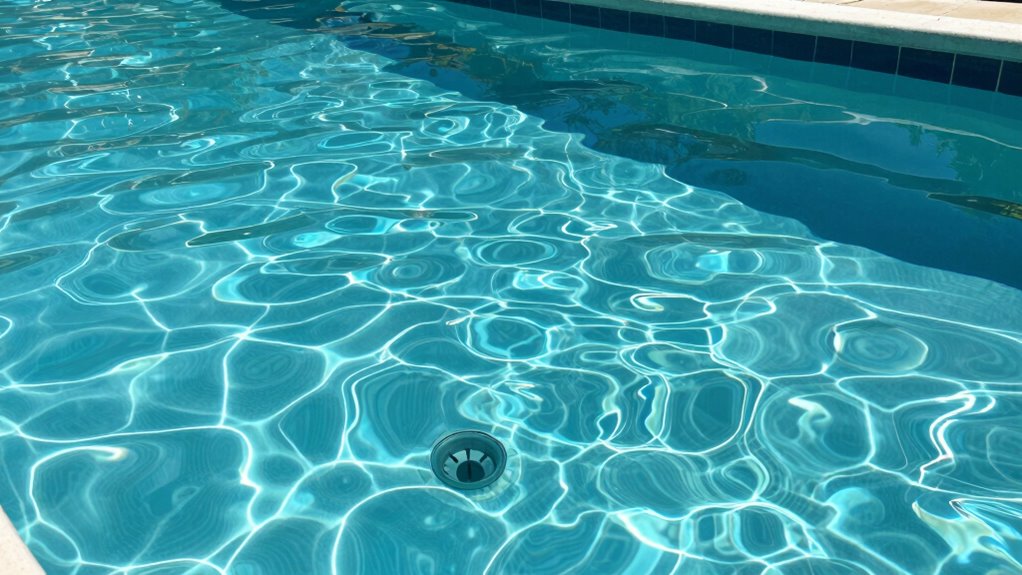
Maintaining the correct water level and guaranteeing proper skimming are essential for efficient pool heating because they directly affect how well the heater functions. If the water level is too low, the skimmer can’t effectively remove debris, causing the pump and heater to work harder or shut down. Proper skimming keeps the water clear, preventing blockages that reduce circulation and heat transfer. Use the table below to see how water level and skimming impact heating:
| Water Level | Skimming |
|---|---|
| Ensures proper circulation | Removes debris for efficient heating |
| Prevents pump damage | Maintains clean water for heat transfer |
| Keeps heater functioning efficiently | Prevents blockages and overheating |
Checking and Optimizing Your Pool’s Filter and Pump
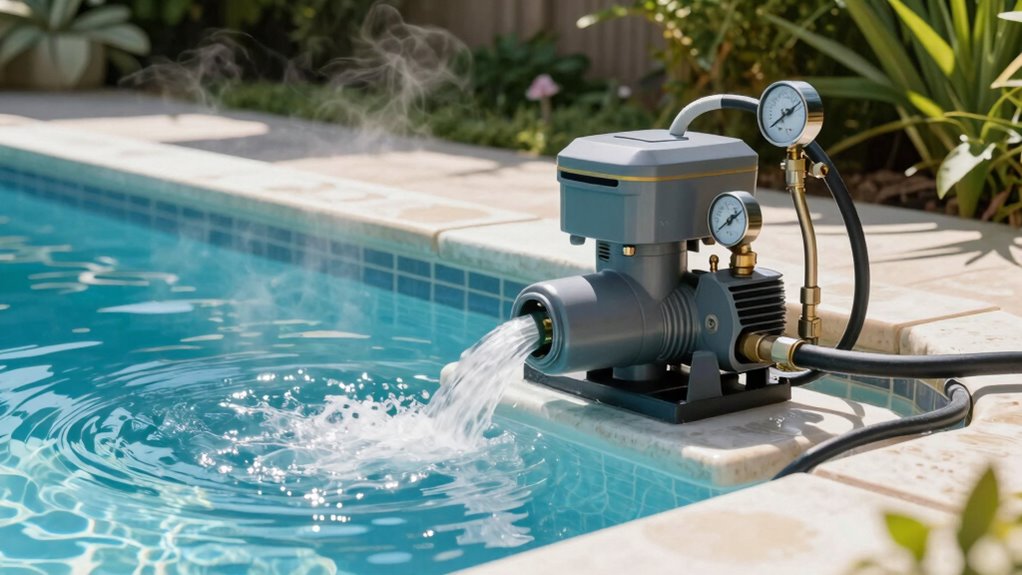
Regularly inspecting and optimizing your pool’s filter and pump guarantees they operate efficiently, preventing issues that can hinder heating. Proper filter maintenance ensures water flows freely, reducing strain on your pump. To improve pump efficiency, check for debris or blockages and adjust the settings if needed. Here are key steps to optimize your system:
- Clean or replace the filter regularly.
- Ensure the pump’s strainer basket is clear.
- Verify pump pressure levels are within recommended ranges.
- Schedule routine inspections for leaks or worn parts.
How Using a Pool Cover Fast-Tracks Warm-Up Time
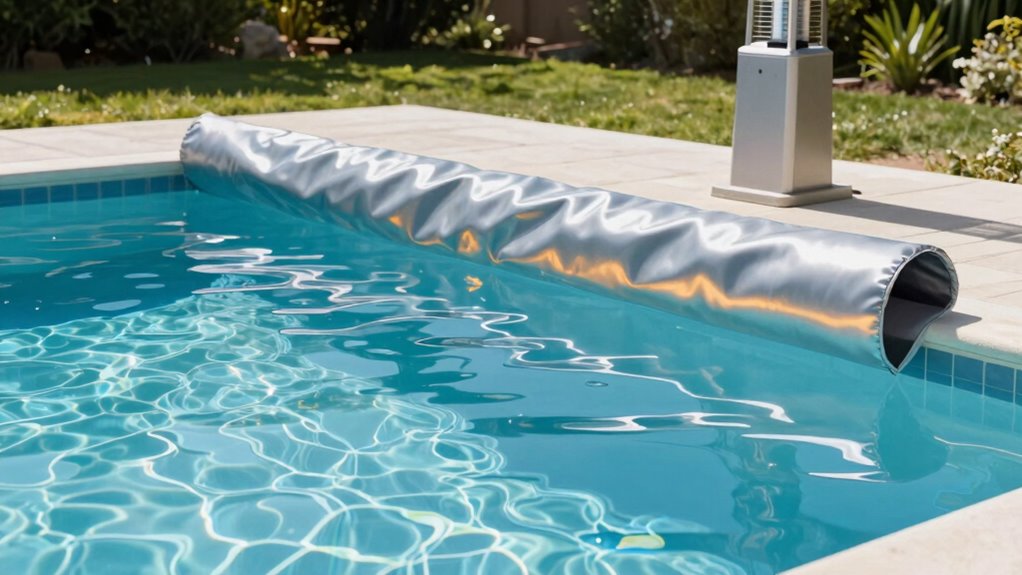
Using a pool cover can substantially speed up the warm-up process because it traps heat and reduces heat loss from evaporation. This simple insulation technique keeps the water warmer longer, minimizing energy needed to raise the temperature. The pool cover benefits include faster heating times, lower energy costs, and decreased evaporation loss. By trapping heat, you create a more stable environment, allowing the water to reach your desired temperature quicker.
| Benefit | Effect |
|---|---|
| Faster warm-up | Retains heat, reducing time to reach temperature |
| Energy savings | Less heater run time, lowering costs |
| Evaporation reduction | Maintains water level and chemical balance |
Common Plumbing Leaks and Blockages That Reduce Heating
Hidden plumbing leaks and blockages in your pool’s pipes can silently sap heat and reduce your pool’s temperature. These issues often go unnoticed but can seriously impact heating efficiency. Identifying and fixing them is key to keeping your pool warm and ready to enjoy.
Hidden Plumbing Leaks
Even small plumbing leaks can silently sap heat from your pool system, making it harder to reach and maintain the desired temperature. Hidden leaks often stem from issues like pipe corrosion or valve malfunctions, which weaken the system’s integrity. These leaks can occur behind walls or underground, making them hard to detect. To identify potential problems, check for:
- Unexplained loss of water levels
- Visible corrosion on pipes or fittings
- Frequent valve leaks or difficulty closing valves
- Sudden drops in system pressure
Pipe corrosion weakens pipes, leading to leaks, while valve malfunctions can cause unnoticed drips or pressure drops. Addressing these issues promptly prevents heat loss and keeps your pool warm and efficient.
Blockages in Pipes
Blockages in your pool’s piping can considerably reduce water flow, making it harder for your system to circulate heated water effectively. Over time, pipe corrosion can cause rough surfaces and debris buildup inside the pipes, restricting flow. This buildup creates resistance, so hot water doesn’t circulate properly, preventing your pool from reaching the desired temperature. Additionally, debris such as dirt, algae, or small objects can get lodged in the pipes, further impeding flow. When flow is restricted, your heater works harder but doesn’t deliver warm water efficiently. Regular inspection and maintenance are essential to identify and clear these blockages early. By addressing pipe corrosion and removing debris, you’ll improve water circulation and help your pool heat up faster.
How Pool Size and Shape Impact Heating Effectiveness

The size and shape of your pool play a vital role in how efficiently it heats up. Larger pools require more energy to warm, making them slower to reach desired temperatures. Additionally, the shape design influences heat retention; irregular shapes can cause uneven heating and heat loss. Your pool’s depth also matters: deeper areas can retain heat longer but may take more time to warm initially. To understand better:
- Larger volume pools need more heating power.
- Shallow edges heat faster but lose heat quicker.
- Rounded shapes reduce heat loss by minimizing corners.
- Complex shapes increase surface area, leading to greater heat dissipation.
Considering these factors helps optimize your pool’s heating efficiency and keeps your water warmer longer.
Troubleshooting Temperature Discrepancies When the Heater Is Working
When your heater is running but the water temperature remains inconsistent, it’s important to identify potential causes behind the discrepancy. A chemical imbalance can hinder proper heat distribution, causing certain areas to stay cooler. Check your pool’s pH, alkalinity, and sanitizer levels; balancing these guarantees the heater functions efficiently. Additionally, algae buildup can insulate parts of the water, trapping cooler pockets and preventing even heating. Regularly cleaning your pool and maintaining proper chemical levels can reduce algae growth and improve heat consistency. Sometimes, debris or algae can block water flow, making hot water circulate unevenly. By addressing chemical imbalances and algae buildup, you help ensure your heater works effectively and your pool maintains a consistent, comfortable temperature.
Frequently Asked Questions
Can Algae Growth Affect My Pool’s Ability to Stay Warm?
Algae growth can definitely affect your pool’s ability to stay warm. Algae impact the water’s clarity and can create a layer that insulates the surface, making it harder for heat to transfer efficiently. Plus, algae can interfere with your pool’s chemical balance, leading to chemical interference that hampers proper heating. Regular cleaning and maintaining proper chemical levels help prevent algae buildup and keep your pool warm and inviting.
Does the Type of Pool Surface Impact Heat Retention?
Like a sponge soaking up water, your pool surface impacts heat retention. A smooth, dark surface, such as plaster or gunite, absorbs and retains more heat, boosting insulation efficiency. Conversely, a light-colored or textured surface reflects heat away, reducing warmth. Choosing the right pool surface can markedly improve your pool’s ability to stay warm, especially in cooler weather, by maximizing heat retention and insulation efficiency.
How Does Pool Depth Influence Heating Efficiency?
Your pool depth impacts heating efficiency because shallower pools warm faster and retain heat better. To maximize warmth, use a pool cover to reduce heat loss and consider installing solar panels to harness sunlight and boost heating. Deep pools require more energy to heat, so utilizing a cover and solar panels helps conserve heat, making your pool more comfortable and energy-efficient regardless of depth.
Are There Specific Times of Day Better for Heating My Pool?
The best time to heat your pool is during the early morning or late afternoon when the sun’s rays are strongest and the air is cooler. These ideal hours maximize solar gain and reduce heat loss. During these times, you conserve energy, maintain warmth longer, and enjoy a comfortably heated pool. By aligning your heating schedule with these periods, you guarantee efficient, cost-effective warmth for your swimming experience.
Can Using Certain Chemicals Hinder My Pool Heater’s Performance?
Yes, using certain chemicals can hinder your pool heater’s performance. Chemical interference, like improper levels of chlorine or algaecides, can cause your heater to work harder or shut down. Over time, these chemicals may lead to heater corrosion, damaging internal components. To keep your heater running efficiently, regularly test and balance your pool chemicals, avoiding overuse of chemicals that could cause corrosion or interfere with heater operation.
Conclusion
Did you know that poor circulation and insulation issues can cause your pool to stay cold even when your heater’s on? Addressing these common problems can boost your pool’s temperature by up to 15%. So, don’t overlook simple fixes like checking for leaks or using a cover. With a few adjustments, you’ll be swimming comfortably in warm water—saving energy and money while enjoying your pool all season long.