
Pool equipment you barely notice can help with routine care without adding bulky hardware or daily tasks. My best overall pick is the Fill-O-Matic 2000, a simple automatic leveler focused on keeping water at a steady height; the Card On Guard Solar Sanitizer FIN and VOKPIT Solar-Powered Pool Ionizer stand out for floating, solar-powered care. The main tradeoff is between low-effort operation and the upkeep, compatibility checks, and ongoing sanitizing your pool still needs. A floating device may be less intrusive than installed equipment, while a leveler addresses water loss rather than water quality. Read on for the full breakdown and a guide to choosing the least noticeable fit for your pool.

Get pool and patio gear delivered free with Prime
- Fast, free delivery on millions of items
- Prime Video, Amazon Music and more included
- Member-only deals all year
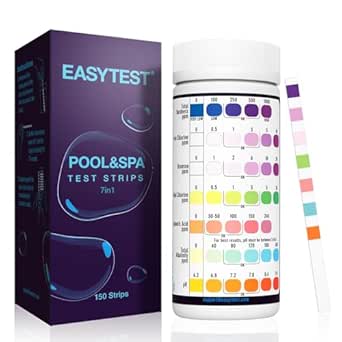
Complete the kit


Key Takeaways
- The Fill-O-Matic 2000 takes the overall lead because it addresses water-level upkeep directly, a different job from the floating sanitizers and mineral systems.
- Solar floaters trade installation for pool-surface presence. The Card On Guard FIN, VOKPIT ionizer, SEEBEEBUS device, and two Solar Pool Maid options rely on floating placement rather than a fixed connection.
- Water levelers are the targeted picks for evaporation and routine topping up. The Fill-O-Matic 2000 and Fxsmgdy leveler should be compared by fit and adjustment needs, not by sanitizer features.
- Pool capacity claims are not a complete fit check. VOKPIT and SEEBEEBUS list pools up to 45,000 gallons, but buyers still need to check their pool’s care requirements and the device’s role.
- None of these products makes pool care disappear. Solar or mineral devices should not be treated as a substitute for monitoring water chemistry and following the pool’s sanitation plan.
| Card On Guard Solar Sanitizer FIN for Swimming Pools |  | Best for Low-Profile Chlorine Support | Coverage: Up to 15,000 gallons per FIN | Claimed chlorine reduction: Up to 50% | Power source: Solar conversion film | VIEW ON AMAZON | See Our Full Breakdown |
| VOKPIT Solar-Powered Pool Ionizer for Pools up to 45,000 Gallons |  | Best for Broad-Coverage Solar Ionizing | Pool capacity: Up to 45,000 gallons | Power source: Solar | Pool compatibility: Freshwater and saltwater pools and spas | VIEW ON AMAZON | See Our Full Breakdown |
| SEEBEEBUS Solar-Powered Floating Pool Care Device for Pools up to 45,000 Gallons |  | Best for Flexible Pool Compatibility | Pool capacity: Up to 45,000 gallons | Power source: Solar | Pool types: Above-ground and in-ground | VIEW ON AMAZON | See Our Full Breakdown |
| Fill-O-Matic 2000 Automatic Swimming Pool Water Leveler |  | Best for Hands-Off Water-Level Control | Model: Fill-O-Matic 2000 | Pool compatibility: In-ground and above-ground pools | Adjustable depth: 2–9 inches | VIEW ON AMAZON | See Our Full Breakdown |
| Suntouch Treasures Solar Pool Maid Mineral System |  | Best for Battery-Free Mineral Support | Power source: Solar | Pool capacity: Up to 35,000 gallons | Item weight: 0.91 kg | VIEW ON AMAZON | See Our Full Breakdown |
| Fxsmgdy Automatic Pool Water Leveler with Adjustable Float Valve |  | Best for Hands-Off Water-Level Control | Brand: Fxsmgdy | Material: UV-resistant ABS plastic | Water-level adjustment: 2–8 inches below the pool deck | VIEW ON AMAZON | See Our Full Breakdown |
| Solar Pool Maid Mineral System, Solar-Powered Floating Pool Accessory |  | Best for Battery-Free Floating Water Care | Power source: Solar | Pool capacity: Up to 45,000 gallons | Dimensions: 8 x 8 x 3 inches | VIEW ON AMAZON | See Our Full Breakdown |
| pool equipment you barely notice | Power source | Model | Pool capacity |
|---|---|---|---|
| Card On Guard Solar Sanitizer | Solar conversion film | COG1 | — |
| VOKPIT Solar-Powered Pool Ioni | Solar | SPI-SR004 | Up to 45,000 gallons |
| SEEBEEBUS Solar-Powered Floati | Solar | SPC | Up to 45,000 gallons |
| Fill-O-Matic 2000 Automatic Sw | — | Fill-O-Matic 2000 | — |
| Suntouch Treasures Solar Pool | Solar | — | Up to 35,000 gallons |
| Fxsmgdy Automatic Pool Water L | — | — | — |
| Solar Pool Maid Mineral System | Solar | ST_SPI25 | Up to 45,000 gallons |
More Details on Our Top Picks
Card On Guard Solar Sanitizer FIN for Swimming Pools
The Card On Guard FIN suits pool owners who want a simple, unobtrusive way to support their existing sanitation routine. Drop it into the water and sunlight powers its solar conversion film; there is no battery or copper anode to clean. Its stated coverage is up to 15,000 gallons per FIN, so larger pools need more than one. Compared with the VOKPIT Solar-Powered Pool Ionizer, this device covers less water and claims a smaller chlorine reduction, but it also avoids the ionizer’s scheduled anode maintenance. The advertised reduction of up to 50% is gradual and depends on sunlight, so I would treat it as a supplement rather than a substitute for testing and maintaining pool water. It makes the most sense when low visibility and minimal upkeep matter more than high capacity.
Pros:- Drop-in design needs little setup
- Solar conversion film requires no battery
- Contains no metals or additives
- May help reduce chlorine use and associated odor or irritation
Cons:- Requires sunlight to operate
- Larger pools need multiple FIN units
- Chlorine reduction is gradual and does not replace routine water care
Best for: Owners of pools or hot tubs up to 15,000 gallons who want a drop-in solar accessory with no metal components to maintain.
Not ideal for: Owners of larger pools seeking one device for broad coverage, or anyone whose pool gets too little sunlight for dependable operation.
- Coverage:Up to 15,000 gallons per FIN
- Claimed chlorine reduction:Up to 50%
- Power source:Solar conversion film
- Product dimensions:22 x 16.5 x 2 inches
- Item weight:2 pounds
- Model:COG1
- Manufacturer:Card on Guard
- Country of manufacture:USA
Our verdict“Choose the Card On Guard FIN for a low-maintenance solar supplement in a smaller sunlit pool, but not as a standalone sanitation system.”
VOKPIT Solar-Powered Pool Ionizer for Pools up to 45,000 Gallons
For buyers who want a floating unit to serve a larger pool, the VOKPIT Solar-Powered Pool Ionizer lists coverage up to 45,000 gallons and works with freshwater and saltwater pools, spas, and both above-ground and in-ground setups. Its solar operation keeps cords and batteries out of the picture, which fits the barely-noticeable brief better than equipment that needs a permanent installation. The tradeoff is hands-on upkeep: the copper anode needs cleaning every two weeks and replacement every one to two quarters. That makes it less hands-off than the Card On Guard FIN, which has no metal parts to service, but it covers a much larger pool and claims chlorine reduction up to 85%. That figure is a claim, not a reason to stop testing or maintaining pool water.
Pros:- Solar floating design avoids a power cord
- Compatible with freshwater and saltwater pools and spas
- Listed for pools up to 45,000 gallons
- Includes a cleaning brush, test strip, and setup accessories
Cons:- Copper anode needs cleaning every two weeks
- Anode replacement is part of ongoing upkeep
- Claimed chlorine reduction does not remove the need for routine pool care
Best for: Owners of pools or spas up to 45,000 gallons who want a floating solar ionizer and are willing to clean and replace its copper anode.
Not ideal for: Pool owners who want an accessory with minimal routine attention, or who do not want copper-based equipment in the water.
- Pool capacity:Up to 45,000 gallons
- Power source:Solar
- Pool compatibility:Freshwater and saltwater pools and spas
- Materials:ABS, copper, and stainless steel
- Copper rod weight:326 g
- Claimed chlorine reduction:Up to 85%
- Anode maintenance:Clean every two weeks; replace every 1–2 quarters
- Model:SPI-SR004
- Included accessories:Float cleaner, copper anode, coil spring, net basket, wing screw, cleaning brush, test strip, and user manual
Our verdict“Pick the VOKPIT for broad solar-ionizer coverage if scheduled anode care is an acceptable tradeoff.”
SEEBEEBUS Solar-Powered Floating Pool Care Device for Pools up to 45,000 Gallons
The SEEBEEBUS Solar-Powered Floating Pool Care Device is a fit-focused choice for owners who need compatibility across pool surfaces: it is listed for vinyl, fiberglass, and plaster, as well as saltwater pools. Its floating solar design avoids a cord, while tether loops offer a way to keep it from drifting away from a preferred spot. That positioning detail may matter more than the upgraded panel or thicker copper component, since the product data gives no specific treatment or cleaning performance figures. Compared with the VOKPIT ionizer, SEEBEEBUS shares the 45,000-gallon capacity but provides less detail about chlorine reduction and anode maintenance. The included brush and test strips are useful, yet buyers seeking clearly specified upkeep should favor VOKPIT; this pick is better for those prioritizing stated surface compatibility and placement options.
Pros:- Solar-powered floating design requires no cord
- Listed as compatible with vinyl, fiberglass, plaster, and saltwater pools
- Tether loops can help keep the device positioned
- Includes a cleaning brush and test strips
Cons:- No specific treatment or cleaning performance figures are provided
- Maintenance and replacement details are not specified
- The listed 45,000-gallon capacity does not clarify performance across different pool conditions
Best for: Owners of pools up to 45,000 gallons who need a floating solar device listed for vinyl, fiberglass, plaster, or saltwater pools.
Not ideal for: Buyers who want a clearly stated chlorine-reduction claim or detailed maintenance schedule before choosing a pool-care device.
- Pool capacity:Up to 45,000 gallons
- Power source:Solar
- Pool types:Above-ground and in-ground
- Compatible pool materials:Vinyl, fiberglass, and plaster
- Saltwater pool compatible:Yes
- Model:SPC
- Included accessories:Cleaning brush and test strips
- Customer support:2 years
Our verdict“Choose SEEBEEBUS when pool-surface compatibility and tethering matter more to you than a quantified treatment claim.”
Fill-O-Matic 2000 Automatic Swimming Pool Water Leveler
The Fill-O-Matic 2000 addresses a different kind of pool equipment you barely notice: it manages routine water-level changes instead of treating the water. Its float valve automatically maintains a selected level, helping spare owners from repeatedly checking and topping up the pool. A non-slip rubber base is designed not to mark the pool surface, and stainless steel hose and hardware suit a device that remains connected to a water supply. Compared with the floating VOKPIT ionizer, the Fill-O-Matic is less discreet visually and needs a hose connection, but it solves a practical chore the ionizer does not. Check your supply pressure before buying: above 60 psi, a pressure-reducing valve is required. The adjustment range is 2–9 inches, and deeper installations need a separately sold extension bracket.
Pros:- Automatically maintains the selected water level
- Works with in-ground and above-ground pools
- Non-slip rubber base is designed not to mark pool surfaces
- Stainless steel hose and hardware resist corrosion
Cons:- Requires a pressure-reducing valve above 60 psi
- Extension bracket for greater depth is sold separately
- Hose connection makes it less visually unobtrusive than floating solar devices
Best for: Pool owners who regularly top up an in-ground or above-ground pool and want automatic level control without constant checking.
Not ideal for: Owners who cannot use a hose-connected leveler, have water pressure above 60 psi without a reducer, or need adjustment beyond the included 2–9-inch range.
- Model:Fill-O-Matic 2000
- Pool compatibility:In-ground and above-ground pools
- Adjustable depth:2–9 inches
- Maximum pressure:60 psi
- Valve type:Float valve
- Base material:Rubber
- Bracket material:UV-stabilized acrylic
- Hose and hardware:Stainless steel
- Warranty:1 year
Our verdict“Choose the Fill-O-Matic 2000 if automatic topping-up matters more than keeping all equipment out of sight.”
Suntouch Treasures Solar Pool Maid Mineral System
The Suntouch Treasures Solar Pool Maid Mineral System is aimed at pool owners who want a floating accessory without adding batteries to their maintenance routine. It is listed for pools up to 35,000 gallons and is intended to support water balance and reduce chemical use. That gives it broader stated coverage than the Card On Guard FIN, though the FIN supplies a specific chlorine-reduction claim while Suntouch does not provide a percentage or detailed performance figures. The lifetime replacement program is a notable ownership benefit, but it does not tell buyers how much chemical reduction to expect or how the device performs under different pool conditions. Compared with the VOKPIT ionizer, this listing offers less detail about materials and service intervals. I’d choose it for simple solar operation and replacement support, not for precise treatment expectations.
Pros:- Solar-powered with no batteries required
- Intended to support water balance and reduce chemical use
- Listed for pools up to 35,000 gallons
- Includes a lifetime replacement program
Cons:- No specific chemical-reduction percentage is provided
- Performance depends on pool conditions and routine care
- Product information gives limited detail about materials and maintenance
Best for: Owners of pools up to 35,000 gallons who want a battery-free floating mineral accessory and value a lifetime replacement program.
Not ideal for: Buyers who need a quantified chlorine-reduction claim, detailed maintenance instructions, or clearly specified performance across pool conditions.
- Power source:Solar
- Pool capacity:Up to 35,000 gallons
- Item weight:0.91 kg
- Number of items:1
- Brand:Suntouch Treasures
- Model number:ST_SPI26W
- Replacement program:Lifetime replacement program
Our verdict“Pick Suntouch Treasures for a battery-free solar accessory with replacement support, but choose a better-documented option if treatment claims guide your decision.”
Fxsmgdy Automatic Pool Water Leveler with Adjustable Float Valve
The Fxsmgdy makes the most sense for pool owners who want to stop topping up water by hand without adding powered equipment. Its hose-connected float valve responds to the water level automatically, while adjustment from 2 to 8 inches below the deck gives you room to set the target where it suits your pool. Unlike the Solar Pool Maid Mineral System, which floats in the pool and supports water care, this device addresses evaporation and water-level upkeep directly.
The tradeoff is a visible unit beside the pool and a garden hose that must stay connected; it is not a built-in plumbing solution. The weighted base may also need gravel or small stones to stay put. For buyers who want equipment that quietly handles a repetitive chore, its no-power, no-tools setup is appealing, but it is less unobtrusive than an installed leveler.
Pros:- Automatically replenishes water as the pool level drops
- Float setting adjusts from 2 to 8 inches below the pool deck
- Requires no electricity, tools, or plumbing installation
- UV-resistant ABS body is designed for outdoor exposure
Cons:- Needs a garden hose connection at the pool
- The unit remains visible beside the pool rather than integrating into the structure
- Base may need added stones or gravel for stability
Best for: Pool owners with a nearby garden hose who want automatic water-level control without electrical work or permanent plumbing.
Not ideal for: Owners seeking a hidden, built-in solution or those who cannot leave a garden hose connected near the pool.
- Brand:Fxsmgdy
- Material:UV-resistant ABS plastic
- Water-level adjustment:2–8 inches below the pool deck
- Power:None required
- Connection:Standard high-pressure garden hose
- Base:Fillable with small stones or pea gravel
- Included items:Pool leveler with float valve and adjustable frame, Teflon tape, instruction manual
- Warranty:Up to 10 years
Our verdict“Choose the Fxsmgdy if you want a simple, unpowered way to maintain pool level and can accommodate a hose-connected device beside the pool.”
Solar Pool Maid Mineral System, Solar-Powered Floating Pool Accessory
The Solar Pool Maid is the lineup’s floating, solar-powered option for owners who want a pool-care accessory without batteries or a cord. At 8 x 8 x 3 inches, it occupies relatively little space at the surface, and its stated capacity of up to 45,000 gallons gives it a broad intended pool range. Compared with the Fxsmgdy leveler, it does not manage water loss or maintain a set water height; its role is to complement routine pool care and support water balance.
The manufacturer says it may help reduce chemical use by up to 85%, but that claim is not independently verified in the supplied product information. I would treat it as a supplement, not a replacement for testing and standard sanitation. Solar operation avoids battery changes, while the lifetime replacement program is a notable support feature; the tradeoff is that results depend on a claim whose performance details are not provided.
Pros:- Solar-powered operation requires no batteries
- Designed for pools up to 45,000 gallons
- Compact floating form measures 8 x 8 x 3 inches
- Includes a lifetime replacement program
Cons:- The stated reduction in chemical use is not independently verified in the supplied information
- It complements pool care rather than replacing testing or established sanitation
- As a floating accessory, it remains visible on the water
Best for: Pool owners with pools up to 45,000 gallons who want a solar-powered floating mineral accessory to complement, rather than replace, their established water-care routine.
Not ideal for: Buyers expecting a standalone sanitizer, guaranteed chemical savings, or equipment that stays out of sight below the waterline.
- Power source:Solar
- Pool capacity:Up to 45,000 gallons
- Dimensions:8 x 8 x 3 inches
- Weight:3.69 pounds
- Model:ST_SPI25
- Manufacturer:SUNTOUCH TREASURES
- Warranty:Lifetime replacement program
Our verdict“Pick the Solar Pool Maid if you want a battery-free floating water-care supplement and are comfortable judging its chemical-reduction claim cautiously.”
How We Picked
I ranked these products by how directly they reduce a recurring pool-care task while remaining unobtrusive in day-to-day use. I compared their stated roles—solar sanitation, ionization, mineral care, and automatic water-level control—along with placement, installation demands, pool-size information, and the amount of follow-up care a buyer should expect. A product that addresses a specific, persistent chore earns a stronger position than one whose value depends on broad expectations of hands-off pool maintenance.
The order also reflects how clearly each product’s purpose can be matched to a buyer’s need. The Fill-O-Matic 2000 leads as a focused water-level solution; the other leveler is a direct alternative, while floating solar and mineral options suit buyers seeking a less fixed presence. Where product details do not establish a clear advantage, I avoid treating similar devices as interchangeable winners: buyers should check compatibility, care instructions, and the role of each unit before choosing.
| pool equipment you barely notice | Power source | Model | Pool capacity |
|---|---|---|---|
| Card On Guard Solar Sanitizer | Solar conversion film | COG1 | — |
| VOKPIT Solar-Powered Pool Ioni | Solar | SPI-SR004 | Up to 45,000 gallons |
| SEEBEEBUS Solar-Powered Floati | Solar | SPC | Up to 45,000 gallons |
| Fill-O-Matic 2000 Automatic Sw | — | Fill-O-Matic 2000 | — |
| Suntouch Treasures Solar Pool | Solar | — | Up to 35,000 gallons |
| Fxsmgdy Automatic Pool Water L | — | — | — |
| Solar Pool Maid Mineral System | Solar | ST_SPI25 | Up to 45,000 gallons |
Factors to Consider When Choosing Pool Equipment You Barely Notice
Low-profile equipment can still change your routine, but “barely noticeable” means different things depending on the job. I would start by identifying the chore you want to reduce, then check whether the device works alongside your existing pool-care setup.
Choose the chore before choosing the device
Water-level control and water treatment solve different problems, even when both products are marketed as easy-care accessories. If evaporation or frequent topping up is the nuisance, a leveler is more relevant than a floating sanitizer. If your concern is routine water treatment, compare the solar and mineral options by their stated role and the care plan they support. A common mistake is buying a device because it sounds automatic without checking what task it actually performs. I would write down the specific repeated task first, then rule out products that do not address it.
Check compatibility beyond pool capacity
A stated gallon limit is only one part of deciding whether a product fits. Pool type, existing sanitation method, plumbing access, and the manufacturer’s usage instructions can all affect whether a device belongs in your setup. Capacity claims for the VOKPIT and SEEBEEBUS floaters do not by themselves establish compatibility with every pool. Before buying, compare your pool’s actual volume and equipment arrangement with the product’s requirements. When those details are unclear, asking the manufacturer or a pool professional is safer than assuming a broad capacity label covers your situation.
Decide what “unnoticeable” means around your pool
Floating equipment avoids a permanent installation but remains visible on the water and may need to be moved for swimming or cleaning. A fixed or connected leveler can stay out of the way during use, though it may require a suitable location and setup. Think about sightlines, skimming, covers, and where swimmers gather before choosing between those styles. Buyers sometimes focus only on how a device looks when first placed in the pool. The better test is whether it interferes with the pool’s normal use or weekly maintenance.
Count the ongoing care, not just the setup
Solar power can reduce reliance on a cord or routine battery changes, but it does not mean a device needs no attention. Floating units may need inspection, cleaning, or repositioning, while levelers need checks for proper movement and water flow. Mineral or ionizing products also do not remove the need to monitor water chemistry and follow a sanitation routine. A frequent buying error is treating reduced hands-on work as zero maintenance. Ask what needs regular checking and whether those tasks are easier than the chore you are trying to replace.
Pay more only for a problem you actually have
Extra features are useful only when they solve a real constraint, such as keeping water at a consistent level or matching a particular pool capacity. If a simple floating accessory covers your needs, a more elaborate system may add complexity without making pool care feel less noticeable. On the other hand, a leveler can be worthwhile when manual top-ups are frequent and a compatible installation is available. Compare the work saved with any setup and upkeep the product adds. I would prioritize a clear fit and a defined job over claims of general convenience.
Frequently Asked Questions
Can a solar pool ionizer or mineral system replace my regular sanitizer?
Do not assume that an ionizer or mineral accessory replaces your pool’s required sanitation routine. These products have distinct roles, and the product name alone does not establish the water chemistry or sanitation plan your pool needs. Check the manufacturer’s directions and the requirements for your pool type, then keep monitoring water as advised. If you are unsure how the device works with your current sanitizer, ask a qualified pool professional before changing treatment. This helps avoid buying a low-profile accessory and then relying on it for a job it may not perform alone.
Should I choose a floating device or an automatic water leveler?
Choose based on the recurring problem, not on which format seems more discreet. Floating devices in this roundup focus on solar, ionizer, or mineral care, while the Fill-O-Matic 2000 and Fxsmgdy products address water-level control. A floater may be simple to place but can remain visible and may need moving during swimming or cleaning. A leveler can reduce manual topping up but depends on a suitable setup and proper operation. If both chores matter, compare whether each device fits your pool and care routine rather than expecting one product to solve both.
Is a pool rated for up to 45,000 gallons automatically a good fit for the VOKPIT or SEEBEEBUS?
No; a capacity figure helps narrow the options but does not confirm full compatibility. Compare your pool’s actual volume with the stated limit, then check the product instructions for any other use conditions. Also make sure the device’s care function matches what you need, since pool volume does not describe sanitation requirements or water chemistry. If your pool is close to the stated maximum, verify the manufacturer’s guidance rather than relying on the headline specification alone. The same careful fit check applies to any solar floater.
Which product makes the most sense if evaporation and frequent topping up are my main problem?
The water-level control options are the relevant choices: the Fill-O-Matic 2000 and the Fxsmgdy automatic leveler with adjustable float valve. Compare their installation requirements and adjustment instructions against your pool’s layout before choosing. A leveler can reduce the need for repeated manual top-ups, but it does not treat water or correct other causes of water loss. If the drop in water level is sudden or unusually large, check for a leak rather than relying on an automatic leveler to mask it. Buyers without a compatible setup may prefer to keep topping up manually while investigating the cause.
Will floating pool equipment stay out of the way during swimming and cleaning?
Not necessarily. Solar and mineral floaters sit on the water, so their position can change and they may need to be moved when people swim, skim, or use a cover. Before choosing one, think about how often the pool is in use and whether you have a convenient place to set the device aside. A floating design avoids some fixed-installation demands, but it is not invisible in the literal sense. If keeping the water surface clear matters most, a properly fitted leveler may be less intrusive while the pool is in use.
Conclusion
For most buyers, the Fill-O-Matic 2000 is my best overall pick because it focuses on a clear, recurring task: maintaining water level. For value-minded buyers, the Fxsmgdy leveler is the direct alternative to compare when adjustable float control suits the pool setup; I would check its fit and instructions before choosing. For beginners, the Card On Guard Solar Sanitizer FIN is a straightforward floating option to investigate, with the reminder that solar sanitation products do not remove the need to monitor water care. For a premium-style floating choice, compare the VOKPIT ionizer and SEEBEEBUS device by their instructions, pool fit, and intended role rather than assuming a capacity label makes them equivalent. For specific needs, choose a water leveler for frequent top-ups or a mineral/solar floater for the care role it is designed to support. The best choice is the one that reduces your particular chore without adding a new obstacle to swimming, cleaning, or routine water checks.
Fall Picks
fall essentials
As an affiliate, we earn on qualifying purchases.