To create a more efficient pool equipment pad, position your equipment close enough to minimize piping length and pressure loss, while ensuring enough space around components for easy maintenance. Use durable, weather-resistant materials and a sturdy, non-slip surface for safety. Keep electrical wiring organized with proper grounding and GFCI outlets, and include a drainage system to prevent water damage. Organize pipes clearly and keep the area clean. Keep these tips in mind, and you’ll improve your pad’s safety and performance.

Get pool and patio gear delivered free with Prime
- Fast, free delivery on millions of items
- Prime Video, Amazon Music and more included
- Member-only deals all year
Key Takeaways
- Arrange equipment to minimize piping length, reducing pressure loss and improving system efficiency.
- Use durable, weather-resistant materials and a solid base to ensure long-term stability and safety.
- Incorporate proper drainage and water management to prevent corrosion and facilitate maintenance.
- Organize and label piping clearly to streamline troubleshooting and routine inspections.
- Ensure adequate space around equipment for easy access, maintenance, and quick repairs.

A pool equipment pad is vital for organizing and protecting your pool’s mechanical systems. When set up correctly, it not only streamlines maintenance but also enhances pool safety. An efficient equipment pad minimizes the risk of accidents and makes routine inspections easier, helping you catch potential issues early. To create a more efficient setup, start by carefully planning the layout. Place the equipment close enough together to reduce piping length, which lowers pressure loss and improves overall system performance. At the same time, guarantee there’s sufficient space around each component for easy access during maintenance or repairs. Proper spacing is essential for equipment maintenance, so you can quickly troubleshoot problems without dismantling large sections of the setup.
Proper layout and spacing ensure safe, efficient, and easy maintenance of your pool equipment.
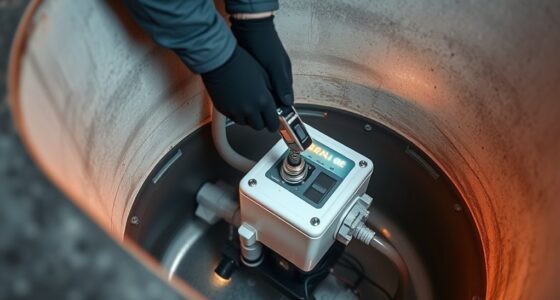
Next, focus on grounding and electrical safety. Make sure your equipment pad is properly grounded to prevent electrical hazards, which directly ties into pool safety. Installing GFCI outlets for all electrical connections adds another layer of protection, reducing the risk of electrical shock. Keep all wiring organized and protected from the elements by using weatherproof conduits and covers. This not only prolongs the lifespan of your equipment but also prevents accidental damage or shorts that could compromise safety.
Another key aspect is drainage. Incorporate a drainage system or a slight slope beneath your equipment pad to direct water away from the area. Standing water can lead to corrosion and damage, which hampers equipment maintenance and jeopardizes safety. Adding an accessible drain pan beneath the equipment can catch leaks and prevent water from pooling, making inspections safer and more straightforward. Ensuring proper material choice is crucial, as using durable, weather-resistant materials like concrete or pressure-treated wood with a non-slip surface guarantees stability and safety over time.
Material choice also plays a significant role in creating an efficient pad. Use durable, weather-resistant materials like concrete or pressure-treated wood with a non-slip surface. This ensures stability and prevents accidents, especially in wet conditions. A sturdy, well-constructed pad keeps your equipment secure and reduces vibrations and noise, which contributes to a safer environment.
Finally, organize your piping and hoses meticulously. Use color-coded or clearly labeled lines to identify water flow paths easily. Proper organization reduces the chance of accidental disconnections or errors during maintenance, maintaining both pool safety and system efficiency. Regularly review your setup, keeping it clean and free of debris, to guarantee your equipment operates smoothly and safely. An organized, well-maintained equipment pad makes pool ownership more manageable, safer, and more efficient.
Frequently Asked Questions
What Is the Ideal Size for a Pool Equipment Pad?
The ideal size for a pool equipment pad depends on your equipment’s equipment pad dimensions, but generally, it should be at least 4 feet by 8 feet. This allows enough space for proper airflow and future upgrades. Focus on a suitable pad layout that provides easy access for maintenance and ensures proper drainage. Prioritize sturdy, level construction to keep your equipment secure and functioning efficiently.
How Do I Prevent Noise From Pool Equipment?
To prevent noise from your pool equipment, focus on noise reduction and vibration control. You can install rubber pads or mats beneath the equipment to absorb vibrations, reducing sound transmission. Enclose noisy machinery in soundproof boxes or barriers, and guarantee proper ventilation to prevent overheating. Regular maintenance also minimizes noise. These steps help keep your pool area peaceful and enjoyable, avoiding disturbing your surroundings with unnecessary noise.
Can I Install a Pool Equipment Pad Myself?
Absolutely, you can install a pool equipment pad yourself if you’re handy. Think of it as your DIY quest, like assembling a vintage radio! Before you start, check out landscaping ideas to guarantee proper drainage and aesthetics. Also, review permitting requirements in your area to stay compliant. With basic tools and careful planning, you can build a sturdy, efficient pad that enhances your pool setup and saves you money.
What Materials Are Best for a Durable Pad?
You should choose concrete or gravel for a durable pool equipment pad. Concrete offers excellent durability, resisting weather and weight, making it a top choice. Gravel is also effective, providing good drainage and flexibility. When considering material selection, focus on durability factors like weather resistance, load-bearing capacity, and drainage. Both options guarantee your equipment stays protected and stable over time, with concrete providing the most long-lasting solution.
How Often Should I Inspect and Maintain the Pad?
You should inspect and maintain your pool equipment pad at least once a month. Regular checks help guarantee pool safety and proper electrical grounding, preventing hazards. Look for signs of wear, leaks, or corrosion, and keep the area clean and dry. Proper maintenance not only extends equipment life but also keeps your pool safe for everyone. Don’t forget, consistent upkeep is key to a trouble-free swimming season.
Conclusion
By designing your pool equipment pad with organization, accessibility, and durability in mind, you create a space that’s both functional and reliable. Keep your equipment protected from the elements, easily accessible for maintenance, and arranged for ideal airflow. With a well-planned pad, you guarantee smooth operation, extend equipment life, and simplify upkeep. Ultimately, a thoughtful setup transforms your pool area into a safe, efficient, and enjoyable retreat—where everything works seamlessly, stays protected, and looks great.
Halloween Picks
halloween
As an affiliate, we earn on qualifying purchases.